Random mumblings and mundom ramblings on music (mostly), and whatever else pops into my mind . . .
[The files attached here are for review only, and should be deleted after two weeks. If you like the bands, go buy the albums . . . like I did!] . . .
And yes - EVERYTHING posted here is still available!
Wow, man - Charlie Watts... We lost a GIANT today, ladies and gentlemen, and an inspiration to rock drummers everywhere. The consummate, detached, sardonic professional and perfectionist, who grounded The Rolling Stones with his steady, yet innovative beats for nearly sixty years.
I've been going through the multitude of remembrances, eulogies and tributes to Mr. Watts all afternoon since I heard the news. Of all of them, I feel that Rob Sheffield captured the manner, spirit and essence of him the best, in the article filed earlier today in Rolling Stone magazine. Honestly, what more need be said?
In honor of the late drummer, I'm offering up for your enjoyment not a Rolling Stones album or rarity, but the loose and rollicking jam session members of the band recorded with two longtime friends and session players (pianist Nicky Hopkins and guitarist Ry Cooder) one night in the spring of 1969, while The Stones were in the middle of recording tracks with producer Glyn Johns for their upcoming album Let It Bleed. The quintet shambled and shuffled through a few loose bluesy originals (penned by Watts, Cooder and Hopkins), along with a couple of blues covers they liked.
It was all a big goof, and at the time it was done, they had no intention whatsoever of releasing the songs. In the original liner notes, Mick Jagger describes the album as "a nice piece of bullshit... which we cut one night in London, England while waiting for our guitar player to get out of bed. It was promptly forgotten (which may have been for the better) ..." As such, it sat around in the vaults for years, until one day a bored Johns retrieved it. Johns said of the album: "[It] was just a joke really, just a laugh. I recorded it and they played it, and then, I don't know how long later [ed. note: nearly three years, actually], we dug the tapes out, I mixed it and they stuck it out on an album. It didn't really warrant releasing really, but it was okay, a bit of fun, and there's some good playing on it." The disc charted briefly in America, eventually peaking at #33 on Billboard, but did nothing in the UK.
To this day, this release is generally reviled and disowned by Rolling Stones purists, who equate the recorded performances here to that of A Toot And A Snore In '74, a recording of a similarly loose (albeit drug-fueled) jam session by John Lennon, Paul McCartney, Harry Nilsson and Stevie Wonder in Los Angeles in the spring of 1974. But I feel that comparison is unfair, and unwarranted. Despite its slapdash nature, there is some good playing on this disc, and at best it shows The Stones unadorned, belting out numbers like the bar band they started out as. All in all, it's definitely worth a listen.
So here it is for you all to do just that - Jamming With Edward! ("Edward" was Nicky Hopkins' nickname), recorded on the evening of April 23rd, 1969, and released on Rolling Stones Records on January 7th, 1972. Enjoy this in the spirit in which it is offered, in honor of the life and legacy of the sublime and now-immortal Charlie Watts. And as always, let me know what you think.
Please use the email link below to contact me, and I will reply with the download link(s) ASAP:
R.I.P. to Isaac Donald (Don) Everly yesterday at the age of 84, the last surviving member of the Everly Brothers (Phil Everly died in 2014) - if not THE greatest, certainly the most influential rock 'n' roll duo of all time. The Everly's close harmonies were a major influence on rock greats like The Beach Boys, The Beatles, The Bee Gees, and especially Simon & Garfunkel. They hold the record for the most Top 100 U.S. singles by any duo, and trail only Hall & Oates as the duo with the most Top 40 hits. The Everly Brothers are recipients of the Grammy Lifetime Achievement Award, have a star dedicated to them on the Hollywood Walk of Fame, and have been inducted into the Vocal Group Hall of Fame, the Rockabilly Hall of Fame, the Musician's Hall of Fame (for Don's innovative rhythm guitar riff on their early hit "Wake Up, Little Susie"), the Country Music Hall of Fame, and of course the Rock Hall of Fame, where the group was included as part of the inaugural class of genre pioneers in 1986. Rolling Stone magazine ranked The Everly Brothers at #33 on its list of "The 100 Greatest Artists Of All Time".
(I list all of these superlatives because, although it seems the duo are all but forgotten today, they were the real deal, and no joke.)
With their greatness basically pretty self-explanatory, I don't think I need to go into great length here with this posting on the background, whys and wherefores of The Everly Brothers. I'll just cut to the chase, and pony up the music...
The duo had their first breakout hits on Cadence Records in the late 1950s, finding massive and widespread success with classic songs like "Bye Bye Love" and "Wake Up, Little Susie" (both 1957), "All I Have To Do Is Dream" and "Bird Dog" (both 1958).
After three years at Cadence, the Everlys signed with Warner Bros. Records in 1960 and stayed with the label for a decade. Their early years at Warners were their most successful, with their first label release, "Cathy's Clown", topping the charts and selling eight million copies. Other early '60s Top Ten hits included "Walk Right Back" and "Crying In The Rain". Although their star faded somewhat in America with the advent of the British Invasion, The Everly Brothers remained very popular and successful in the United Kingdom and Canada for the remainder of the decade.
Here for your listening pleasure is the Everly Brothers compilation The Price Of Fame, covering the first five years (1960-1965) the group was at Warner Bros., and including not only every release from that period, but a number of alternate takes and outtake sessions. Every early huge label hit is here, along with re-recordings of some of their early Cadence music. This is a massive set... but I feel it's an essential one for fans of the Everlys and for rock fans in general.
The compilation was put out by the celebrated German label and reissue specialists Bear Family Records on January 31st, 2006. Since its a Bear Family release, you know it's going to be thorough!
Anyway, enjoy, and let me know what you think. Thanks and farewell to you, Don - the choir in Rock 'n' Roll Heaven just got a little better. All the best to you and your brother, wherever you are.
Please use the email link below to contact me, and I will reply with the download link(s) ASAP:
[I began putting this one together back in mid-2018... but discovered
some problems with the discs that took a while to sort out, and by the
time I did so, I'd moved on to other write-ups. Guess I'll finish this
one up now...]
I found this rarity available for download a couple of months ago [ed. note - early 2018], from an obscure music website, Kangnave (which appears to have been actively added to for a couple of years in the mid-2010s, but hasn't seen a new posting since 2015). Here's the description the blog moderator put up regarding this:
This is a pretty insane project put together by my pal Vince B. from San
Francisco a few years back. As the title indicates, this is a homemade
12 x CD-R (!) compilation of punk bands fronted by female vocalists from
1977 to 1989. More like a giant mixtape than a compilation, as he only
made 36 copies which he sent to friends and people who submitted
material. You may notice that some of the bands didn’t have a steady
female vocalist (The Lewd, etc.) but he still included songs that were
sung by another member of the band. This is as international as it gets,
with stuff ranging from world famous Blondie or Crass to the most
obscure Eastern European cassette compilation veterans. The boxset came
packaged in a handnumbered fancy translucent lunchbox enclosing all 12
CD-Rs, a stack of full-colored cards featuring comprehensive tracklist
and artwork/info, as well as a manga pin-up figure! Talk about a labor
of love.
Like the guy above said, this is a pretty incredible worldwide collection of decent to excellent punk vocalized by women - here's the lineup for all twelve discs:
Disc 1:
1. Blutsturz – Schweigen (Demo) (Germany, 198?) 2. Penetration – Money Talks (England, 1977) 3. Pyhäkoulu – Painajainen (Finland, 1986) 4. VulpeSS – Me Gusta Ser Una Zorra (Spain, 1983) 5. The Comes – Panic (Japan, 1984) 6. Suicide Squad – New Kids Army (Australia, 1980) 7. Rivolta Dell’Odio – Altari Del Terrore (Italy, 1984) 8. Sick Things – Anti-Social Disease (England, 1977) 9. Accident (a.k.a Accidents) – True Detective (USA, 1979) 10. Dishrags – I Don’t Love You (Canada, 1979) 11. Último Resorte – Hogar, Dulce Hogar (Demo) (Spain, 1981) 12. The Fastbacks – Someone Else’s Room (USA, 1981) 13. Anorexia – Rapist In The Park (England, 1980) 14. Phobia – Pretend You’re Not Crazy (USA, 1978) 15. Androids Of Mu – Bored Housewives (England, 1981) 16. Sort Sol (With Lydia Lunch) – Boy-Girl (Denmark/USA, 1983) 17. Tappi Tikarrass – Skrid (Iceland, 1984) 18. Flowers – After Dark (Scotland, 1979) 19. The Rentals – I Got A Crush On You (USA, 1979) 20. Pariapunk – Double Face (France, 1987) 21. Amsterdamned – Traditie Amme Balle (Netherlands, 1982) 22. Dr. Zeke – Vild I Skogen (Sweden, 1979) 23. The Lewd – Magnetic Heart (USA, 1982) 24. Au Pairs – Kerb Crawler (England, 1980) 25. Mo-Dettes – White Mice (USA/Switzerland/England, 1979) 26. Stripes – Weekend Love (Germany, 1980) 27. Violators – The Fugitive (England, 1980)
Disc 2:
1. Schund – Schund (Austria, 1982) 2. Wunderbach – Raya (France, 1982) 3. Total Muzak – Någonstans I Sta’n (Sweden, 1980) 4. Liliput – Hitch-Hike (Switzerland, 1980) 5. NJF – Sitting!! Pretty (Canada, 1984) 6. S.I.B. – Listless (Italy, 1981) 7. Manisch Depressiv – Zeitmaschine 1 (Switzerland, 1983) 8. Sheena & The Rokkets – Omae Ga Hoshii (One More Time) (Japan, 1979) 9. Rezillos – Flying Saucer Attack (Scotland, 1978) 10. Sado-Nation – Messed Up Mixed Up (USA, 1982) 11. Lucrate Milk – Fucking Pacifist (France, 1983) 12. Dan – Lust Is Greed (England, 1987) 13. Nasty Facts – Drive My Car (USA, 1981) 14. Life Cycle – Indifference (Wales, 1988) 15. Livin’ Sacrifice – Mentalsjuk (Sweden, 1981) 16. The Brat – Attitudes (USA, 1980) 17. Non Band – Ducan Dancin’ (Japan, 1982) 18. Bizkids – VIPs (Netherlands, 1980) 19. Minus Cway – Gdje Me Vjetar Odnese (Yugolsavia, 1982-88) 20. The Rats – Broken Wire Telephone (USA, 1983) 21. Anouschka & Les Privés – Contrôle (France, 1980) 22. Slits – Vindictive (England, 1977) 23. ICA – Untitled (Netherlands, 1981) 24. Trash – Peace Of What (USA, 1984) 25. Boys Boys – Monley Monkey (Japan, 1980) 26. Honey Bane – Girl On The Run (England, 1979) 27. TNT – Razzia (Switzerland, 1981) 28. Nuns – Wild (USA, 1980) 29. Electric Deads – 30 Years (Denmark, 1982) 30. Conflict – Who Will (USA, 1984) 31. Atims – Women (Netherlands, 1982)
Disc 3:
1. Hans-A-Plast – Polizeiknüppel (Germany, 1979) 2. Usch – LTO (Sweden, 1979) 3. Desechables – El Asesino (Spain, 1984) 4. Ici Paris – Le Centre Du Monde (France, 1980) 5. Action Pact – Suicide Bag (England, 1982) 6. Invaders – Backstreet Romeo (England, 1980) 7. Lepers – Flipout (USA, 1979) 8. Franti – Vento Rosso (Italy, 1983) 9. Out On Blue 6 – Examples (England, 1981) 10. Mr. Kite – Exit B9 (Japan, 1978) 11. De Zweetkutten – Atoomgeweld (Netherlands, 1981) 12. Ideal – Berlin (Germany, 1980) 13. Holly And The Italians – I Wanna Go Home (USA, 1981) 14. Modesty – Kad Srce Radi Bi Bam (Yugoslavia, 1982-88) 15. Delta 5 – Anticipation (England, 1980) 16. Beex – He Obliterates Me (USA, 1981) 17. Kaltwetterfront – Revolverheld (Germany, 1982) 18. Hydra – Ombre (Italy, 1985) 19. Vacum – Är Ungdomar Människor? (Sweden, 1980) 20. Nixe – Man Under My Bed (Netherlands, 1981) 21. Alternative – Seen Through Tear-Filled Eyes (Scotland, 1984) 22. Schematix – Nothing Special (USA, 1980) 23. Eyes – Don’t Talk To Me (USA, 1978) 24. Russians – Anything She Wants (England, 1980) 25. Kontrola W.– Manekiny (Poland, 1982/1998)
Disc 4:
1. Kizza Ping – Den Nya (Sweden, 1982) 2. Strapaze – Tage (Germany, 1983) 3. Glueams – 365 (Switzerland, 1979) 4. Kleenex Aktiv – Hilfe (Germany, 1985) 5. XL Capris – My City Of Sydney (Australia, 1980) 6. Josie Cotton – Johnny, Are You Queer? (USA, 1981) 7. Rakketax – Van Agt (Netherlands, 1980) 8. A-Heads – No Rule (England, 1982) 9. Drustvo Prisjecavalaca Boljih Dana – Sexualna Ovisnost (Yugoslavia, 1982-88) 10. Pink Champagne – Söndagsskolehyckel (Sweden, 1980) 11. Curse – Killer Bees (Canada, 1978) 12. Flirt – Don’t Push Me (USA, 1978) 13. 水玉消防団 (Mizutama Shouboudan) – 真空パック・トラベル (Japan, 1981) 14. Bizon Kidz – Godsdienstwaanzin (Netherlands, 1981) 15. X-Ray Spex – I Live Off You (England, 1978) 16. Reactors – World War Four (USA, 1980) 17. Klasse Kriminale – Construito In Italia (Italy, 1988) 18. Debils – Maso (Switzerland, 1981) 19. Plastix – Geschlechtsverkehr (Austria, 1981) 20. Avengers – Teenage Rebel (USA, 1978) 21. Hagar The Womb – Idolization (England, 1983) 22. Blitzkrieg – Szene (Germany, 1989) 23. DIRT – Hiroshima (England, 1981) 24. Disturbers – KZ Syndroom (Netherlands, 1980) 25. Andreas Dorau Und Die Marinas – Fred Vom Jupiter (Germany, 1981) 26. Pandoras – That’s Your Way Out (USA, 1984) 27. Lost Cherrees – Living In A Coffin (England, 1982) 28. Learned Helplessness – Vegis (USA, 1982) 29. A-Gen-53 – Stalingrad-Stumpfsinn (Austria, 1981)
Disc 5:
1. Crass – Where Next Columbus? (England, 1981) 2. A.P.P.L.E. – If In Heaven (USA, 1985) 3. Sleeping Dogs – (I Got My Tan In) El Salvador (USA/England, 1982) 4. Asbest – Family Care (Netherlands, 1982) 5. FFF – Arbeit Macht Dumm (Germany, 1986) 6. Gas – World Peace (Japan, 1985) 7. Les Calamités – Toutes Les Nuits (France, 1984) 8. Mother’s Ruin – Godzilla (Switzerland, 1979) 9. Toxic Waste– Traditionally Yours (Northern Ireland, 1985) 10. The Ex – Lied Der Steinklopfer (Netherlands, 1989) 11. NBJ – Dead Porker (USA, 1982) 12. Doll – Trash (England, 1978) 13. ST-37 – Unknown Soldier (Germany, 1985) 14. Jetset – Tot Hier En Niet Verder (Netherlands, 1982) 15. Fega Påhopp – Hålla Masken (Sweden, 1980) 16. Alma Y Los Cadáveres – Confidencias de Nutrexpa (Spain, 1982) 17. Da Stupids – Alien (USA, 198?) 18. Essential Logic – Quality Crayon Wax OK (England, 1979) 19. Beardsley – Summer Holiday (Japan, 1986) 20. Lärm – Pigeon (Netherlands, 1982) 21. Fatal Microbes – Violence Grows (England, 1978) 22. Sin 34 – Not (USA, 1983) 23. Vice Squad – Latex Love (England, 1980) 24. Lord Eva Braun – Week-End à Blois (France, 1989) 25. Ätztussis – Bullen (Germany, 1980) 26. Falange – Falange Suburbana (Brazil, 1988) 27. Bags– Survive (USA, 1978)
Disc 6:
1. Conflict – The Guilt And The Glory (England, 1982) 2. Putrid Girls – 1234 (USA, 1983) 3. Nog Watt – Going On (Netherlands, 1984) 4. Suburban Reptiles – 45 Single (New Zealand, 1978) 5. Lost Kids – Alle Taler (Denmark, 1979) 6. Edith Nylon – Edith Nylon (France, 1979) 7. Expelled – No Life, No Future (England, 1982) 8. Tollwut – Seuchen (Germany, 1981) 9. Blondie – Youth Nabbed As Sniper (USA, 1977) 10. Wartburgs Für Walter – More More Anymore (East Germany, 1989) 11. Ref – Soda Bikarbona (Yugoslavia, 1982-86) 12. Chumbawamba – beginning To Take It Back (England, 1986) 13. Mizz Nobody – Smittad (Sweden, 1978) 14. Platzangst – It’s A Light (Germany, 1983) 15. The Pogues – I’m A Man You Don’t Meet Every Day (Ireland, 1985) 16. St. Vitus Dancers – The Survivor (England, 1982) 17. Mary Monday & The Bitches – I Gave My Punk Jacket To Rickie (USA, 1977) 18. DZK – Juventude (Brazil, 1988) 19. Cocadictos – Juan Pablo II Y Amigos (Spain, 1983-84) 20. K.U.K.L. – Dismembered (Iceland, 1984) 21. Petticoats – Allergy (England, 1980) 22. Kalashnikov – Ødelæg Og Hærg (Denmark, 1984) 23. No Thanks – Fuck Everything (USA, 1983) 24. Indirekt – Shell Helpt (Netherlands, 1985) 25. Namenlos – Nazis (East Germany, 1984) 26. UXA – No Time (USA, 1980) 27. Peggy Luxbeurk – Sueur Froide (France, 1982) 28. Flere Døde Pansere– Midedød (Denmark, 1983)
Disc 7:
1. Toxic Shock – Remote Control (England, 1984) 2. Toxic Shock – Riot Riot Riot (USA, 1982) 3. Zelda – [Japanese Title] (Japan, 1981) 4. Total Chaoz – Oh Beatrix (Netherlands, 1981) 5. ZOI – Psaulme 1 (France, 1986) 6. Tozibabe – Moja Praznina (Yugoslavia, 1985) 7. Xmal Deutschland – Qual (Germany, 1983) 8. Ghost Walks – Fallen Angel (USA, 1985) 9. Life In The Fridge Exists – Have You Checked The Children? (New Zealand, 1980) 10. X – Nausea (USA, 1980) 11. Sacrilege – Dig Your Own Grave (England, 1985) 12. Combat Not Conform – Keep Your Head (Germany, 1985) 13. Typhus – ノータッチ (Japan, 1980) 14. Foreign Legion – Trenchline (Wales, 1986) 15. Rough Cut – Danger Boy (USA, 1981) 16. Ludus – Mother’s Hour (England, 1981) 17. The Bastards – Impossibilities (Switzerland, 1978) 18. Rutto – Paha, Kuolema (Finland, 1983) 19. Nikki Corvette – Young & Crazy (USA, 1977) 20. Photos – Skateboard (England, 1980) 21. Last Few – Suicide Commando (Netherlands, 1983) 22. Tyranna – Back Off Baby (Canada, 1980) 23. Screaming Sneakers – Violent Days (USA, 1982) 24. Poison Girls – Statement (England, 1982) 25. Verdun – Günther (France, 1988) 26. Noh Mercy – Caucasian Guilt (USA, 1979) 27. Bow Wow Wow – C30, C60, C90, Go (England, 1980) 28. Götterflies – Empty (Netherlands, 1981)
Disc 8:
1. Post Mortem – The Casualty (England, 1985) 2. Antischism – Evil God (demo) (USA, 1989) 3. Wrong Kind Of Stone Age – Run Amok (Australia, 1984) 4. The Puke – Happy Family (Netherlands, 1981) 5. Teddy & The Frat Girls – Clubnite (USA, 1980) 6. Questions – Take A Ride (France, 1980) 7. 無理心中 (Muri Shinjuu)– 子宮 (Live) (Japan, 1980-82) 8. Rubella Ballet – Something To Give (England, 1982) 9. Die Tödliche Doris – Kavaliere (Germany, 1982) 10. Los Microwaves – Time To Get Up (USA, 1981) 11. Extrém Exém – Eget Liv (Sweden, 1982) 12. Icon A.D. – Fight For Peace (England, 1982) 13. Dago Wops – Big Mac (Germany, 1981) 14. 8-Eyed Spy – Diddy Wah Diddy (USA, 1980) 15. Indian Dream – Insult To Injury (England, 1985) 16. Destroy All Monsters – Bored (USA, 1978) 17. Bluttat – Flying Into Heaven’s Door (Germany, 1985) 18. Raincoats – Adventures Close To Home (England, 1979) 19. Afrika Korps – Buzz Stomp (USA, 1977) 20. M’n’M’s – I’m Tired (USA, 1980) 21. キャ→ (Kyah!) – Slapdash (Japan, 1985) 22. Teenage Jesus & The Jerks – Less Of Me (USA, 1978) 23. Dog Faced Hermans – Balloon Girl (Scotland/Netherlands, 1987) 24. Mydolls – Soldiers Of A Pure War (USA, 1983) 25. Gash– Gash Trash (Australia, 1986)
Disc 9:
1. Berlin – The Metro (USA, 1982) 2. Poles – C.N. Tower (Canada, 1977) 3. Kuolleet Kukat – Vihollinen On Systeemi (Finland, 1984) 4. Joyce McKinney Experience – Armchair Critic (England, 1989) 5. VKTMS– Hard Case (USA, 1979) 6. ゴメス (Gomess) – 地獄へ (Japan, 1986) 7. Charol – Sin Dinero (Spain, 1980) 8. Tragics (a.k.a Misfits) – Mommi I’m A Misfit (USA, 1981) 9. Kandeggina Gang – Sono Cattiva (Italy, 1980) 10. Jingo De Lunch – What You See (Germany, 1987) 11. Vermilion – Angry Young Women (England, 1978) 12. The Maggots – (Let’s Get, Let’s Get) Tammy Wynette (USA, 1979) 13. Brain Death – Personal Affair (Japan, 1987) 14. Squits – Porno Pirate (Netherlands, 1982) 15. Siouxsie And The Banshees – The Staircase (Mystery) (England, 1979) 16. Unwarranted Trust – Honour’s Calling (Canada, 1984) 17. Bulimia Banquet – Scientology Sucks (USA, 1988) 18. Nurse – ナ-ス (Japan, 1983) 19. Secta Suicida Siglo 20 – Virginidad Sacudida (Mexico, 1989) 20. Castration Squad – The X Girlfriend (USA, 1979) 21. Jo Squillo Eletrix – Skizzo Skizzo (Italy, 1981) 22. A5 – Reeperbahn (Germany, 1980) 23. Manufactured Romance – You (England, 1980) 24. Frigidettes – Turmoil (USA, 1982) 25. Capitalist Alienation – Nuclear Trash (Canada, 1987) 26. Sperma – Please Love Me Tonight (Japan, 1985) 27. Mystery Girls – Ego (USA, 1983) 28. Exeroica – Del Apocalipsis (Argentina, 1988) 29. Partners In Crime – I Wanna Drive You (USA, 1984) 30. Dawn Patrol – What My Gonna Do (With Me) (England, 1981) 31. Maps– My Eyes Are Burning (USA, 1979)
Disc 10:
1. Neo Boys – Never Comes Down (USA, 1980) 2. New Walls – No Creation!? (Japan, 1985) 3. Gymslips – Miss Nunsweeta (England, 1982) 4. Loud Warning – Loud Warning (Netherlands, 1986) 5. Vs.– Magnetic Hearts (USA, 1980) 6. Turncoats – Waste Of Time (England, 1987) 7. Agonia – [Unknown title] (Italy, 1985) 8. Demented – Back To The Bed (USA, 1982) 9. PVC – Galehus (Norway, 1980) 10. Girls At Our Best! – Warm Girls (England, 1980) 11. Wilma & The Wilbers – Chronic Alkie (USA, 1980) 12. Cringe – Secretary Spread (USA, 1981) 13. Detectors – La Ciutat No Es Per Mi (Spain, 1987) 14. Suburban Lawns – Gidget Goes To Hell (USA, 1979) 15. Red Scare – Streetlife (USA, 1982) 16. Sofa Head – Invitation To Dinner (England, 1989) 17. 45 Grave – Black Cross (USA, 1980) 18. Plasmatics – Dream Lover (USA, 1979) 19. Not Moving – Behind Your Pale Face (Italy, 1983) 20. Enemy – Want Me (USA, 1978) 21. Potential Threat – Animal Abuse (England, 1982) 22. Anti-Scrunti Faction – Slave To My Estrogen (USA, 1985) 23. Legal Weapon – Hostility (USA, 1981) 24. OXZ – Be Run Down (Japan, 1984) 25. Shivvers – Teen Line (USA, 1980) 26. Donkeys – Wacky Acky I Aye (England, 1978-82) 27. Wrecks – Punk Is An Attitude (USA, 1982) 28. La Souris Déglinguée – Marie France (France, 1983) 29. SST – Autistic (USA, 1977) 30. Anti/Dogmatikss– Estado De Caos (demo) (Spain, 1983)
Disc 11:
1. Abwärts – Bel Ami (Germany, 1980) 2. Even Worse – Illusion Won Again (USA, 1981) 3. F.U.A.L. – Freedom Under Animal Liberation (Northern Ireland, 1989) 4. Nena – Nur Geträumt (Germany, 1983) 5. Gruftrosen – Mörder Von Gestern (Austria, 1985) 6. Sledgehammer– Paramilitary Recruits (Northern Ireland, 1988-ish) 7. Deutscher Abschaum – The German Superman (Germany, 1984) 8. Family Fodder – Debbie Harry (England, 1980) 9. Pink Turds In Space – Eastenders (Northern Ireland, 1988) 10. Die Mimmi’s – Mc Donald (Germany, 1984) 11. No-Song Kutkotz – Telegram (Netherlands, 1984) 12. Ratos De Porão – Nao Me Importo (live) (Brazil, 1985) 13. Martina + Part Time Punx – Mehr Von Dir (Germany, 1987) 14. Frightwig – Only You (USA, 1984) 15. Big In Japan – Big In Japan (England, 1977) 16. Bärchen Und Die Milchbubis – Jung Kaputt Spart Alterscheime (Germany, 1980) 17. Mood Of Defiance – American Love Song (USA, 1983) 18. Virgin Rocks – Get Along With You (Japan, 1987) 19. Ana Hausen – Professionals (England, 1981) 20. Métal Boys – New Malden (France, 1980) 21. Red Cross – Standing In Front Of Poseur (USA, 1980) 22. Dolly Mixture – Been Teen (England, 1981) 23. Morbid Opera – White Flag (USA, 1983) 24. Chin-Chin – We Don’t Wanna Be Prisoners (Switzerland, 1984) 25. Lovedolls – Now That I’ve Tasted Blood (USA, 1986) 26. Compos Mentis – Confused (New Zealand, 1985-ish) 27. Hysteria– Silent Hate (England, 1984)
Disc 12:
1. Pervers – Asozial (Germany, 1984) 2. Hugh Beaumont Experience – Moo (USA, 1983) 3. Inocentes with Meire – Ri Dos Hippies (Brazil, 1984) 4. Ruggedy Annes – Hollow Heroes (Canada, 1985) 5. Blowdriers– Berkeley Farms (USA, 1979) 6. Rap – Accident (Japan, 1985) 7. Decadent – Opposition Proposition (USA, 1982) 8. Warriors – Born To Ride (Japan, 1987) 9. Bambix – Little Miss Sunshine (Netherlands, 1989) 10. Super Heroines – Death On The Elevator (USA, 1981) 11. Cherry Vanilla – The Punk (England, 1977) 12. Hari-Kari – Prey For Peace (USA, 1983) 13. Kleenex – Ü (Switzerland, 1979) 14. Chute De Esperma – No Keremos (Spain, 1984) 15. Revo – Fuck The School (Netherlands, 1980) 16. The Fall – Hotel Blôedel (England, 1983) 17. Der Riß– Images (Germany, 1985)
As the compiler mentioned above, in some ways, the title of this set is a misnomer... although many of the bands featured in this compilation (such as The Raincoats, Kleenex, The Slits, Hans-A-Plast, etc.) are indeed all-woman groups, a good proportion of the songs being offered here are by unisex bands that just happened to have a woman as a lead singer (like X, Teenage Jesus & The Jerks, Chumbawumba and X-Ray Spex) or groups that let one of the female members sing a song or two (like The Fall, 45 Grave, The Rezillos, and the like). Perhaps a better name for this would have been A Reference of Female Voices in Punk Rock 1977-89... but maybe I'm just nitpicking. All in all, the selection here is superb...
Unfortunately, the initial set of downloads burned from this blogger's copies were NOT superb. I had a heck of a lot of issues with some of the song files, especially in the last five or six discs - some files were incomplete, others hopelessly corrupted. So I made the time and took the extra effort to cull out the crap and find replacement files for some of these bands from other sources. Considering the level of obscurity of some of the tunes provided in this set, it goes without saying that it took a while for me to track everything down. But in the end, I think I did. So the set I'm offering here is a clean and uncorrupted as you're going to find out there for the time being.
Apparently, this set was featured on the Dangerous Minds website a few years ago - but still linked back to the Kangnave page, with its wonky files. Here for your listening pleasure is my repaired version of A Reference Of Female-Fronted Punk Rock 1977-89, a fan-compiled boot of twelve discs containing over 300 slices of quality punk and post-punk from the heyday of this music. Enjoy, and as always, let me know what you think.
Please use the email link below to contact me, and I will reply with the download link(s) ASAP:
[I started this one way back in 2017, but for some reason never got around to finishing it. Here you go...]
Back when I was a kid, my parents discouraged us from drinking much in the way of soft drinks. There was never that much soda in any of the houses where we lived, and that that was present was generally reserved for the grown-ups; the kids had to make do with things like milk, water, juice and occasionally Wyler's and/or (in some cases, stunningly culturally inappropriate) Funny Face fruit-flavored drink mixes. I suppose at the time it was just one of the ways and methods our folks used to watching out for our health and well-being - and being a parent now, I can sympathize with and relate to that attitude. But when I was a child, it felt like a heavy blow, as if we were being unfairly and arbitrarily deprived of something that other kids had ready access to.
However, my grandmother (on my father's side) had no such compunctions; she always had a plentiful stock of stuff like RC Cola, 7-Up and Mr. Pibb readily at hand in big half-gallon (later two liter) bottles at her house, and during our visits there she would spoil us unmercifully with near-unlimited access to this carbonated nectar ("unlimited", that is, until my folks would inevitability step in and order us "not to drink all of Grandmama's soda"). I don't think my parents fully understood that that limited availability only served to make us children desire it more, and make it seem more "special".
Even with all of that, once I got older and began living (and shopping) on my own, I can't say that I became a big pop drinker. To this day, my non-alcoholic beverages of choice continue to be water, milk and OJ (so I guess my parents did that right after all). I do keep cans of soda in the fridge, and have never prevented my own children from having them when they felt the desire. In doing so, I think I've kept them from equating soft drinks as special treats, as I once did, regarding them now as just another choice that they can take or leave. And I think that tactic has been successful; they are not big soda guzzlers either.
I think that this info will not be regarded as good news by the big beverage bottlers - Keurig Dr. Pepper, PepsiCo, and the longtime industry giant, The Coca-Cola Company - all of whom have invested hundreds of millions of dollars in advertising revenue promoting their products and exhorting us to drink more-More-MORE! These companies have gone to great lengths to convince/coerce the public to consume mass quantities, with some campaigns more memorable than others. Those of us of a certain age fondly recall this classic Dr. Pepper commercial:
Or this memorable 7-Up commercial, featuring the talents and voice of the incomparable Geoffrey Holder:
And this, probably the gold standard as far as soft drink commercials are concerned, the 1971 "Hilltop" ad for Coca-Cola, featuring a reworked version of the New Seekers' song "I'd Like To Teach The World To Sing (In Perfect Harmony)" - a song so popular that not one, but TWO versions of it, both made the U.S. Top Ten in 1972 and went Gold:
Coca-Cola had long been the industry leaders in innovative, creative product promotion. The company began placing ads in national magazines as early as 1904, and by the end of that decade, their advertising budget exceeded $1 million per year, an extraordinary sum for that time.
The very design of the unique and world-famous Coca-Cola bottle in the 1910s was a deliberate choice to differentiate the brand from that of other cola competitors. Coke was one of the first brands to feature Santa Claus prominently in its print ads, beginning in the 1930s, an association that has remained to this day. And from the dawn of the 20th century, the firm made heavy use of celebrity endorsements, beginning with popular singer Hilda Clark in 1901.
For over fifty years, Coca-Cola engaged the services of the D’Arcy Advertising Company as its official ad agency, and the union was very successful. But in 1956, Coke ended its relationship with D’Arcy and transferred the company’s advertising account to McCann-Erickson, Inc. The aim was to more successfully utilize new media like television, areas that McCann-Erickson was more in touch and in tune with. The new agency proved its worth quickly with the first two Coca-Cola campaigns it managed in the 1950s – “The Sign of Good Taste” (1957) and “Be Really Refreshed” (1959). Pop performers from the period, such as the McGuire Sisters, The Brothers Four and Connie Francis were involved in these successful efforts (note that, at the time, Coke didn't appear to be very interested in utilizing rock 'n' roll stars and making inroads into the youth market... curious).
The next major McCann-Erickson campaign was “Things Go Better with Coke,” which began in 1963. For this campaign, there was an explosion in the number and quality of ads, and the number of top contemporary music stars involved, making up for that dearth in the earlier campaigns. As mentioned in Allmusic.com:
During the 1960s, it wasn't unheard of for rock & roll groups and
music performers to lend their voices to commercial jingles... But in the '60s, artists of surprisingly high stature were willing (and artists of
surprisingly middling stature were asked) to lend their talents and skills to the cutting of product advertising jingles. Any act with lesser stature than The Beatles or The Rolling Stones was fair game to be approached by an advertising agency with some hope of success.
McCann-Erickson (backed by Coca-Cola's huge checkbook, I'm sure) convinced some huge stars of the period to record radio and/or television commercials under the “Things Go Better with Coke” campaign. These artists were asked to incorporate the “Things Go Better with Coke” slogan into a commercial-length song, which was generally inspired by one of their big hits (for example, Tom Jones’ Coke commercial uses the melody and arrangement of his signature tune “It’s Not Unusual”):
Again, from Allmusic.com:
It may seem monotonous -- most of the spots include the phrase "Things Go Better With Coke" -- but the variations are fascinating, and it is a chance to hear these acts having what can only be considered fun with their respective sounds. There is a kind of surreal fun to be found in these sounds -- many of the tracks run well over a minute and are done in each artist's straight style, whatever that might be. The second of three Roy Orbison numbers here, for example, is in his hardest rocking style of the mid- to late '60s, while the third blatantly imitates "Oh, Pretty Woman." [Other] acts... completely absorb the Coca-Cola lyrics into their own respective sounds.
Acts who participated include the aforementioned Tom Jones and Roy Orbison, along with The Supremes, The Tremeloes, Jan & Dean, The Moody Blues, Boyce & Hart, Marvin Gaye, Gladys Knight & The Pips, Gary Lewis & The Playboys, The Easybeats, Ray Charles, The Box Tops, The Bee Gees, Aretha Franklin, and many, many more. All in all, the "Things Go Better With Coke" campaign, which ran until 1970, was a smashing success, and to this day the phrase is probably second only to "It's The Real Thing" in regards to a signature, recognizable brand slogan.
Initially, there doesn't appear to have been any great interest in preserving these ads for posterity; I think both the company and the performers themselves considered them to be for commercial use and generally disposable. So the origin and sourcing of this album is pretty scanty and sketchy, to say the least. It appears that these songs were all but forgotten about for over twenty-five years, until someone at McCann-Erickson corporate headquarters pulled them all together in the mid-1990s as an in-house thing, commemorating and celebrating their innovative and successful 60's ad campaign. As such, it was initially produced in very limited quantities (only about 100 copies or so) - it was definitely not done by a studio. It probably would have remained an internal ad agency document if some enterprising and on-the-ball individual hadn't recognized its significance and historical value, nabbed a copy and began marketing it as a hard-to-find blank-label bootleg CD in the late 1990s. However, even that effort was short-lived; this album has been off the market now for close to twenty years and has become a difficult find on the Web, and/or an rare, high-priced purchase from sites like eBay.
With this being an unlicensed, unregulated bootleg, even its format and track listing vary from version to version, with different album covers (as shown here) and song listings. The original boot release listed a total of sixty-four cuts, but actually only included sixty-one, for some reason. I can't recall where or when I ended up acquiring my copy from, but it appears I hit the jackpot - my version of this compilation includes over ONE HUNDRED tracks, both short and long radio commercials done by dozens of artists. The quality throughout this comp is generally good to excellent, although the American material is slightly lower in fidelity for the most part (The Box Tops' tracks in particular reveal some surface noise, and seem to be the only tracks taken from sources other than tape). And the final song, "Come Alive", appears to have been appended on to my version as a joke, as "Come Alive" was the late-60's slogan for Coca-Cola's bitter (no pun intended) rival, Pepsi-Cola.
Anyway, here for your listening pleasure is the hard-to-find but enjoyable bootleg compilation Things Go Better With Coke: Sixties Coca-Cola Commercials 1965-69, original release date unknown. Have a listen to these short but interesting and classic blasts of '60s radio ephemera, and as always, let me know what you think.
(...and, if I may, might I suggest you enjoy this auditory experience while imbibing the thirst-quenching soft drink of your choice; I won't make any recommendations - I'm sure one brand in particular will somehow come to mind...)
Please use the email link below to contact me, and I will reply with the download link(s) ASAP:
Earlier this morning, after nearly 300 posts spanning over eleven years, Pee-Pee Soaked Heckhole recorded its millionth visitor! It's been a long time coming!
For all of you who have managed to stick with me and the silly little blog of mine over the years, let me once again provide you with my most sincere thanks and appreciation. Thank you for your patronage, your suggestions, and most of all, your comments - it feels good to know and read that, in some cases, I've turned someone on to a new genre of music, or reunited them with a lost classic. My favorite comments to receive are those along the lines of "I've been looking for this for years!", or "I never thought I'd hear this again!" - I get that same kind of feeling and thrill whenever I manage to track down a hard-to-find tune I'm seeking; glad to know I can instill that in others. This site started off as a "Can I possibly do this too?" sort of lark, so even after all of the music I've provided and write-ups I've penned, it's still sort of crazy to me that THAT many people have found this obscure corner of the Web and have read at least a little of the meandering, verbose narrative I've cranked out month after month, year after year.
In honor of this Million Visitor Milestone, I thought I'd at least make an attempt to complete some of the dozens of half-written music write-ups I've had sitting in my queue but, for some reason or another, never finished (some have been in limbo for literally years). Over the next few days I'll do what I can to bear down at get a least a few of this publication-ready for you all. So keep an eye on the site, and keep on coming back!
Looking forward to meeting and engaging with the next million visitors!
All the best to you all from Pee-Pee Soaked Heckhole
Happy Birthday to famed musicians and identical twins Kim and Kelley Deal, who were born on this date in Dayton, Ohio sixty years ago today. In honor of this day, I thought I might as well post the rest of Kelley Deal's output I currently have in my possession.
Both of the twins got into music during their teen years in Ohio, working up songs in the home studio they built in their parents' basement, and playing folk- and country-laced originals and covers in and around the Dayton area (with Kim on guitar and Kelley on drums). This went on for a couple of years until the mid-1980s, when Kim got married and moved to Boston; Kelley stayed in Dayton and started working as a technical analyst. Kim found a job in the Massachusetts biochemical tech industry, and that was her main focus in life until one day in March 1986, she came across an unusual advertisement in the "Musicians Wanted" classified section of the old Boston Phoenix newspaper that read, "Band seeks woman bassist into Hüsker Dü and Peter, Paul and Mary..." On a whim, Kim answered the ad (she later found that she was the only person who did) and met locals Charles Thompson and Joey Santiago, old college roommates who were thinking about forming a band. The trio began jamming together, and that's how the band The Pixies were formed.
Even with Kim on board, the rudimentary Pixies were still without a drummer. Kim contacted her sister Kelley back in Ohio, and subsequently paid for her to fly out to Boston to audition behind the kit for the band. Although both Thompson (soon to be known as Black Francis) and Santiago approved, Kelley wasn't confident enough in her drumming to join up, and opted to move back to Ohio. Kim then recommended another drumming acquaintance, David Lovering, a friend of her husband's she met at their wedding reception the year before. Lovering signed on, and the group was complete.
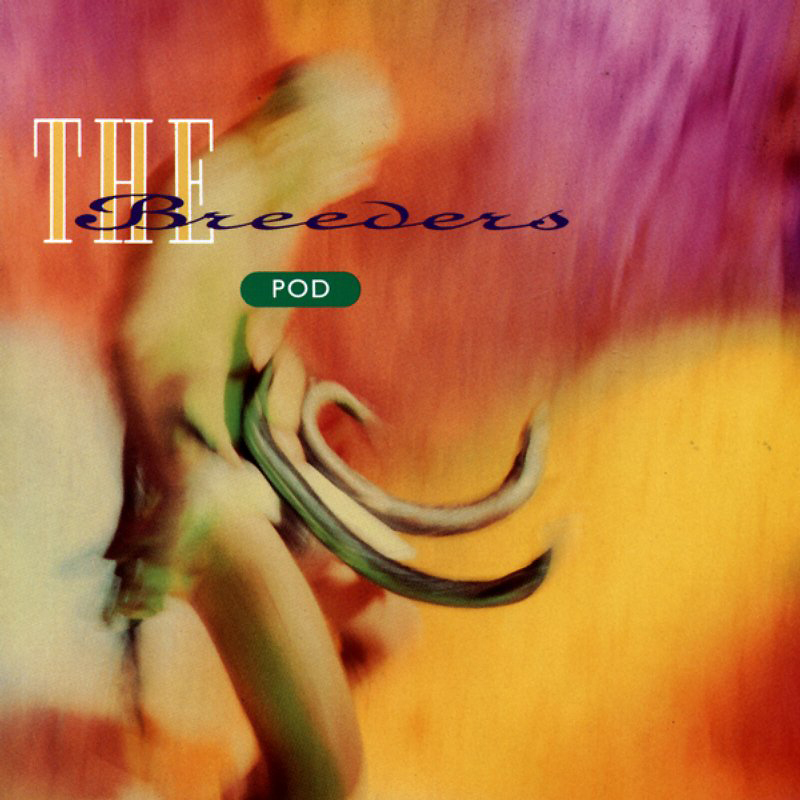
In a post I published a decade ago, I briefly provided an overview of the formation of The Breeders in 1989, the result of the dissatisfaction Kim Deal and Tanya Donelly were feeling regarding their roles in their then-current bands (Donelly was a member of Throwing Muses). Kim asked Kelley to join the new group and assist with the recording of their debut album Pod, but Kelley was unable to participate because she couldn't arrange to take enough time off of her analyst job. However, after Donelly left the group, Kelley quit her job and joined her sister's band in 1992, assuming the lead guitarist role (although at the beginning, she had NO IDEA how to play the instrument).
Many moons ago, I related to you all the story of my initial encounters and brief long-distance semi-friendship with Kelley Deal during the mid-to-late 1990s. In that narrative, I related how she and The Breeders were riding on the crest of global commercial and critical success, in the midst of a triumphant world tour capitalizing on their hit album Last Splash. It seemed to me at the time that everything was going right for the band; little did I know how much turmoil was occurring behind the scenes, and how much things were getting out of hand for Kelley. Demons already long present in her life began to take over, exacerbated by the long hours of life on constant tour. Taken from a 2002 feature article on the group from The Guardian newspaper:
The Breeders spent several months during 1993 and 1994 touring, and it
was during this period that Kelley's long-standing addiction to heroin
stopped being a secret and started being a problem. When the band
returned home, the Deals immediately started work on the follow-up to
Last Splash, but in autumn 1994 Kelley was arrested for possession, and
by the beginning of 1995 she was in rehab in Minnesota.
As I mentioned in that earlier post, Kelley got busted by the feds when she received a half-pound brick of Black Tar heroin from her dealer at her home address. The subsequent felony charges could have landed her in jail for an extended period. But her family pulled together to support her, and saved her from the slammer - not that she appreciated it at the time (also from The Guardian):
Kelley insists that her family drove her to the rehabilitation centre
themselves, and that meant that when her case came to court, she wasn't
convicted. "I hated my family," she admits. "They were all against me,
they didn't understand me. I didn't think I had a problem."
She was ordered to report to the famed Hazelton rehab center in Minneapolis, Minnesota, where she spent much of 1995 in a structured, isolated environment, getting treatment for her addiction. Kelley's time at the clinic also helped her find a up-to-then untapped wellspring of creativity and inspiration, and for the first time she began penning her own songs. At the completion of her program at Hazelton, Kelley was gradually eased back into society, moving into a halfway house in nearby St. Paul for further observation and treatment. While there, she met and befriended Jesse Colin Roff, a local guitarist and drummer also undergoing drug rehab, and (tentatively, at first) began sharing with him some of the songs that she wrote while at the center. Intrigued and inspired, the two began jamming together and collaborating, and Kelley began plotting a return to active recording.
The duo began gathering like-minded musicians, including David Shouse from The Grifters and
Jimmy Flemion of The Frogs, and by early 1996 Kelley was confident enough in the abilities of herself and her band (christened The Kelley Deal 6000) to enter Minneapolis's Terrarium recording studio to work on a debut album. Go To The Sugar Altar was completed in a month, and issued in the late spring of 1996.
Go To The Sugar Altar, to me, is the sound of a band, and a musician, finding their/her feet. The songs (all written either by Kelley herself or in conjunction with various band members) cover a number of genres: straight-ahead rock, some punky thrashing, a dollop of blues and even a dash of country thrown in from time to time. A lot of these songs sound somewhat like glorified demos... but that may be due to the nature of the circumstance, with Kelley producing and funding the project herself from whatever limited funds she had at her disposal. With that being said, most of the songs are winners, and Kelley's voice is a treat; it has the same familiar sound as that of her sister, but unlike Kim, who tends to bury her voice somewhat in her recordings, Kelley's is out front the entire time, and has an appealing tone and growl. Some of my favorite songs off of this album include "Dammit" and "How About Hero":
Comparing the Deal sisters' immediate post-Last Splash releases of the time [after The Breeders went on forced hiatus in the wake of Kelley's drug problems, Kim assembled what was originally intended to be a "new Breeders", but instead evolved into The Amps, and released a so-so album (Pacer) in late 1995], I feel that Go To The Sugar Altar is the truer follow-up/continuation of the hit Breeders sound.
The band's debut album met with decent reviews, and the group hit the road that summer for shows all across the U.S., drumming up support for the disc. I saw The Kelley Deal 6000 a couple of times that year, as I mentioned in my earlier post, and at every show took the opportunity to try to say "hello". During their tour, the label released the Canyon EP, containing the lead cut from the album along with the non-album track "Get The Writing". I picked up both over the course of that year.
After their extensive tour, the group returned to Minneapolis in the spring of 1997 to record their sophomore album Boom! Boom! Boom! During these sessions, Kelley and Jesse Roff took a little time apart from the other band members to record a two-song side project, titled Carnivale, under the moniker Solid State 6000. This single didn't expand upon the sound ideas that ended up on the full band album, but serves as a superb companion piece.
These were the final releases by Kelley on her own. After the Boom! Boom! Boom! tour ended in early 1998, the group went on indefinite hiatus, and Kelley returned to the Breeders' fold, where she remains to this day.
It's been a quarter-century since the band's debut, and while they didn't last very long, The Kelley Deal 6000 and related projects shouldn't be relegated to just a long-ago memory, or regarded as a 'flash in the pan'. Kelley definitely had some things to say, and it is to her credit that, in the wake of all that was going wrong for her at the time, she was bold enough and adventurous enough to step out on her own and present to the public what was on her mind at the time. I enjoyed this group very much while it lasted, and miss heading out to see them in the small clubs they played around the country during that time. And on a personal note, it was an honor and a privilege to have Kelley as my friend, even for so brief a time.
With that being said, for your listening pleasure, here are:
Go To The Sugar Altar, the debut album by The Kelley Deal 6000, released by Nice Records (Kelley's label) on June 4th, 1996;
The band's Canyon EP, released later that summer; and
The Carnivale single, released by Solid State 6000 on the same label in mid-1997.
Enjoy, and as always, let me know what you think.
Please use the email link below to contact me, and I will reply with the download link(s) ASAP:
The Kelley Deal 6000 - Go To The Sugar Altar: Send Email The Kelley Deal 6000 - Canyon EP: Send Email Solid State 6000 - Carnivale (single): Send Email
I've posted a couple of B-52's entries in the past three years; here are some more hard-to-finds:
"Private Idaho" b/w "Party Out Of Bounds (Instrumental)" - I mentioned in a post about a decade ago that when I purchased The Yellow Album in the fall of 1980, the first music I ever bought with my own money, I'd listen to it in the living room during off-hours, with my ear pressed against the speaker and the volume turned down low; my parents weren't into this crazy New Wave music at all! But that situation was rectified that Christmas, when my folks got my brother and I a small stereo set (with speakers, cassette player and turntable) to set up in the tiny room we shared in the La Mesa Navy housing complex in Monterey, CA.
Woo-hoo! No more having to sneak around the house shamefacedly with my B-52s album, bracing myself for grownup derision, and/or admonitions to "turn that noise down!". And to show that there were no hard feelings, my parents also gave me a couple of 45s to play on own new rig. One was Devo's "Whip It" single (off of their then-latest album, Freedom Of Choice) b/w "Turnaround", a non-album B-side that quickly became (and still is) a favorite of mine.
The other disc my folks got for me was The B-52's "Private Idaho" single, off of their August 1980 Top 20 album release Wild Planet. The flip side of this record included an instrumental version of "Party Out Of Bounds", the lead track off of the same album. Both of these singles, plus the album I already owned, were in heavy rotation in me and my brother's bedroom for the next few weeks. That stereo system was the impetus I needed to begin acquiring more records by artists that I liked - like it or not, my parents inadvertently set me on the road to become a lifetime collector and appreciator of all types of music!
And after all of these years, through dozens of records, scores of cassettes, hundreds of CDs and thousands of MP3s, and more household moves that I can count, I still have this record in my possession. I used to play it often on my turntable, before technology caught up and I was able to burn both sides to MP3. This disc was never released on CD, so the B-side instrumental is somewhat hard to find. Therefore, here it is for you.
"Give Me Back My Man" b/w "Give Me Back My Man (Instrumental)" - As 1980 turned into 1981, with a new stereo in my possession, I was eager to expand my music collection, but really didn't know how to start. Although I had been working a good-paying after-school job in the kitchen at Santa Catalina private girls' school (just down the street from where I lived), I was initially hesitant about spending my hard-earned pay on full albums. So my early purchases, from both the music racks at the Navy Postgraduate School Exchange and the music store at Del Monte Mall (both within walking distance of my house), were vinyl singles.
Here's one of the first I purchased that new year - another single (both the album track and instrumental version) from the Wild Planet album. I really like this song; I feel that "Give Me Back My Man" is one of the all-time highlights of Cindy Wilson's vocal career - you can really hear and feel the yearning heartache she conveys behind the somewhat silly words:
As good as the vocal version is, it's the instrumental version on the B-side that really grabbed me. I never get tired of hearing Ricky Wilson's innovative and creative guitar work showcased in this song's bridges - the guy was a frickin' MASTER! This particular song was the one that finally convinced me to loosen my purse strings and purchase the album... and I'm glad I did. However, I've always been somewhat disappointed that, outside of the vinyl single, the instrumental version of this song has never been released in any other format. Fortunately, with the time and the equipment, I took care of that!
Fun fact: Weird Al Yankovic completely stole the rhythm and melody (I believe he referred to it as a "style parody) of "Give Me Back My Man" for his song "Mr. Popeil", on his 1984 sophomore release "Weird Al" Yankovic In 3-D, the same album that contained his smash single "Eat It". His appropriation of this B-52s song even included background vocalists that sounded a lot like Cindy Wilson and Kate Pierson:
If there is a fine line between tribute, parody and plagiarism, Weird Al came very close to obliterating it with this one. Whatever - water under the bridge at this point.
"Creature In A Black Bikini" versions - When I first wrote about this B-52's rarity three years ago, the only thing I had to go on was a brief soundboard snippet apparently recorded during one of the band's 1985 practice/rehearsal sessions for Bouncing Off The Satellites. From that abbreviated clip, it was obvious that there was more to the song, perhaps many more minutes, but I figured I'd never have a hope in Hell of tracking the longer version down.
However, about a year ago, I began hearing from a site visitor and rabid, knowledgeable French B-52's fan writing under the pseudonym "Frank Reich". Mr. Reich had the inside scoop on a TON of band information, which he kindly shared with me. For example, in my 2018 post, I speculated on what appeared to be a tentative track list for the full-blown Mesopotamia album, which was aborted and released in a 6-track EP format in early 1982. I had some thoughts and questions regarding demo tracks from that period, some of which were saved and developed for future albums, and some that had apparently never seen the light of day - included a conjectured "Butterbean" demo.
Mr. Reich set me straight on that account:
"...the band never recorded "Butterbean" during the late 1981 sessions... because of the tension accumulating in the studio ([such as] Byrne not telling the band he asked Kate to put vocals on an instrumental piece called "Cloud 9", which became "Deep Sleep"). In the end, there is no "outtake" version of "Butterbean" like there is with "Queen Of Las Vegas".
So, there you go. I got plenty of other great tidbits from him regarding Mesopotamia, including the following:
"[It was] Fred [Schneider who wrote, then] totally scrapped "Adios Desconocidas' (and didn't ever want to talk about it again), and Warner Brothers almost asked the band to drop the song "Mesopotamia" out of the record...
[Island Records head] Chris Blackwell asked David Byrne for his mixes (from various sources) that were then sent to Island Records... that's how the UK/European version of the EP sounds so different. Blackwell wanted to release and promote Mesopotamia as a dance/experimental funk record, something the band didn't know and never agreed to... In the end, European critics hated the record, fans were confused, and that's why that era of The B's (1981 - 1988) is not very famous (or known at all) in Europe. Talk about destroying a band's reputation...
The band ended up very frustrated with the EP, and to this day they still joke about 'finishing it', something they tried to do at various times throughout the '80s and '90s... that's why when you saw the band performing "Big Bird" during that '82 show, they were performing songs [according to] their original idea of what Mesopotamia could have been."
Mr. Reich was an absolute pleasure to correspond with, and as I mentioned above, a font of good band gouge. And at the end of our conversations, he provided me with two treasures: the full NINE MINUTE jam version of "Creature In A Black Bikini"... AND:
"I've also taken the liberty to include my own mix here, when I remastered the tape and overdubbed [it] with drum machine and keyboards in order to form a full 5 minute song."
Mr. Reich's efforts on this fully realized mix are incredible - it really sounds like something The B-52's themselves would have released during that era. It has the same sort of sound qualities and beats that were heard in band releases from that time like Whammy! and Bouncing Off The Satellites. It is a song fully worth devoting multiple listens to (and I have!).
So here you all are, for your repeated listening pleasure as well:
"Private Idaho" b/w "Party Out Of Bounds (Instrumental)", recorded by producer Rhett Davies at Compass Point Studios, Nassau, Bahamas in April 1980, and released on Warner Bros. Records in October 1980;
"Give Me Back My Man" b/w "Give Me Back My Man (Instrumental)", also recorded at Compass Point Studios in April 1980 and released on the same label as above in November 1980;
"Creature In A Black Bikini", the full 9-minute jam session outtake from the Bouncing Off The Satellites sessions, recorded in Philadelphia in the spring/summer of 1985 but never released; and
"Creature In A Black Bikini (Frank Reich Mix)", a fan-created re-imagining of what a fully realized and produced version of this song would have been.
More B-52's stuff is ALWAYS good in my book! If you tend to agree, than this post, and these files, are for you! Have a listen, enjoy, and as always, let me know what you think.
Please use the email link below to contact me, and I will reply with the download link(s) ASAP:
"Private Idaho" single (1980): Send Email "Give Me Back My Man" Single (1980): Send Email "Creature In A Black Bikini" (Extended Jam): Send Email "Creature In A Black Bikini" (Frank Reich Mix) : Send Email
I hate to start off a post on a negative note, but I've got to get this off of my chest:
I f**king HATE Tony DeFranco.
...Or to be more accurate, I hated him (past tense), once long ago, when I felt that he and his band, The DeFranco Family, directly and negatively affected my life. Let me elaborate:
As I've mentioned several times in previous posts, in the early Seventies, my family moved from Virginia to Wisconsin for my Navy-officer dad to attend graduate school in Madison, the state capital, for a couple of years. I'd spent my first couple of elementary school years in Virginia, and as such I don't think I stood out particularly. I had several friends there, mind you, and was always part of the schoolyard gang at recess, but I didn't consider myself particularly popular or noticeable.
That all changed once I got to Wisconsin. The small-town school I went to was full of mostly kids who had either lived there or on the surrounding farms for most of their entire lives, and as of yet hadn't seen much of the world. A big trip for them and their families was a day in Madison, just up the road; jaunts to more far-flung areas, such as Milwaukee or even Chicago, were almost unheard of. So when my siblings and I entered school that year (all told, there were six of us (including myself), ranging from kindergarten to 5th grade) as the "big city slickers from far away", we were instant novelties and semi-celebs in the classrooms. To my surprise, I found that I was "interesting" and popular - especially with the girls in my 4th grade class. As a youngster, I really hadn't taken that much notice or had that much interest in girls beforehand; most of them didn't like to play the rougher games that the boys used to engage in during recess. Now, during school breaks, they would race to the playground to wait for me to appear, so that one (or two) of them could link their arms with mine and spend that period walking around and being seen with me. It was all very wholesome and innocent for that time, but it was still thrilling for a young boy to get so much female attention. Not to toot my own horn, but I had it 'going on'! This situation lasted for the entire school year, much to my pleasure.
During the school break that summer, my family and I made several jaunts around the state, taking in tourist attractions of especial interest to kids, like The House On The Rock (with its amazing carousel and coin-operated automatic music machines), Baraboo (the old headquarters of the Ringling Brothers And Barnum & Bailey circus, with the town featuring several circus-related attractions) and Wisconsin Dells, where we spent a blazing afternoon sitting in the lakeside stands watching the old Tommy Bartlett water-skiing show (I looked up the weather records years later; that day was recorded as one of the hottest in state history). We also traveled back to Virginia to see relatives for a few days, and I also got the chance to visit our old neighborhood and spend a happy day in the company of my best friend Ricky and a lot of the old gang there.
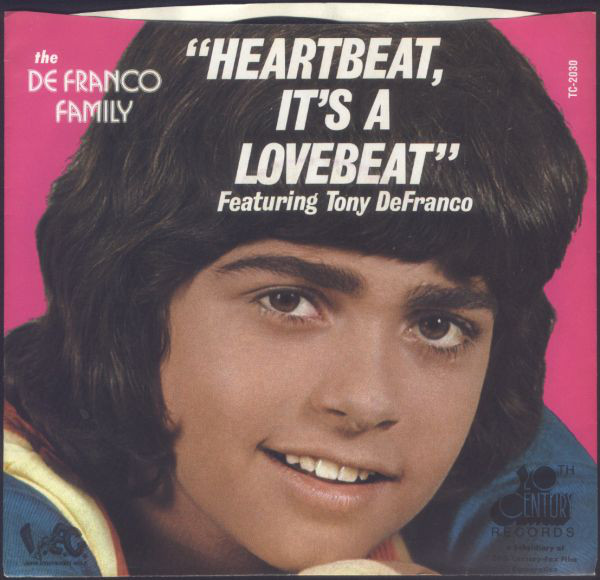
During our travels as the summer months passed, a new song appeared on the local AM stations and started getting heavy play, "Heartbeat - It's A Lovebeat" by a new teenage pop group, The DeFranco Family.
The song spent the summer climbing the charts, and by the time school was about to reconvene that fall, it was a Top Five hit. Its sound was generic kiddie pop from that period, and in hindsight the lyrics were mainly frothy nonsense... but of course all of the young people back then liked it, including myself. But I didn't really pay that much attention to the group itself.
As the start of the new elementary school year approached that fall,
I found myself looking forward to getting back to class, to once again resume my role as the area's #1 primary school paramour. But soon after the start, I found that my star had been eclipsed - ALL the girls would talk about amongst themselves was about how "cute" and "talented" the new group's lead singer, Tony DeFranco, was. They would whisper and giggle to one another about him, and during recess, instead of vying for my company, they would ogle pictures of him culled from the most recent teenybopper magazine. Suddenly, I was yesterday's news - Tony was top dog now, and how could I compete with a genuine rock star, with his sloe-eyed, sultry ‘come hither’ gaze and thick helmet of dark, wavy, young girl-attracting hair? Needless to say, I was consumed with preteen jealousy, and began to hate this little MF with a passion for stealing my mojo. It seemed that he and his family band appeared out of nowhere, just to personally torment me!
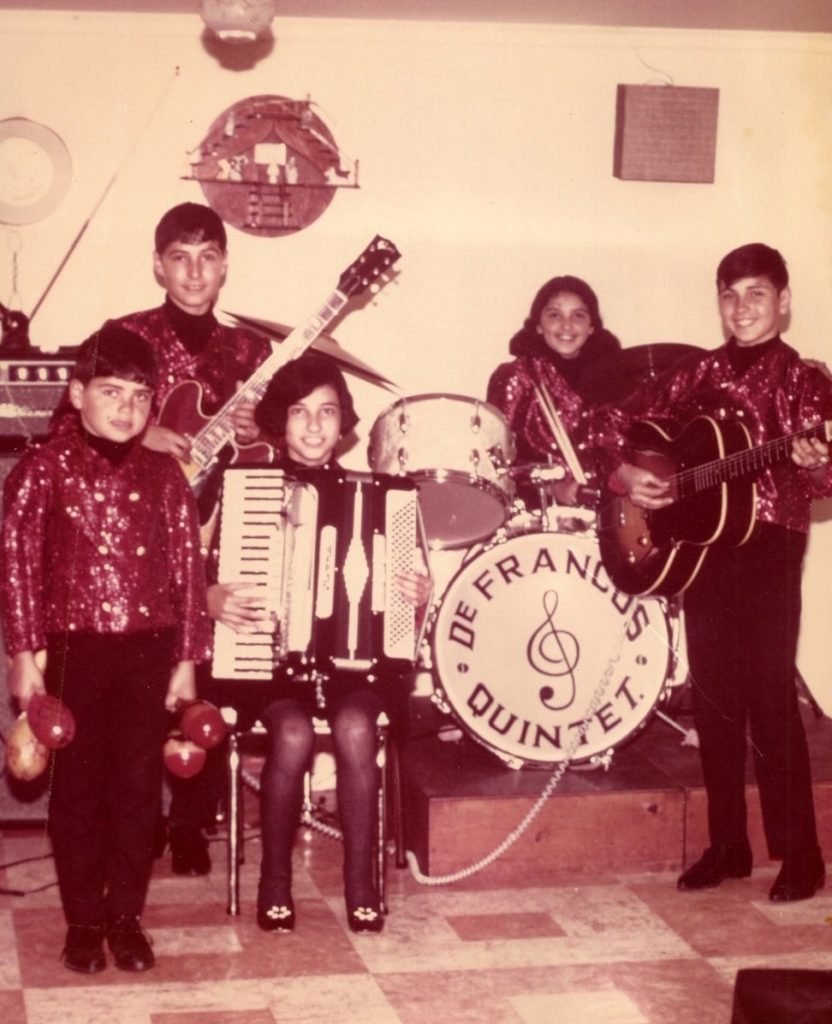
The DeFranco Family were originally from the Niagara Falls, Canada area; specifically sleepy small Canadian towns like Port Colborne and Welland hard by the tourist/resort city, wedged on a strip of land between Lake Erie and Lake Ontario. The siblings (consisting of older brother and lead guitarist Benny, sisters Marisa on keyboards and Merlina on drums, younger brother Nino on rhythm guitar and kid brother Tony as lead singer), children of Italian immigrants to Canada in the 1950s, started a band (The DeFranco Quintet) with their parents' encouragement in the late 1960s, and did the local circuit, playing instrumentals and pop standards at area weddings, bar mitzvahs, store openings, parades and the like. They weren't exactly taking the music world by storm... and even in their out-of-the-way corner of the world, they weren't considered one of the top bands in the area.
But fortunately for The DeFrancos, luck and fate intervened. A local talent scout stumbled upon one of their gigs, taped it, and sent the recording (along with a picture of the band) along to Sharon Lee, editor of Tiger Beat magazine. Ms. Lee liked what she saw and heard enough to forward the material on to the magazine's founder and publisher, Charles Laufer. For Laufer, The DeFranco Family couldn't have come along at a more opportune time.
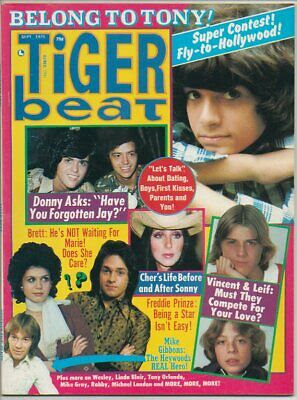
Tiger Beat was founded in 1965 as a fan magazine targeted towards teenage girls, with a heavy emphasis on pop idols and young movie actors who girls of the era found "dreamy" (Decades later, The Simpsons did a wicked - and accurate - send-up of Tiger Beat and similar teenybopper magazines with Lisa Simpson being an avid reader of Non-Threatening Boys magazine). The magazine was essentially a publicity flack journal, featuring wholesome gossip, contests ("Win A Dream Date With...!") and information on the popular preteen entertainment crushes of the period: starting in the '60s with the likes of The Monkees, The Beatles, The Cowsills, Bobby Sherman, and Dino Desi & Billy, and on into the '70s with stars such as David Cassidy, Barry Williams and Chris Knight from The Brady Bunch, The Hudson Brothers,
The Williams Brothers, Shawn Cassidy and Leif
Garrett - and of course, the two top pop titans of the early 1970's, The Jackson 5 and The Osmonds - to name but a few.
Despite being one of the main go-to sources for pop artist news, Laufer and Tiger Beat had no direct stake in any revenues generated by the artists they promoted. In fact, much of the data and interviews contained in their monthly 'zine were paid for by the publisher, not offered for free by the artists' managers. And yet Laufer was in no position to complain about this arrangement; any pushback or negative press on his part would lead to an immediate curtailing of access of that particular actor or singer. Basically, the entertainment industry had Tiger Beat by the balls. Laufer longed for an artist he could take into his orbit to supervise and exploit outside of the influence of these talent managers... and like magic, The DeFranco Family came into his sights as his golden goose.
In the fall of 1972, Lee flew the band out to Los Angeles for a full-fledged audition with Laufer, and he also liked what he heard. The magazine publisher quickly signed the group to an exclusive deal with his company, Laufer
Entertainment, financed a debut three-song demo, and helped secure for them a
recording contract with 20th Century Records. Laufer also began some early tub-thumping for The DeFrancos in the pages of his mag, with the very first mention of the group coming in the November 1972 issue, months before any DeFranco Family product had actually made it into the music store bins.
The DeFranco Family entered United Western Recorders studio in Hollywood (the same place where Pet Sounds and "California Dreamin'" were cut a few years earlier) in February 1973 to lay down tracks for their debut album, utilizing members of the legendary Wrecking Crew as their backing band. The debut single, "Heartbeat - It's A Lovebeat" was released that May, a couple of weeks before the album of the same name hit the shelves, and immediately began climbing the charts.
The success of that single, both in the U.S and internationally, was boosted somewhat by content regulations in Canada (which mandated that stations there give maximum exposure and airplay to local artists), but was mostly due to relentless positive press for the band generated in the pages of Tiger Beat and picked up by other teen idol magazines of the period. Hardly a month went by in 1973 where The DeFrancos, and Tony in particular, weren't featured as cover stars in Laufer's rag. This created a groundswell of support that encouraged radio stations across the U.S. to play the song as much as possible... which simultaneously helped fill Laufer Entertainment's coffers. Laufer's investment in the group began to pay off handsomely.
It can also be argued that another huge factor in The DeFranco Family's success in 1973
came from filling the market void left by mistakes and misfires made by
the two reigning "family" pop bands of the period, the aforementioned Jackson 5 and
Osmonds. After six hit albums in just three years, The Jackson 5 sound
was getting a bit old and tired. Plus, lead singer Michael's voice
began changing in 1972, forcing Motown management and the band's
songwriting team ("The Corporation") to find/craft songs to fit this
vocal shift. The group was enormously dissatisfied with the songs
chosen for their next album, and all of the brothers had begun writing
their own material with the hope of having some of their songs
included. But Motown actively prevented them from recording any of their own material. The resulting album, Skywriter, containing
nothing but label-mandated music, was released in March of 1973. While
it sold relatively well (2 million copies worldwide), it was the first Jackson 5
disc to miss the Top Ten, peaking at #44. The entire situation left
the Jackson family extremely unhappy as to how they had been treated by
the label. The Skywriter situation was one of a number of factors that led to The Jackson 5 leaving Motown two years later.
As
for The Osmonds, they were sort of in the same situation as The Jackson
5, having cranked out four albums in rapid succession (within two
years) and also dealing with lead singer Donny's changing voice. But
the difference between the two bands was that The Osmonds got more
musically ambitious with each album, because their label made some
allowances for them to include their own material. Phase III,
released in early 1972, retained a lot of the bubblegum pop sound that
put them on the map in the first place, with hit songs like "Down By The
Lazy River" and "Yo-Yo". But it also included smatterings of genuine
hard rock. Their subsequent album, Crazy Horses, released in
October of that year, their first with every song penned by a band
member, all but completely dispensed with pop sounds - believe it or
not, but it is truly one of the great early '70s hard rock albums.
Listening to it nowadays, you can't BELIEVE that these five clean-cut boys from Utah recorded it - it's that raw, nasty and good. Both of The Osmonds' 1972 albums made the Billboard Top Twenty.
With
that wave of critical and popular success behind them, The Osmonds then
made a curious move. Being devout Mormons, some of the older band
members were coming of the age to go off on year-long church missions,
which would derail their entertainment careers. The band thought that,
rather than placing the group on hiatus while on religious duties, they
would be better served and reach more people through their music. To
this end, in June 1973 The Osmonds put out an ambitious album called The Plan,
described as "a Mormon concept album with prog rock aspirations" (the
album name is taken from The Plan Of Salvation, a key tenet of the
Mormon faith). All of the songs (recorded in a variety of genres)
relate to aspects of Mormonism. While some saw it as an sincere and
ambitious attempt to celebrate their religion and expose it to the
masses, many critics viewed it as straight-up proselytizing. The disc
was significantly less successful than their two preceding releases (The Plan
peaked at #58 on the Billboard 200, and two singles released from it
both only reached #36), and in hindsight can be viewed as the end of The
Osmonds' chart dominance. The band never put out another album that
made the Top Fifty.
So for The DeFranco Family, in many ways the
timing of their entry onto the market was almost perfect. Their 1973 was full of hit songs, sold-out concerts, TV appearances (they were on American Bandstand a record nine times) and widespread teen adulation. But it
wouldn't last.
After "Heartbeat - It's A Lovebeat" went Gold that fall (and subsequently Platinum by Christmas), the second
single from the debut album, "Abra-Ca-Dabra", also made the American Top Forty by
the end of 1973. This was enough to drag their Heartbeat - It's A Lovebeat release up to a peak of #109 on the album charts. While "Abra-Ca-Dabra" was still on the rise, the label pushed the group back into the studio to record their follow-up, another disc full of poppy, lightweight teenager love songs, along with a cover of the early '60s Drifters hit "Save The Last Dance For Me". The resulting album, also titled Save The Last Dance For Me, failed to stimulate much excitement in the market, only peaking at #163, but the cover song itself was fairly successful, making it into the Top Twenty by May of 1974.
At this point, timing, which had worked to The DeFranco Family's advantage the year before, began to work against them. Family pop groups, both real (like the Jackson 5 and Osmonds) and fake (The Partridge Family and The Brady Kids) began to fall out of favor beginning in 1974, concurrent with the rise of disco. The Jacksons were the only one of those groups to quickly adapt to the times and the new sound, reentering the Top Twenty album charts with their September 1974 disc Dancing Machine, with the album's title track becoming a smash hit (#2 Pop, #1 R&B) that touched off the "Robot" dance craze of the mid-70s. The DeFrancos weren't equipped musically to make that transition, hence the poor reception of their second album. But 20th Century Records failed to recognize this shift in the music market - instead blaming the failure of Save The Last Dance For Me on the producer of their two albums. The label fired him and selected as his replacement longtime music industry insider (and future Lieutenant Governor of California) Mike Curb to oversee the group's career.
Seeing the success the band had with their last hit single, Curb began pressuring The DeFranco Family to rely solely on cover songs for their subsequent releases. The band strongly resisted, and after a couple of Curb-produced attempts to record them as such (with cover singles of "We Belong Together" in 1975 and "Venus" in 1976) that flopped, the DeFrancos terminated their recording relationship with 20th Century Records and their managerial relationship with Laufer and Laufer Entertainment. Other labels weren't exactly lining up to re-sign them, so The DeFranco Family put together a touring show and went out on the road for a couple of years, playing county fairs and less-than-packed Vegas houses before finally throwing in the towel in 1978.
Tiger Beat never stopped trying to promote the DeFrancos (and milking every possible dollar they could out of the group) during the two years (1974-76) they were circling the drain; as late as the fall of 1976, more than two years after their last chart appearance, Tony DeFranco appeared as a magazine cover star. But by that time, the group's brief months of glory and once vast and rabid fan base were far behind them. Too bad. Of course by then, I'd moved on from Wisconsin and elementary school, and the fortunes and fate of The DeFranco Family weren't high on my list of concerns. It was too far in the past and too far removed for me to feel any satisfaction at the comeuppance / downfall of a teen idol who seemingly stole my playground buzz a couple of years earlier.
After the end of their recording career, all of the DeFrancos settled in California and began various careers in film and television production, education and other endeavors. Tony DeFranco is now a very successful high-end Southern California real estate agent with Sotheby's International Realty. All of the siblings are happy and settled in their lives, and remain close - which frankly is a refreshing thing to hear, after so many horror stories about former entertainers sliding into the abyss of poverty and self-destruction. Good on them. Tony, I hereby forgive you.
And here's something for me to give to YOU: both DeFranco Family albums put out by 20th Century Records at the periods indicated:
Heartbeat - It's A Lovebeat, released in May 1973; and
Save The Last Dance For Me, released in the spring of 1974.
These discs were hard as heck to track down; to the best of my knowledge, the albums have been out of print since the mid-1970s, and neither of them were ever subsequently released on CD.
This isn't burningly important or technologically innovative music, and I doubt you'll ever see it honored the Rock Hall of Fame anytime soon. But for those of us of a certain age, these DeFranco Family tunes will take us back to a time in our rapidly receding pasts when there was still seemingly enough innocence and wonder in the atmosphere to popularize lightweight poppy AM radio paeans of young love like these being offered. And if you're not old enough to recall those times, at least have a listen and get a chuckle as to what your parents and/or grandparents thought was 'hip' and 'cool' in the early Seventies. Either way, enjoy, and as always, let me know what you think.
Please use the email link below to contact me, and I will reply with the download link(s) ASAP:
Saying "Thanks" for the music you receive from here costs you absolutely nothing, and yet is worth quite a bit to me… If you can't bother leaving a comment on this blog for the first album/set we send you, don't bother making a request For a second album…