Tuesday, January 19, 2016

David Bowie - Love You Till Tuesday ("Soundtrack" & Film)


It's been a week-plus now since David Bowie's death . . . and it still feels weird. I don't want to overplay the "end of a era" thing, but that's sort of the way his passing feels. And most of the tributes and commentaries that followed in the wake of his death have all, either overtly or not, mentioned the same feeling. The man was one of a kind, and it may be a long time before someone with his creative gifts, innate intelligence, and puckish wit ever passes this way again.

In the past week, Bowie's latest album Blackstar has shot to the top of the U.S. and several international charts, and NINE of his earlier albums also reentered the Billboard 200, including two more in the Top 40: The Best Of Bowie at #4 and The Rise And Fall of Ziggy Stardust & The Spiders From Mars at #21. Radio stations around the world have held week-long tributes - since last Monday, Radio NZ has played nothing but Bowie hits. And music bloggers all over the Internet (myself included) have fallen all over themselves writing about the man and artist and trying to come up with obscure, hard-to-find tidbits of Bowie-ibilia to make themselves stand out from their peers.

I was going to try to avoid doing that . . . but in reviewing the artist's offerings made available on various sites over the past few days, I noted that one interesting artifact appeared to be missing - an artifact that I happen to have in my possession.

In the mid-60s, a teenaged David Jones passed through a series of unsuccessful bands - The Konrads, The King Bees, The Manish Boys, The Lower 3rd, The Riot Squad - most of which recorded non-charting, poorly-received singles. With the emergence of another English David (Davy) Jones, a member of the American pop group The Monkees, Jones
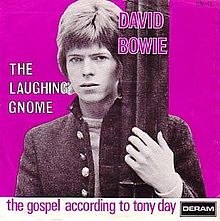
changed his name to David Bowie in late 1966 to differentiate himself. Not that the change in moniker did him any good; he released a solo single in April 1967 (the weird and wonderful/embarrassing (depending on who you ask) children's song "The Laughing Gnome") and his debut album, David Bowie, that June (the same day Sgt. Pepper's Lonely Hearts Club Band was released), both on Deram Records.

The problem with David Bowie especially, in my opinion, is that it's all over the map - on it, Bowie does folk tunes, Anthony Newley-type show tunes, baroque pop, etc.; none of them written especially well. Buyers just didn't know what to make of him; was he 'for real', or just a novelty artist? The result was that they stayed away in droves - neither the single nor the album charted. This would be the last music Bowie released for more than two years (Deram dropped him a couple of months later).

In the interim, Bowie began an intensive course of study in dance and the dramatic arts under renowned choreographer Lindsey Kemp. He immersed himself in lessons in mime, Medieval Italian comedy and avant-garde performance, and began his first serious exploration into creating a distinct persona/personae for himself. David also started performing again, in a folk/Merseybeat combo with mime interludes and poetry readings mixed in, with his new girlfriend Hermione Farthingale (God, how 'English' a name can you get?) and friend John Hutchinson. And through his connection with Kemp, he got a couple of small uncredited parts in British movie and TV productions. Here he is (blink and you'll miss him) as an extra in the 1969 movie The Virgin Soldiers:


Around the same period, Bowie got a new manager, Kenneth Pitt, who believed in David's talent but was annoyed and frustrated by his lack of wider recognition. Pitt wracked his brains to figure out some way to bring Bowie's gifts to the masses. A chance encounter with a West German television producer in late 1968 provided him with what he thought was an answer: Pitt would put together a short promotional film showcasing Bowie's talents. The professionally-produced short would include not only music from David's 1967 album, but also dramatic and mime bits. The German producer broadly hinted that, once completed, he would air the film on Zweites Deutsches Fernsehen (ZDF), the country's public broadcasting station, the equivalent to the American Public Broadcasting Service (PBS). Pitt figured that that sort of exposure might break Bowie out in Europe, with that fame subsequently translating back to Britain. He suggested his plan to Bowie, who also thought it was a boffo idea.

In choosing which songs to feature and dramatize in the film, Pitt and Bowie selected four from David Bowie, along with two new songs David had recently written with Farthingale and Hutchinson, "Ching-A-Ling" and "When I'm Five". Added to these selections was "Let Me Sleep Beside You", a single recorded and rejected by Deram shortly after the 1967 album was released and shortly before the label released him (Bowie wrote this song with a new friend of his, a young American expat record producer named Tony Visconti). Pitt enlisted a Scottish friend who had spent considerable time in the U.S., Malcolm Thomson, as the director, and arranged for a week's shooting at a studio in Greenwich in late January 1969; the schedule was delayed due to Bowie's participation in The Virgin Soldiers, shooting earlier that month.

David arrived at the Greenwich studios that January 26th ready to go in every aspect but one; his hair was unfashionably short, cut to regulation Army length for the war film. Pitt and Thomson were aghast, but quickly improvised by finding a suitable long-haired wig for Bowie to wear throughout the shoot. Bowie also arrived with another piece to include in the production; an unfinished outer space-themed song that he and John Hutchinson had been working on during the prior week called "Space Oddity".

The filming ran into difficulties from nearly the very beginning. Pitt and Thomson began to clash over content, quality and subject matter. I think that Pitt was looking for more of a quickie showreel done relatively cheaply, where Bowie's songs were the standout/featured attraction. Thomson, on the other hand, wanted to add more costumes, camera movement, and artistic nuances into the production. A major point of contention between the two centered on plans for "Space Oddity"; in particular, Thomson wanted to make the part where Major Tom cavorts with the "space maidens" considerably more
sexy and risque than what may have been permitted for German television. Also, a considerable amount of time and effort was expended on Bowie's mime segment, titled "The Mask". As a result of all of this, studio time had to be extended, and the overall cost of the film began to mount.

Finally, after nearly two weeks of filming, the film (entitled Love You Till Tuesday) wrapped on February 7th. Here's a list of the performance pieces on it:
  1. "Love You Till Tuesday"
  2. "Sell Me a Coat"
  3. "When I'm Five"
  4. "Rubber Band"
  5. "The Mask (A Mime)"
  6. "Let Me Sleep Beside You"
  7. "Ching-a-Ling"
  8. "Space Oddity"
  9. "When I Live My Dream"
Pitt immediately contacted his West German friend, to let him know the short was ready for airing . . . but found that the producer had moved on from ZDF, and no one else there was interested in showing a music film by some unknown English artist. Bowie's manager found he had spent all of his money for seemingly nought. Desperate now, Pitt began shopping the showreel around to various British networks and record labels, but no one was interested in anything about it . . .

Well, that is, ALMOST no one.

Ken Pitt was given an audience with representatives from Mercury Records' British subsidiary Philips in the early spring of 1969. The reps found little of interest in the film . . . except for "Space Oddity". From that modicum of interest, Pitt was then able to negotiate a one album deal (with an option for another one or two albums) for Bowie with the label. David was rushed into the studio; "Space Oddity" was recorded that June 20th, and released as a single on July 11th, 1969, just in time to take advantage of the Apollo 11 mission (the first lunar landing) nine days later. The single proved to be a hit in Britain, where after a slow start it peaked at #5 (it did nothing in America on its initial release, stalling at #124 - but on its re-release in 1973 in the wake of Ziggy Stardust, it reached #15, his first U.S. hit single).
This song, and the subsequent album David Bowie (aka Man Of Words/Man Of Music in the States) released in November 1969, launched David's career.

As for the film: apart from its use to secure the Mercury/Philips deal, Pitt found no immediate further use for it and filed it away, where it sat unseen for years. But in the early '80s, with the advent of home video, Bowie's former producer (the two split in 1971) realized he may have something golden on his hands. He contacted Polygram (by
then the holding company for Philips) and made a deal for its release; Love You Till Tuesday went on sale in VHS format in May 1984. Not to be outdone, Deram Records, the label holding most of the material used in the movie, released a "soundtrack album" (actually, just the versions of film songs recorded for David Bowie, along with non-film singles from the same period) that same month. Here's the song lineup:
1. Space Oddity
2. Love You Till Tuesday
3. When I'm Five
4. Ching-A-Ling
5. The Laughing Gnome
6. Rubber Band
7. Sell Me A Coat
8. Liza Jane
9. When I Live My Dream
10. Let Me Sleep Beside You
11. The London Boys
Looking at the film nowadays, it's hard to properly consider it for its standalone artistic and musical merits in the context of its time. It's very much a time capsule of late '60s "Swinging London" styles and attitudes, and as such, in this day and age it's an effort to take it all seriously. For example, it is difficult to watch Bowie, the dapper young puka-beaded gentleman, lounge suggestively on pillows while warbling the title track and resist the urge to shout "Yeah, baby!" in a cheesy Austin Powers accent:

(Did you hear him briefly snicker halfway through the video?  David knew full well what the story was, and what he was doing . . .)
All in all, there's nothing in Love You Till Tuesday, either the album or the film, that's particularly deathless or essential in Bowie's career. Other than "Space Oddity", which was considerably revamped for its summer 1969 release, most of the other tunes here are either lightweight or forgettable. But both works of art stand as interesting artifacts in the early design and development of David's sound and vision of himself to come. The seeds of Major Tom, Ziggy Stardust, Pierrot from Scary Monsters, and the otherworldly/alien Bowie can be found in his performances here.

And what's also great to see and hear here is Bowie as a young man - full of energy, life and happiness, presenting his compositions and ideas to the world with a knowing smile on his face and absolutely no fear whatsoever. No matter what other changes he brought to his act and career, that part of him always stayed consistent and true. Thank God for that.

So, for your consideration, here's:
  • The album Love You Till Tuesday, released by Deram Records on vinyl and cassette in May 1984 (not released on CD until 1991);
  • The film Love You Till Tuesday, produced in 1969 but released by Polygram in May 1984. The complete 30-minute film is exceedingly difficult to find on the Web; so here it is, in .mp4 format.
I promise that this will be my last Bowie post for the foreseeable future. So enjoy, and as always, let me know what you think.

Please use the email link below to contact me, and I will reply with the download link(s) ASAP:
Love You Till Tuesday (album): Send Email

Love You Till Tuesday (film): Send Email

Monday, January 11, 2016

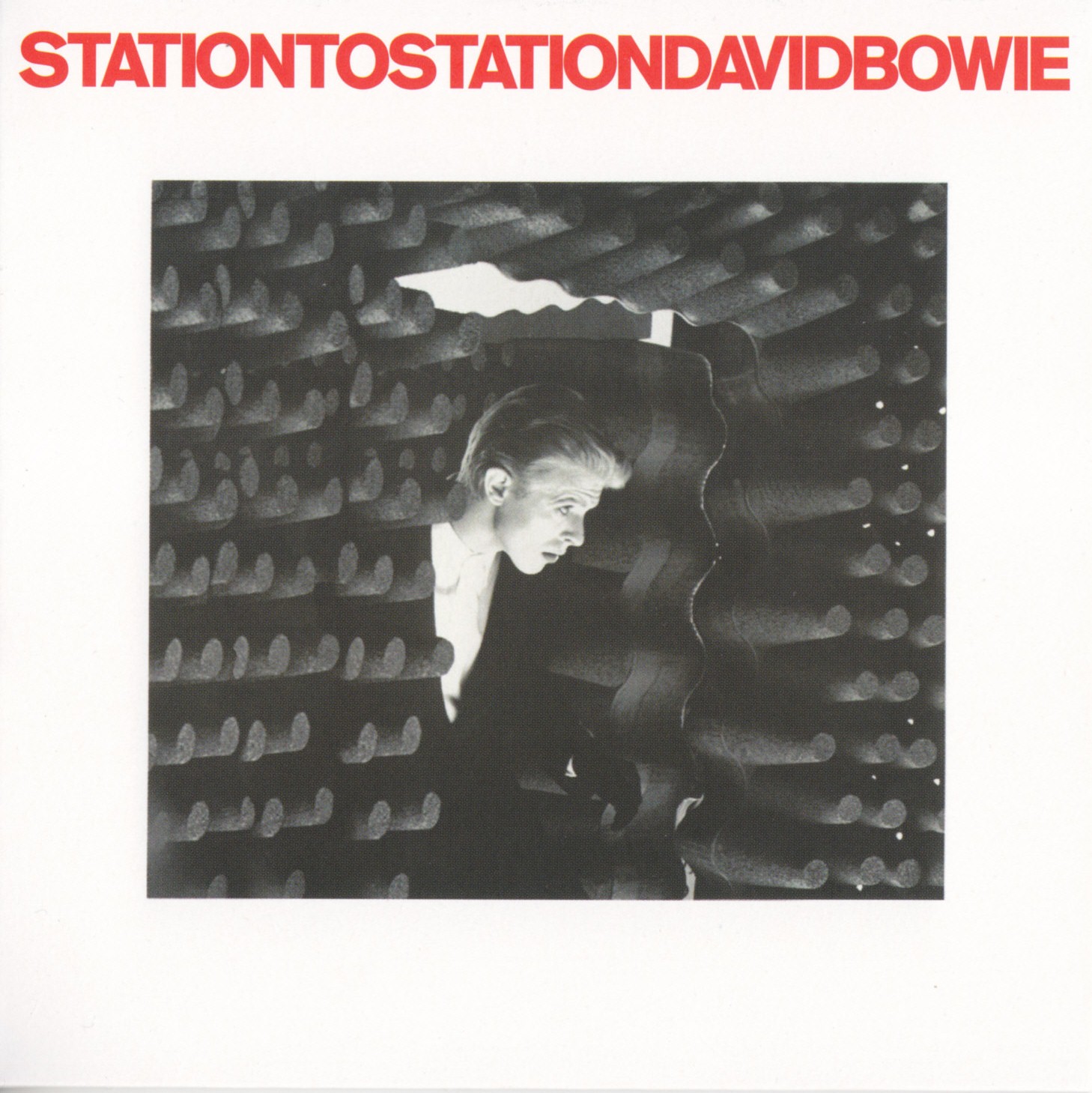
David Bowie - Station To Station (Deluxe Edition) (3 Discs) (RS500 - #323)


I was up fairly late last night - I've recently been having a little trouble falling asleep before midnight. At around two a.m., I received a Skype call from my old buddy Rob, who'd just returned to Christchurch after spending the past few days mountain biking near Arthur's Pass. I've mentioned Rob on occasion in this blog; he's been one of my best friends for over twenty years now, and in that time we've had some hilarious adventures and fun experiences together in both New Zealand and America.

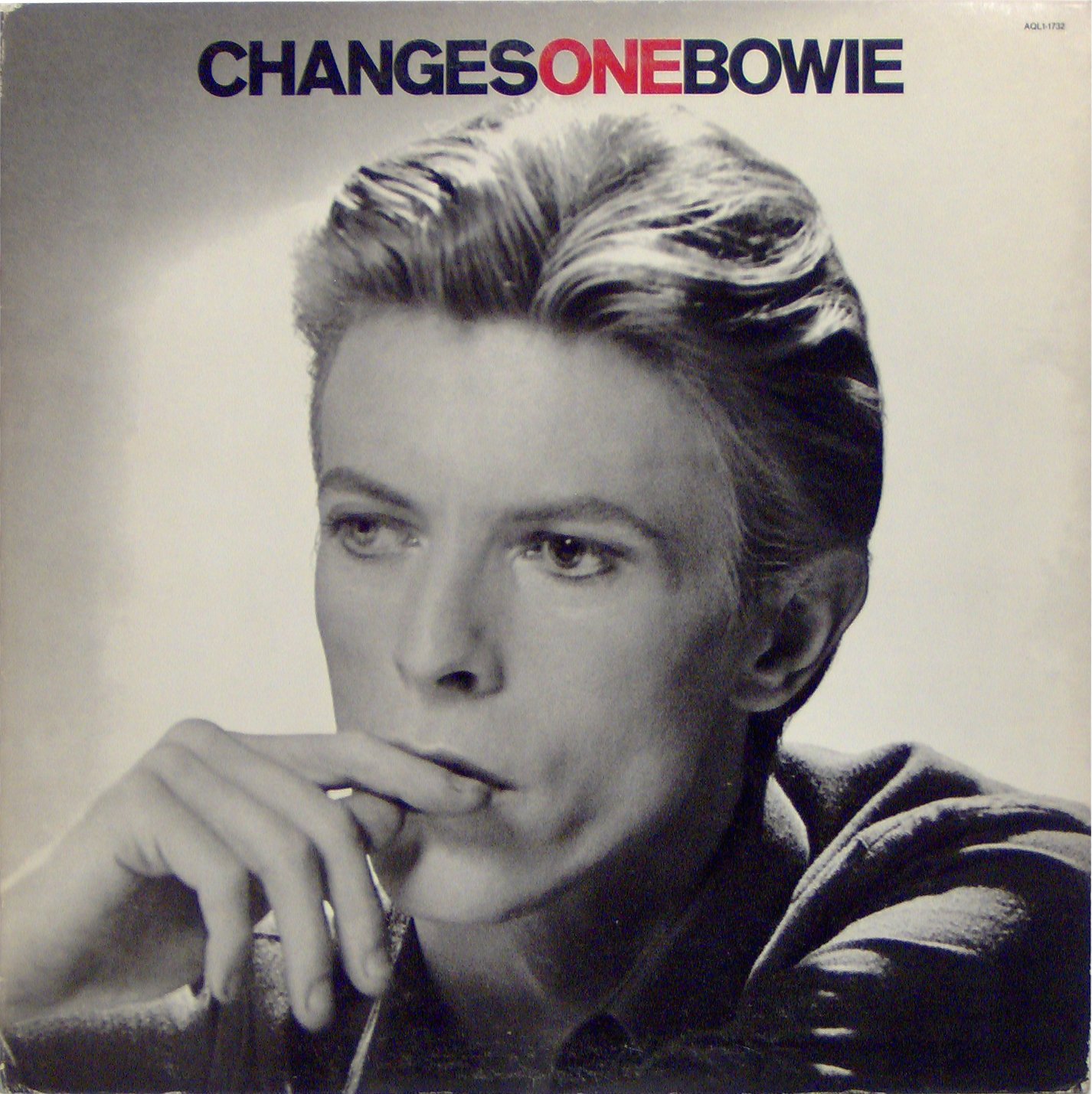
In addition to being my friend, Rob is one of the most rabid, knowledgeable David Bowie fans I know. He was into Bowie before he reached his teens; the first album he ever owned was Changesonebowie, given to him by his mother on his birthday in 1976. By his own admission, this introduction to Bowie's music changed Rob's life. He quickly morphed into a dedicated follower, and fell in with a small but selective group of hard-core Bowie fans in Christchurch, cutting his hair and dressing in flares in emulation of his musical idol (much to the amusement of his infinitely patient and devoted mother . . . and the chagrin of his staunch, straight-laced career Air Force father, who didn't have the faintest notion as to why his son was acting so "crazy"). Rob was amongst the crowd who attended the legendary concert at QE2 Stadium on November 29th, 1978 on the Australasian leg of his Isolar II Tour that year, Bowie's sole South Island show for the entirety of his career.

In the years that followed, Rob's fandom never waned. He managed to assemble quite a Bowie collection, probably the best in New Zealand - rare albums and bootlegs, books, photographs and lithographs. His travels around the world have taken him to places renowned in Bowie-lore; Rob has posed in front of the gate to Château d'Hérouville in France, where most
of Low was recorded, and made a special trip to Berlin to tour the Hansa Tonstudio and stand in the exact spot where "Heroes" was recorded. For over forty years, he remained a devoted Bowie fan, and over time he has greeted each new release, no matter how poorly reviewed, with genuine adoration and enthusiasm. Just as The Fall are my all-time favorite artists, David Bowie has long been Rob's Number One.

Anyway, last night, Rob began to tell me about his weekend and a minor sports injury he suffered while riding around, but our Skype chat was interrupted when he received a call via his regular phone, so he asked me to hold for a couple of minutes. I whiled away that time sifting through my email messages and browsing the news on the Web, nothing major or out-of-the-ordinary, just another night. So I was jolted when I suddenly came across the headline "David Bowie Dead at 69".

I instantly thought "This has got to be bullshit." After all, David's latest album, Blackstar, had just been released two days prior on his birthday, to rave reviews. Plus, there hadn't been the slightest hint or warning in the news that he had been ill. I figured that it was a album release publicity-driven hoax, and began to dismiss it from my mind . . . but I started checking into the story anyway, just to be sure.

It didn't take long to find that the news was not specious, but accurate - David Bowie had died a couple of hours earlier. "Jolted" is an inadequate word to describe my initial thoughts and feelings once I received confirmation of this story . . . with my second thought being, "How am I going to break this to Rob?" I knew it was potentially devastating, heartbreaking news, and I wasn't looking forward to telling him . . . but he had to know, as soon as possible - and it's always good to find these sort of things out from your friends. I sent him a quick text message telling him to get off the phone as quickly as he could, as there was some important news I had to tell him . . .

When Skype resumed, I told Rob the news, in a way that let him know I wasn't screwing around or pulling his leg. I've known this guy a long time . . . and I have to say I've never seen him more stunned. We spent the rest of the call reminiscing, commiserating, and reflecting on the life and work of Bowie, and what he's meant to us over the years.

To be honest, I didn't know that much about David Bowie until I was well into my teens - my first full-on encounter with all things Bowie occurred in late 1979, when I saw him perform on NBC's Saturday Night Live. As I alluded to an earlier post, in much of America of the 1970s, Bowie was considered a "weirdo", a cross-dressing English fop with a flair for flamboyant, garish makeup and outlandish rock 'n' roll alter egos. Of course, by the late '70s, he'd long left a lot of that stuff behind - Bowie was constantly modifying and experimenting with his sound and his look. But the majority of Americans didn't keep up with his ever-changing moods, methods and influences - in this country, first impressions meant a lot. And the impression that the majority of Middle America still had of Bowie - the otherworldly Major Tom and Ziggy of the late '60s/early 70s - was the impression that still lingered as the Eighties approached.

But long before his SNL gig, Bowie had begun taking steps to make himself more accessible and acceptable to the American public at large. The original concept behind his 1973 album Pin Ups was to present an album of cover songs by '60s British rock and pop artists (The Pretty Things, The Merseys, Them) to an American audience that might not have been aware of them. This was to have been followed by another album covering American artists from the same period (the second
part of this plan was eventually scrapped). After 1974's Diamond Dogs, Bowie permanently moved away from glam and on his next album, 1975's Young Americans, he began showcasing his latest musical influences, American R&B and Philly soul. His plan seemed to be paying off here; Young Americans went Gold in the States and produced his first U.S. #1 hit "Fame".

And of course, a big move was his appearance on Bing Crosby's Merrie Olde Christmas holiday special on 30 November, 1977. As I mentioned in an earlier post:
"People forget nowadays, but back in the mid-70s Bowie was considered to be an out-and-out freak by most of Middle America . . . so it was somewhat of a shock and an enlightenment for a lot of people seeing the friendly, polite, 'normal' family man Bowie warbling Christmas carols with Mr. Wholesomeness himself."
So the stage was pretty well set for him to continue his assault on the U.S. market through his Saturday Night Live appearance, his first national television performance. David made the most of this opportunity.

Bowie's appearance on SNL was in many ways a concise summation of his career up to that point. He and his band (supplemented by up-and-coming (but then generally unknown) New York performance artists Joey Arias and Klaus Nomi) opened with "The Man Who Sold The World", from his 1970 album of the
same name (The Man Who Sold The World is regarded by many music critics as "where the [Bowie] story really starts", with the artist abandoning much of the folky, acoustic music of his first two '60s albums and moving into the hard rock/glam rock genres). Later in the show, he blazes through "TVC 15", off of 1976's Station To Station (by this album, he left behind his early '70s glam rock personae of Ziggy Stardust/Aladdin Sane and the "soul boy" funk leanings of his previous album, 1975's Young Americans, and began forging a
hybrid sound combining his earlier influences with that of German electronic music). And the song Bowie closed the show with, "Boys Keep Swinging", from Lodger released earlier that year (Lodger was the last of Bowie's celebrated "Berlin Trilogy" (along with Low and "Heroes") of abstract, minimalist albums with collaborator Brian Eno, but was considered the most accessible and commercially successful).

Here's a clip of the first song from the show, "The Man Who Sold The World":


I thought the costume that Bowie wore for this song was amazing; basically a rigid Bauhaus/Dada-inspired shell tuxedo that held him immobile - Arias and Nomi had to carry him out to
his place on stage. Apparently, I wasn't the only one affected by his getup; Nomi was reportedly so impressed with the costuming that he adopted a variation on the huge plastic tuxedo Bowie wore as his own signature look, wearing one on the cover of his first album, 1981's Klaus Nomi, and performing in it until his death from AIDS in 1983.

What followed later in the show was "TVC 15", with another stunning and androgynous costume change that Bowie pulls off flawlessly, a 1940s-style Lennon Sisters wide-shouldered dress suit and sheath skirt:


And who could forget the pink poodle with the monitor in its mouth, and the herky-jerky backup singing?

The strangest performance occurred at the very end of the program, just before the host/cast farewells and closing credits. For "Boys Keep Swinging", Bowie's head is shown atop what appears to be a man-sized wooden puppet body, which during the performance cavorts and bounces around the stage in a very weird, off-putting yet mesmerizing way:


Bowie was pissed that the NBC censor bleeped out the "other boys check you out" line during the song, but he got his revenge and the last laugh - take a close look at what happens to the puppet's pants at the end of the tune! All in all, it was truly a strange, surreal "WTF?" moment in television history. I didn't know what to make of it; you can tell by the studio audience reaction that they didn't know what to make of it all either.

In any event, as strange as it was to see unusual performances like this on American national TV, I was entranced and impressed by Bowie's art, and finally realized what I'd been missing all those years. December 15th, 1979 at 1:00 AM was the moment I finally became a David Bowie fan - a decision I've never regretted.

I spoke with Rob again for a bit this afternoon. "Mate," he said, "I don't normally like to admit this, but I'm feeling a little . . . weird and vulnerable since I heard the news last night." I know exactly what he means. The passing of an entertainment icon is normally a cause for acknowledgement, appreciation and tribute from fans and contemporaries. But in the vast majority of these instances, this "moment of reflection" is just that - a short-lived moment, and after which, we all go on with our lives. Perhaps all of this is too recent to make a truly subjective determination, but David Bowie's death feels . . . different, as though something has definitely changed in the world.

I've had conversations with other friends today regarding his passing, and they all feel the same way. The recent deaths of Lemmy and Natalie Cole were sad, but they haven't been lingered over, analyzed and eulogized in the press and on social media as Bowie's has been. I think that may be due to the nature of the man and what he brought to the world for the past fifty years. To quote Rob: "Bowie didn't write music; he made accessible art." In those words lies the essence of what made Bowie so great, why he will be missed, and why his absence will leave such a void.

During our conversation late last night, Rob and I asked one another not what our favorite Bowie album is, but even more narrowly, what our favorite Bowie SONG is. Here's mine - the 1973 alternate demo version of "Candidate", included as a bonus cut on Diamond Dogs:


Rob's all-time fave is "Always Crashing The Same Car", from Low:


Enough of all of this - there have been more than enough tributes today, and there are certain to be tons more coming in the next few days. I don't expect my reflections and memories of David Bowie will have that much import or impact in the grand scheme of things. I just felt the need to pay a small tribute to a visionary artist who is now no longer with us. We may not see the likes of David Bowie again . . . but isn't it great that, in the millions and billions of years that this planet has existed, we all were lucky enough to share this planet at the same time with him?

In honor of the life and memory of David Bowie, for my buddy Rob, for myself, and for you all, I proudly offer the deluxe edition of the 1976 album Station To Station. This is the September 10th, 2010 reissue, which includes not only the original album, but the entire show at Nassau Coliseum in Uniondale, New York on March 23rd, 1976 (on two bonus discs).

In addition, also offered here are the three performance videos from Saturday Night Live shown above, in .mp4 format. These are notoriously hard to find on the Web; NBC and Lorne Michaels are vicious about keeping SNL content off of free sites like Vimeo and YouTube. The ones included here are burned off of my SNL DVDs I purchased upon their release many years ago; I own the first five seasons of the show, which are really the only seasons anyone needs to care about.

Anyway, enjoy, and as always, let me know what you think.

Farewell, Thin White Duke.

Please use the email link below to contact me, and I will reply with the download link(s) ASAP:
Station To Station (Deluxe Edition): Send Email

Saturday Night Live performances, December 15th, 1979: Send Email


[Hmm . . . it appears that the performance videos I embedded above aren't being displayed in this post anymore; I guess Blogger.com has an issue with having them be seen here. No matter - the download links are still available, and I'll be happy to send them along to you.]

David Bowie (1947-2016)


"Chameleon, comedian, Corinthian and caricature".

I'm speechless . . . what a loss.

Can't even write about this now.  More later.

Farewell, Thin White Duke.

Friday, January 1, 2016

The Clash - Clash On Broadway (The Outtakes)


Well, let's start 2016 off right - with some Clash!

From Sharoma's superb site, reviewing a multitude of Clash bootlegs and rarities, comes the following quote taken from his excellent write-up regarding the super-hard-to-find (except here, of course!) Demos, Outtakes, Alternates (D.O.A.) set:
"Along with Clash On Broadway Outtakes and The Rat Patrol, [you'll] almost have all The Clash demos, outtakes and alternates."
Since the other two mentioned above have long been available on this blog, I figured I might as well post the third and final selection in the band's bootleg triumvirate!

Despite this disc's professionally-produced liner notes and cover, which are identical to the 1991 three-disc Clash on Broadway Legacy Records release, this release is NOT an official part of that set. The original compilation (which included early singles, some live recordings, and a couple of previously unreleased tracks and demos) covered the period from the band's 1977 debut through to 1982's Combat Rock. It notably
included nothing from the critically and commercially reviled 1985 album Cut The Crap, about which I've had more than enough to say about in the past. The Outtakes (or Clash On Broadway (Disc 4), if you will), is an attempt to fill in that missing piece, and also provide fans with additional rarities and demos left off of the box set (which, in my opinion, had a pretty scanty selection).

Sharoma's site only details the last ten tracks for this boot (I stand by his reviews of these songs); I got the extended version from somewhere - I can't quite recall where or when, it's been so long. Here's the back cover with song details:


Highlights from the first half include some live concert takes by the post-Mick Jones Clash in Seattle, Glasgow and Paris (as much as I've badmouthed this lineup over the years, I must say that overall, they didn't sound that bad in concert); radio news reports of the chaos surrounding the Clash's legendary 1981 stand at Bond's International Casino in New York; a full-length version of "Dirty Harry", the early working title for Sandinista's "The Magnificent Seven" (a shorter version of this song is contained on my previous Clash post, Rocker Station); and in my opinion the only decent song off of Cut The Crap, "We Are The Clash". There are a couple of things here that have appeared elsewhere: "Rock The Casbah (with Ranking Roger)" was included on Rat Patrol From Fort Bragg, and "Guns Of Brixton (alt. mix)" was taken off of the Return To Brixton EP. But overall, the selections here are truly hard to find and well thought out.

So, for my first post of the new year, here's Clash On Broadway (The Outtakes), complied in 2002 by an European bootleg label called Scotty Snail. Enjoy, Happy New Year, and as always, let me know what you think.

Please use the email link below to contact me, and I will reply with the download link(s) ASAP:

Send Email

Tuesday, December 22, 2015

Minutemen - Double Nickels On The Dime (RS500 - #411)


Dennes Dale "D." Boon of The Minutemen died thirty years ago today, on December 22nd, 1985. It is truly hard to fathom that it's been that long.


The first Minutemen song I ever recall hearing was "Political Song For Michael Jackson To Sing". I was listening to WHFS, the local alternative station, in my dorm room at Bancroft Hall shortly after the beginning of my youngster (sophomore) year at the Naval Academy in the fall of 1984 when this tune came on:


I don't know what it was about that song that grabbed me; was it the chugging melody? The plaintive, stop-start vocals? Or one of the few lyrics I could make out, "We'd cuss more in our songs and cut down the guitar solos" - followed immediately by a cheeky guitar solo? I didn't know much about The Minutemen prior to 1984; the little I'd heard about them was that they were "just another" California hardcore punk band, which formed my generally negative impression of the group before I'd ever heard a single note of their music. But hearing this weird, complex, melodic, funny song on the radio was a revelation, and completely turned my mind around regarding this band. That weekend, I made my way to Oceans II Records downtown and purchased the cassette version of the album this song was on, Double Nickels On The Dime.

Based upon what I knew of the band's history, I was a little concerned about what I would find on this album. Guitarist Boon and bassist Mike Watt were childhood friends, having met at the age of thirteen in San Pedro, California in 1971, after Watt's military officer dad was transferred to the area from Maryland a couple of years earlier. They started playing music together while still in junior high, playing rock covers and the like until their last year of high school, when they got into punk. The due began writing their own songs, and formed their first punk band, The Reactionaries, in 1978. When that group broke up eighteen months later, Boon and Watt formed Minutemen, with their former drummer from The Reactionaries, Ed Hurley, joining them a few months later.

The Minutemen began releasing records through Long Beach-based SST Records; their first EP, Paranoid Time was out before the end of 1980. Their first effort on vinyl completely lived up the the "loud/fast/hard" punk ethos - Paranoid Time blasts through its seven songs in six and a half minutes, and for the most part the tunes are what you would expect - abrasive guitars, thrashing drums, shouted vocals, everything at top speed. The disc was a minor hit in punk circles, quickly selling out its initial 300-copy pressing. Impressed, SST label head Greg Ginn invited the band to record a full-length album the following year. The Minutemen went into the studio for a single late-night session in the late summer of 1981 and laid down The Punch Line, which was released in November 1981.

Like their debut EP, The Punch Line is notable for the brevity of its songs; the album blazes through eighteen songs in fifteen minutes, with no song running longer than a minute and a quarter. But what's also notable about this release is the remarkable musical development of The Minutemen in the few short months since their first release. There's still some thrashing and shouting on this album, but some songs are melodic, tuneful in almost a prog-rock, free-form jazz sort of way. For instance, check out this song, "The Struggle":


I think that, despite their immersion in the early California punk scene (they were huge Black Flag and Flesh Eaters fans), a lot of what influenced The Minutemen's music came from their time as a rock covers band, playing music from groups they admired like Steely Dan, Creedence Clearwater Revival and Alice Cooper. Of course, coming out openly and admitting that they liked bands like that would have drawn the ire and opprobrium of their rabid punk fan base. So in a sense, Watt, Boon and Hurley "camouflaged" this rock/pop aesthetic with enough punk-y bells and whistles to be palatable for their crowd.

The Punch Line was the first Minutemen release that got some serious notice by the mainstream rock press, many of whom recognized early on that this was no ordinary punk band. The band continued to garner critical praise with their second full-length album, What Makes A Man Start Fires?, released in January 1983. All of this set the stage for their magnum opus, Double Nickels On The Dime.

Like I said above, at the time I purchased this album I didn't know a lot of details of the band's early history that I noted above. I knew that they were on SST, home of Husker Du, another California hardcore punk band. I'd heard a couple of cuts from the latter band's Zen Arcade (released on the same day as Double Nickels) and frankly, they weren't to my taste. So I still thought I was screwing myself over by purchasing an album based on my impression of a single song. As it turned out, I couldn't have been more wrong - Double Nickels On The Dime is a fantastic album, the definitive expression of what The Minutemen were all about - eclectic, thoughtful, tuneful, sharp, funny, introspective. As good as "Political Song . . ." was, there were plenty more on this album that struck my fancy. But probably my favorite tune here is "History Lesson, Part II", where D. Boon sings about how the band came to be, and specifically about his relationship with his band mate and friend Mike Watt:


The first line of this song, "Our band could be your life", is now iconic, along with "Punk rock changed our lives." "History Lesson, Part II" is an ode to a scene that was fast disappearing (in many ways, the release of Double Nickels marked the beginning of the end of the scene the band came up in. According to American Hardcore: A Tribal History author Steven Blush, this album (along with Zen Arcade), was "either the pinnacle or downfall of the pure hardcore scene."). Bands like Black Flag also began to ignore the rigid rules of their genre, and move away more and more from the thrash-and-bang sound. "History Lesson, Part II" is also one of the best friendship songs ever written - Mike Watt wrote the song as a tribute to D. Boon, but Boon ended up singing it and conveying his respect and affection for his old friend back at him.

Double Nickels On The Dime was met with near-universal acclaim upon its release - influential Village Voice critic Robert Christgau gave the album an "A-", then later admitted he underrated it. Even the critics and publications who didn't fully appreciate the disc at the time have made an effort in following years to rectify their error - Rolling Stone originally gave it 3 1/2 stars, but when it was re-reviewed in 2004, the magazine upgraded the album to "classic" status, a full five stars. Even with all of that, Double Nickels wasn't a huge seller; in its first year, only about 15,000 copies were sold (including the one I bought). That wasn't too shabby a result for for an indie band, but not enough to get you onto the Billboard 200. Still, to this day, the album remains The Minutemen's best selling record.

Even with all of the critical acclaim and their relentless touring in support of their record during 1984 and 1985, The Minutemen and its members weren't exactly household names in 1985. So D. Boon's death in a car accident that December wasn't big news in a lot of quarters. I was fairly plugged in to what was happening in the music world then, so I heard about it the day after it occurred, while I was home on Christmas vacation. From what I understand, Boon was sleeping in the back of a van being driven by his girlfriend through Arizona when the rear axle suddenly broke. The van immediately lost control and rolled off the side of the highway; Boon was thrown out the rear door and broke his neck, killing him instantly.

When I got the news, I got the same weird feeling in the pit of my stomach that I'd had a couple of months earlier, when I learned that The B-52's Ricky Wilson had also died unexpectedly (reportedly, at the time, of "cancer"; it was much later that it was revealed he had perished of AIDS). It was odd and sad to see musicians like these at the top of their game succumbing at such early ages to illnesses and accidents. D. Boon had a lot left to offer the music world; Double Nickels was only the band's third album. With every release they were expanding their melodic focus; it would have been cool to see where The Minutemen would have gone, had Boon remained alive.

But all in all, that feeling of loss I had was shared with very few others, just folks who knew and loved the band. The nearest analogy I can think of regarding the reaction to D. Boon's death was when guitarist Dimebag Darrell was shot and killed on stage in Columbus, Ohio in 2004. In certain quarters, Dimebag was a legend, the exciting and innovative musician behind Pantera and Damageplan. But I'll be willing to bet that the average man in the street had little if any idea who Dimebag Darrell was on the night of his death, why he was so important to music, and why his fans reacted with an outpouring of genuine despair and grief at his passing. To most people, he was "just another metal guitarist" . . . just as D. Boon was "just another punk rocker". But they were both much more than that, as understood by their true fans and supporters, and the music world lost something interesting and special with their passing.

Thirty years have now gone by, and for the most part, the memory of D. Boon has faded from general knowledge. But for a few, who still revere the legendary music that The Minutemen left behind, the spirit of Boon still endures. After a period of depression and seclusion in the wake of Boon's death, Mike Watt and Ed Hurley resumed their music careers, first in fIREHOSE, and later with other bands and their own solo work. They are still the keepers of the old band's flame, and in interviews wax nostalgic over the sounds they made together with their long-lost friend. Even after all these years, Watt still calls Double Nickels On The Dime "the best record I ever played on." Damn straight.

I was planning on writing a more in-depth history of the band and their music (especially this album) and a fuller account of the life and death of D. Boon here, but it's already been done, probably better than anything I ever could have written - here it is, if you're interested. It comes highly recommended.

Anyway, in memory of D. Boon, here's the album, released on SST Records in July 1984. Enjoy, and as always, let me know what you think.

Please use the email link below to contact me, and I will reply with the download link(s) ASAP:

Send Email

Sunday, December 20, 2015

Various Artists - Punk Rock Xmas


More Christmas stuff . . . generally speaking.

I don't know if I need to elaborate much about this offering; you pretty much know what you're getting here. There are more than a few of these types of compilations out there, filled with noisy, shambolic renditions of traditional holiday songs or barely coherent Christmas originals performed by punk bands old and new. But in my opinion, this one's the best of the lot - at least, I think it is; it's actually the only one of these sort of things that I own. Someone sent this to me years ago, I can't even recall what year. During the year, I don't pay much attention to it - and every December, I try my hardest to ignore it, but I usually end up playing at least a couple of cuts off of it as the holiday approaches.

Here's the lineup:
1. (It's Gonna Be A) Punk Rock Christmas - The Ravers
2. Silent Night - The Dickies
3. Hooray For Santa Claus - Sloppy Seconds
4. Fuck Christmas - Fear
5. A Merry Christmas - The Greedies
6. There Ain't No Sanity Claus - The Damned
7. Homo Christmas - Pansy Division
8. It's Christmas - Bouquet Of Veal
9. Merry Xmas Blues - The Celibate Rifles
10. Merry Christmas (I Don't Wanna Fight Tonight) - Ramones
11. Deck The Halls - Metal Mike Alison And Julia
12. Feliz Navi Nada - El Vez
13. Run, Run Rudolph - The Humpers
14. Daddy Drank Our Xmas Money - TVTV$
15. Here Comes Santa's Pussy - The Frogs
16. Christmas Christmas - Mojo Nixon
17. Mr. Grinch - D.I.
18. White Christmas - Stiff Little Fingers
This disc contains some touchstones of the punk/Christmas music hybrid genre, including: "Daddy Drank Our Xmas Money"
by TVTV$; The Humpers' rockin', straight-ahead version of Chuck Berry's classic "Run Run Rudolph" (one of my personal favorites); Sloppy Seconds exquisitely stupid cover of an exquisitely stupid holiday song, "Hooray For Santa Claus" (from the 1964 film Santa Claus Conquers The Martians, widely considered one of the worst movies ever made); and what is quite possibly the definitive punk rock Xmas song, "Fuck Christmas" by Fear.


Again, what else can I say? If you like this sort of stuff, this post will be right up your alley. If you don't . . . well, give it a shot anyway, at the very least for the sake of a laugh and a short respite from the overload of sappiness and saccharine that usually defines the holiday season. Sometimes, you need to tell Frosty with his hat and Charlie Brown with his little tree to get lost for a little while!

So, for your holiday listening pleasure, here's Punk Rock Xmas, a compilation released by Rhino Records on October 10th, 1995. Enjoy, Merry Christmas, and as always, let me know what you think.

Please use the email link below to contact me, and I will reply with the download link(s) ASAP:

Send Email

Monday, December 14, 2015

Alvin & The Chipmunks - The Chipmunks Greatest Christmas Hits


More Christmas music for you . . . This one's all but guaranteed to drive you and your household up the wall! Here's the lineup:
1. The Chipmunk Song (Christmas Don't Be Late)
2. Here Comes Santa Claus (Right Down Santa Claus Lane)
3. Rudolph, The Red-Nosed Reindeer
4. Up On The House-Top
5. Silver Bells
6. All I Want For Christmas (Is My Two Front Teeth)
7. It's Beginning To Look Like Christmas
8. Jolly Old Saint Nicholas
9. White Christmas
10. The Twelve Days Of Christmas
11. Deck The Halls
12. Wonderful Day
13. Santa Claus Is Comin' To Town
14. Frosty The Snowman
15. Have Yourself A Merry Little Christmas
16. We Wish You A Merry Christmas
17. The Chipmunk Song (Christmas Don't Be Late)
This album features selections from two previous Chipmunks holiday albums, 1962's Christmas With The Chipmunks and and 1963's Christmas With The Chipmunks, Vol. 2. Both of these albums were HUGELY popular back in the day; both went platinum (over 1 million copies sold) and made the Billboard charts in their
respective years, with the latter disc making it into the Top Ten and spending three months on the charts. Not too shabby a result for a former down-and-out bit actor and small-time composer, Ross Bagdasarian, who in 1958 spent the last of his cash on a varying-speed tape recorder and started messing around with it, achieving fame and fortune as David Seville with The Chipmunks and other novelty songs (including the hit "Witch Doctor").

The first song, of course, is a classic, with most of the others falling into either the delightful/adorable and/or annoying/execrable camp, depending upon your mood and tastes. The final song on this disc is the strangest one, a 1969 collaboration with popular boogie-rock band Canned Heat, then at the height of their fame. I found this brief description from a Canned Heat band bio:
In an incongruous move, the band next released a Christmas single. The “A” side, “The Chipmunk Song,” paired Canned Heat with their Liberty labelmates, the Chipmunks. The “Chipmunk Song” wasn’t actually the same song as the Chipmunks’ similarly titled 1958 chart-topper, but it was a good-natured boogie containing humorous dialogue between Bob Hite and the Chipmunks (Simon, Theodore and Alvin… named after executives at Liberty).
 
For good or ill, this stuff IS Christmas music - I leave it to you to determine your level of tolerance.

So here you are: Alvin & The Chipmunks' The Chipmunks Greatest Christmas Hits, a "best of" compilation of their first two holiday albums along with a bonus cut, released by Capitol Records on September 21st, 1999. Enjoy, happy holidays, and as always, let me know what you think.

Please use the email link below to contact me, and I will reply with the download link(s) ASAP:

Send Email

Thursday, December 10, 2015

Richard Pryor - Craps (After Hours)


I've mentioned before how much of a comedy buff my oldest daughter has become. Through my collection of audio and video, she has been fully conversant with the entire Monty Python ouevre before she was out of elementary school; has watched all of the episodes of Police Squad!, Fawlty Towers and The Young Ones multiple times, and is a huge fan of Mystery Science Theatre 3000 reruns. Just a couple of months ago, I took her to see Dave Chappelle's live show here in town. Believe me, I put a lot of thought into whether or not, as a high-school teen, she was old enough to handle Chappelle's language and style of humor (and don't ask me how I managed to sneak all of this past her mother . . .). But my girl has a pretty good head on her shoulders, so in the end I brought her along, we both had a great time - my daughter thought he was hysterical.

For Father's Day earlier this year, my little girl got me an inspired gift, Scott Saul's Becoming Richard Pryor, detailing the early life and rise of the great groundbreaking comedian and performer. I've been enjoying this book very much, and through it learned quite a bit about the life and career of this man.

To say that Richard Pryor's early life was rough would be a gross understatement. He was born in 1940 in Peoria, IL, a city located midway between Chicago and St. Louis. Despite its northern location, Peoria in the 1940s and '50s was still a heavily segregated town, not de jure but de facto. But that didn't prevent it from being considered at the time one of the most corrupt, sordid, "wide open" cities in America. For decades, gambling (the largest gambling hall in the city was directly across from the police department), drinking (the largest distillery in the world was located there; before income tax was implemented, when the U.S. derived most of its revenue through import fees and commodity taxes, Peoria alone, through the whiskey tax, was responsible for nearly half the federal government's income), and prostitution flourished here, not only in the exclusively white, upper-class bluffs overlooking the city, but especially in the lower-class, industrial valley section hard by the Illinois River, where most of the minorities were congregated.

Richard's grandmother was a celebrated madam in the city's North Washington red-light district, operating a string of brothels in the area. Richard's mother was a brothel worker (i.e., prostitute); his father, the brutal Leroy "Buck" Pryor, was one of the head pimps working for his mother. His parents divorced at the age of five and Buck was awarded custody of his son, so Richard grew up primarily in and around the whorehouses, privy to all that went on in these establishments from an early age, and subject to the heavy and routine physical abuse inflicted on him by both his father and grandmother. In school, he was usually one of the few black kids in his class, and his days will filled with ostracism, taunts and bullying from most of his classmates. This was the atmosphere Pryor grew up in; it must have been miserable.

His only escape was through the movies - in the "Negroes Only" balcony seats of Peoria's downtown theaters, he could lose himself for an hour or two in adventure films and westerns (his favorite was the whip-wielding cowboy star Lash LaRue). Practically the only other bright spot in Pryor's life during his Peoria years occurred when he was fourteen years old, where he participated in a youth theater group at a local community center. The group's adult director, Juliette Whittaker, took Richard under her wing, gave him crash courses in acting, set and costume design, and directing, and provided him some of his first opportunities to shine in front of an audience. If any single person set Richard on the path to fame and stardom, it was Ms. Whittaker.

After being kicked out of school in ninth grade, Richard worked odd jobs in and around the Peoria area until joining the Army in the spring of 1959.  His stint in the military lasted a year and a half; stationed in Germany, he was constantly in trouble, serving several periods of restriction and extra duty, culminating in a long stay in the stockade after stabbing a fellow soldier. It was by supreme good fortune that Pryor received an honorable discharge from the Army in August 1960. He returned home to Peoria and recommenced the same cycle as before his departure - working odd, low-paying jobs and hanging out on the streets and interacting with winos, drifters and other neighborhood characters. He soon landed a job as a bartender and occasional comedian at a local black club of questionable legality and ill repute, and worked there until it was closed by the city in the fall of 1962. He then headed to New York to try his luck there as a professional comic.

The first couple of years of Pryor's professional standup career were relatively undistinguished. Bill Cosby's comedic career had taken off and catapulted him to nationwide fame just as Richard was starting out, and for a long while, Pryor labored under Cosby's long shadow. His material was straight out of the Cosby playbook - on the whole middlebrow, mild, and generally observational. Combined with Richard's near-mimicry of Cosby's act and subject matter was a tendency to punctuate his punch lines with a goofy face or expression - Pryor appropriated that rubber-faced schtick from the man he called "The God of Comedy", Jerry Lewis. But above all, Pryor's act strove to be free of any controversial class or racial connotations that could upset Middle American audiences. In fact, Pryor was very careful to obscure or whitewash any and all aspects of his rough past and upbringing.

For example, here's Richard Pryor's television debut in August 1964, on Rudy Vallee's variety show On Broadway Tonight. Vallee introduced him as "a former Army paratrooper" whose father Leroy, "an old vaudeville song and dance man", bequeathed his talent on his son. In Pryor's act, the lies and bullshit kept coming:


Looking back at it now, Richard Pryor's act in the mid-60s was startlingly conventional, and rigidly within the bounds of decency. There was nothing particularly exceptional or ground-breaking in his comedy. But that seemed to suit the tenor of the times. As Scott Saul wrote:
Soon Richard would be recognized as a "lean, literate, quick-witted kook", the man with "the most elastic face in show business." His main persona was the bungler or schlemiel . . . He was Bill Cosby's younger, skinnier brother, the one who blew his cool as much as Cosby kept his.
After his appearance on On Broadway Tonight, Richard began appearing on television more frequently, especially on the Ed Sullivan and Merv Griffin programs where he was a favorite guest. His broadcast work in New York earned Pryor a ticket to Hollywood in 1966, where he was featured as a recurring special guest on a new program, The Kraft Summer Music Hall, a relentlessly hokey TV variety show hosted by the squarest of squares, singer John Davidson. Appearances on other shows - The Wild Wild West, The Mod Squad, The Partridge Family - were soon to follow, and Pryor became a Hollywood insider, making friends of industry power brokers and stars like Aaron Spelling, David Wolper, Ryan O'Neal and Bobby Darin.

But despite this plethora of high-profile, highly paid TV work, it all kept Richard's comedy under the same strictures - somewhat corny, mild, inoffensive, acceptable to most of America . . . and by that, I mean white America; his act had yet to resonate with black Americans. For most of that community, Pryor's comedy didn't connect; for them, he was little more than a slightly hipper version of Nipsey Russell. Richard once related a story of how one day in 1966, after a Merv Griffin taping, he and his new friend Redd Foxx went on a visit to Harlem. Foxx, of course, was by then a giant in black comedy, a Chitlin Circuit veteran known for his raunchy underground show recordings - the "King of the Party Records". As they walked through the neighborhood, residents greeted Foxx warmly, shouting his street nickname, "Zorro". Pryor was all but ignored.
"Wait a minute," he thought to himself. "I'm in the wrong place, I'm in the wrong town. I want to be here. I want people to talk to me like they talk to Redd."
His klutzy, zany, goofball TV persona was in marked contrast to his continuing stand-up work at counter-cultural comedy clubs like the Troubadour, the Improv and the Cafe Au Go-Go, where his language and subject matter were considerably less PC. But at that point in time, there was no acceptable outlet for Pryor to bring this side of his humor to the public at large. He was making it, but yet not "making" it, if you understand my meaning.

By 1967, Pryor seriously began to chafe against these strictures, with the result being that he started to lose it, both personally and professionally. The early part of that year was fraught with turmoil, including a breakup from his longtime girlfriend, jail time for drug possession and court hearings after his arrest for assaulting a hotel clerk. His oft-mythologized "breakdown" on stage at the Aladdin in Las Vegas occurred later that year, but the legend behind this incident - in mid-set at the venue, suddenly asking himself and the audience out loud "What the fuck am I doing here?" and walking offstage, thus beginning his long blackballing by the entertainment industry - belies the actual facts. Pryor continued to be welcome in Vegas and on TV for the remainder of the year and into 1968. But he, and his act, were changing.

His first album, titled simply Richard Pryor, taken from recordings from his shows at the Hollywood Troubadour in July 1968, was released on Dove/Reprise later that year. There are some semi-risque bits on it, like "Super Nigger" and "Farting", and a mild obscenity or two. But for the most part, the album is made up of Richard's "kook" persona delivering somewhat lame, polished, showbiz-zy routines (like "Prison Play" and "TV Panel Show") that would have wowed a semi-"with it" Las Vegas lounge audience. The only real evidence of the change in Pryor's attitude here was on its cover, with Richard simultaneously embracing and denigrating an African stereotype - an interpretation that, in that day, could go either way.

In the months to come, things continued to fall apart in Pryor's life. Both of his parents died, and he began seriously abusing drugs, leading to a series of missed performances, breakups with managers and lovers, and estrangement from the industry (including cancellation of his two-album deal). By the end of the decade, Pryor was pretty much off the nightclub/talk show circuit; there were only four clubs TOTAL "in the world" whose doors were open to him: The Cellar Door in DC, Maverick's Flat in L.A., Basin Street West in San Francisco and Mandrake's in Berkeley, CA. Richard had burnt his bridges nearly everywhere else. Even his old friend and patron Redd Foxx refused to book him at his club, considering him unreliable. Richard tried to concentrate on his TV and movie acting career during this period. But even that had stalled. By mid-1970, Pryor was in bad shape and in serious trouble - no manager, little income, and debts to some fairly heavy and sinister drug dealers had begun to mount.

At this low point, Richard turned for help to Louis and David
Druzen, the owners of Laff Records, a small and rather disreputable label specializing in releasing infamous black raunch/"party" records from the likes of LaWanda Page, Skillet & Leroy, Mantan Moreland - and yes, Redd Foxx. Laff signed Pryor in late 1970 for only a $5,000 advance - a far cry from the $50,000
he received just two years earlier for his two-album deal with Reprise Records. What Laff got in return was plenty - a commitment for four albums over the next two years (with $27,500 payable upon receipt of the last one), plus exclusive recording/release rights to Richard's comedy for the next two years and the right afterwards to exercise an additional
two-year option that would have committed Pryor to releasing three more albums with the label. That's a potential total of seven albums over four years - a daunting nut to make. But at the time, Richard was desperate - the drug dealers were after him big time. As he told the Druzens as he signed with them and received his money, "If I didn't get this, I'm going to die."

The first album he delivered was Craps (After Hours). Showing some leniency to his friend and protege, Foxx allowed him to record the album at the Redd Foxx Club in Los Angeles. What made it on to the recording was almost a complete departure from the work Richard was known for before.

Craps differed in many ways from Pryor's first Reprise album. Most obvious was the number of tracks - thirty-two (as opposed to just seven on Richard Pryor), with some tracks lasting no longer than a few seconds. There was no clear underlying theme in the comedy here; Pryor covered sex ("Gettin' Some", "Big Tits"), drugs ("Gettin' High"), politics ("President Nixon"), race relations and all sorts of controversial, risque topics in dark, absurd terms. He also got very personal - for the first time, Pryor openly discussed, in detail, the turmoil, craziness and violence in his family life. Also for the first time here, he brought the images (winos, junkies and preachers) and vocal rhythms of lower-class black life into his act. On Craps, Richard moves from thought to thought, theme to theme, in rapid-fire sequence, so the album at first listen seems scattershot and not totally coherent from start to finish. But despite (or due to) its low concept approach, it feels more intimate, more "real", than Pryor's first album. It's also funny as hell.


Due to the limited retail reach of Laff, Craps (After Hours) wasn't a Billboard 200 hit (it was fortunate to have been released on the cusp of major social changes in America; the album probably would have been banned if it had been put out just a couple of years earlier). But it soon became an underground/cult classic - future comedians like Eddie Murphy and Chappelle have spoken about hearing this album at a young age and how much it influenced their ambition and later work. This was the first record that allowed Pryor to be Pryor, to break free of showbiz bounds and express himself the way that he wished to be heard.

All in all, Craps was a revelation, and the date of its release can be considered the starting point of the true comedic genius of Richard Pryor. Richard's later comedic development and ascent to superstardom began with the launch of this disc. Its release date can also be thought of as a Year Zero for stand-up comedy in this country. The influence of the openness of subject matter and language in Richard Pryor's work, and on this album in particular, can be seen and heard in the later work of Murphy, Damon Wayans, Sarah Silverman and Margaret Cho, among many, many others. Comics from across the spectrum and every generation fully acknowledge the impact of Pryor to U.S. humor; Jerry Seinfeld called him "the Picasso of our profession"; Bob Newhart named him as "the single most seminal comedic influence in the past fifty years." Comedian Paul Rodriguez said it best: "There are two periods in comedy in America: before Richard Pryor and after Richard Pryor." Craps was the transition point.

So here, on the tenth anniversary of the death of the man universally acknowledged as the greatest stand-up comedian of all time, I proudly present to you Richard Pryor's Craps (After Hours), released by Laff Records in late 1971 and rereleased on CD on November 15th, 1994.   This is hard as hell to find for download online, so here it is, burnt off of my personal copy.  Laugh, enjoy, and remember this great talent.

And as always . . . well, you know.

Please use the email link below to contact me, and I will reply with the download link(s) ASAP:

Send Email

Friday, December 4, 2015

Various Artists - Dr. Demento Presents: The Greatest Christmas Novelty CD Of All Time


I got back home fairly late last Friday night; I spent all of Black Friday with my children running up and down Manhattan, an annual tradition with us. I know that to many of you, it may sound like madness to willingly subject myself and my family to the inherent craziness of a major city on the biggest, most frenzied shopping day of the year . . . but I - we - LOVE New York during the holiday season.

There's nothing like Christmas in that city - the crowds on Fifth Avenue filling the sidewalks, everyone carrying boxes and bags from the high-end stores located up and down the street; the streets and buildings decorated with wreaths, trees, bells and bunting; the display windows of Saks Fifth Avenue and Bergdorf Goodman transformed into amazing Christmas fantasies; the ringing of the bells near the Salvation Army donation kettles situated on every block; St. Patrick's Cathedral filled with visitors sitting in the pews or mingling amongst the votive candles; the pungent burnt smell wafting from the carts selling roast chestnuts and sugared peanuts and cashews; the steam rising in curls from the manhole covers (not so much this year - the day was unseasonably mild and pleasant) . . . just everything about New York on that day all but screams "The holidays are here!". I rarely if ever do any actual Christmas shopping while I'm there - frankly, there ain't that many deals to be had in the city's shops on that day. I go to New York on Black Friday mainly to eat, have fun, get myself psyched for the holiday season, and to carefully watch my kids as they gleefully go through places like the Times Square Toys 'R' Us and the old F.A.O. Schwarz (it is very weird not having that venerable toy shop around this year) to gather gift ideas for them for the coming holiday.

The kids enjoy the town as much as I do. I never spent any serious time in NYC myself until I was in my mid-20s; it was then that I realized how much I'd missed out by not experiencing all that the city had to offer until then. Since that realization, I've made sure that my kids got familiar with the city at an early age; I didn't want them to miss out for so long as I did. So since they were toddlers, I have taken them to New York quite often, usually a couple of times a year; there are a ridiculous number of things to do and see there, especially for kids - the stores, the parks and playgrounds, the museums and sights of the City That Never Sleeps. And over the years, my crew have developed their own distinct preferences and favorites in the city. They now know where the best playgrounds are in the city (specifically, the Union Square playground and the Billy Johnson playground in Central Park, with its long hillside granite slide).
They think that the Carnegie Deli is vastly better than its cross-street rival, the Benash Delicatessen, and they used to charm and impress the Carnegie waitresses by ordering their own chocolate egg creams like native New Yorkers (I hope that deli sorts out the ongoing mess with their utilities and opens its doors again sometime soon - the city isn't the same with them closed for the past six months now, and their permanent loss would be a terrific blow to what makes New York what it is). They'd rather spend an afternoon at MoMA, the Metropolitan Museum or the Strand bookstore than anywhere else. And they know what subway stop to take to get to the Soho Dean & Deluca, their preferred location of that city's gourmet grocery, where they purchase their favorites, landjaeger and colorful sugar cookies.

My Black Friday New York visits used to be all about the esoteric, commercial aspects of the city and the holiday season - that is, up until last year.

Our time in the city on Black Friday 2014 was fairly typical. We hit F.A.O. first, where my son undertook a lengthy inspection of the store's Lego inventory (he had his eye on the new Tumbler Batmobile - guess what he got under the tree that year?), followed by visits to the Apple Store, Little Miss Matched, the Hershey Candy boutique and Toys 'R' Us, with other stops in between. By late afternoon, I could tell that they were starting to wind down from their long day in the city, so we stopped for a long, leisurely dinner at one of their favorite places, the Oyster Bar at Grand Central Terminal.

My gang got their second wind after dinner, and expressed a desire to head down to Soho to patronize the Dean & Deluca there before we left the city for home. So we took the 4 train (Lexington Avenue Express) out of Grand Central down to Union Square, then changed over to the R (Broadway Local), since it stopped at Prince Street, right across the street from our destination. We all found seats in a half-empty car, and settled in for the short ride (Prince was the second stop after 8th Street-NYU).

The stop at 8th Street-NYU was uneventful, but as the train pulled away, I noticed a young woman who had apparently just boarded, dressed in what appeared to be some sort of red and green gown, a Christmas-y outfit, standing at the far end of our car. Whoop, I thought - here we go. I've been on enough NYC subway rides to smell a performance/donation shakedown coming, and sure enough, as the train picked up speed, without any preliminaries or introduction, she began to sing.

But her song wasn't just an ordinary Christmas carol; it was "Ave Maria", in a strong, clear, obviously classically-trained soprano voice. And her rendition of it was . . . well . . .

Do you recall that scene in The Shawshank Redemption, when Andy commandeered the prison loudspeakers and played "Canzonetta sull'aria" from Mozart's Marriage of Figaro for the inmates? If you don't, let me remind you of it again:


For a moment, as the girl's clear, strong "Ave Maria" filled that subway car, it was sort of like that scene in the film - just . . . goosebumps. To be in the presence of something so perfect and beautiful in the most drab and mundane of surroundings was a special event. It was difficult to resist the urge to lose yourself in the beauty of that moment . . .

And yet, resist I did. Cynic that I am, I simply regarded it as just another New York hassle - I ride the subway to get from Point A to Point B, not to be frickin' serenaded! I hunkered down in my seat, frowning to myself as the singing woman began slowly moving up the car, holding out a hat for donations from riders.

My children, however, were charmed and mesmerized by the woman's performance. My two oldest, both girls, are aspiring singers, and both participate in their school choruses and drama clubs. So I could tell they were pretty well blown away. They both began to reach into their wallets and pockets for their money, made up of weekly allowances I provide to them (plus a little extra that I gave them especially for our trip to the Big Apple) to spend on things that they pleased - little toys, candy and the like. They didn't have much, but enough to enjoy themselves with. I pursed my lips and grimaced slightly as my oldest daughter pulled out two or three dollars, but I didn't say anything - seemed like a little much in my estimation, but oh well. She was blocking my view of my younger daughter, so I couldn't see how much money she took out.

My oldest sat back to close her purse, and I looked over just in time to see my little girl handing the singer . . . a twenty-dollar bill.

As my body stiffened and my mouth flew open in shock and consternation, the young singer took the donation, smiled sweetly at my girl and paused her song to thank her profusely. I guess in some ways it was pretty heartwarming, and later on I recalled a couple of other subway riders seated nearby who were smiling on the scene . . . but all I could think of at the time was "Holy shit! She just gave that chick $20!", a goodly portion of the funds she had in her possession, her spending money for the Dean & Deluca delicacies she talked of purchasing. Fortunately, a few seconds later we arrived at the Prince Street station, and I quickly hustled my charges past the woman and off of the car.

I got the kids through the station turnstiles, then stopped and faced my little girl. I was pretty displeased, but with effort, I tried to keep any emotion out of my voice as I asked her "Why did you give that singer so much?" Without any hesitation, my daughter looked up at me and replied with a smile, "She was so pretty! And sang so well! I wanted to give her something to thank her - did you see how happy she was?"

I looked down at her, and saw the joy on her face from that moment on the train, an experience that was worth far more to her than money or merchandise. It was then that I 'got' it . . . and I stopped being mad. I smiled back at my daughter, and she took my hand as we climbed the station stairs up to the street. She and the other kids talked about that singer the entire time we were in the gourmet shop, where I bought them whatever they wanted and let them keep what remained of their funds.

My little girl taught me a lesson that day. Despite all of the in-store displays, newspaper ads, mailbox flyers and TV commercials urging you to "Buy, BUY, BUY!", and the hucksterism and crass consumerism that has become an integral part of the holiday season, Christmas is about giving back to the people who have made you happy during the year or for any portion thereof - a month, a week, a day . . . or perhaps even just for a moment. In some cases, the best Christmas gifts you receive aren't the ones purchased for you . . . and the gifts you offer are sometimes worth more to someone than the dollar amount you paid.

As noted in its title, this disc contains several major Christmas novelty songs, including one of my all-time favorites (the famous "The Chipmunk Song (Christmas Don't Be Late))". It also includes many of my most reviled holiday tunes, including "Nuttin' For Christmas" (which, with every play, dredges up bad memories of horrible school pageants from when I was in 4th grade . . . no need to elaborate upon that here!) and what is in my opinion the worst Christmas song ever produced, Elmo & Patsy's "Grandma Got Run Over By A Reindeer". But all in all, there's some good stuff here that should bring back some fond holiday memories and make you and yours smile this month. Here's the full lineup:
1. The Chipmunk Song - The Chipmunks
2. All I Want For Christmas Is My Two Front Teeth - Spike Jones & His City Slickers
3. Jingle Bells - The Singing Dogs
4. Twelve Gifts of Christmas, The - Allan Sherman
5. I Want A Hippopotamus For Christmas - Gayla Peevey
6. Nuttin' For Christmas - Stan Freberg
7. A Christmas Carol - Tom Lehrer
8. Grandma Got Run Over By A Reindeer - Elmo & Patsy
9. I Yust Go Nuts At Christmas - Yogi Yorgesson
10. Twelve Days of Christmas, The - Bob and Doug McKenzie
11. Green Christmas - Stan Freberg
12. I'm A Christmas Tree - Wild Man Fischer
13. I Saw Daddy Kissing Santa Claus - Kip Addotta
14. Santa Claus And His Old Lady - Cheech & Chong
15. Christmas At Ground Zero - Weird Al Yankovic
16. Christmas Dragnet - Stan Freberg & Daws Butler
I hope that you accept this Christmas music in the spirit in which it is offered, and in some small way, it makes your holiday that much merrier.

For your listening pleasure, here's my first selection for this year's season, Dr. Demento Presents: The Greatest Christmas Novelty CD Of All Time, released by Rhino Records on July 31st, 1989. Enjoy, and as always, let me know what you think.  

Please use the email link below to contact me, and I will reply with the download link(s) ASAP:  

Send Email