Showing posts with label 2010. Show all posts

Tuesday, December 24, 2024

Various Artists - Mr. Magoo's Christmas Carol (Unofficial Soundtrack)

[I've been writing this doggone post off and on for over two years now... could never seem to find a time to finish it before the holiday, so I kept holding it over. Finally time to put this one to bed!]

It’s that time of year again - time to me to settle in on cold winter evenings and enjoy one of the many, many holiday movies, cartoons, specials and extravaganzas dedicated to and associated with the Christmas season... with a few exceptions, as noted below.

My Christmas go-to shows have always included the old Rankin-Bass stop-motion animation specials that I first saw as a kid and still enjoy to this day - not only the early ones like Rudolph The Red-Nosed Reindeer (a timeless classic) and Frosty The Snowman, but later productions like Santa Claus Is Comin' To Town and The Year Without A Santa Claus (which presented the immortal Heat Miser and Cold Miser) (I'm not a big fan of their '60s special The Little Drummer Boy, however - probably because the title character in the story is such a mopey, whiny little bitch...). And of course, A Charlie Brown Christmas rates high on the holiday "must-see" list.

In regards to longer-form holiday narratives (i.e., Christmas movies), I personally have never had much use for or interest in the plethora of holiday movies that the Hallmark Channel inundates the airwaves with every year - in my mind, they all seem to have the same basic plot: cold, spiritless, workaholic guy/girl gets into a situation that removes him/her from the hectic, unfeeling city/palace/posh life to a more warm and rustic location, where gradually he/she finds love, happiness, and the true spirit and magic of Christmas dwelling in the hearts and lives of the people he/she is thrust upon and made to interact with. It's the same old formula, time and time again (summed up in this this hilarious (but spot-on) article from a few years ago, "Every 2020 Hallmark Christmas Movie Has One of Twelve Plots"). That hasn't stopped Hallmark from cranking these cliched flicks out over and over - I read somewhere recently that the channel was releasing FORTY-TWO "new" ones this year along alone, on top of the thirty-one premieres last year, and the scores of others released in the years prior to that.

Lord have mercy. Enough already!

The period films I like during this time of year are things like the original Miracle on 34th Street from 1947 (were you aware that this movie not only was nominated for Best Picture at that year's Academy Awards, but Edmund Gwenn, who played Santa Claus, won Best Supporting Actor?) and the immortal It's A Wonderful Life. And I've recently gotten into another classic Hollywood musical, White Christmas with Bing Crosby and Danny Kaye; it's fairly enjoyable, although I still cringe inwardly during the scenes when the duo fondly reminisce in song about the "good ol' minstrel show days"...

But for me, the holiday story that stands the test of time over and over again is Charles Dickens' archetypal yuletide yarn A Christmas Carol. There have been seemingly dozens of versions of this tale committed to film, starring the likes of Reginald Owen, Alastair Sim, Albert Finney, George C. Scott, etc., etc. All of these takes have their proponents, and rightfully so; Dickens' story is so well-written, that it's almost impossible to make a bad movie of it. But if you were to watch just one Christmas Carol this year, which would it be?

In my mind, a good case could be made for — believe it or not — Mr. Magoo’s Christmas Carol, starring the voice of Jim Backus as the comically myopic Quincy Magoo. Not merely a superior musical version, it is a pioneer among animated Christmas traditions. Before Charlie Brown, before the Grinch, and even before Rudolph, Magoo was the go-to Christmas special everyone watched. In fact, it is considered the FIRST animated holiday television special.

But before we go into the show itself, let's start with a not-so-brief history of the production arm that ended up producing this classic.

United Productions of America (UPA) origins began at the Walt Disney studio in the late 1930s and early 1940s. During that time, as Disney expanded into feature films beginning with Snow White, he rapidly expanded his staff with young art school graduates who were generally more progressive and artistically aware than the older, more established, but generally less academically trained bullpen of Disney animators. This led to a schism between the "anti-art", "we owe Walt for where we are" old-timers and the change-oriented, Depression-era molded newcomers who had fewer stars in their eyes about Walt's influence and importance.

This schism came to a head during the infamous Disney animators' strike in the spring of 1941, a result of Disney's resistance to the progressive employees' attempt to form a union. Walt responded to the strike by firing many of his animators (although he eventually was pressured into reinstating some of them and recognizing the new union, the Screen Cartoonists Guild). Many of these fired employees found new positions with other studios (for instance, Frank Tashlin was given creative control of the Screen Gems studio and hired practically his entire staff off of the Disney picket line) or struck out on their own, doing freelance work (safety filmstrips and the like) for industrial corporations.

Shortly after their voluntary exodus from the studio, two former Disneyites, Zach Schwartz (then at Screen Gems) and David Hilberman (with Graphic Films), began renting a small space in a Los Angeles warehouse where they could paint in their spare time. Another former Disney colleague of theirs, Stephen Bosustow, was working in design at Hughes Aircraft. Bosustow convinced his superiors at Hughes to commission a filmstrip on safety, and he brought the idea to Graphic Films - but Graphic turned the job down. Hilberman then talked his way into doing the job with his partner Schwartz, and the resulting product was well-received by the corporation. The three men then formed a loose partnership, calling themselves Industrial Film & Poster Service, and began seeking other production work.

Around that time, the United Auto Workers (UAW) began considering sponsoring a pro-Roosevelt campaign film in the run-up to the 1944 general election. The union got in touch with the Screen Cartoonists Guild, and members of that organization put together a storyboard and began shopping it around to various studio animation production houses. But due to its political content, no major studio would touch it. As a last resort, the unions approached Schwartz, Bosustow and Hilberman's tiny shop to see if they could handle the job. They were awarded the contract for the film, called Hell Bent For Election, in January 1944, with the caveat that it be completed by that August, just six months away.

Overnight, their little warehouse hideaway became a beehive of activity, as all of the trio's friends and professional colleagues heard about what they were doing and ran to help - some working their regular jobs in animation during the day, then spending all night moonlighting on this exciting project. Most of them worked for free, including director Chuck Jones, musician Earl Robinson and lyricist "Yip" Harburg (of The Wizard Of Oz fame). The resulting film was stylish, modern, and a bold move away from "Disney-style" animation. It was also a great success with the UAW. Here it is:

After Hell Bent For Election, the little studio began receiving steady commissions for work on industrial and government films and slides, and started building a full-time staff of animators (including names revered in cartoon history to this day, including John Hubley, Bobe Cannon and Bill Hurtz). It was also around this time that it was decided that the name of the company should change from Industrial Film & Poster Service to United Productions of America, or UPA for short. The new concern was established as a three-way partnership, with Schwartz, Hilberman and Bosustow all owning equal shares. However, by 1946, the partners had a falling out, resulting in Schwartz and Hilberman selling out their interests in the company, making Bosustow initially the sole, then later (as he parceled out shares to key staff) majority shareholder in UPA.

It was also in the late 1940s that UPA took over Columbia Pictures animation duties out from under Screen Gems; Columbia had been dissatisfied for years with the Screen Gems product and was looking to make a change, provided that UPA continue using the studio's signature characters, the Fox and Crow. The new cartoon studio produced two releases with the characters: 1948's Robin Hoodlum and 1949's The Magic Fluke. Both were well received by Columbia, and both were nominated for Oscars for Best Short Subject (Cartoons) in subsequent years. But UPA wanted to get away from "funny animal" cartoons and begin creating its own characters. In the spring of 1949, they proposed a story that Columbia reluctantly accepted, only because the short had an animal in it, as well as a human character. The cartoon was titled Ragtime Bear, released in September 1949, and the star of the film was the curmudgeonly, near-sighted Mr. Magoo, featuring the voice of character actor Jim Backus:

Mr. Magoo was UPA's first successful series (six more Magoos were rapidly produced in the following year), but the film that made the studio a household word and put them in the forefront of the "animation as art" movement was Gerald McBoing Boing, released in January 1951.

With Gerald McBoing Boing, UPA made a clean break from Disney-style animation, and reviewers and the public noticed and approved. From a Time magazine piece in February 1951:

"Everything about the film is simple but highly stylized: bold line drawings, understated motion, striking color and airy design in the spirit of modern poster art, caricatured movements and backgrounds as well as figures... In his own way, [little Gerald's] 'Boing!' may prove as resounding as the first peep out of Mickey Mouse."

Gerald won similar raves from newspapers, highbrow critics and film trade reporters. And that spring, the cartoon won the Academy Award for Best Animated Short Subject, UPA's first Oscar.

The praise and popular success the studio received for Gerald McBoing Boing and the early Magoo cartoons carried through for several years, and kept UPA a dynamic and financially-viable concern. Columbia increased their budget per short by more than 25 percent, to almost $35,000 each, an amount that UPA sorely needed; the firm was run by artists committed to putting a quality product up on screen. Few UPA staff members were budget-oriented; they were film-oriented. As such, the extra money was used to refine and enhance what seemed to outsiders to be "simple" drawings and "limited" animation, but didn't lead to any increased profitability in the company.

However, this approach led to some remarkable releases in the mid-1950s, including a delicate adaptation of Ludwig Bemelmans' popular children's story Madeline (1952); the amazing Rooty Toot Toot (also in 1952; still one of the best-known and remembered UPA cartoons); a faithful reproduction of James Thurber's distinctive drawing style for 1953's A Unicorn In The Garden; and a striking and disturbing version of Edgar Allan Poe's The Tell-Tale Heart, also in 1953 (I remember seeing this one in junior high school English class, and it made a deep impression on me at the time). The Magoo series, however, was the studio's bread and butter, and UPA continued to churn out shorts featuring the character (while also toning down/softening much of his cantankerous ways), in the last half of that decade producing six to eight Magoo shorts a year. Despite the increase in volume, these cartoons did not lack for quality; in fact, two Magoo shorts - When Magoo Flew in 1954 and Magoo's Puddle Jumper in 1956 - both won Academy Awards in their respective years.

UPA established a satellite studio in New York in the early 1950s to handle exclusively commercial and nontheatrical work, and initially it was very successful, as businesses were eager to work with an Academy Award-winning company. The commercial studio's biggest triumph was the Bert & Harry Piel beer commercial campaign, featuring the voices of radio greats Bob & Ray. The New York office was so successful, in fact, that much of its profits were siphoned off to keep the theatrical division of UPA afloat (seems that that $35,000 budget increase from Columbia still wasn't covering costs).

However, by the late 1950s, the wheels were starting to come off of at UPA. In 1956, CBS Television commissioned The Gerald McBoing Boing Show, the very first Saturday morning program made especially for network TV. By agreeing to it, the studio committed to producing much more animation than had ever been put out at any one time, and required an immediate hiring frenzy. The resulting show, a mixture of old UPA cartoons and new bits, came off as disjointed, 'soft' and generally unfunny, but it managed to air for two years before CBS pulled the plug. It was also around this period that the New York office, inundated by competition for commercial work, closed its doors, shortly after an ambitious but poorly-conceived London branch was established and also failed within a year.

1958 was also the year work began on a Magoo feature film. There had been talk regarding an animated feature ever since the early award-winning years at the studio, but Columbia would not commit to financing any of UPA's ideas, which included adaptations of Gilbert & Sullivan's HMS Pinafore, Ben Jonson's Volpone, and/or Cervantes' Don Quixote (all of which, frankly, were probably too highbrow for Columbia executives to understand or grasp). Finally that year, Columbia provided the funds to animate a version of The Arabian Nights. Production of 1001 Arabian Nights did not go smoothly - the director quarreled with Bosustow and quit, resulting in a frantic search for a viable replacement (the job went to Disney veteran Jack Kinney). And there were issues with the story - Mr. Magoo's character was sort of shoehorned into the tale of Aladdin, and he comes off as inconsequential and tangential. The film was released in late 1959 to lackluster reviews and tepid box office, and failed to recoup back Columbia's investment.

By the time of the feature film's release, many of the main/founding staff of UPA had by then left the company to create their own studios, including Format Films (future producers of The Alvin Show) and Jay Ward Productions (producers of the hilarious Rocky & Bullwinkle cartoons for television). Bosustow saw the handwriting on the wall, and in 1960 he sold his controlling interest in UPA and rights to all characters to producer Henry G. Saperstein.

Saperstein was a longtime cinema owner/operator who had branched out into tie-in/licensed of merchandising of Western TV characters like Wyatt Earp and Roy Rogers, and entertainment personalities such as Rosemary Clooney, The Three Stooges and Elvis Presley. As such, he showed little concern or regard for the artistic pretensions and commitment to perfection of the old UPA; he was just interested in utilizing the remaining staff to churn out as much product as possible, milking the studio's established characters and his animators' talents for all they were worth. Saperstein quickly entered the TV market, producing a Mr. Magoo series for NBC in late 1960 and a syndicated Dick Tracy series in early 1961. The studio cranked out more than 125 episodes of each program over the next two years, destroying the last vestiges of UPA's once renowned reputation for quality - these shows made the contemporary Hanna-Barbera product look lavish by comparison.

But Saperstein and UPA still made one last stab at repairing/retaining their artistic mojo with critics and the public. The studio prepared two major releases for late 1962.  The first, Gay Purr-ee, a tale of a feline's adventures in Paris in the late 19th century and featuring the voices of Judy Garland and Robert Goulet, was released to theaters on December 17th of that year. The very next day, the second production, Mr. Magoo's Christmas Carol, made its television debut on NBC. While Gay Purr-ee was critically savaged for both its animation style and story (one magazine's review felt that the film's subject matter was too sophisticated for an animated film, drily noting that its target audience seemed to be "the fey four-year-old of recherchĂ© taste") and an outright box-office failure, Mr. Magoo's Christmas Carol was immediately hailed as a classic, a reputation which has lived on to this day.

The following is excepted from a 2012 New York Times article celebrating the fiftieth anniversary of the venerable program:

At the time [of its debut] “Magoo” was a big enough event to warrant extensive and positive media coverage. As soon as it was over Walt Disney telephoned Mr. Orgel [the show's producer] to tell him, “Not only is this generation going to watch it, but your children, your children’s children and your children’s children’s children will watch this show.”...

“It has the quality of a cozy quilt,” said Adam Abraham, author of When Magoo Flew: The Rise and Fall of Animation Studio UPA (Wesleyan University Press). “It’s like figurines of your imagination playing out a very familiar story against a dreamlike Victorian design.”

“Magoo” is hardly definitive Dickens. Much of the original tale, especially the entire subplot of Scrooge’s relationship with his nephew, Fred, was cut to fit the 60-minute running time. For no apparent reason the Ghost of Christmas Present precedes the Ghost of Christmas Past.

“Magoo” also offers a curious framing device whereby the whole story is treated as a Broadway production, with Magoo as an actor portraying Scrooge. The producer, Lee Orgel, feared that audiences wouldn’t accept Magoo being plucked out of his cartoon context and plopped into the 19th century without explanation. In retrospect this concern seems absurd. But the result is still good enough to have lasted 50 years.

Alas, the success of the Magoo special wasn't enough to save UPA. Saperstein gradually wound down animation production during the 1960s, finally shuttering the cartoon studio in 1970, and he also sold off the studio library of films (which shrewdly retaining the rights to Magoo, Gerald McBoing-Boing and other characters). The studio then entered into a partnership with Toho Co., Ltd. of Japan, and for the following decade helped distribute the firm's "Giant Monster" movies in the States. After Saperstein died in 1998, his family sold off what remained of UPA two years later. Thus closed the saga of a once-innovative and ground-breaking studio.

Throughout the 1960s, Mr. Magoo's Christmas Carol was a network staple, appearing on NBC every year until 1969. The show then entered syndication, and for the next couple of decades you had to be lucky enough to catch it on one of your local stations... That's how I came upon the program - I was browsing the stations as a kid one December, stumbled across it, and was immediately charmed, so much so that for every year afterward, I made an effort to track down when and where the cartoon would be played. The show moved to cable TV in the '90s. However, to mark the program's golden anniversary, NBC presented it in 2012, its first prime-time network appearance in decades.

A lot of the greatness inherent in Mr. Magoo's Christmas Carol lies in the excellent songs created for the show by the celebrated Broadway composers and lyricists Jule Styne and Bob Merrill, who between them provided the music for the stage hits Carnival!, Gypsy, Gentlemen Prefer Blondes, and Funny Girl, and penned such classics as "Let It Snow! Let It Snow! Let It Snow!", "Everything's Coming Up Roses", "(How Much Is) That Doggie In The Window?" and "If I Knew You Were Comin' I'd've Baked A Cake". Again, from the NYT 2012 article:

The magic of “Magoo” begins with rich songs by Jule Styne and Bob Merrill. “Ringle Ringle,” a celebration of money, and “The Lord’s Bright Blessing,” about the true meaning of Christmas, might easily have worked for a live-action staging.

“Styne and Merrill really understood the characters and brought them to the surface,” said Darrell Van Citters, author of “Mister Magoo’s Christmas Carol: The Making of the First Animated Christmas Special” (Oxberry Press).

One song in particular underscores this mature sensibility: “Winter Was Warm,” the lament of Scrooge’s former love, Belle, over how he lost her to his pursuit of wealth. Mr. Van Citters calls this number “the story’s emotional core.”

The showstopping number “We’re Despicable,” a grotesque march of the human maggots who plunder the dead Scrooge’s estate, features goofy lyrics like “We’re reprehensible/We’ll steal your pen/And pencible.”

(For years, it was rumored that the song "People" from the musical Funny Girl, a huge hit for production star Barbra Streisand in 1964, was originally written by Styne and Merrill for inclusion in Mr. Magoo's Christmas Carol. But both composers denied this in their memoirs.)

The music in Magoo... is SO superb, in fact, that it's somewhat surprising that no official soundtrack was ever released by any label. These songs by the two honored composers were slated to be lost Christmas classics, appearing only during rare broadcasts of the program. But in 2010, intrepid individuals released bootleg copies of tunes from the show. It wasn't done in a technically sophisticated manner; they basically just copied the overall narrative/soundtrack into audio and separated/sequenced the tracks. Still, it's nice to have this music available.

So here for your holiday listening pleasure is Mr. Magoo's Christmas Carol, the unofficial soundtrack of the now sixty-two year old(!) program. Enjoy some woofle-berry cake and razzleberry dressing this holiday with your family and friends! And, as always, let me know what you think.

God bless you, every one! Expect more to come here in 2025.

Please use the email link below to contact me, and I will reply with the download link(s) ASAP:

Send Email

Thursday, December 5, 2019

James Brown - The Complete James Brown Christmas (2-disc set)


I was completely remiss regarding posting any holiday-related albums last year... so I'm making an attempt this year at getting off my lazy ass and actually providing some Christmas releases
well prior to the day in question. So my first post this month features one of the artists most closely associated with the holiday season - the Hardest Working Man in Show Business, Mr. James Brown himself...

Ha ha - just kidding! The Godfather of Soul isn't the first artist that leaps to mind for most people in regards to Christmas music. But James Brown had a love and affinity for that time of year, and believe it or not, over the course of his career he cut not only one, but THREE Christmas albums: James Brown And His Famous Flames Sing Christmas Songs in 1966, A Soulful Christmas in 1968, and Hey America It's Christmas in 1970. The 1966 disc was his most
"traditional" holiday release, per se - on it, Brown and his band cover several holiday standards, like "Please Come Home For Christmas", "Merry Christmas Baby" and "The Christmas Song" (twice) - all recorded at moderate tempos and with full string accompaniments. But the band also comes up with some inspired originals more in keeping with the funky, 'real' JB style, including the R&B workout "Signs Of Christmas", and "Let's Make Christmas Mean Something This Year", a serious song containing a classic James Brown 'rap'. This was the only Brown record that contained any versions of holiday classics; for his follow-up Christmas records, he and the band followed their own path and sound.

This was evident in the 1968 release, A Soulful Christmas; The eleven originals herein are suffused with soul stylings, jazzy influences and funky drums and horns. And all of them are OUT-standing: standouts include "Santa Claus, Santa Claus" (with its refrain echoing back to one of Brown's earliest hits "Please, Please, Please"), the instrumental "Believers Shall Enjoy (Non Believers Shall Suffer)" - prominently featuring a vibraphone - and the amazing "Soulful Christmas". Oddly, the band included a song on this disc not overtly associated with the holiday - "Say It Loud: I'm Black And I'm Proud". This song had been previously released as a single earlier that summer; its inclusion here was its album debut. At first glance, having "Say It Loud..." on a Christmas album seems sort of weird... but somehow, someway, it FITS. And it's a great song to boot - so who are we to argue with the genius of James Brown?


Soul Brother #1's final holiday release, Hey America It's Christmas, came out at the tail end of 1970, and with only eight tracks, it's by far the shortest of the three albums. But it continues in the same vein as the 1968 album: nothing but the classic JB sound - raw, driven, bluesy, funky. Greats on this disc include "Go Power At Christmas Time", "Christmas Is Love", and another classic (and brutal) James Brown 'rap', appropriately titled "My Rapp".

By the late Seventies, all three of these albums had gone out of print. But about ten years ago, Hip-O Select released a compilation set containing every song from all of these Christmas albums, along with selected bonus tracks (singles and unreleased versions). All in all, this is non-mainstream but nonetheless essential Xmas music to own, and a perfect compliment to any holiday gathering where it is played.

So for your listening pleasure, I humbly provide to you The Complete James Brown Christmas comp, put out by Hip-O Select on October 12th, 2010. Bring the noise, bring the funk to your household over the holidays!  And as always, let me know what you think.

Please use the email link below to contact me, and I will reply with the download link(s) ASAP:

Send Email

Sunday, February 3, 2019

J. P. Richardson (The Big Bopper) - Hellooo Baby - You Know What I Like!


Sixty years to the day since "The Day The Music Died", the plane crash in Clear Lake, Iowa in the wee hours of the morning of February 3rd, 1959 that killed three touring rock musicians (Buddy Holly, Ritchie Valens and The Big Bopper, along with local pilot Roger Peterson), one of the more tragic days in rock history.  There will be tons of write ups and remembrances commemorating this day, so I suppose I'm jumping on that bandwagon...

You might not recall this, but in the first (1964-65) season of the TV show Gilligan's Island, the characters The Professor (played by Russell Johnson) and Mary Ann (played by Dawn Wells) weren't referenced by name in the song in the opening credits - it used to go: "...the millionaire, and his wife; the movie star... and the rest - are here on Gilligan's Isle!":


At the time, Johnson and Wells were considered "second-billed co-stars", and not worthy of full acknowledgement in the credits. But as their characters became more popular as the initial season wore on, the star of the series, Bob Denver (who played Gilligan) insisted they also be specifically included in the theme song for the next season. When the studio initially balked at this request, claiming that rerecording the song would be too expensive, Denver (to his credit) threatened to quit the Top 20 show unless it was done, and the studio caved to his demand...

I mention this seemingly unrelated fact regarding Gilligan because to me for many years, I regarded the third entertainment victim of this plane crash, J. P. Richardson (The Big Bopper), as "the rest" - a sort-of hokey, low-level, small-time comedy act and incidental passenger, whose subsequent immortality was due to his involvement in the same tragedy that snuffed out two of rock's brightest leading lights. The Bopper's "hit", "Chantilly Lace", always seemed to me to be a minor novelty song, nowhere near the level of tonality and sophistication of the tunes that Holly and Valens were putting out at that time.

Then a couple of years ago, I did a little research - "Chantilly Lace" was released on D Records in the spring of 1958, and had such early success that Mercury Records purchased the recording and re-released it under its own label that summer. The song was in the Top 40 for five months, peaking at #6 on Billboard (#4 on Cash Box charts, which measured jukebox plays), and by some measures was the third-most played song of 1958. So it wasn't a fluke or "flash in the pan" after all...

That's when I started taking The Bopper a little more seriously, and started to look a little more in-depth into his life and career.

Jiles P. Richardson (J.P., or "Jape" to his friends) was born in East Texas in 1930, and grew up in Beaumont. He originally set his sights on becoming a lawyer, and after his high school graduation in 1947, attended Lamar College (now Lamar University) there in town, majoring in prelaw. For pocket money while in college, he began working part-time at a local radio station. The station owners quickly recognized the teenager's on-air talent, and gave him a series of advancements and promotions. By 1949, Richardson had quit school and was a full-time employee of the station, supervising all of the station's announcers.

In the spring of 1955, Richardson was drafted, and spent two years in the Army as a radar instructor in El Paso. After his military discharge, he returned to the radio station in 1957. Soon after his return, he began hosting an afternoon show featuring rock and pop dance hits. He recalled seeing local college students doing a new dance called The Bop... thus, "The Big Bopper Show" was born, with Richardson assuming that moniker from then on.

In addition to being a broadcast personality, Richardson was also a guitarist, and began penning his own songs while he was in the Army. His music came to the attention of local country music producer Harold "Pappy" Daily (owner of Texas labels Starday and D Records, and
an A&R rep for Mercury Records), who signed him to Mercury in mid-1957. Richardson's first record, the country-flavored single "Beggar To A King" b/w "Crazy Blues" (credited to "Jape Richardson & The Japetts"), was released that October to little to no notice (however, the song would be rerecorded after his death by Hank Snow, making it to #5 on the Country charts in 1961).

As I noted above, Richardson's follow-up song, "Chantilly Lace", was a huge hit. As part of the promotion for that song, The Bopper arranged for a performance to be filmed at a Texas supper club in mid-1958; segments of this performance are provided in the clip below:


As primitive and rudimentary as it is, this performance is now credited as the first ever music video... and it was not a haphazard, poorly-considered action. The Bopper fully believed that video was the wave of the future for rock, and in late 1958, he was actually preparing to start production on music videos for TV and was making plans for the design of a special video jukebox to play them on. So the guy was a futurist, entrepreneur and innovator as well! What's more, he's even credited with coining the term "music video" in a 1959 interview with Disc, a British music magazine, published just days before his death.

Richardson's songwriting prowess proved its worth a couple more times in 1958 with hits for other artists, the first of which was "Treasure Of Love", a #6 Country hit that fall for up-and-coming country star George Jones. It also including "Running Bear", written for his friend Johnny Preston. Recorded in 1958 with Richardson's backing vocals, the song was not released until late 1959, but still made it to #1 on the US Hot 100 for three weeks in January 1960.

Along with his dreams of starting a video recording/production business, Richardson was increasingly interested in acquiring his own radio station there in Texas.  But despite the success of the tunes provided to his friends, and his own follow-up to "Chantilly Lace", the novelty hit "The Big Bopper's Wedding" b/w "Little Red Riding Hood" (released in November 1958), Richardson's financial resources for these plans were limited. So in December 1958, he agreed to take part in the "Winter Dance Party" rock 'n' roll package tour of towns and cities in the upper Midwest, scheduled to begin in late January 1959 (the tour headliner, Buddy Holly, also signed on for financial reasons - he had split from his previous band, The Crickets, that prior November, and the group's manager Norman Petty was withholding Holly's royalty payments; for all intents and purposes, Buddy Holly was broke by the beginning of 1959, and needed to go out on the road to earn some income).

The Winter Dance Party tour began on January 23rd, 1959 in Milwaukee, Wisconsin, and soon devolved into a nightmare of logistical and weather-related challenges - including a poorly mapped-out tour schedule (the distance between some daily venues would be as much as 400 miles, zig-zagging all over the region - in some cases passing through cities and towns the tour had played just a few days earlier...), subzero temperatures and waist-deep snow, inadequate transportation (unreliable, poorly heated - or in some cases unheated - school buses), and no support crew (the artists had to load, set up and break down their own equipment). By mid-tour, half of the performers, including Valens and Richardson, had come down with colds and the flu, and Buddy Holly's drummer Carl Bunch had to be hospitalized for frostbitten feet incurred on another long frigid bus journey.

By the time the tour arrived in Clear Lake, Iowa for the February 2nd gig (after a 350+ mile journey from Green Bay, Wisconsin), Holly had pretty much had it. Knowing that the next stop on the tour was Moorhead, Minnesota, another 350+ mile journey almost due north on a badly-heated bus into even colder weather, Holly decided to charter a plane that night to fly himself and his remaining backing band (Tommy Allsup on guitar and Waylon Jennings on bass) to their next destination. There, they could get some rest, wash some clothes, and wait for the rest of the tour participants to arrive. He felt they needed the break; the next gig after Moorhead was scheduled for the very next day (February 4th) in Sioux City, Iowa, another 300+ mile journey.

Hearing about the charter flight that night during the show, a deathly ill Richardson pleaded with Jennings for his plane seat, and Jennings acquiesced. Valens was intensely afraid of planes and flying due to a tragic incident two years earlier, the
January 1957 midair collision between a Douglas DC-7 and a U.S. Air Force fighter jet over Pacoima, California, with debris from the crippled planes landing in Valens' junior high playground just as recess was ending. Seventy-four people on the ground were injured and three killed, including friends of Valens (he was at his grandfather's funeral that day, and wasn't at the school). But even with his fears, he too was too ill and miserable to face another long, cold overnight bus ride. So, following The Big Bopper's lead, Valens asked Allsup for his place on the charter flight that night. Allsup wasn't as willing as Jennings to lose his place on the plane, so instead he and Valens decided to flip a coin for it - Ritchie "won".

After the show, Holly, Valens and Richardson were driven over to the nearby Mason City Municipal Airport, where they boarded the Beechcraft Bonanza piloted by Peterson and took off in overcast weather and light snow just before 1 a.m. on February 3rd. The aircraft crashed at high speed just minutes later, less than six miles from the airport. Everyone on board was killed instantly. The wreckage wasn't found until later that morning, shortly after sunrise.


After identification and autopsy, The Bopper's body was returned to Texas, where he was buried the following week at Forest Lawn Memorial Park in Beaumont. J. P. Richardson was only 28 years old when he died.

But he left behind one final legacy; in the week immediately after The Big Bopper's death, his friend George Jones reentered the studio to record a song written earlier that winter and provided to him by Richardson just before he left for the Midwest. Understandably distraught due to the death of his lifelong friend, Jones arrived at the studio drunk, and continued drinking throughout the session. All in all, it took eighty takes to finally get the song on vinyl. Released later that month, the single "White Lightning" b/w "Long Time To Forget" became a smash hit, reaching #1 Country by April 1959, the first of thirteen chart-topping hits by Jones during his subsequent 60-year career in music.


The Iowa plane crash was one of a series of events and incidents in the late '50s/early '60s that, in my opinion, threw American rock 'n' roll out of whack. These include Little Richard renouncing secular music and turning to religion after a harrowing incident during a tour in Australia in late 1957; Elvis Presley getting drafted into the Army in March 1958 for a two-year hitch; the uproar in mid-1958 surrounding the revelation that Jerry Lee Lewis had married his 13-year-old cousin Myra Gale Brown; Chuck Berry's arrest in late 1959 and subsequent conviction and jailing over an alleged Mann Act violation; and Eddie Cochran's fatal road accident while on tour in England in early 1960 (a crash that also seriously injured rockabilly legend Gene Vincent, and possibly shortened his career). By the end of that decade, most if not all of the biggest names, pioneers and innovators in rock music had been sidelined - leaving a huge, sucking vacuum that was initially filled in the late '50s/early '60s by bland, "safe" crooners with tenuous connections to rock 'n' roll - Tommy Sands, Fabian, Paul Anka, Frankie Avalon, Ricky Nelson and the like - the so-called "Teen Idol" era. "The Day The Music Died" was the day rock 'n' roll lost its heart, its soul... and indeed, its balls. And it wouldn't regain that spirit of independence and innovation for many years to follow, until the emergence of new rock innovators from California (The Beach Boys) and England (The Beatles and many others) in the early 1960s.

The long-term impact to the music industry stemming from this February 1959 plane crash should no longer be evaluated according to the legacies and unfulfilled potentials of only Buddy Holly and Ritchie Valens. Far from being a one-hit wonder or comedy rocker, Jiles P. Richardson, through his music and his far-ahead-of-their-time ideas about the future presentation and promotion of rock artists, had just as much talent and unrealized potential as his two lost plane mates. I no longer consider him to be an incidental victim in a larger tragedy, but as a equal to Holly and Valens; to me, The Big Bopper is no longer "the rest", but truly one of the "three stars" lost, and fully deserving of the decades of sorrow and heartfelt tribute associated with his loss on that terrible day.

Compared to Ritchie Valens and the uber-prolific Buddy Holly, Richardson released only a small number of recordings during his lifetime. While both Holly and Valens have had several expansive box sets of their work released over the years (including one provided here last year), The Big Bopper has rarely received that sort of recognition - only a incomplete compilation of his tunes (Hellooo Baby! The Best of The Big Bopper 1954-1959) released by Rhino Records in 1989.

This situation was rectified back in 2010, with the release of the album provided here. This disc includes every known song and song version (LP or rare single-only version) recorded by Richardson in his lifetime, along with an additional eight cuts featuring tributes and answer songs to some of the singer's most beloved tunes. As far as Big Bopper releases are concerned, it gets no more complete than here.

So here for your listening pleasure on the anniversary of one of the most tragic days in music history, I proudly present you with Hellooo Baby - You Know What I Like!, the definitive Big Bopper compilation, released by German label Bear Family Records on June 1st, 2010. Enjoy, and as always, let me know if I know what you like!

Please use the email link below to contact me, and I will reply with the download link(s) ASAP:

Send Email

Monday, January 11, 2016

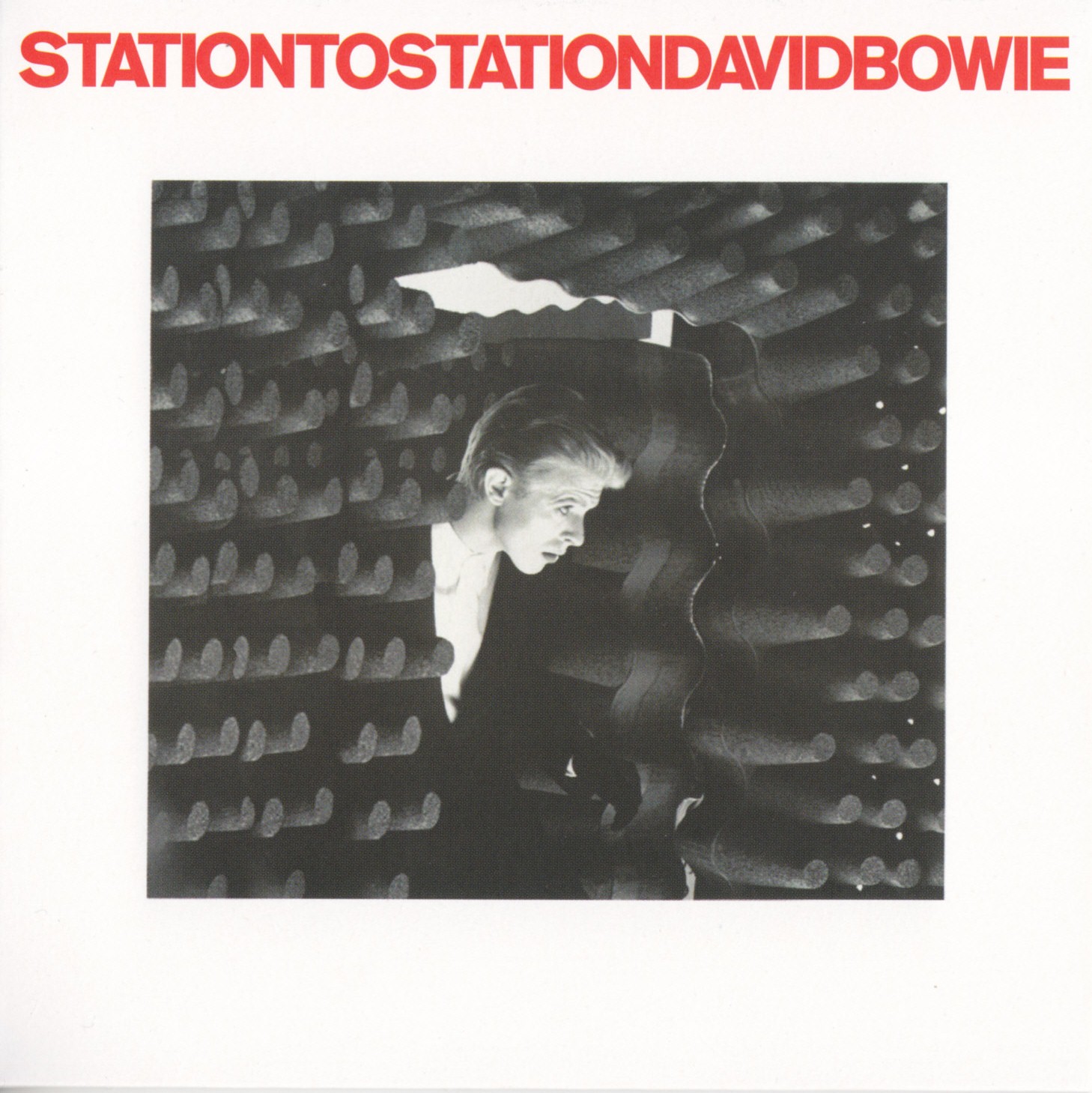
David Bowie - Station To Station (Deluxe Edition) (3 Discs) (RS500 - #323)


I was up fairly late last night - I've recently been having a little trouble falling asleep before midnight. At around two a.m., I received a Skype call from my old buddy Rob, who'd just returned to Christchurch after spending the past few days mountain biking near Arthur's Pass. I've mentioned Rob on occasion in this blog; he's been one of my best friends for over twenty years now, and in that time we've had some hilarious adventures and fun experiences together in both New Zealand and America.

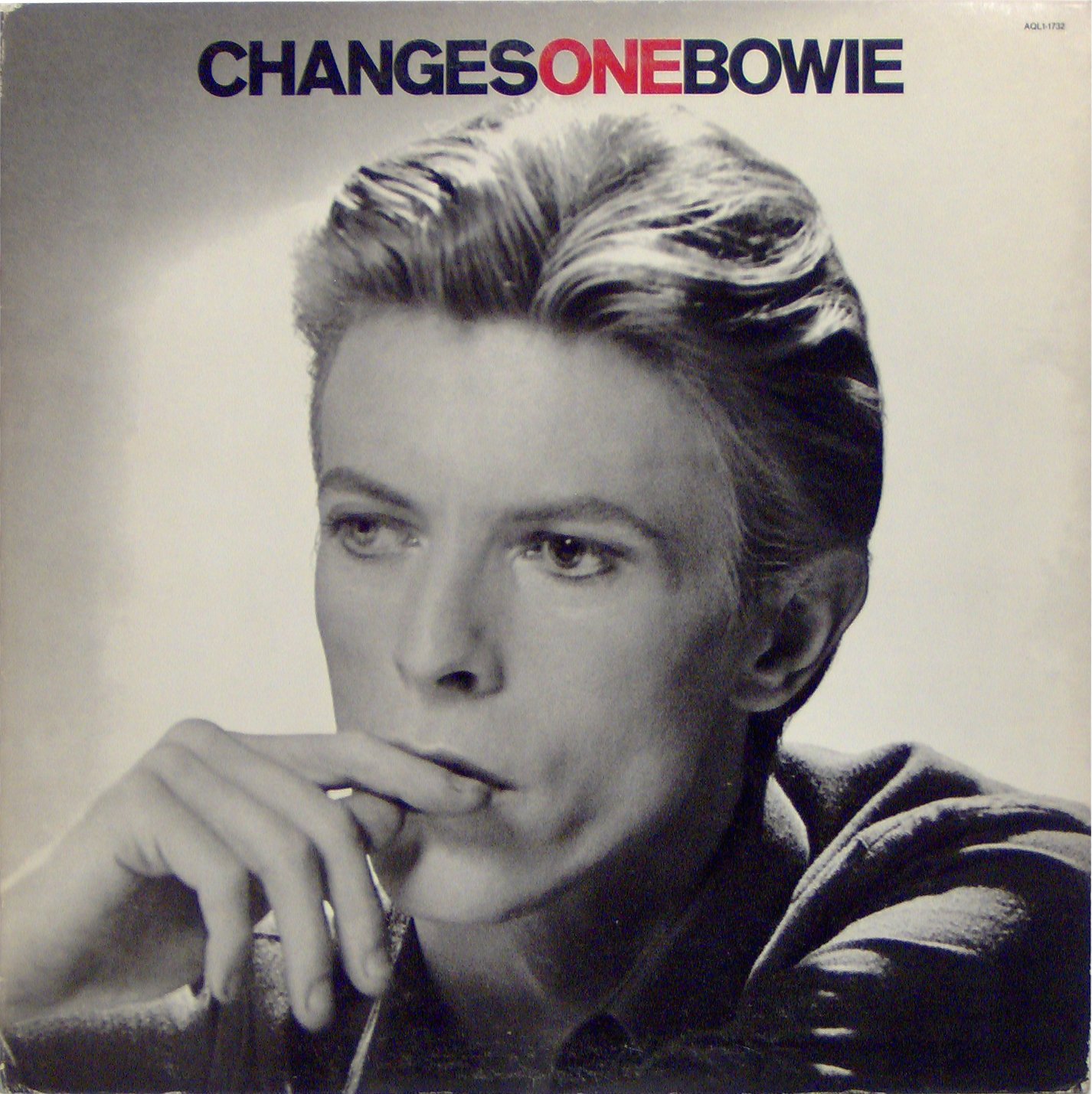
In addition to being my friend, Rob is one of the most rabid, knowledgeable David Bowie fans I know. He was into Bowie before he reached his teens; the first album he ever owned was Changesonebowie, given to him by his mother on his birthday in 1976. By his own admission, this introduction to Bowie's music changed Rob's life. He quickly morphed into a dedicated follower, and fell in with a small but selective group of hard-core Bowie fans in Christchurch, cutting his hair and dressing in flares in emulation of his musical idol (much to the amusement of his infinitely patient and devoted mother . . . and the chagrin of his staunch, straight-laced career Air Force father, who didn't have the faintest notion as to why his son was acting so "crazy"). Rob was amongst the crowd who attended the legendary concert at QE2 Stadium on November 29th, 1978 on the Australasian leg of his Isolar II Tour that year, Bowie's sole South Island show for the entirety of his career.

In the years that followed, Rob's fandom never waned. He managed to assemble quite a Bowie collection, probably the best in New Zealand - rare albums and bootlegs, books, photographs and lithographs. His travels around the world have taken him to places renowned in Bowie-lore; Rob has posed in front of the gate to Chùteau d'Hérouville in France, where most
of Low was recorded, and made a special trip to Berlin to tour the Hansa Tonstudio and stand in the exact spot where "Heroes" was recorded. For over forty years, he remained a devoted Bowie fan, and over time he has greeted each new release, no matter how poorly reviewed, with genuine adoration and enthusiasm. Just as The Fall are my all-time favorite artists, David Bowie has long been Rob's Number One.

Anyway, last night, Rob began to tell me about his weekend and a minor sports injury he suffered while riding around, but our Skype chat was interrupted when he received a call via his regular phone, so he asked me to hold for a couple of minutes. I whiled away that time sifting through my email messages and browsing the news on the Web, nothing major or out-of-the-ordinary, just another night. So I was jolted when I suddenly came across the headline "David Bowie Dead at 69".

I instantly thought "This has got to be bullshit." After all, David's latest album, Blackstar, had just been released two days prior on his birthday, to rave reviews. Plus, there hadn't been the slightest hint or warning in the news that he had been ill. I figured that it was a album release publicity-driven hoax, and began to dismiss it from my mind . . . but I started checking into the story anyway, just to be sure.

It didn't take long to find that the news was not specious, but accurate - David Bowie had died a couple of hours earlier. "Jolted" is an inadequate word to describe my initial thoughts and feelings once I received confirmation of this story . . . with my second thought being, "How am I going to break this to Rob?" I knew it was potentially devastating, heartbreaking news, and I wasn't looking forward to telling him . . . but he had to know, as soon as possible - and it's always good to find these sort of things out from your friends. I sent him a quick text message telling him to get off the phone as quickly as he could, as there was some important news I had to tell him . . .

When Skype resumed, I told Rob the news, in a way that let him know I wasn't screwing around or pulling his leg. I've known this guy a long time . . . and I have to say I've never seen him more stunned. We spent the rest of the call reminiscing, commiserating, and reflecting on the life and work of Bowie, and what he's meant to us over the years.

To be honest, I didn't know that much about David Bowie until I was well into my teens - my first full-on encounter with all things Bowie occurred in late 1979, when I saw him perform on NBC's Saturday Night Live. As I alluded to an earlier post, in much of America of the 1970s, Bowie was considered a "weirdo", a cross-dressing English fop with a flair for flamboyant, garish makeup and outlandish rock 'n' roll alter egos. Of course, by the late '70s, he'd long left a lot of that stuff behind - Bowie was constantly modifying and experimenting with his sound and his look. But the majority of Americans didn't keep up with his ever-changing moods, methods and influences - in this country, first impressions meant a lot. And the impression that the majority of Middle America still had of Bowie - the otherworldly Major Tom and Ziggy of the late '60s/early 70s - was the impression that still lingered as the Eighties approached.

But long before his SNL gig, Bowie had begun taking steps to make himself more accessible and acceptable to the American public at large. The original concept behind his 1973 album Pin Ups was to present an album of cover songs by '60s British rock and pop artists (The Pretty Things, The Merseys, Them) to an American audience that might not have been aware of them. This was to have been followed by another album covering American artists from the same period (the second
part of this plan was eventually scrapped). After 1974's Diamond Dogs, Bowie permanently moved away from glam and on his next album, 1975's Young Americans, he began showcasing his latest musical influences, American R&B and Philly soul. His plan seemed to be paying off here; Young Americans went Gold in the States and produced his first U.S. #1 hit "Fame".

And of course, a big move was his appearance on Bing Crosby's Merrie Olde Christmas holiday special on 30 November, 1977. As I mentioned in an earlier post:
"People forget nowadays, but back in the mid-70s Bowie was considered to be an out-and-out freak by most of Middle America . . . so it was somewhat of a shock and an enlightenment for a lot of people seeing the friendly, polite, 'normal' family man Bowie warbling Christmas carols with Mr. Wholesomeness himself."
So the stage was pretty well set for him to continue his assault on the U.S. market through his Saturday Night Live appearance, his first national television performance. David made the most of this opportunity.

Bowie's appearance on SNL was in many ways a concise summation of his career up to that point. He and his band (supplemented by up-and-coming (but then generally unknown) New York performance artists Joey Arias and Klaus Nomi) opened with "The Man Who Sold The World", from his 1970 album of the
same name (The Man Who Sold The World is regarded by many music critics as "where the [Bowie] story really starts", with the artist abandoning much of the folky, acoustic music of his first two '60s albums and moving into the hard rock/glam rock genres). Later in the show, he blazes through "TVC 15", off of 1976's Station To Station (by this album, he left behind his early '70s glam rock personae of Ziggy Stardust/Aladdin Sane and the "soul boy" funk leanings of his previous album, 1975's Young Americans, and began forging a
hybrid sound combining his earlier influences with that of German electronic music). And the song Bowie closed the show with, "Boys Keep Swinging", from Lodger released earlier that year (Lodger was the last of Bowie's celebrated "Berlin Trilogy" (along with Low and "Heroes") of abstract, minimalist albums with collaborator Brian Eno, but was considered the most accessible and commercially successful).

Here's a clip of the first song from the show, "The Man Who Sold The World":


I thought the costume that Bowie wore for this song was amazing; basically a rigid Bauhaus/Dada-inspired shell tuxedo that held him immobile - Arias and Nomi had to carry him out to
his place on stage. Apparently, I wasn't the only one affected by his getup; Nomi was reportedly so impressed with the costuming that he adopted a variation on the huge plastic tuxedo Bowie wore as his own signature look, wearing one on the cover of his first album, 1981's Klaus Nomi, and performing in it until his death from AIDS in 1983.

What followed later in the show was "TVC 15", with another stunning and androgynous costume change that Bowie pulls off flawlessly, a 1940s-style Lennon Sisters wide-shouldered dress suit and sheath skirt:


And who could forget the pink poodle with the monitor in its mouth, and the herky-jerky backup singing?

The strangest performance occurred at the very end of the program, just before the host/cast farewells and closing credits. For "Boys Keep Swinging", Bowie's head is shown atop what appears to be a man-sized wooden puppet body, which during the performance cavorts and bounces around the stage in a very weird, off-putting yet mesmerizing way:


Bowie was pissed that the NBC censor bleeped out the "other boys check you out" line during the song, but he got his revenge and the last laugh - take a close look at what happens to the puppet's pants at the end of the tune! All in all, it was truly a strange, surreal "WTF?" moment in television history. I didn't know what to make of it; you can tell by the studio audience reaction that they didn't know what to make of it all either.

In any event, as strange as it was to see unusual performances like this on American national TV, I was entranced and impressed by Bowie's art, and finally realized what I'd been missing all those years. December 15th, 1979 at 1:00 AM was the moment I finally became a David Bowie fan - a decision I've never regretted.

I spoke with Rob again for a bit this afternoon. "Mate," he said, "I don't normally like to admit this, but I'm feeling a little . . . weird and vulnerable since I heard the news last night." I know exactly what he means. The passing of an entertainment icon is normally a cause for acknowledgement, appreciation and tribute from fans and contemporaries. But in the vast majority of these instances, this "moment of reflection" is just that - a short-lived moment, and after which, we all go on with our lives. Perhaps all of this is too recent to make a truly subjective determination, but David Bowie's death feels . . . different, as though something has definitely changed in the world.

I've had conversations with other friends today regarding his passing, and they all feel the same way. The recent deaths of Lemmy and Natalie Cole were sad, but they haven't been lingered over, analyzed and eulogized in the press and on social media as Bowie's has been. I think that may be due to the nature of the man and what he brought to the world for the past fifty years. To quote Rob: "Bowie didn't write music; he made accessible art." In those words lies the essence of what made Bowie so great, why he will be missed, and why his absence will leave such a void.

During our conversation late last night, Rob and I asked one another not what our favorite Bowie album is, but even more narrowly, what our favorite Bowie SONG is. Here's mine - the 1973 alternate demo version of "Candidate", included as a bonus cut on Diamond Dogs:


Rob's all-time fave is "Always Crashing The Same Car", from Low:


Enough of all of this - there have been more than enough tributes today, and there are certain to be tons more coming in the next few days. I don't expect my reflections and memories of David Bowie will have that much import or impact in the grand scheme of things. I just felt the need to pay a small tribute to a visionary artist who is now no longer with us. We may not see the likes of David Bowie again . . . but isn't it great that, in the millions and billions of years that this planet has existed, we all were lucky enough to share this planet at the same time with him?

In honor of the life and memory of David Bowie, for my buddy Rob, for myself, and for you all, I proudly offer the deluxe edition of the 1976 album Station To Station. This is the September 10th, 2010 reissue, which includes not only the original album, but the entire show at Nassau Coliseum in Uniondale, New York on March 23rd, 1976 (on two bonus discs).

In addition, also offered here are the three performance videos from Saturday Night Live shown above, in .mp4 format. These are notoriously hard to find on the Web; NBC and Lorne Michaels are vicious about keeping SNL content off of free sites like Vimeo and YouTube. The ones included here are burned off of my SNL DVDs I purchased upon their release many years ago; I own the first five seasons of the show, which are really the only seasons anyone needs to care about.

Anyway, enjoy, and as always, let me know what you think.

Farewell, Thin White Duke.

Please use the email link below to contact me, and I will reply with the download link(s) ASAP:
Station To Station (Deluxe Edition): Send Email

Saturday Night Live performances, December 15th, 1979: Send Email


[Hmm . . . it appears that the performance videos I embedded above aren't being displayed in this post anymore; I guess Blogger.com has an issue with having them be seen here. No matter - the download links are still available, and I'll be happy to send them along to you.]