Showing posts with label RCA. Show all posts

Monday, January 11, 2016

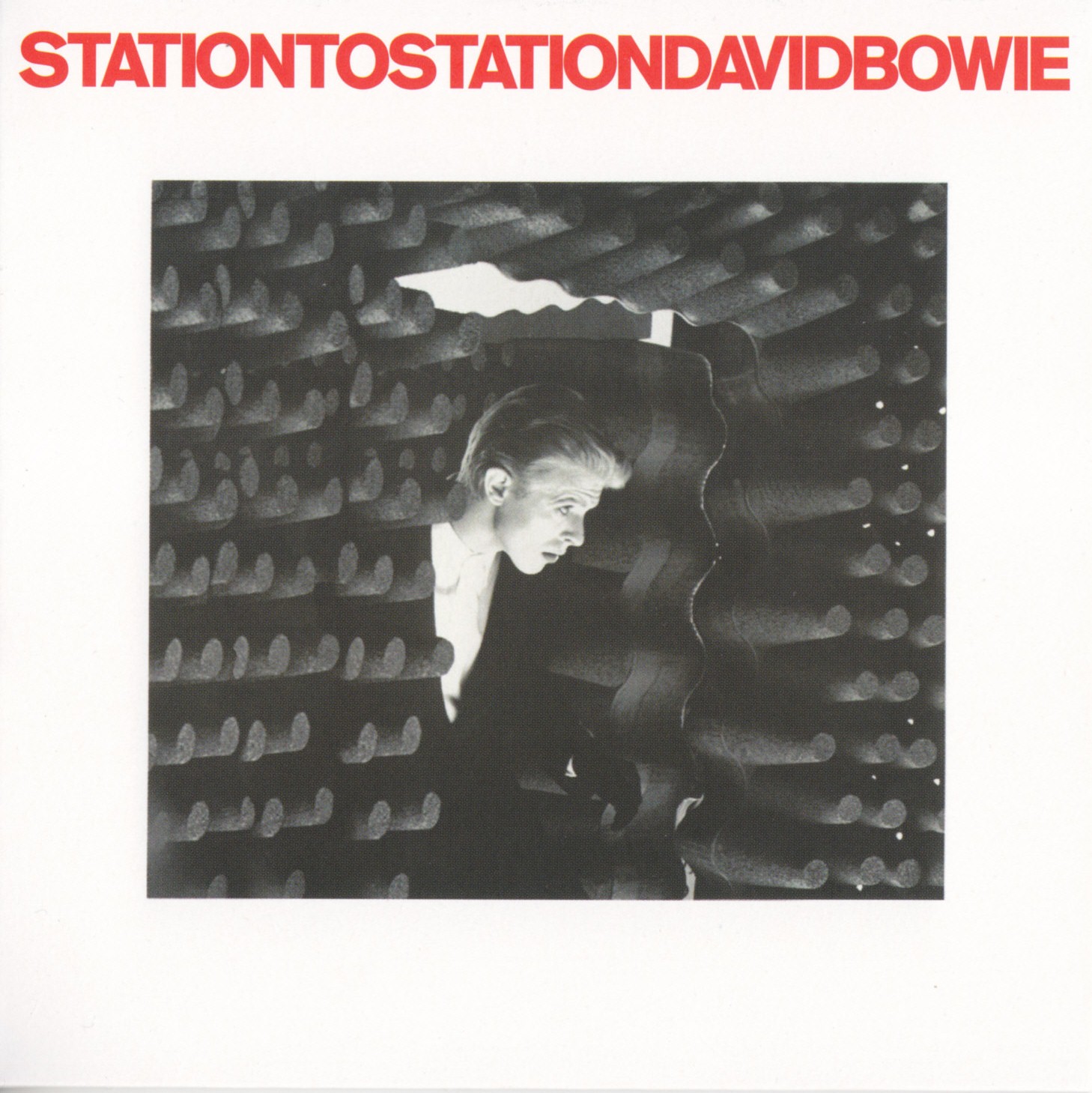
David Bowie - Station To Station (Deluxe Edition) (3 Discs) (RS500 - #323)


I was up fairly late last night - I've recently been having a little trouble falling asleep before midnight. At around two a.m., I received a Skype call from my old buddy Rob, who'd just returned to Christchurch after spending the past few days mountain biking near Arthur's Pass. I've mentioned Rob on occasion in this blog; he's been one of my best friends for over twenty years now, and in that time we've had some hilarious adventures and fun experiences together in both New Zealand and America.
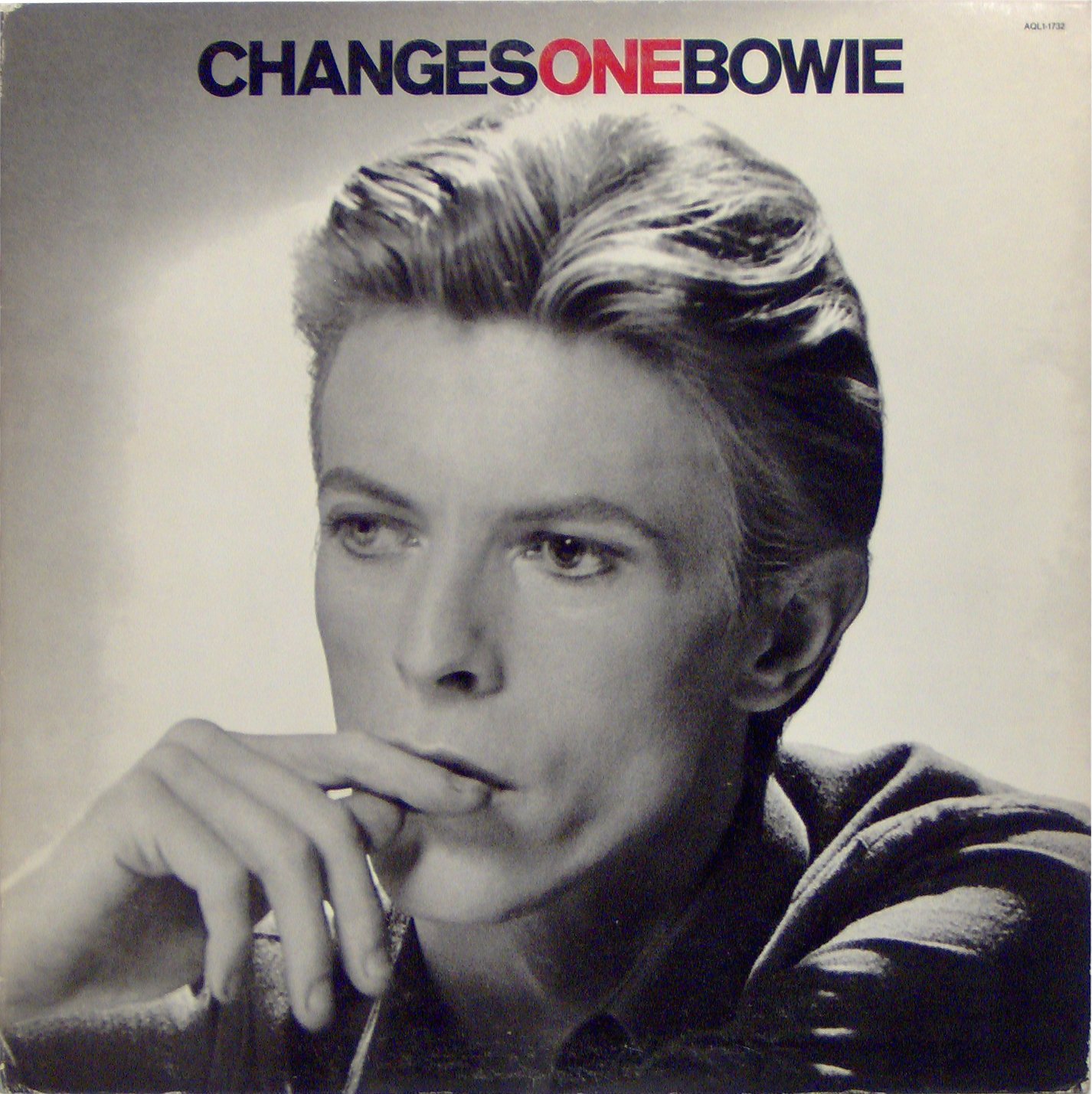
In addition to being my friend, Rob is one of the most rabid, knowledgeable David Bowie fans I know. He was into Bowie before he reached his teens; the first album he ever owned was Changesonebowie, given to him by his mother on his birthday in 1976. By his own admission, this introduction to Bowie's music changed Rob's life. He quickly morphed into a dedicated follower, and fell in with a small but selective group of hard-core Bowie fans in Christchurch, cutting his hair and dressing in flares in emulation of his musical idol (much to the amusement of his infinitely patient and devoted mother . . . and the chagrin of his staunch, straight-laced career Air Force father, who didn't have the faintest notion as to why his son was acting so "crazy"). Rob was amongst the crowd who attended the legendary concert at QE2 Stadium on November 29th, 1978 on the Australasian leg of his Isolar II Tour that year, Bowie's sole South Island show for the entirety of his career.

In the years that followed, Rob's fandom never waned. He managed to assemble quite a Bowie collection, probably the best in New Zealand - rare albums and bootlegs, books, photographs and lithographs. His travels around the world have taken him to places renowned in Bowie-lore; Rob has posed in front of the gate to Château d'Hérouville in France, where most
of Low was recorded, and made a special trip to Berlin to tour the Hansa Tonstudio and stand in the exact spot where "Heroes" was recorded. For over forty years, he remained a devoted Bowie fan, and over time he has greeted each new release, no matter how poorly reviewed, with genuine adoration and enthusiasm. Just as The Fall are my all-time favorite artists, David Bowie has long been Rob's Number One.

Anyway, last night, Rob began to tell me about his weekend and a minor sports injury he suffered while riding around, but our Skype chat was interrupted when he received a call via his regular phone, so he asked me to hold for a couple of minutes. I whiled away that time sifting through my email messages and browsing the news on the Web, nothing major or out-of-the-ordinary, just another night. So I was jolted when I suddenly came across the headline "David Bowie Dead at 69".

I instantly thought "This has got to be bullshit." After all, David's latest album, Blackstar, had just been released two days prior on his birthday, to rave reviews. Plus, there hadn't been the slightest hint or warning in the news that he had been ill. I figured that it was a album release publicity-driven hoax, and began to dismiss it from my mind . . . but I started checking into the story anyway, just to be sure.

It didn't take long to find that the news was not specious, but accurate - David Bowie had died a couple of hours earlier. "Jolted" is an inadequate word to describe my initial thoughts and feelings once I received confirmation of this story . . . with my second thought being, "How am I going to break this to Rob?" I knew it was potentially devastating, heartbreaking news, and I wasn't looking forward to telling him . . . but he had to know, as soon as possible - and it's always good to find these sort of things out from your friends. I sent him a quick text message telling him to get off the phone as quickly as he could, as there was some important news I had to tell him . . .

When Skype resumed, I told Rob the news, in a way that let him know I wasn't screwing around or pulling his leg. I've known this guy a long time . . . and I have to say I've never seen him more stunned. We spent the rest of the call reminiscing, commiserating, and reflecting on the life and work of Bowie, and what he's meant to us over the years.

To be honest, I didn't know that much about David Bowie until I was well into my teens - my first full-on encounter with all things Bowie occurred in late 1979, when I saw him perform on NBC's Saturday Night Live. As I alluded to an earlier post, in much of America of the 1970s, Bowie was considered a "weirdo", a cross-dressing English fop with a flair for flamboyant, garish makeup and outlandish rock 'n' roll alter egos. Of course, by the late '70s, he'd long left a lot of that stuff behind - Bowie was constantly modifying and experimenting with his sound and his look. But the majority of Americans didn't keep up with his ever-changing moods, methods and influences - in this country, first impressions meant a lot. And the impression that the majority of Middle America still had of Bowie - the otherworldly Major Tom and Ziggy of the late '60s/early 70s - was the impression that still lingered as the Eighties approached.

But long before his SNL gig, Bowie had begun taking steps to make himself more accessible and acceptable to the American public at large. The original concept behind his 1973 album Pin Ups was to present an album of cover songs by '60s British rock and pop artists (The Pretty Things, The Merseys, Them) to an American audience that might not have been aware of them. This was to have been followed by another album covering American artists from the same period (the second
part of this plan was eventually scrapped). After 1974's Diamond Dogs, Bowie permanently moved away from glam and on his next album, 1975's Young Americans, he began showcasing his latest musical influences, American R&B and Philly soul. His plan seemed to be paying off here; Young Americans went Gold in the States and produced his first U.S. #1 hit "Fame".

And of course, a big move was his appearance on Bing Crosby's Merrie Olde Christmas holiday special on 30 November, 1977. As I mentioned in an earlier post:
"People forget nowadays, but back in the mid-70s Bowie was considered to be an out-and-out freak by most of Middle America . . . so it was somewhat of a shock and an enlightenment for a lot of people seeing the friendly, polite, 'normal' family man Bowie warbling Christmas carols with Mr. Wholesomeness himself."
So the stage was pretty well set for him to continue his assault on the U.S. market through his Saturday Night Live appearance, his first national television performance. David made the most of this opportunity.

Bowie's appearance on SNL was in many ways a concise summation of his career up to that point. He and his band (supplemented by up-and-coming (but then generally unknown) New York performance artists Joey Arias and Klaus Nomi) opened with "The Man Who Sold The World", from his 1970 album of the
same name (The Man Who Sold The World is regarded by many music critics as "where the [Bowie] story really starts", with the artist abandoning much of the folky, acoustic music of his first two '60s albums and moving into the hard rock/glam rock genres). Later in the show, he blazes through "TVC 15", off of 1976's Station To Station (by this album, he left behind his early '70s glam rock personae of Ziggy Stardust/Aladdin Sane and the "soul boy" funk leanings of his previous album, 1975's Young Americans, and began forging a
hybrid sound combining his earlier influences with that of German electronic music). And the song Bowie closed the show with, "Boys Keep Swinging", from Lodger released earlier that year (Lodger was the last of Bowie's celebrated "Berlin Trilogy" (along with Low and "Heroes") of abstract, minimalist albums with collaborator Brian Eno, but was considered the most accessible and commercially successful).

Here's a clip of the first song from the show, "The Man Who Sold The World":


I thought the costume that Bowie wore for this song was amazing; basically a rigid Bauhaus/Dada-inspired shell tuxedo that held him immobile - Arias and Nomi had to carry him out to
his place on stage. Apparently, I wasn't the only one affected by his getup; Nomi was reportedly so impressed with the costuming that he adopted a variation on the huge plastic tuxedo Bowie wore as his own signature look, wearing one on the cover of his first album, 1981's Klaus Nomi, and performing in it until his death from AIDS in 1983.

What followed later in the show was "TVC 15", with another stunning and androgynous costume change that Bowie pulls off flawlessly, a 1940s-style Lennon Sisters wide-shouldered dress suit and sheath skirt:


And who could forget the pink poodle with the monitor in its mouth, and the herky-jerky backup singing?

The strangest performance occurred at the very end of the program, just before the host/cast farewells and closing credits. For "Boys Keep Swinging", Bowie's head is shown atop what appears to be a man-sized wooden puppet body, which during the performance cavorts and bounces around the stage in a very weird, off-putting yet mesmerizing way:


Bowie was pissed that the NBC censor bleeped out the "other boys check you out" line during the song, but he got his revenge and the last laugh - take a close look at what happens to the puppet's pants at the end of the tune! All in all, it was truly a strange, surreal "WTF?" moment in television history. I didn't know what to make of it; you can tell by the studio audience reaction that they didn't know what to make of it all either.

In any event, as strange as it was to see unusual performances like this on American national TV, I was entranced and impressed by Bowie's art, and finally realized what I'd been missing all those years. December 15th, 1979 at 1:00 AM was the moment I finally became a David Bowie fan - a decision I've never regretted.

I spoke with Rob again for a bit this afternoon. "Mate," he said, "I don't normally like to admit this, but I'm feeling a little . . . weird and vulnerable since I heard the news last night." I know exactly what he means. The passing of an entertainment icon is normally a cause for acknowledgement, appreciation and tribute from fans and contemporaries. But in the vast majority of these instances, this "moment of reflection" is just that - a short-lived moment, and after which, we all go on with our lives. Perhaps all of this is too recent to make a truly subjective determination, but David Bowie's death feels . . . different, as though something has definitely changed in the world.

I've had conversations with other friends today regarding his passing, and they all feel the same way. The recent deaths of Lemmy and Natalie Cole were sad, but they haven't been lingered over, analyzed and eulogized in the press and on social media as Bowie's has been. I think that may be due to the nature of the man and what he brought to the world for the past fifty years. To quote Rob: "Bowie didn't write music; he made accessible art." In those words lies the essence of what made Bowie so great, why he will be missed, and why his absence will leave such a void.

During our conversation late last night, Rob and I asked one another not what our favorite Bowie album is, but even more narrowly, what our favorite Bowie SONG is. Here's mine - the 1973 alternate demo version of "Candidate", included as a bonus cut on Diamond Dogs:


Rob's all-time fave is "Always Crashing The Same Car", from Low:


Enough of all of this - there have been more than enough tributes today, and there are certain to be tons more coming in the next few days. I don't expect my reflections and memories of David Bowie will have that much import or impact in the grand scheme of things. I just felt the need to pay a small tribute to a visionary artist who is now no longer with us. We may not see the likes of David Bowie again . . . but isn't it great that, in the millions and billions of years that this planet has existed, we all were lucky enough to share this planet at the same time with him?

In honor of the life and memory of David Bowie, for my buddy Rob, for myself, and for you all, I proudly offer the deluxe edition of the 1976 album Station To Station. This is the September 10th, 2010 reissue, which includes not only the original album, but the entire show at Nassau Coliseum in Uniondale, New York on March 23rd, 1976 (on two bonus discs).

In addition, also offered here are the three performance videos from Saturday Night Live shown above, in .mp4 format. These are notoriously hard to find on the Web; NBC and Lorne Michaels are vicious about keeping SNL content off of free sites like Vimeo and YouTube. The ones included here are burned off of my SNL DVDs I purchased upon their release many years ago; I own the first five seasons of the show, which are really the only seasons anyone needs to care about.

Anyway, enjoy, and as always, let me know what you think.

Farewell, Thin White Duke.

Please use the email link below to contact me, and I will reply with the download link(s) ASAP:
Station To Station (Deluxe Edition): Send Email

Saturday Night Live performances, December 15th, 1979: Send Email


[Hmm . . . it appears that the performance videos I embedded above aren't being displayed in this post anymore; I guess Blogger.com has an issue with having them be seen here. No matter - the download links are still available, and I'll be happy to send them along to you.]

Tuesday, September 20, 2011

Hall & Oates - Ultimate Daryl Hall & John Oates (Discs 1 & 2)


In July 1983, I returned to my old hometown of Annapolis, Maryland, and began my plebe (freshman) year at the Naval Academy, a lifelong dream of mine. Plebe Summer is a time-honored tradition at USNA, a time when inductees are tested, trained and molded into military officers. The (all too true) joke about Plebe Summer is that they take away everything you're accustomed to in life, and slowly give them back to you as 'privileges' during your remaining four years at the Academy. And that's EVERYTHING - freedom, civilian clothes, music (the hardest blow for me), sleep . . . (and some would say 'dignity' as well . . . but we'll just move on). That summer is designed to be demanding and rough, both physically and mentally, and many don't make it through these first few weeks. A few plebes excel, but most just grit their teeth and slog their way through it; I was one of the latter.

So I presevered like the rest. We were up before the sun every morning, and every minute of every day was tightly scheduled and fully utilized, with marching, three-mile runs, close-order drill, uniform and room inspections, sailing instruction, ship and aircraft identification, and a million other things to do before lights out. In the midst of all of this intensive training, physical exertion, spit-and-polish and military pride and tradition - I met a girl and fell in love.

Near the end of the summer, the authorities began giving us . . . well, not exactly free time, but the opportunity to choose for ourselves what we wanted to do during sports period in the late afternoon. We were free to try out different intermural activities, and one day, on the recommendation of a friend, I decided to look into the fencing class over in Ricketts Hall. I'd seen it on TV, and it looked like fun. It was in that class that I saw her close up for the first time. She was a fellow plebe in a different company from mine, and as such her living quarters were far away on the other side of Bancroft Hall. I had noticed her during marches and morning runs, but until that point I'd never been within 50 yards of her. A buddy of mine was in her company, and as luck would have it, he was also in the fencing class that day, and introduced us. We had the chance to talk a bit between waving epees around, and seemed to connect somewhat. Even wearing the drab Academy-issue athletic gear, I thought she was gorgeous.

Plebe Summer finally ended, and the upperclassmen returned for the start of the Academic Year. Even with the start of classes, a plebe's time was still tightly scheduled, but in a different way than in the summer. But with all that we had to do, I still made the time to cross the huge Bancroft Hall dormitory (I was in 7th Wing, she was in 4th) - down the center of each passageway at a dog trot, arms close to my body, shouting "Go Navy" or "Beat Army" when making a sharp 90-degree turn - to see her as much as I could. I was taking a risk seeing her so much - Academy regulations strictly forbid relationships between first-year students, so I had to play it uber-cool. Besides, early on I wasn't quite sure where I stood with her; I believed that she thought of me more than as a fellow plebe, but I couldn't get a sign from her either way. So I had to lay back, and see what happened.

In October, the Naval Academy Drama Club ('The Masqueraders') put on a multipart production of Shakespeare's Richard II, Henry IV, Part 1 and Henry IV, Part 2, calling the whole shebang Kings. I had a bit part in the first portion, but nothing in the latter parts. So on the second night, I invited her to attend the show with me. We sat side by side in the audience of the darkened Mahan Hall theater, the only lighting illuminating the stage. At one point in the play, Sir John Falstaff was parleying with his boon companion, the wastrel Prince Hal, and said/did something particularly uproarous. As I laughed with the rest of the audience, I brought my hand down on the armrest and, to my surprise, found it resting on top of hers. She instantly grabbed mine, and it was as though an electric shock ran up my arm! We sat there in the dark for the rest of the play, holding hands secretly, down low so no one would spot us. That's when I knew for certain how she felt about me . . . that is, at least I thought I did.

The next few weeks were . . . trying, to say the least. I wanted to see as much of her as possible, which of course wasn't much time at all. We began scheduling "study" sessions together in empty classrooms in Michelson and Chauvenet Halls after evening meal, but soon had to stop doing that after nearly getting busted by one of the upperclassmen patrolling these buildings one night. But finally, a rare and unique opportunity presented itself.

That November, for the first time (and as it turned out, for the ONLY time) ever, the annual Army-Navy football was played not in its usual Philadelphia location, but on the West Coast, at the Rose Bowl in Pasadena, California. And thanks to the efforts of Academy boosters and private contributors, the ENTIRE Brigade of Midshipmen and West Point Corps of Cadets would be in attendance.

For us plebes, this trip to California was to be a rare taste of freedom from Academy regulations for a couple of days. While many mids and cadets were going to be housed in various area hotels, the majority of us were put up, in twos and threes, with local families (from what I heard later, many more people volunteered to host us than were required - say what you want, but the L.A. area is pretty hospitable). As such, restrictions on civilian attire for all midshipmen, including plebes, were lifted - only on the day of the game would we be required to be in uniform. The game was also our only official function during that period; prior to that, we were on our own and could do what we wished. Needless to say, I was REALLY looking forward to this trip - not only for a mental break, but as a rare opportunity to spend some serious quality time with my girlfriend.

In California, I was going to stay with a sponsor family along with my buddy Jim, a fellow plebe in my company. We had been in touch with our temporary landlords in the week prior to the journey - they lived in Pasadena, fairly close to the stadium. My girl was staying with her roommate with a family in Torrance, California, which on a map looked reasonably close to Pasadena (I'd only been to Los Angeles once before, so I was clueless about the distances between places). At that point in my life, I still didn't have a driver's license (don't ask why - long story), but Jim was fully on board with hooking me up with her, with the nebulous promise of a double-date with her roommate as his reward. We arranged for the rental of a vehicle to tool around in during our time there.

The main body of midshipmen flew out of BWI to LAX on the Wednesday before Thanksgiving (I still marvel at the logistics of moving 4,000 mids and 1,000 other related officers and staff - it all went like clockwork, without a hitch). We landed in LA that evening, and our host family met Jim and I at the airport. We immediately changed into civvies in the bathroom, then they took us over the rental car lot, where we found to our surprise and delight that the agency had upgraded us to a hot-looking red Mustang convertible. Jim put the top down, and we drove to Pasadena up the 110 through the relatively warm evening breeze, feeling on top of the world.

Having no access to my own music since the summer, my main preoccupation during the drive was finding a decent radio station. I settled on a station playing a new Hall & Oates song called "Say It Isn't So", released by RCA the previous month as one of the two new songs (the other being "Adult Education") on their greatest hits compilation album, Rock 'N Soul Part 1. "Say It Isn't So" was a continuation of Hall & Oates' evolution from a soft rock duo into more of a neo-blue-eyed soul, almost power pop band - a move that began in 1980 with their hit "You Make My Dreams", and continued through the early 80s with huge hits like "I Can't Go For That (No Can Do)", "Maneater", "Private Eyes" and "Family Man". This latest song was filled with echoing vocals, syncophated electronic drums and synths, cowbell and wood block accents, and enough hooks to hang a full set of Calphalon cookware off of it. That ride to Pasadena that evening was the first of many times I heard that song that week - it quickly became the unofficial theme song to my California adventure.
"We like to be the strangers at the party, two rebels in a shell.
You like to move with the best of them you know we move so well.
Don't need someone to lean on. I know that there's an open door.
But if I'm faced with being replaced I want you even more so baby say it isn't so...
."
The next day was Thanksgiving Day, and as such we were obliged to spend the day with our host family. I was itching to get down to Torrance, but it just wasn't happening that day. Friday was planned as the Big Day of Freedom for the visiting academies - the only things planned for us that day was a special evening at Disneyland, with admittance only for mids, cadets, and their families and guests. I finally connected with my girl over the phone, and the plan was that Jim and I would drive down to Torrance that evening to meet up with her and her roommate, and from there we would proceed in a two-car convoy to Disneyland. Upon arrival there, we would pair off and go do our respective things.

Well, the first thing I discovered on our trip south was that Pasadena to Torrance was a hike, at least 35 miles, a trip made even longer by the standard Friday evening L.A. traffic. So we had several opportunities to hear "Say It Isn't So" during the drive down, since it seemed every radio station in the Los Angeles Basin had the song on heavy rotation.
"Who propped you up when you were stopped low motivation had you on the ground.
I know your first reaction you slide away hide away goodbye.
But if there's a doubt maybe I can give out a thousand reasons why.
You have to say it isn't so...
"
By the time we finally got to the place where she was staying, Jim and I were both frazzled. But I perked up immediately upon seeing her - it was the first time I'd ever seen her out of uniform (so to speak), and she looked GOOD. We said a quick hello-goodbye to her sponsor family, then we all hit the road. It was at that point that I learned that she didn't have a valid license either, so we couldn't ride with one another to Anaheim. She hopped in their rental car with her roommate, while I somewhat dejectedly climbed in beside Jim, and we began another 30+ mile drive in the dark to the park.

The traffic to Anaheim down Route 91 was pretty heavy, but for some reason, despite my protests, Jim insisted on driving like a maniac. He was weaving in and out of traffic like Mannix, music blaring ("Say It Isn't So" was heard at least once more during that drive), and soon the girls were nowhere in sight. I was plenty pissed, but fortunately she and I had made plans for this contingency - whoever got to Disneyland first would wait for the others by the front gate. So when we arrived, I immediately stationed myself by the ticket entrance near Main Street, U.S.A., and waited for her . . .

And waited . . . and waited. For nearly 2 hours. Jim waited with me for a while, then I released him from his unspoken obligation so that he could enjoy himself while I waited alone. There were thousands of people, military academy members and their guests, who streamed into the park during that time. And I'm pretty sure I eyeballed every single one of them on their way in. But somehow, someway, I missed seeing her arrive. Whether it was accidental or deliberate on her part didn't cross my mind at the time; all I could think about was how I missed my one big chance. I met up with Jim again as the park was closing, and we drove back to Pasadena, with me slumped in the passenger seat as, sure enough, "Say It Isn't So" played in the background.

The next day was the football game at the Rose Bowl. Due to my state of mind, I remember very few details of that day. We formed up into companies a couple of miles away from the stadium, and marched through a couple of Pasadena neighborhoods on the way there. Navy stomped Army, 42-13, a score that at any other time would have given me a great deal of satisfaction - but not that day. I finally met up with her late in the game, behind the stands. Couldn't get a clear explanation as to what had occurred the night before; in my mind, Jim and I were to blame for losing them on the highway. I was hoping to set up some time with her that evening, after the game, but she claimed she had other plans she couldn't break - which only added to my dejection. Overall, I was getting a weird vibe from her, and I didn't like it.

However, I saw her once more in California, in the airport waiting area the next day, just before we flew back East. In full view of other mids, she was overtly affectionate to me, in a near-blatant-disregard-of-Navy-rules sort of way. So that cheered me somewhat, and I felt pretty good on the flight back.
"Say it isn't so painful to tell me that you're dissatisfied.
Last time I asked you I really got a lame excuse.
I know that you lied.
Now wicked things can happen...you see 'em goin' down in war.
But when you play in a quiet way that bites it even more.
"
Back at Navy, we again carried on as before. But the rendezvous quickly became shorter and farther between. Finally, a couple of days before Christmas break, in an empty classroom in Michelson Hall, she lowered the boom on me - we were through; she was seeing someone else. Whether this new thing had begun prior to or after Pasadena, I never got an answer to. But I was devastated, and went through the holiday back home and almost the entire second half of Plebe Year pretty much in a depressed daze.
"Why you gonna go do you hafta say you wanna go ooh ooh baby say it isn't..."
Say it isn't so, indeed.

"Say It Isn't So" should have gone to Number One. But it had the misfortune of being released the same week as Michael Jackson's and Paul McCartney's "Say Say Say", off of the latter's Pipes Of Peace. The two songs battled for the top spot all through that November and December 1983 and into January 1984, with "Say Say Say" coming out on top. The Hall & Oates song was second-best every time - a ranking I suddenly could relate to.

For the next 3 1/2 years, she and I attempted to studiously ignore one another, a task made difficult by the fact that a) the Brigade of Midshipmen is fairly small; b) we were both English majors, a fairly rare breed at Navy, and as such were in several of the same courses over the years; and c) after graduation, we both chose the same speciality within the Navy, so we were in school together for almost another year after Annapolis, and encountered one another regularly since then. But in the past 25 years, we have only spoken together twice, very briefly, both times initiated by her, in a spirit of patently false bonhomie. While I was polite to her, both times I refused to be sucked in - some hurts never fully go away.

I used to be a pretty big fan of Hall & Oates back in their '80s heyday, but their appeal has definitely waned for me as the years have gone by. I don't have the same sort of nostalgia for them that I have for other bands from that era. Nowadays, I regard them more as "the Seals & Crofts of the 1980s" or "the American Wham! with a bit more testosterone". Yes, I know that sounds harsh, especially in light of all the hits they had - Billboard still regards them as the most popular duo of all time, beating out such acts as The Everly Brothers, Simon & Garfunkel, Steely Dan and Ike & Tina Turner, among others. But for me, this band will always be associated with "Say It Isn't So", the song that played continually in the background in the Navy-themed, unhappy-ending version of my own personal John Hughes movie in the late fall of 1983.


But for those of you lacking the same sort of visceral reaction to this band's music, here's an excellent two-disc compilation, Ultimate Daryl Hall & John Oates, released by RCA in 2004. Enjoy, and let me know what you think.

Please use the email link below to contact me, and I will reply with the download link(s) ASAP:

Send Email

Thursday, April 21, 2011

Love Tractor - This Ain't No Outerspace Ship


As you can probably tell from my posts, I was (and am) a big fan of the old Athens sound, beginning with the B-52's and R.E.M., and branching out to less-well-known but still vital bands from that era like Pylon, Oh-OK and Buzz of Delight. Love Tractor was an Athens band that appeared very late on my radar, probably because what they were initially into was a bit removed from the other local bands of that time.

The band was formed in April 1980 by two local guitarists, Mike Richmond and Mark Cline, more as a way to alleviate the boredom of living in the one-horse town Athens was back then, rather than creating/joining a new musical movement. The two began gigging around Athens as a duo, accompanied at first by a drum machine. But along the way, they began adding members on bass and keyboards, and shed the drum machine for a succession of flesh-and-blood drummers (including, briefly, a pre-R.E.M. Bill Berry) before settling on Kit Schwartz behind the kit.

The major difference that set Love Tractor apart from the other bands vying for stage time at the 40 Watt Club and Tyrone's back then was in their sound - Love Tractor was a TOTALLY instrumental folk-rock band; no vocals whatsoever in their performances.

Now, I'll be honest, with very few exceptions, instrumental bands bore the shit out of me. Instrumental rock is no picnic in itself, but of all the genres, instrumental jazz ensembles have got to be the worst and most ennui-inducing for me. For example, I've recently been frequenting a local Cuban restaurant here in a sketchy part of town that features great food, dirt-cheap beer and some of the best, most eclectic live music performances in the city every weekend. In the couple of months I've been a regular at this place, I've been treated to superb groups offering up rock, big band, world music [quick shout-out on this one: the excellent band I saw there under this genre, Copal, came all the way from Brooklyn to our little burg, and featured a stunning redhead fronting the band on violin(!) and a weirdly hypnotic classical/Middle Eastern/gypsy/hip-hop sound - if that sounds like something you'd be into, run, do not walk, and pick up their latest, Into The Shadow Garden], what have you.

However, the worst band I saw there was a couple of weeks ago, when I went to the restaurant for a bite to eat and a couple of drinks. I got there fairly early in the evening, and while I ate I watched the band set up - just a quartet of nondescript young guys, sporting the apparently de rigueur look of torn jeans and scraggly post-secondary school goatees. I was looking forward to some decent music, but these guys completely disappointed me. Their entire set consisted of fifteen-twenty minute-long meandering "jazz explorations", with each player seemingly just doing his own thing. There was no visible connection/acknowledgement between the players, and as such, their music did nothing to draw the audience in. After a very short while, their music moved from boring to annoying, and I fled the venue much earlier that usual.

So, I can sort of imagine what Love Tractor was facing during their early years of playing in Athens. Cline has admitted in interviews that his was never "the most marketable band". With its shows, the band never really built up the sort of buzz and mythology that surrounds the early efforts of the B-52s (i.e., the legendary Valentine's Day party) or R.E.M. (practicing in the abandoned church). It seems that they were more admired than loved in town.

It took a while for them to find a recording contract, but Love Tractor was finally signed to DB Records in 1982. They released their first album, an all instrumental self-titled effort, later that year. Love Tractor received decent reviews, but sold poorly. For their second DB Records album, 1984's Till The Cows Come Home, the band began experimenting with actual words, adding a couple of songs with lead vocals by Richmond.

The relative success of this record, coupled with DB Records' increasingly shaky financial posture, led to the band's move to the larger Big Time Records (America) label in 1986. Their first release on their new label was 1987's This Ain't No Outerspace Ship. This album was Love Tractor's first full-scale foray into vocal rock, and in my opinion they pull it off with great success. Their sound on this record can be described as sort of a funkier R.E.M., with Richmond's twangy voice well suited to songs such as "Beatle Boots" and "Outside With Ma".


As fortune would have it, I moved to Athens shortly after this album came out, and the record was being championed by WUOG, the local independent college station. They played "Outside With Ma" to death, so much so that I fell in love with it. If I recall correctly, I bought this album on vinyl at either the Wuxtry, the famous local record shop, or at the local college co-op/music store located just down the street. It wasn't until years later that I replaced my vinyl copy with a CD version.

Love Tractor released one more album on Big Time, 1989's Themes From Venus, before breaking up later that year. The band members went on to join several other bands, but they all remained friends, and every year or so they would all get together in Athens to reconnect and write songs together. Seven years after breaking up, they reformed, and after touring around the country for several years, released a reunion record, The Sky At Night, on Razor & Tie in 2001.  They broke up again shortly afterwards.

So, here's what in my opinion is Love Tractor's best album, This Ain't No Outerspace Ship from 1987 (distributed by RCA). Be sure to check out their covers of Marvin Gaye's "Got To Give It Up" and The Gap Band's "Party Train"! Enjoy, and let me know what you think.

Please use the email link below to contact me, and I will reply with the download link(s) ASAP:

Send Email

Tuesday, June 8, 2010

Sam Cooke - One Night Stand: Live At The Harlem Square Club, 1963 (RS500 - #443)


It has often been said that the best live album ever released was James Brown's Live At The Apollo (1962). A very close second, in my opinion, is Sam Cooke's One Night Stand: Live At The Harlem Square Club, recorded a year after James Brown's legendary album but (inexplicably) not released by RCA until 1985. If you've never heard this album, you are definitely in for a treat, and a shock.

Since his death in 1964, Sam Cooke's legacy has been that of the soulful crooner, the man who used his gospel-trained voice to smooth out the rough edges of the R&B of the fifties to create transcendent romantic ballads and radio-friendly teenage pop songs that appealed to both black and white. The constant replaying of his standards, such as "You Send Me", "Cupid" and "Another Saturday Night", to name a few, have served to reinforce this image. But in reality, Sam Cooke was a man of great artistic depth, with fierce passions and convictions. At the risk of losing his white audience, he was an early and vocal public supporter of civil rights. Late in his career, he focused all of his passion for equality and songwriting skill into the single "A Change Is Gonna Come", the greatest of all Civil Rights era songs.

Cooke was frustrated by the constraints of his contract with RCA, which all but required him to continue banging out frothy ballads and fluff like "Everybody Loves To Cha Cha Cha", songs that played to Cooke's white audience. But he had another audience that knew a different Sam Cooke than the one usually presented. His main contact with black audiences was in his tours of the small clubs and dance halls located mainly in the South, both on and off the old 'Chitlin Circuit'. On those tours, Cooke was free to ignore the restraints imposed on him by society and the industry, and allow his ferocity and power to burst through.

Live At The Harlem Square Club is the only recorded evidence of the 'real' Sam Cooke, the one that black audiences knew and loved. In his set at the Miami club in 1963, you can almost FEEL the heat and sweat in the joint, as he roars and tears through classic after classic, presenting them in a way you've never heard before. Once you hear his versions here of "Twistin' The Night Away", and especially "Bring It On Home To Me", you'll never listen to the originally recorded versions (the "pop" versions) the same way. He sounds more like Wilson Pickett than the Sam Cooke we've been used to.

Final word: this is an amazing record that presents a different, unfamiliar yet exciting side of a legendary artist. And is it a must-have. So here - take it:

Please use the email link below to contact me, and I will reply with the download link(s) ASAP:

Send Email