Random mumblings and mundom ramblings on music (mostly), and whatever else pops into my mind . . .
[The files attached here are for review only, and should be deleted after two weeks. If you like the bands, go buy the albums . . . like I did!] . . .
And yes - EVERYTHING posted here is still available!
Well, it was exactly one year ago today that Mark E. Smith died, done in by lung and kidney cancer. Since then, it's been an odd year for me (and many others, I'm sure) in that regard; the first one in memory that wasn't graced by a new Fall release.
As affecting as MES's death has been to me over the past year, what I'm finding equally distressing is the gradual silence which seems to be falling over Fall-world. Yes, there are still diehards who frequent The Fall Forum, posting on band-related topics and the like. But from my vantage point, the number and quality of posts there has declined significantly since the initial flood of comments, tributes and the like that came immediately after Smith died. And The Fall Online blog, a formerly "must-see" site that for many years I used to visit at least weekly, is also slowly and gradually falling quiet. There have been only two posts in the "Fall News" section since last September... I suppose with the band kaput and the leader no more, there wouldn't be much "band news" to report, per se. Still, it's weird to see how quickly that once go-to source has become moribund.
Somewhat related to that: in the wake of Smith's death last January, I figured that, as in the case of other rock legends who pass on, the "floodgates" (as it were) would soon be opened, and longtime fans would have been blessed with a plethora of heretofore unreleased Fall product - rare outtake and demo collections, multi-disc compilations, album re-releases and the like stored away in the vaults, pulled together from the prolific band's long career. I was all but rubbing my hands together in anticipation; it all might not have been of the greatest quality, but I reckoned at the very least these archive releases would have kept the name and legend of The Fall alive for many more years. But for the most part, this hasn't happened... which I find sort of strange. Other than a few live sets (a couple from the 1990s released by Cog Sinister, consisting of some dodgy FLAC-only files of various shows in Sheffield) and a three-disc set of "golden greats" out on Cherry Red, there's really been nothing noteworthy put out. It's as if the world is already forgetting about the honorable Mr. Smith, and deeming the volume and quality of material he and his band produced over the past four decades is inconsequential and unworthy of continued acknowledgement.
Therefore, it's up to us, true Fall fans, to keep Mark's name and legacy alive. And to that end, here's a little something for my fellow Fall travelers - a bootleg recording
of the very last concert by the band, which took place in the Queen Margaret student union at the University of Glasgow, Scotland, only two months before Smith's death. A very obviously ill MES performed seated at center stage for the entire show... but he DID perform, so all props and respect to him for that. The Telegraph (UK) newspaper published a superb review of the gig the day after the show - the story's opening paragraph was prophetic, and therefore now haunting:
Hunched in a wheelchair, right arm in a sling, face bloated and bearded, Mark E Smith sang-spat a repeated phrase – “I think it’s over now, I think it’s ending” – as his sidemen locked into a brutal riff. This sounded valedictory, and a question hovered in the air: could we be witnessing the last days of The Fall, a band that for 40 years has belched like a dirty chimney through the drab skies of British culture?
Sucks to be right sometimes... Anyway, I got this recording from my friend and fellow blogger Jon Der - and subsequently I bestow it unto you all as well.
Here it is, The Fall's final show, recorded on the evening of November 4th, 2017. Enjoy, and spare a moment today to remember the late, great Mark E. Smith, the original Rock Curmudgeon, and all of the outstanding music he and the various incarnations of his band The Fall left behind. He, and they, remain my all-time favorite artist(s), and probably will so for the rest of my life.
And as always, let me know what you think.
Please use the email link below to contact me, and I will reply with the download link(s) ASAP:
In the day since Mark E. Smith's passing, there have been tributes and commentaries galore about the nature of the man and his music. In addition to the Guardian's notice I posted yesterday, here's but a small sampling of what's been published in the past 24 hours:
I don't feel that I'm up to the task of matching this worldwide outpouring of eloquence in regards to the life and work of this man. Nor do I feel the necessity to reiterate how much Mark and his band have meant to me over the years; I've coveredthat topicseeminglycountlesstimes in this blog. Smith and The Fall have been a reliable constant in my life for decades, and I looked forward to each new offering that appeared like clockwork year after year; no matter if the band's latest disc was brilliant or banal - it was The Fall, and that was enough for me. It is odd to contemplate the fact that there will no longer be any new music arriving from that quarter; Smith's voice has been stilled, and his brilliant, strange, obtuse and thought-provoking wordplay will no longer grace my eyes and ears. His death leaves a giant hole in my musical life, one that I can't foresee will ever be adequately filled again.
Enough of my overwrought prattle about a singer and band that the vast majority of people in the world were profoundly unfamiliar with, uninterested in and/or indifferent to. Mark E. Smith and The Fall's music was definitely an acquired taste; I'm just glad I was admitted to the banquet... and brave/open-minded enough to sample and appreciate the wares being offered. If you're a fellow Fall fan, you know exactly what I mean.
I think that, instead of words, the greatest tribute I can render unto the man on this blog is to provide to you all over the next few days with access to some of my favorite, most obscure works of his (either with The Fall, individually or with other artists) from my collection of Fall-orabilia. I'll start with his first solo spoken word release, The Post Nearly Man, released on Artful Records in August 1998.
Enjoy, remember, and as always, let me know what you think.
More to come...
Please use the email link below to contact me, and I will reply with the download link(s) ASAP:
Most of the stuff on these discs was recorded during the tension-fraught Levitate sessions in mid-1997, studio time filled with financial pressures, band member walkouts (Simon Wolstoncroft) and reentries (Karl Burns), unpaid producers quitting in disgust, and creation of semi-coherent, structureless songs, most of which for some reason vocalist and group leader Mark E. Smith refused to sing (Smith later admitted that, at the time, he was "drinking heavily", "paranoid" and "losing it"). Somehow out of all of this confusion and turmoil (a portion of which I alluded to here), an album was produced, but neither the methods to create it nor the final product were particularly inspiring or pretty.
Levitate was the last in a series of weak and generally unmemorable 1990s Fall albums issued in the wake of 1993's The Infotainment Scan, considered at the time of its release the band's most accessible and commercially successful album (debuting at #9 on the British album charts). As I wrote in an earlier piece I did regarding The Fall during this era:
The 1990s were an iffy period for The Fall, in my opinion. Brix had left Mark E. Smith and the band, and her presence and ear for pop-friendly hooks was sorely missed. Her absence did serve as the inspiration for one of the best Fall albums of that era, 1990's Extricate . . . From there, the albums began a gradual decade-long slide into mediocrity. There were some high spots here and there: Code: Selfish and The Infotainment Scan had many high moments. But other releases like Middle Class Revolt and Cerebral Caustic seemed to lack the imagination and fire of some of the band's best material from the 1980s. And, of course, the infamous onstage punchup in New York in 1998 that led to the departure of longstanding Fall stalwarts like Steve Hanley didn't help either. The Fall really didn't start to get its shit back together until 1999's The Marshall Suite.
At the time of its release in September 1997, Levitate was The Fall's worst performing album since 1979's Dragnet (which did not chart), only making it as high as #117 on the British charts. The tragedy of all this is that even with all of the craziness going on during the recording sessions, there were some great songs produced during that period, that for some ungodly, unknown reason were not included on the album itself. Instead, these songs were bundled with various versions of album cuts onto a couple of CD singles released in early 1998, shortly after Levitate dropped.
Masquerade (Disc 1) contains the following track listing:
1. Masquerade (Single Mix)
2. Ivanhoes Two Pence
3. Spencer Must Die (Live)
4. Ten Houses Of Eve (Remix)
Songs 1, 3 and 4 are versions of songs included on the album. The only "new" song here is "Ivanhoe's Two Pence", a shambling, chugging workout of a song set on a strong rhythmic foundation - no wonder, since longtime Fall bassist Steve Hanley co-wrote it (his 100th (and as it turned out, last) songwriting credit with the band). Despite the rudimentary, almost slapdash nature of the song, it's still better than much of what ended up on Levitate.
Disc 1 is OK, but for my money, the real gold of the Levitate sessions is contained in Masquerade (Disc 2). Here's the track listing:
The first and last tunes here are album track versions. But the second and third songs, "Calendar" and "Scareball", are some of the great "lost" Fall tracks, and probably my favorite Fall songs of the past twenty years.
The circumstances behind the recording of "Calendar" are weird and interesting, as all good Fall stories are: In the early winter of 1997, shortly after Levitate was released, Mark E. Smith went out on the town in Manchester and tied one on. Stumbling out of the Night & Day pub late that evening, Smith jumped into what he assumed was a cab and ordered the driver to take him home. However, it was no cab; it was the private car of a local musician named Damon Gough — aka Badly Drawn Boy — who just happened to be idling outside the pub at the time. Gough was still relatively unknown at the time; his first EP had been released only three months earlier, and he was still two years removed from worldwide acclaim with his album The Hour Of Bewilderbeast. Gough agreed to drive Smith home, but only after getting Smith to commit that the Fall record one of Gough's songs, the instrumental "Tumbleweed", which was reworked by the two in the studio later that month into "Calendar". Badly Drawn Boy even guests on guitar, resulting in an interesting collaboration between two of Britain's leading independent musicians. Just a great song:
As for "Scareball", this song was written by keyboardist (and Smith's then-girlfriend) Julia Nagle; it was based on a demo that Nagle recorded with her previous group, the Manchester-based What? Noise the year before. The tune is essentially a point-counterpoint duet between Smith and Nagle, with some excellent guitar work and a catchy little keyboard riff thrown in for good measure:
I found these discs for sale at the old Virgin Megastore at Grapevine Mills Mall in Texas in early 1998. I noticed the similarities in the design of the singles covers to that of the parent album, which I had purchased a couple of months prior and, frankly, didn't particularly like. But as a longtime Fall fan, I was damned if I was going to leave any band product up on the shelf, unpurchased. I'm glad I did - I find the music on these two EPs superior to the majority of what could be found on Levitate. Apparently, others did as well - the Masquerade singles charted in England significantly higher than The Fall's previous album release. Now, I am not by any means claiming that the addition of these songs to Levitate would have made the album that much more acclaimed or successful. It just seems to me that the disc could have used a bit more of the innovative spirit and "pep" inherent in these sidelined works.
It would be nice to claim that the songs off of these EPs were precursors for The Fall's future success, and pointed the way towards the band's critical and creative reemergence in the late 1990s (sparked by the release of The Marshall Suite) - but that claim just doesn't hold up under scrutiny. After the disastrous 1998 American tour, punctuated by the Brownies on-stage altercation that led to the departure of longtime Fall members Hanley and Karl Burns, Smith was forced to reconstitute the band with all new members, which necessitated a return to basics - specifically to the more simplistic rockabilly-influenced sound of earlier group lineups. The new band members brought a new level of spirit and energy to The Fall's music, similar to what the best of the Masquerade songs offered, but it wasn't as if they were in any way influenced by or building upon that sound.
It's still an open question as to which direction The Fall would have moved in if the pre-1998 members had stayed in the band - whether they would have followed the Masquerade singles trend, or just continued to simply crank out uninspired, half-assed albums like Cerebral Caustic and Levitate. Who knows? All I can say is that, in many ways, the New York bustup was a blessing in disguise, and may have saved the band.
But enough of all that. Here you go - The Fall's two Masquerade EPs, released by Artful Records in January 1998. These discs are fairly hard to come by now - Artful went belly-up more than a decade ago, and all of their releases are currently out of print. So enjoy, and as always, let me know what you think.
Please use the email link below to contact me, and I will reply with the download link(s) ASAP:
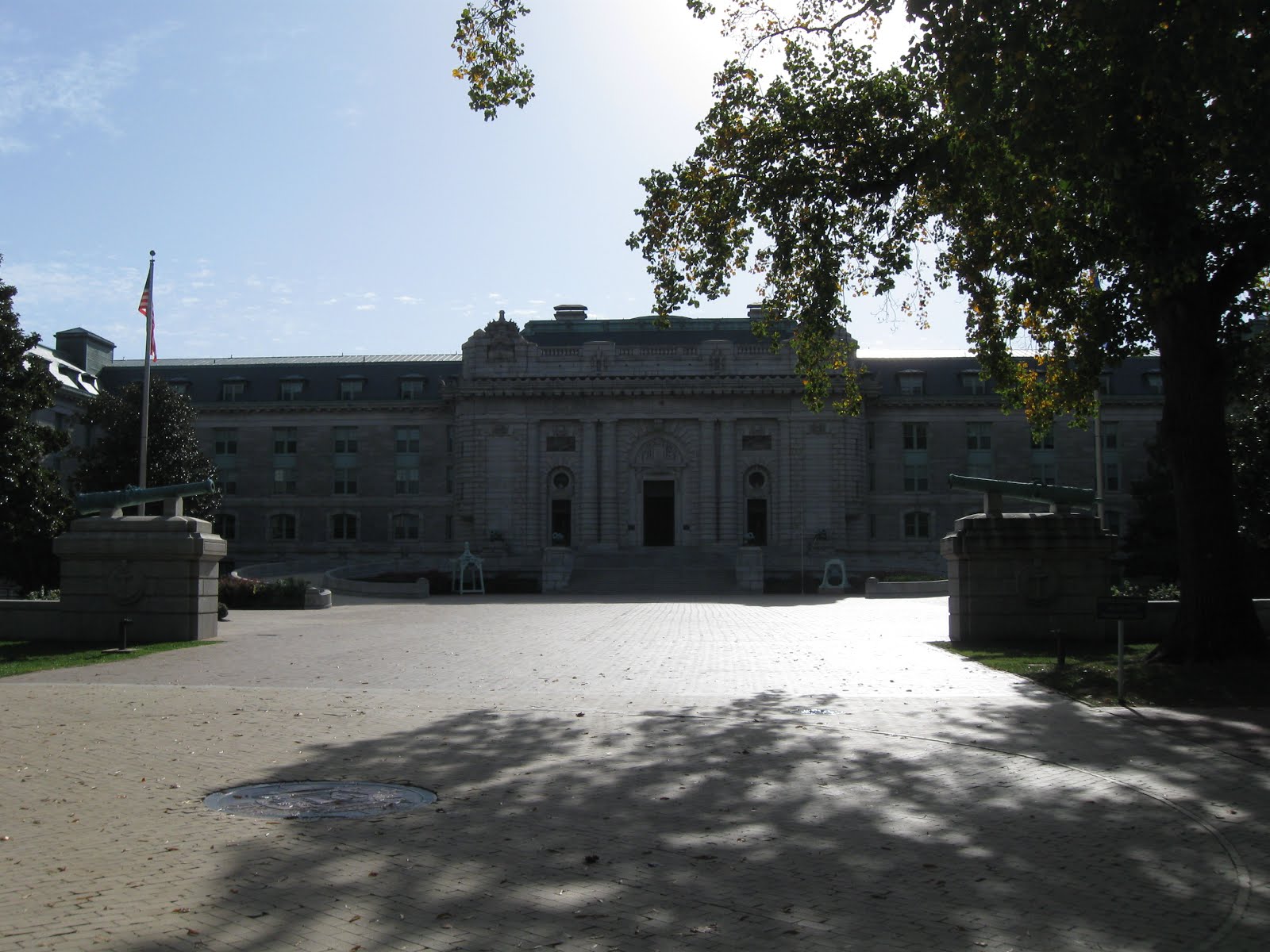
Weekend before last, I made the trek back to Annapolis, MD for my Naval Academy class reunion. I hadn't been to Annapolis in many years; as I approached the city from the west on Rt. 50, I could almost feel the time slipping backwards, as I closed in on my past. Annapolis holds a lot of my personal history; not only did I attend the Academy, but as I mentioned in an earlier post, I also spent part of my childhood there, living in the military housing across from the Academy gates.
The rain was hammering down on the city, and water was literally running like rivers in the streets as I arrived early that Friday to check in at the hotel that served as alumni headquarters and pick up my credentials for the upcoming events of Homecoming weekend. It seemed like the torrential downpour would last all day, but by the time I checked in and said hello to a few old classmates, the deluge had ended, and to my amazement, the sun could be seen breaking through; it was actually going to turn out to be a nice day. Instead of heading towards the Academy Yard to participate in the morning meetings and events of that first day, I turned my steps in the opposite direction, towards the locales I knew when I was a kid. I spent the morning revisiting my old neighborhood and elementary school, gazing once more over playgrounds and swimming pools and the old homes of long-lost friends and playmates - places now altered in several different ways with the passing of years, but with many old landmarks still recognizable.
I eventually made my way back to the Academy grounds that afternoon, wandering around the brick walks and immaculately tended lawns and flower beds of the Yard for a while, taking in the sights of my alma mater. I visited the Academy Chapel, the first time I've set foot in that building in more than two decades, then walked across the street to the Herndon Monument, the successful assault of this 20-foot tall stone obelisk, covered with grease and topped with a combination cap, serving as the annual culmination and symbolic rite of passage out of plebe (freshman) year. I guess I didn't realize it as much when I was there, but the Naval Academy Yard (campus) is actually pretty beautiful, and fairly dripping with history and symbolism - like most things, I suppose you don't really think about such things until you've been away from them for a while.
I strolled down Stribling Walk, the central brick walkway, towards Bancroft Hall (the midshipman dormitory and my home for four years), and entered through the huge iron doors into the Rotunda area. When I went to school there, I was always a little bit in awe of this part of the building; it seemed even more awe-inspiring now, twenty-plus years on, with its imposing marble floors and walls, and murals depicting key events in American naval history.
The most hallowed part of the Rotunda was up a wide set of well-worn stone stairs directly opposite the entrance; these led to Memorial Hall, where the names of Academy Medal of Honor winners and graduates who died in the line of duty (almost 1,000) are enshrined, by graduating class, in stone tablets on the wall. I went up and made my way over to the plaque for the class ahead of mine, the Class of 1986, and for the first time in a long while stopped to say "Hi" to my old friend Greg, while once more reflecting on the past . . .
In the summer of 1981, I entered the Naval Academy Preparatory School in Newport, Rhode Island. Now I'm sure that the term "prep school" conjures up for some of you images of leafy campuses, ivy-covered halls full of tweedy professors, varsity sweaters and snobby guys with names like Chas and Biff playing squash or lacrosse. But this place was far removed from the likes of real prep schools like Choate or Phillips Andover.
The school, known as NAPS, has its origins at the tail end of the First World War. The U.S. Secretary of the Navy at the time, Josephus Daniels, established a program that would make up to 100 regular sailors from the fleet eligible to attend the Naval Academy in Annapolis, Maryland. In those days, all Naval Academy candidates had to take an entrance exam, and by all accounts the test was a bear, with only a small fraction of applicants passing and gaining entrance to the service academy. The first couple of groups of sailors to take the exam got their asses kicked by it, so NAPS was established in 1920 by the then-Undersecretary of the Navy to help prepare the sailors for this rigorous test. That official's name? Franklin D. Roosevelt.
NAPS was exclusively a training facility for enlisted men (one infamous attendee was former Marine and University of Texas Tower sniper Charles Whitman) until the late '60s/early '70s, when they began admitting civilians as well. I was selected for NAPS, instead of going straight into the Naval Academy, because I was two weeks too young to enter Annapolis directly (I graduated from high school when I was sixteen).
So in late July, I travelled alone 3,000 miles across the country to attend this faraway school - a scrawny, geeky-looking kid at least a year younger than most of my classmates. I arrived that evening at my new home for the next year - Nimitz Hall, a drab-looking brick-and-concrete dormitory with six dreary-looking wings of industrial beige-painted cinder block and dull green-tiled halls, located on a windy point of land between Coddington Cove and Coasters Harbor Island. On the first full day there, the other attendees ("Napsters") and I (about 200 in all) were organized alphabetically by last name into companies and then into platoons, with each platoon occupying a wing.
The next few weeks were full of heavy indoctrination, with the aim of quickly acclimatizing a bunch of high school kids into the ways, wherefores and rigors of military life. The days were full of early morning wakeups, physical exertion, five-mile runs, instruction on military history and tradition, uniform inspections, room inspections; rules on how to make a bed, fold your socks, clean your rifle; address an officer; and marching - always marching and drilling, on the hot tarmac behind the building. As one of our early memory exercises, we were required to learn the names and hometowns of everyone in our platoon. I found that we were from all over the country and from various walks of life. Some members were former military, but most of us were just out of high school.
One platoon-mate who stood out was Greg. Greg was a short, stocky, powerfully-built black dude straight outta Brooklyn, NY (he graduated from the renowned Erasmus Hall High School in Flatbush, where he was a star wrestler). At that point in my life, I'd never known anyone who was actually from New York (much less Brooklyn), and as such I always assumed (misguidedly) that anyone from there must be a gang member or some sort of badass. Greg WAS a badass, but in a different way. He carried himself with calm dignity and good humor, and while he wasn't an academic genius per se, he had an innate sense of intelligence that surpassed even the smartest students there.
He did something that first week in Newport that impressed the hell out of me and many others, officers and peers alike. On the morning of our third day there, we were marched over to the nearby indoor pool for a swim test, to see who the 'dolphins' and who the 'rocks' were. The test included a leap from a platform suspended 7 meters above the deep end of the pool. Now, I wasn't a strong swimmer, but I could swim - still, I was plenty nervous when I got up on that platform and saw how high it really was over the water. Greg, on the other hand, couldn't swim a stroke. But without a moment's hesitation or the slightest quaver of fear, that guy climbed up the ladder and jumped right in! They had to fish him out of the water, but still . . . I still consider that to be one of the bravest things I ever saw anyone do in my life, and from that point onward Greg earned my everlasting respect.
At NAPS, Greg was paired up with a roommate named Dave, a corn-fed straight-arrow out of B*mf*ck, Iowa, seemingly as naive and salt-of-the-earth as they come. You'd be hard-pressed to come up with two people more dissimilar than Greg and Dave . . . but they became inseparable friends there in school, and on weekends could always be found out in town together, chasing the Salve Regina College girls and making liberal use of Newport's many bars (Dave might have seemed like a Midwestern square, but he had a taste for the booze just as powerful as Greg's, if not moreso). Many of their escapades became part of the school lore of that time - bar fights, road trips and hookups with the local chicks. With all of that, both Greg and Dave still managed to get high marks academically, and both were selected for leadership positions within the NAPS Battalion.
Greg and Dave moved on to the Naval Academy; I followed the next year. Although I was a year behind my old NAPS classmates, I still saw a lot of them at school and out in town. At Annapolis, just as in Newport, Greg excelled, eventually reaching the position of regimental commander, one of the top three posts at Navy. He busted his ass there, and finished his years at the Academy with a class ranking high enough to allow him to choose whatever speciality he wanted to pursue. Greg had long had his sights set on becoming a jet pilot, so it was no surprise when he chose Navy Air. I saw him one last time on his final day at Annapolis, in the King Hall mess hall, just before he headed down to Pensacola to begin flight school. I congratulated him on his graduation, and we spent a few minutes reminiscing fondly over the past five years, the places we'd been and all the folks we'd known during that time, many of whom had long ago fallen by the wayside on that long journey. We had a laugh or two, then he had to go. We shook hands and wished one another luck, and that was that. He was off to Florida, while I remained to complete my senior year.
That last year at Navy, and the mid-80s in particular, was a transitional period for me, musically. All of the bands I'd grown up with and loved - Devo, The B-52's, The Clash, The Police, The Specials, Talking Heads, Madness - had either collapsed, disbanded, or were reaching what appeared to be the ends of their creative peaks. I'd been such a hardcore New Wave fan for so long, that as that genre was winding to a close and/or evolving into the alternative music of the late Eighties, I was sort of set adrift. Instead of getting fully into some of the new music coming out of England and the U.S. underground, I spent a great part of that period following/chasing after the tattered remnants of the bands I used to love: General Public and Fine Young Cannibals (ex-English Beat); Andy Summers, Stuart Copeland and Sting (ex-Police); Stan Ridgway (ex-Wall Of Voodoo); Jane Wiedlin(ex-Go-Go's) - I bought all of the releases (of varying quality) by these artists during that period.
As such, I was late getting into The Smiths. I'm sort of ashamed to admit this - I like to think that I am usually ahead of the curve when it comes to musical trends and movements, but not in this case. I don't know why it took me so long to get into them; in hindsight, their music was right in my wheelhouse. But I guess I was still too locked in to the bands of my past to concentrate on the future of music that The Smiths represented. One of my biggest music regrets is that I didn't absorb The Smiths in real time, instead coming to them just as the band was on the brink of permanently falling apart.
As I recall, the song that piqued my interest in this band was "How Soon Is Now?", played on local alternative station WHFS one evening in the late fall of 1986. I started asking around among my musically-like-minded friends, and found that, to a man, they were all big Smiths fans. I borrowed their albums to begin my education, and by the spring of 1987 I was such a fan myself that when I found a cassette copy of the compilation The World Won't Listen in the import bins at Tower Records in DC, I quickly snapped it up. I enjoyed the album immensely, especially songs like "Panic" ("Hang the DJ, hang the DJ, hang the DJ!"), "Bigmouth Strikes Again" and "Rubber Ring". But throughout the disc, there's an air of melancholy and resignation inherent in many of the songs - "Unloveable" and "Half A Person" are prime examples. For me, this atmosphere of sadness and depression made the album a lot more 'real' than a disc full of "good time music". But it kept me from fully absorbing the entire record for quite a while - you can only take so much melancholy in a sitting.
The end of my final year at Annapolis was fast approaching, with Final Exam Week in May coming up shortly. Late one afternoon in mid/late April, I was walking back to Bancroft Hall from my Economics class final, using the corridor beneath Michelson and Chauvenet Halls hard by the Ingram Field track, when a classmate caught up with me to tell me the news of the death of a prior year graduate during a training flight down in Pensacola, Florida earlier that day. I asked him if he knew the grad's name, and when he said it was Greg, I stopped cold in my tracks. It felt like my entire body went . . . numb. I pressed the classmate for more information, but there wasn't much. It seemed that Greg and his instructor were in a jet trainer, practicing touch-and-goes (takeoffs and landings without stopping) at the flight school there, when something apparently went wrong during a landing approach and the plane plunged to the ground. From what I first heard, the flight instructor survived (a report that later turned out to be erroneous...), but Greg was killed instantly.
It was jolting news, hard to believe.
I stumbled back to my room in a semi-daze, and sat at my desk in silence for what seemed like eons, thinking about everything, while at the same time thinking about nothing. For a good man, a friend, to die just like that, in the twinkling of an instant . . . it was just unfathomable. After a while the silence got to be interminable and oppressive, so I reached over and switched on the boombox at the corner of my desk, the one I purchased a couple of years early during my Youngster YP cruise. The World Won't Listen began playing in the cassette player - which seemed appropriate, given the circumstances. The music played on softly in the background, and I listened distractedly as I sat there thinking of my old friend . . .
I was suddenly roused from my contemplation and lethargy when I heard these words coming out of the speakers:
". . . Don't feel bad for me
I want you to know . . ."
The song was "Asleep", one of the quieter, more reflective songs on The World Won't Listen, a song I'd never paid much attention to before (truth be told: I usually just fast-forwarded past this song to get to "Half A Person"). The song consisted of Morrissey singing over a gentle piano ballad, with sound effects resembling wind blowing in the background. In the state of mind I was in at that point, the wind sound could be construed as the sound of someone flying through the air . . . like a pilot doing his flight training. I continued listening, and heard these lyrics near the end:
"There is another world
There is a better world
Well, there must be
Well, there must be
Bye, Bye . . .
Bye, Bye . . ."
I'm not much for "messages from beyond the grave" . . . Still, in its own odd way, hearing those lyrics at that time, sounding like a farewell from the dead or dying, was somewhat comforting to me. I was sad that Greg was gone, but maybe he was in a better place . . . It didn't make everything OK, but still. I played The World Won't Listen and "Asleep" especially several times over those next few days, and in its own small way it helped me come to terms with what had transpired . . .
All of those thoughts and memories came flooding back, as I stood there that afternoon staring at my friend's name on the wall. Greg has been gone for more than twenty-five years now, asleep under green grass in a quiet corner of Long Island . . . forgotten by nearly all except for his family and his closest friends, who at gatherings still swap stories about his antics from long ago. He was one of the best of us, and would have gone far in the Navy, had he chosen to stay with it all these years. I could have easily seen him rising to flag rank (Rear Admiral and above) - he was that good, that well-respected, and that driven. I feel that it was a tragedy for the naval service, and possibly the nation, that his life was cut short at such a young age.
But mostly it was a tragedy for his loved ones and for those of us who knew him well. Dave, Greg's best friend, was devastated by his death. He spoke at Greg's funeral, and for a while there I heard that he was sort of drifting through his military career, burdened by grief and loss. But with the passing of time and the support of those close to him, Dave bounced back, and became a successful and high-ranking helicopter pilot. However, he never forgot his old friend and drinking buddy; a couple of years later, when Dave and his wife had their first child, a son, they named him Gregory.
Greg probably never knew how much I looked up to him - shoot, nobody talked about stuff like that, especially in their late teens and twenties; it would have seemed sort of weird. And besides, back then, it didn't need to be said - we were young, and were going to live forever, so there was plenty of time for that later. And now, it's far too late to tell him so. To me, he's not just a name on a plaque on a wall, but someone I knew and admired, and will always remember. And every time I listen to this album, and hear "Asleep", I think of him.
R.I.P., man.
Here's The Smiths' The World Won't Listen, released February 23rd, 1987 on Rough Trade Records. As always, let me know what you think.
Please use the email link below to contact me, and I will reply with the download links ASAP:
"Fine Time" was the lead single and (in my opinion) best song on what I consider to be New Order's last decent album, 1989's Technique. The album came out shortly after I returned from six months in Europe, where I became a big fan of acid house music. I was stunned and happily surprised when I first heard Technique and found that New Order had heavily coopted that sound. What I learned much later (partly through Michael
Winterbottom's 2002 film 24 Hour Party People - a great movie about the Factory Records/Manchester scene, by the way) was that soon after recording 1986's Brotherhood, the band went on vacation to the Mediterranean island of Ibiza, off the coast of Spain, a renowned European club and party zone. While there, they first came in contact with the rising acid house sound and with Balearic beat, a style of electronic dance music pioneered on the islands. The band fully immersed themselves into the music of Ibiza, and came away from their trip committed fans of that sound. They were determined to have their next album reflect this new musical sensibility.
New Order took a longer-that-usual amount of time to record Technique - almost three years, much to their label's chagrin. By the mid-80s, Factory Records was bleeding money all over the place, but especially through the Hacienda, the Manchester nightclub and music venue jointly financed and built by Factory and New Order. Although popular, the majority of the Hacienda's patrons preferred taking ecstacy and other drugs to buying drinks at the bar. This, coupled with generally low admission prices, led to spiraling debts at the club. These debts were usually covered through revenues from New Order's record sales. By 1987, the Hacienda was costing Factory (or more specifically, New Order) nearly a quarter million dollars a year. So a quick turnaround on a new New Order record was necessary not just for the band, but more importantly for the label in keeping its various enterprises afloat. But New Order would not be rushed, and Factory was in no position to force the issue (especially since the band, not the label, owned all of their music). So all Factory could do was sit and stew as New Order flew back and forth to Ibiza month after month, tinkering with their new sound.
The long wait was justified when Technique was released in January 1989 and became an immediate hit, the band's first UK #1 album and their first non-compilation disc to go gold in the US (the Substance compilation went platinum in 1987), reaching #32 on the US album charts. Two album singles, "Fine Time" and "Round and Round", made the UK Top Twenty, but had even greater success in America, with both songs reaching the top five on the national dance and modern rock charts.
Being a long-time New Order fan, I bought Technique on cassette practically the instant it came out, and played it to death while driving around Virginia that winter. I especially liked "Fine Time", so much so that when I spotted a 12" disc of remixes available at the George Washington University branch of Tower Records that March, I immediately snapped it up. It's such a well-constructed song, that it can withstand the manipulation of several different mixes and still sound fresh and exciting each time.
So here you are, burned off of my still-mint condition vinyl copy - New Order's Fine Time 12", released by Factory Records in 1988 and distributed in the U.S. by Quincy Jones' Qwest Records (BTW - out of the 37(!) different versions of this record available internationally, this one is one of the few that have all five remixes available, along with the b-side "Don't Do It"). I think the quality of this burn is exceptionally good - if you feel otherwise, let me know and I'll rescorch it. Either way, let me know what you think:
Please use the email link below to contact me, and I will reply with the download link(s) ASAP:
Speaking of more insane Madchester nonsense I acquired back in the day . . .
Here's another one from that era, Slow Bongo Floyd's More Than Jesus EP, released in 1991 on Epic Records.
Slow Bongo Floyd was a minor Manchester band, formed in the immediate wake of the Stone Roses' success (see previous posting). The band was essentially the brainchild/project of local musician Mick Jones (no, not the Clash's Mick Jones - this is another one), assisted by a rotating group of friends and fellow musicians. Slow Bongo Floyd went beyond what The Stone Roses started, and sowed that thumping house groove a little deeper into their music than some of the other Madchester bands (with the possible exception of The Happy Mondays). It's conceivable that this sound should have carried them at least as far as it did the Mondays, but alas, the band was destined to coexist on the fringes of the movement.
I can't remember where or when I first heard this song; it was probably at once of those old dance clubs in Washington DC on F Street. I know I did purchase it from the now-defunct GWU Tower Records the year it came out (too bad Tower went belly up, but it wasn't my doing. I estimated once that in my lifetime, I probably purchased at least 60% of the scores of tapes and hundreds of CDs I own from Tower, with the vast majority of those coming out of the place in Washington).
Slow Bongo Floyd was active for a fairly long period, from about 1989 to early 1992. But strangely, any detailed information on the band is VERY hard to find nowadays. It's weird that in this day and age, they remain somewhat of a mystery.
So, that's all I've got on these guys - not a lot. But I know you're here for music, and not information. So here you go:
Please use the email link below to contact me, and I will reply with the download link(s) ASAP:
For a very brief time in the late '80s/early '90s, maybe two years tops, the Norfolk/Virginia Beach, VA area hosted an outstanding alternative music radio station, the callsign of which escapes me at the moment (if anyone knows or remembers it, I'd really appreciate you reminding me of it). The folks who put that station together had a lot of courage - the Hampton Roads area isn't exactly a hotbed for that type of music. Rap, country and Jesus music are more to the public's tastes down there. Due to this, in hindsight, although I and many others who loved the station were shocked and saddened by its sudden disappearance from the airwaves in early 1991 (replaced by a talk radio format), we really shouldn't have been THAT surprised at its demise.
But during its brief lifespan, the station went all out to cater and respond to its devoted listeners. They had a visible presence around the campus of Old Dominion University, and at the rare appearance of a decent band in Norfolk (for example, they were prominently involved in the B-52's show at the late, lamented Boathouse downtown during the band's 1989 Cosmic Thing minitour). They sponsored "New Wave Nights" at various clubs and bars around town every week, where you could go and hear/dance to stuff you wouldn't usually hear in town, like Depeche Mode and Peter Murphy. And their request line was always open, and they would play practically anything you asked for. I recall calling in a request while driving home from work one day, then smiling to myself a few minutes later as the song "Anthrax" screeched and thumped out of my car windows, thinking (probably rightly) that that was the first time a Hampton Roads station ever playing Gang Of Four on purpose!
It was while listening to this station one late summer afternoon in 1989 that I heard "Fools Gold" by The Stone Roses for the first time. I was driving to Lynnhaven Mall in Virginia Beach when they began playing the nine-minute plus album version of this song (not the 3-minute radio edit).
I was completely mesmerized, so much so that I pulled over into the parking lot of a KFC and sat there listening with the engine running until the song was complete. I was like, WOW, and as soon as they IDed the song and band, I continued on to the mall, ran into the record store there, and picked up a cassette copy of the album. I put The Stone Roses in my car tape player, where it remained for the next several weeks. That album was like my soundtrack to the last half of that summer.
At that time, the sound of The Stone Roses was unique, sort of a hybrid of the English guitar rock pioneered by the recently disbanded Smiths, coupled with the rhythms and sensibilities of the acid house sound that had swept Britain and all of Europe the year before. However, The Stone Roses didn't start out with this new sound in mind.
The band was formed in 1985 in Manchester, England, working the clubs there and earning a popular local following. In the early days, The Stone Roses were more of a heavy metal/goth rock(!) band. After a couple of years, their sound began moving more towards the jangly Smithsesque guitar sound sweeping the country at that time. If you listen to one of their early singles, "Elephant Stone", released on Silvertone Records in 1988, it's got the Smiths' fingerprints all over it.
The band kept gigging and refining their sound, so by the time of their first album release, also on Silvertone in June 1989, they had not only arrived at this neo-psychedelic house/guitar groove, but also found themselves at the forefront of a new musical movement. With the massive national success of The Stone Roses, several similarly-sounding bands sprung up in its immediate wake - Inspiral Carpets, The Charlatans UK, and especially The Happy Mondays. Music magazines gave this movement a name which would soon reverberate around the world: "Madchester".
Although they basically started the Madchester sound, The Stone Roses did not benefit from it as much as their followers did. In 1990 the band attempted to get out of their contract with Silvertone Records to sign with another, larger label. Silvertone retaliated by filing suit and having a court injunction issued that prevented the band from releasing any new material until the case was settled. It took two years for the case to be heard, during which time The Stone Roses basked in the celebrityhood created by their first album, but did nothing much else.
In early 1992 the case was resolved in the band's favor. They quickly signed to Geffen Records, and ostensibly began work on their long-awaited follow-up to their debut. In reality, however, the band members were a bunch of lazy sods, and only visited the studio haphazardly, producing dozens of half-finished recordings. Most of the rest of the time, they just dicked around at home, doing nothing but watching TV. This went on for nearly three years, until finally Geffen put its foot down, and threatened to cut off their money supply. This threat served as
impetus for the band to finally finish the album. Second Coming was released in December 1994 to a completely underwhelming response, and faded quickly from the charts. Due to their sloth, the band had squandered its chance. Oh well - at least the first album existed, to cement their legacy.
* * * * * * *
One last Stone Roses-related memory: In the fall of 1990, I found myself in Bahia Blanca, Argentina, a small, dingy city about 400 miles southwest of Buenos Aires. Buenos Aires is renowned as a city of beauty, culture and excitement - Bahia Blanca was the exact opposite. The place was dull and somewhat dusty, and soon after my arrival there I was counting the days until my departure.
I spent my first full day there wandering around town, seeing whatever mediocre sights there were to see and drinking a lot of cheap Argentine beer. In the early evening, on the advice of a local, I sauntered over to a bar/disco near the center of town that this guy assured me would be hopping that evening. However, when I arrived at the place, there were practically tumbleweeds blowing across the joint. I would have left, but there was literally nothing else to do in that town, so I found a stool at the nearly empty bar, ordered a beer, and sat waiting for something to happen.
The bartender assured me that, once the DJ arrived and started playing, the place would fill up. Sounded like bullshit to me, but I stayed another hour or so until the DJ arrived and started setting up. I was sitting there staring into space and lamenting my fate, so I heard but didn't really hear the music coming over the PA as the DJ put his first record on. In addition to not really paying attention, the tune started off very low, a quiet ringing rumble punctuated by bass notes here and there. But as the song began to build, it finally took hold of my brain, and I began to smile in disbelief - "No way! He's not playing THAT here!" I was still unsure until the guitars finally kicked in, then I grinned with certainty. Here at a nothing little bar in Nowheresville, Argentina, they were playing "I Wanna Be Adored" off of that first album!
That song set the tone for the night for me, and I ended up having a great time there, and came to enjoy the rest of the city. See - the Stone Roses know no borders!
Enough of my prattle - here's the music. Enjoy:
Please use the email link below to contact me, and I will reply with the download link(s) ASAP:
Saying "Thanks" for the music you receive from here costs you absolutely nothing, and yet is worth quite a bit to me… If you can't bother leaving a comment on this blog for the first album/set we send you, don't bother making a request For a second album…