Showing posts with label 1997. Show all posts

Wednesday, June 11, 2025

The Beach Boys - The Pet Sounds Sessions (4 disc set)


R.I.P. to the great Brian Wilson... a true visionary, innovator and musical genius who with his group The Beach Boys, in my opinion, saved American rock - and indeed rock music as a whole - in the early sixties after the demise/sidelining of some of the genre's early stars (Buddy Holly, Elvis, Chuck Berry, Eddie Cochran, Little Richard, etc., as I mentioned here earlier). Wilson used his deep musical knowledge and melodic sense to craft, at first, seemingly simple but sonically advanced anthems to the beach life and culture of Southern California, then began to expand his musical palette and subject areas into more intense, personal areas and compositions. He put every iota of his being into his search for crafting the perfect pop song, miniature "teenage symphonies to God". It's an open debate as to whether this intensity of focus was the cause of his subsequent mental breakdowns, or if tensions and situations outside of music (such as drug abuse, or his relationship with his father and early band manager Murry Wilson) were the reason. But Brian Wilson LIVED, FELT, and SAW music... clearer than almost anyone else.

In regards to his celebrated output, many reviewers and critics reference Smile, The Beach Boys' unfinished 1967 concept album, as Wilson's peak. However, I feel that the praise regarding Smile is somewhat overblown, heavily influenced by its aura of being a "legendary" 'lost" album (true, the original album sessions were finally released in 2011 as a multi-disc box set that included an approximation of what the finished album would have sounded like... but in my opinion, it's not quite the same thing as having the thing appear in its proper time and place back in the 1960s).

For my money, however, Brian Wilson's magnum opus was and will always be Pet Sounds, released in 1966. Although ostensibly a Beach Boys album, Wilson was the sole producer and arranger, and primary composer (along with guest lyrical collaborator (and ad man/jingle writer) Tony Asher) of every song on the disc. Brian put his heart and soul into this release; he basically considered Pet Sounds to be a solo album - reportedly, somewhat to the chagrin of his bandmates, who generally weren't consulted regarding compositions and lyrics, instead being presented with completed arrangements they were expected to follow explicitly.

Although the album met with "meh" reviews and middling sales in the U.S., Pet Sounds was lauded by critics in the U.K., and was a major hit over in England, reaching #2 on the national charts and remaining in the English Top Ten for over six months. Eventually, critics around the world caught up with what was heard and felt about this album in Britain. Today, Pet Sounds is widely recognized as an innovative, groundbreaking, revolutionary rock release, and is considered one of, if not THE, greatest album of all time (currently #2 on the Rolling Stone 500).

I distinctly remember purchasing my copy of this album at a record store in Austin, Texas in the late '90s, while on a road trip to that city. Strangely, despite my voluminous music collection even back then, I had yet to add this one to my stacks. As such, that day on the road in Central Texas, for some reason I was COMPELLED to acquire this album IMMEDIATELY, and went out of my way to find a local music store that carried it.   And after all these years, I still love the music it contains. I consider "God Only Knows" to be one of the greatest, most beautiful songs ever composed.

Call me crazy... but I am convinced that, should the Earth come to an end hundreds of millions of years from now, on the day it occurs at least one of our successors (whether humanoid or not) will be listening to this song on the way out.

1997 saw the release of The Pet Sounds Sessions, containing detailed excerpts of the recording sessions and remastered mono and stereo mixes of the original album. The original plan was that Sessions was to have been released in May 1996 to coincide with the 30th anniversary of Pet Sounds. But Beach Boys vocalist Mike Love took exception to the box set's planned liner notes, which he felt diminished what he claimed was his more active involvement in the making of the original album (an observation and attitude that, for all intents and purposes, existed solely in his own head...). So modifications were made to Sessions' essays to include Love's self-serving and generally nonfactual comments, which delayed the set hitting store shelves by eighteen months.

Allmusic provides this review of the set:

"Part of the fascination with Pet Sounds lies in its detailed, multi-layered arrangements, in which all the parts blend together into a symphonic whole. The richness of the music is one of the reasons hardcore fans have desired a set like The Pet Sounds Sessions, a four-disc box that presents an abundance of working mixes, alternate takes, instrumental tracks, and rarities, as well as the first true stereo mix of the album. Certainly, a set this exacting is only of interest to serious fans, and even they might find the endless succession of work tracks tedious. Nevertheless, there's something fascinating about hearing the album broken down to its individual parts; after hearing horn lines, vocals, and percussion tracks out of their original context, the scope and originality of Brian Wilson's vision becomes all the more impressive."

'Nuff said.

So in memory of the late, great Brian Wilson, who passed away earlier today, I hereby provide you with The Pet Sound Sessions, a four-disc compilation of alternate mixes, instrumental track, isolated vocals, and other pieces and parts that made up the whole of one of the most influential and celebrated rock albums in history, released by Capitol Records on November 4th, 1997. Have a listen and revel once again in Brian's genius... and, as always, let me know what you think.

Please use the email link below to contact me, and I will reply with the download link(s) ASAP:

Send Email

Wednesday, January 24, 2024

More Mary Hansen (Stereolab) Obscurities


I was in the casino last weekend to play a little poker and make a couple of bets on the NFL playoff games scheduled for that weekend. The place I go has a huge sports book, with multiple giant screens covering a vast back wall, showing every current game (football, college and pro basketball, hockey, etc.) being played at that particular time on various broadcast networks.

As I was walking in to the space to place my bet at one of the automated machines (go Kansas City!), I was jolted when I suddenly heard Stereolab's "Lo Boob Oscillator" blasting at top volume all around me. Now, Stereolab isn't generally what you'd expect to hear coming out of a casino's music system... so needless to say, I was momentarily confused, as I couldn't immediately place the source. Then I looked up and one of the display screens, and saw it was running the following commercial for Hotels.com:

I couldn't believe it - a huge corporation choosing to set their ad to a tune by a band that I'll wager the vast majority of Middle American viewers had never heard of, and one of my favorite songs of all time, as I've related in a previous posting here! Now, I'm not overly superstitious... but I took that out-of-the-blue Stereolab encounter as a good omen... as it turned out to be. I not only won my football bet that night, but also came away with a solid win at the hold 'em tables.

As I've detailed time and again here, I adore Stereolab, and over the years have managed to gather up pretty much all of their recorded output as a group (or "Groop", if you will), both albums and singles, along with many of the band collaborations and individual member side projects. In the past, I've posted a couple of these harder-to-find releases here earlier, including the Rose, My Rocket-Brain! tour EP from 2004 and the Eaten Horizons Or The Electrocution Of Rock art-house release from 2007.

I was ecstatic when they reformed in 2019 after a ten-year hiatus, and went running like a bastard to their show at Boston's Royale back in September of that year, a couple of months before COVID hit (damn, hard to believe that show was THAT long ago...). The concert was superb, and even with the long break, they didn't seem to have missed a beat (and yes, they played "Lo Boob Oscillator"). But seeing the group up on stage that night once again made me wistful for the presence of Mary Hansen, their late percussionist, keyboardist and background vocalist, who died in 2002. As I mentioned in an earlier post, Mary brought an ineffable quality to Stereolab's music:

Hansen's voice was the perfect complement to Sadier's; their singing styles and vocal range were very similar . . . but different enough to add nuance and color to many of the band's songs.

So, in the wake of a previous request for these items from an intrepid blog visitor, I thought I'd post a few more releases I have that feature Mary's work.

  • Europa 51 - Abstractions

Over the years, Stereolab's drummer Andy Ramsay has been the catalyst behind an number of the band's experimental singles/EPs, offshoots and collaborations, Either with his bandmates or working independently, Ramsay has appeared on, written for or arranged releases with artists as diverse as The High Llamas, Ui, Wire, The Charlatans, Add N to (X), and many, many more. In the past, I've featured some of his work here on this blog. But this release was probably his most eclectic.

Named after Roberto Rossellini's early '50s Italian film starring Ingrid Bergman, Europa 51’s lone album, Abstractions, is the work of Ramsay and fellow Stereolab member Simon Johns, also featuring Mary Hansen, High Llamas members Dominic Murcott and John Bennett, jazz bass player Simon Thorpe and classical harpist Celine Saout. The album was a hybrid project that combined styles like lounge, jazz, bluegrass, and folk. While this album sounds somewhat like Stereolab from time to time, in many ways it goes far beyond anything The Groop had ever done - unfortunately, with somewhat uneven results. Mary's vocals are featured on tracks 4 through 7 ("Voyeurism", "Three Steps In The Sun", "Golden Age Of Gameshows" and "Free Range Corona"), and are lovely as always. But be sure to check out the entire album - it may not all be to your taste, but you will definitely find sounds that pique your interest.

  • Splitting the Atom - Splitting The Atom EP:

Another Ramsay one-off, a short-lived project with Stereolab's sound engineer Simon Holliday and Peter Kember, a.k.a. Sonic Boom (Spaceman 3, Spectrum, etc.). Only 2,500 copies of this EP were pressed for release on black vinyl, making it one of the rarest Stereolab-related discs. Mary Hansen added vocals to one track here.

Trivia: "Monkey Brain" (vinyl pops and all) was later used as the soundtrack to a short film/digital video called "four" by Man and Martin, described as "four whole minutes of pulsating thought muesli, ultra-violet and ultra-compact bulletproof adventures for ages four years and above" (Man and Martin is graphic designer, sculptor and AppleMacintosh convert Andy Martin). "four" premiered at the onedotzero2 digital film festival at the Institute of Contemporary Arts, London in May 1998. Here it is, if you'd like to see it:

  • Various Artists - Spooky Sounds Of Now:

An ostensibly Halloween-themed compilation CD - plus a very cool comic collection in book form ("Spooky Tales", subtitled 'Spirit Summoning Stories', edited by Mark Baines) - all housed in a lidded box. In addition to inclusions from alternative heavy hitters such as Jad Fair, Yo La Tengo and The High Llamas, this release also includes a short track by Blips, "Blip^/Blip~", featuring Stereolab's Tim Gane and Mary along with Sonic Boom once again. It sounds a lot like what was released on the Turn On side project, also released that year - hard to tell if it was an outtake from that session or not. No matter - it's a pretty good tune.

Here's the full track list:
1. Dymaxion - The Haunted Radio
2. Blips - Blip^/Blip~
3. Jad Fair & Jason Willett - Werewolf of London Town
4. Two Dollar Guitar - The Lonliest Monk
5. Herald - It's Under The Waltzers
6. Kooljerk - Mailor Jeune
7. Mount Vernon Arts Lab - Scooby Don't
8. Cylinder - Red Moss
9. Pink Kross - Spooky Dooky
10. Mystery Dick - Screambirds
11. Amplifier - Cat Whisker
12. The Yummy Fur - Saturday Night Mo-Mo
13. Dick Johnson - Vertigo
14. Angel Corpus Christi - Clown Sex
15. Project Dark - Full Length Mirror
16. G. Mack - Red Moss [Frame Trigger]
17. the Dramatics - Hallucination of a Deranged Mind [Inspired by Coffin Joe]
18. Yo La Tengo - 3D
19. Supermalprodelica - L'etat De Grace
20. High Llamas - Spool to Spool
21. Will Prentice - Singing Floorboards

  • Alternative 3 - Original Soundtrack Recording:

In June of 1977, England's Anglia Television aired a documentary called 'Alternative 3' on its weekly Science Report program. The episode was presented as a factual expose, in that the show's investigators had found evidence that life on Earth was soon to be doomed to extinction from global warming, and the two superpowers of that time (Russia and the United States) had been secretly working together for decades to terraform and eventually
colonize the Moon and Mars with selected superior humans - leaving the rest of us here on this planet to die off when the inevitable end came. The show detailed what appeared to be a global 'brain drain', with scientists, engineers and other highly skilled technicians and thinkers from all over the world seemingly disappearing or dying - but, in the course of the program's investigation, finding that they all had been recruited for the interplanetary program, and sequestered at a secret base to work on it. 'Alternative 3' was filled with interviews with authoritative personnel and film footage showing the level and scope of work on this secret plan up to the present day.


Within minutes of its airing, network and government phone lines were inundated with thousands of calls from jolted viewers, demanding more information on this all-too-real effort. Needless to say, 'Alternative 3' was all just a big hoax, a spoof of similarly styled conspiracy documentaries from that period. It was originally planned to air on April 1st (April Fool's Day) of that year, in order to drive that point home, but due to production issues was not broadcast until June 20.

Needless to say, it freaked a whole lot of people out, in the same manner that Orson Welles' radio broadcast of War Of The Worlds caused mass hysteria almost forty years earlier. Although Anglia Television and the show's producers freely and readily admitted that it was fake, the basic points and premises of 'Alternative 3' live on to this day in various forms in other global cabal/UFO/extraterrestrial conspiracy theories.

The score for the 1977 broadcast was composed by no less than Brian Eno, who subsequently released a portion of it on his 1978 album Music For Films. And in 2001, a collective of musicians (including Stereolab, Add N to (X), Richard Thomas and others, all recording under the Alternative 3 moniker) recorded and released an 'alternative' version of the film score, allegedly for a feature film on the hoax that was scheduled for release that same year (I didn't find any evidence that this movie was ever produced or released, however).

This album is promoted on the label's website as "Super fried electronic madness. Long lost sessions mostly recorded at the Centre of Sound in London plus some dubs done at the ‘labs studio, stretched and twisted into dense and filmic slices of electronica." Can't really argue with any of that description!


So here for your listening pleasure is a smorgasbord of Stereolab's Mary Hansen-related ephemera:

  • Europa 51 - Abstractions, released by London-based experimental music label Lo Recordings in 2003;
  • Splitting the Atom - Splitting The Atom EP, put out on Stereolab's own Duophonic Super 45s label in 1997;
  • The Spooky Sounds Of Now compilation, launched by Scottish independent label Vesuvius Records, also in 1997; and
  • Alternative 3 - Original Soundtrack Recording, another Lo Recordings release, put out on April 30th, 2001

Have a listen and once again contemplate and revel in the artistry of the late, lamented vocalist, who left this world way too soon - you are still missed, Mary, by multitudes of music fans.

And as always, let me know what you think.

Please use the email link below to contact me, and I will reply with the download link(s) ASAP:
  • Europa 51 - Abstractions: Send Email
  • Splitting The Atom - Spiltting The Atom EP: Send Email
  • Various Artists - Spooky Sounds Of Now: Send Email
  • Alternative 3 - Original Soundtrack Recording: Send Email

Thursday, June 10, 2021

The Kelley Deal 6000 - Go To The Sugar Altar... Plus

Happy Birthday to famed musicians and identical twins Kim and Kelley Deal, who were born on this date in Dayton, Ohio sixty years ago today. In honor of this day, I thought I might as well post the rest of Kelley Deal's output I currently have in my possession.

Both of the twins got into music during their teen years in Ohio, working up songs in the home studio they built in their parents' basement, and playing folk- and country-laced originals and covers in and around the Dayton area (with Kim on guitar and Kelley on drums). This went on for a couple of years until the mid-1980s, when Kim got married and moved to Boston; Kelley stayed in Dayton and started working as a technical analyst.  Kim found a job in the Massachusetts biochemical tech industry, and that was her main focus in life until one day in March 1986, she came across an unusual advertisement in the "Musicians Wanted" classified section of the old Boston Phoenix newspaper that read, "Band seeks woman bassist into Hüsker Dü and Peter, Paul and Mary..."  On a whim, Kim answered the ad (she later found that she was the only person who did) and met locals Charles Thompson and Joey Santiago, old college roommates who were thinking about forming a band.  The trio began jamming together, and that's how the band The Pixies were formed.

Even with Kim on board, the rudimentary Pixies were still without a drummer. Kim contacted her sister Kelley back in Ohio, and subsequently paid for her to fly out to Boston to audition behind the kit for the band. Although both Thompson (soon to be known as Black Francis) and Santiago approved, Kelley wasn't confident enough in her drumming to join up, and opted to move back to Ohio. Kim then recommended another drumming acquaintance, David Lovering, a friend of her husband's she met at their wedding reception the year before. Lovering signed on, and the group was complete.

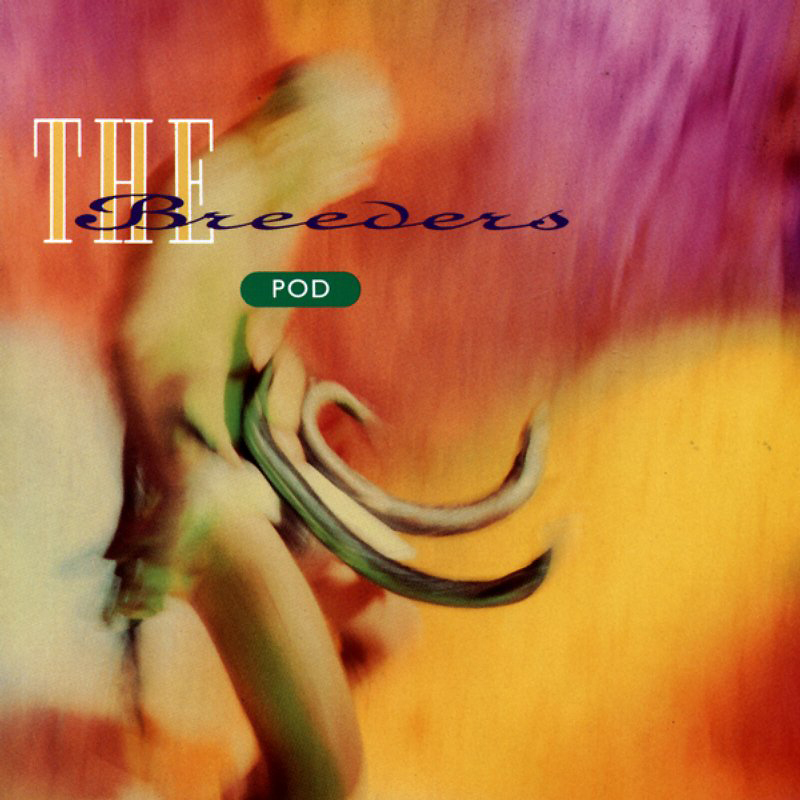
In a post I published a decade ago, I briefly provided an overview of the formation of The Breeders in 1989, the result of the dissatisfaction Kim Deal and Tanya Donelly were feeling regarding their roles in their then-current bands (Donelly was a member of Throwing Muses). Kim asked Kelley to join the new group and assist with the recording of their debut album Pod, but Kelley was unable to participate because she couldn't arrange to take enough time off of her analyst job. However, after Donelly left the group, Kelley quit her job and joined her sister's band in 1992, assuming the lead guitarist role (although at the beginning, she had NO IDEA how to play the instrument).

Many moons ago, I related to you all the story of my initial encounters and brief long-distance semi-friendship with Kelley Deal during the mid-to-late 1990s. In that narrative, I related how she and The Breeders were riding on the crest of global commercial and critical success, in the midst of a triumphant world tour capitalizing on their hit album Last Splash.  It seemed to me at the time that everything was going right for the band; little did I know how much turmoil was occurring behind the scenes, and how much things were getting out of hand for Kelley. Demons already long present in her life began to take over, exacerbated by the long hours of life on constant tour. Taken from a 2002 feature article on the group from The Guardian newspaper:

The Breeders spent several months during 1993 and 1994 touring, and it was during this period that Kelley's long-standing addiction to heroin stopped being a secret and started being a problem. When the band returned home, the Deals immediately started work on the follow-up to Last Splash, but in autumn 1994 Kelley was arrested for possession, and by the beginning of 1995 she was in rehab in Minnesota.

As I mentioned in that earlier post, Kelley got busted by the feds when she received a half-pound brick of Black Tar heroin from her dealer at her home address.  The subsequent felony charges could have landed her in jail for an extended period.  But her family pulled together to support her, and saved her from the slammer - not that she appreciated it at the time (also from The Guardian):

Kelley insists that her family drove her to the rehabilitation centre themselves, and that meant that when her case came to court, she wasn't convicted. "I hated my family," she admits. "They were all against me, they didn't understand me. I didn't think I had a problem."
She was ordered to report to the famed Hazelton rehab center in Minneapolis, Minnesota, where she spent much of 1995 in a structured, isolated environment, getting treatment for her addiction. Kelley's time at the clinic also helped her find a up-to-then untapped wellspring of creativity and inspiration, and for the first time she began penning her own songs. At the completion of her program at Hazelton, Kelley was gradually eased back into society, moving into a halfway house in nearby St. Paul for further observation and treatment. While there, she met and befriended Jesse Colin Roff, a local guitarist and drummer also undergoing drug rehab, and (tentatively, at first) began sharing with him some of the songs that she wrote while at the center. Intrigued and inspired, the two began jamming together and collaborating, and Kelley began plotting a return to active recording.

The duo began gathering like-minded musicians, including David Shouse from The Grifters and Jimmy Flemion of The Frogs, and by early 1996 Kelley was confident enough in the abilities of herself and her band (christened The Kelley Deal 6000) to enter Minneapolis's Terrarium recording studio to work on a debut album. Go To The Sugar Altar was completed in a month, and issued in the late spring of 1996.

Go To The Sugar Altar, to me, is the sound of a band, and a musician, finding their/her feet. The songs (all written either by Kelley herself or in conjunction with various band members) cover a number of genres: straight-ahead rock, some punky thrashing, a dollop of blues and even a dash of country thrown in from time to time. A lot of these songs sound somewhat like glorified demos... but that may be due to the nature of the circumstance, with Kelley producing and funding the project herself from whatever limited funds she had at her disposal. With that being said, most of the songs are winners, and Kelley's voice is a treat; it has the same familiar sound as that of her sister, but unlike Kim, who tends to bury her voice somewhat in her recordings, Kelley's is out front the entire time, and has an appealing tone and growl. Some of my favorite songs off of this album include "Dammit" and "How About Hero":


Comparing the Deal sisters' immediate post-Last Splash releases of the time [after The Breeders went on forced hiatus in the wake of Kelley's drug problems, Kim assembled what was originally intended to be a "new Breeders", but instead evolved into The Amps, and released a so-so album (Pacer) in late 1995], I feel that Go To The Sugar Altar is the truer follow-up/continuation of the hit Breeders sound.

The band's debut album met with decent reviews, and the group hit the road that summer for shows all across the U.S., drumming up support for the disc.  I saw The Kelley Deal 6000 a couple of times that year, as I mentioned in my earlier post, and at every show took the opportunity to try to say "hello".  During their tour, the label released the Canyon EP, containing the lead cut from the album along with the non-album track "Get The Writing".  I picked up both over the course of that year.

After their extensive tour, the group returned to Minneapolis in the spring of 1997 to record their sophomore album Boom! Boom! Boom!  During these sessions, Kelley and Jesse Roff took a little time apart from the other band members to record a two-song side project, titled Carnivale, under the moniker Solid State 6000. This single didn't expand upon the sound ideas that ended up on the full band album, but serves as a superb companion piece.

These were the final releases by Kelley on her own. After the Boom! Boom! Boom! tour ended in early 1998, the group went on indefinite hiatus, and Kelley returned to the Breeders' fold, where she remains to this day.

It's been a quarter-century since the band's debut, and while they didn't last very long, The Kelley Deal 6000 and related projects shouldn't be relegated to just a long-ago memory, or regarded as a 'flash in the pan'.  Kelley definitely had some things to say, and it is to her credit that, in the wake of all that was going wrong for her at the time, she was bold enough and adventurous enough to step out on her own and present to the public what was on her mind at the time. I enjoyed this group very much while it lasted, and miss heading out to see them in the small clubs they played around the country during that time. And on a personal note, it was an honor and a privilege to have Kelley as my friend, even for so brief a time.

With that being said, for your listening pleasure, here are:

  •  Go To The Sugar Altar, the debut album by The Kelley Deal 6000, released by Nice Records (Kelley's label) on June 4th, 1996; 
  • The band's Canyon EP, released later that summer; and
  • The Carnivale single, released by Solid State 6000 on the same label in mid-1997.

Enjoy, and as always, let me know what you think.

Please use the email link below to contact me, and I will reply with the download link(s) ASAP:

The Kelley Deal 6000 - Go To The Sugar Altar: Send Email
The Kelley Deal 6000 - Canyon EP: Send Email
Solid State 6000 - Carnivale (single): Send Email

Wednesday, November 18, 2015

Various Artists - Virgin Megastore Anatomy of Music: Volume One


A CD music sampler given away for free (with purchase) at participating Virgin Megastores worldwide in 1997. I recall
getting mine when I purchased Bjork's Homogenic in the store at Grapevine Mills Mall in Texas that fall. They just sort of handed it to me at the register; I was happy to receive it (free is always good), but there was nothing on the recording particularly cutting-edge or out of the ordinary.

You can determine that for yourself - here's the track list:
1. One Way Or Another - Blondie
2. Crowded House - Something So Strong
3. We're An American Band - Grand Funk Railroad
4. It Ain't Over 'Til It's Over - Lenny Kravitz
5. Fly Like An Eagle - Steve Miller
6. Thing Called Love - Bonnie Raitt
7. Rock This Town - Stray Cats
8. I'm Still In Love With You - Al Green
9. Hungry Like The Wolf - Duran Duran
10. Locomotive Breath - Jethro Tull
11. What's Love Got To Do With It? - Tina Turner
12. American Pie - Don McLean
13. Behind The Wall Of Sleep - The Smithereens
14. Higher Ground - The Red Hot Chili Peppers
15. The Weight - The Band
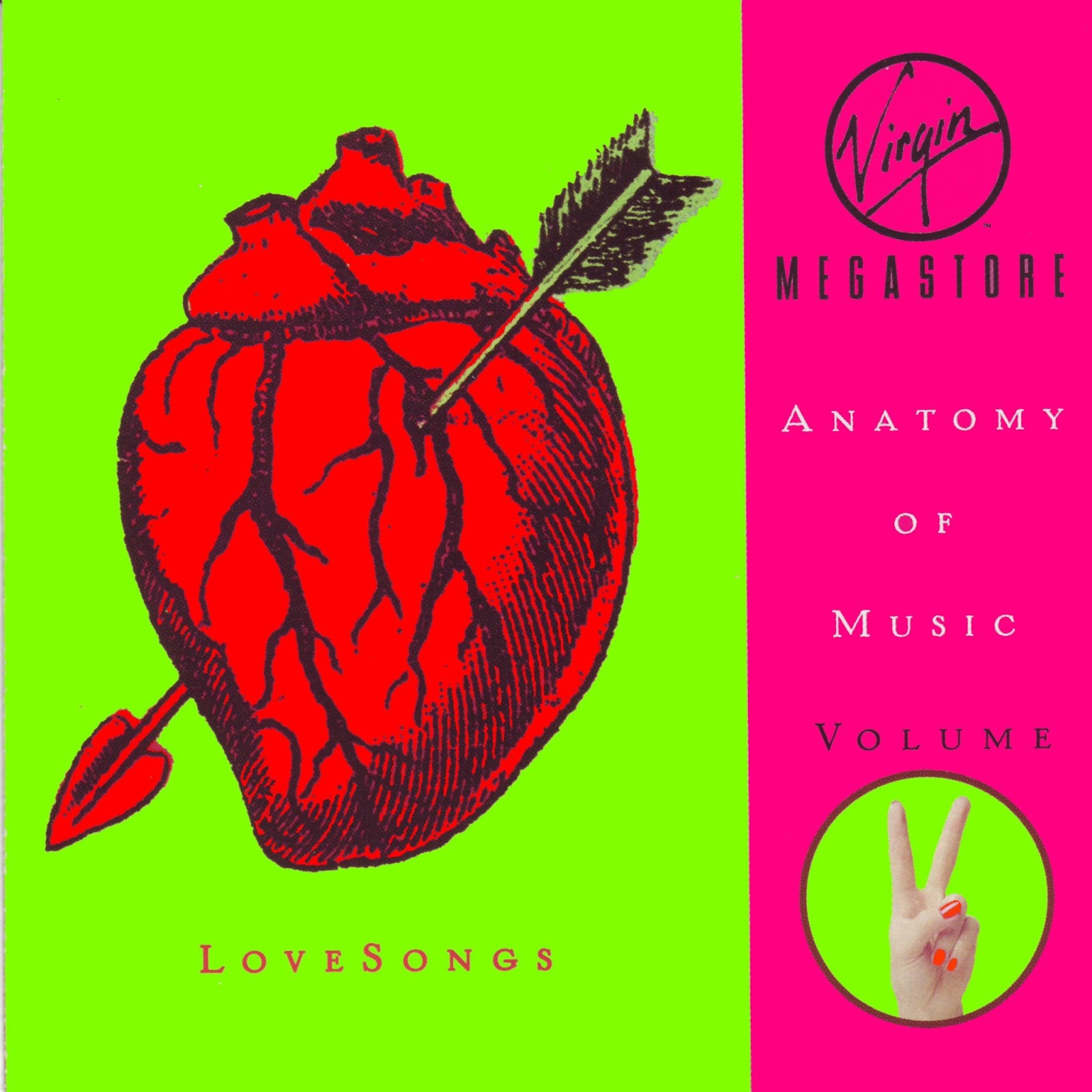
I believe that Virgin's goal on this disc was to break down music into its major parts and groups - rock, New Wave, easy listening, R&B, etc. - then provide representative examples of what they considered the best in each type of genre, in order to inculcate listeners who might not have as much familiarity with these different sounds (and hopefully generate more sales in their stores). Fair enough . . . On this thing, Virgin went out of their way to provide something for everyone, in the most inoffensive way possible; there's nothing on here that's going to generate controversy or set your hair on fire. I assume that Virgin planned on making these Anatomy of Music compilation freebies an ongoing thing at their stores, but they only put out one
more of them (Volume 2: Love Songs) before discontinuing the series in 1998.

The reason I'm posting this recording is as follows: I was looking through my CD racks this evening and came across this old disc. On a whim, I looked it up on Google, and found that this old giveaway - filled with conventional hits easily acquired from other sources - was being sold on Amazon for $50! I'm sorry, but that sort of blatant money-grubbing pisses me off.

So in order to head off the gougers (and the people seriously considering forking over big money for a CD like this), I offer to you for your enjoyment Virgin Megastore Anatomy of Music: Volume One, put out by Virgin Entertainment Group in late 1997. Enjoy this soothing musical pablum and, as always, let me know what you think.

Please use the email link below to contact me, and I will reply with the download link(s) ASAP:

Send Email

Wednesday, March 5, 2014

Sneaker Pimps - Spin Spin Sugar EP


The only thing worse than getting royally screwed by someone . . . is screwing yourself over. Here's a prime example.

Sneaker Pimps was the brainchild of two musicians from Hartlepool (in northeastern England), friends Chris Corner and Liam Howe. Chris and Liam were the sort of teenage music nuts who would hang out together after high school, talking about bands they liked and creating their own weird, experimental lo-fi bedroom recordings. Their mutual interests in reggae, pop, funk, folk and show tunes eventually found their way into their music, and after college the pair (as F.R.I.S.K.) inked a deal with small independent Clean Up Records and recorded the instrumental The Soul of Indiscretion EP in early 1993. This disc (along with others such as Massive Attack's 1991 album Blue Lines) is considered to be one of the earliest examples of what soon became known as trip-hop - a label that the duo came to despise, as they weren't out to create a whole new genre of music. Whatever their intent, and despite the label's small reach and limited distribution network, the 'right' people were exposed to the EP, and the new sound began taking off and spreading.

For a couple of years after this release, the duo worked as in-house producers for other Clean Up artists, and continued releasing trippy, funky, beat-heavy instrumental recordings on the label, both as F.R.I.S.K. (1994's Take The Sun Away EP) and as Line of Flight (World In A Cone EP that same year). But by late 1994, Corner and Howe were eager to move into producing their own complete songs, with more complex structures and vocals. Not feeling that they were up to the task of writing their own lyrics, they got in touch with an old Hartlepool school chum, Ian Pickering, and the three of them together honed about a dozen songs for eventual release. The only problem they had now was in finding an actual vocalist to sing their words over their music; Howe and Pickering couldn't sing very well. Corner had the pipes, but at the time he felt severe trepidation and anxiety over fronting as a lead vocalist. Beside, the group, now christened Sneaker Pimps (taken from an article they read in The Beastie Boys' Grand Royal magazine, about a guy they hired to track down classic sneakers), felt that the lyrics were more suitable for a female voice.

While attending a show in a Birmingham pub in 1995, Corner and Howe noticed Kelli Dayton, a saucy, bubbly lead singer and guitarist for a band called The Lumieres. They didn't think much of her personality, but they liked the sound of her voice, which seemed a perfect fit for the new songs they had available. After a few days of discussions, they talked Dayton into joining their band as vocalist. Two more old muso college friends, Joe Wilson and David Westlake, were also recruited to comprise a rhythm section, and the group entered the studio in early 1996 to record their first LP. Corner and Howe, as Line of Flight, served as producers, and shared engineering and mixing duties with others, including Flood and Nellee Hooper. This album,  
Becoming X, was released by Clean Up Records in England on August 19th, 1996. Throughout it all, Corner and Howe approached Sneaker Pimps and the album as a short-term project, fully expecting that the disc would repeat the fate of their previous Clean Up releases - a few thousand copies sold, a little recognition and acclaim in some limited quarters, and that would be that. They figured they would soon be back to their behind-the-scenes production duties and instrumental releases.

Of course, that's not quite how it turned out . . .

After a slow start, momentum behind this disc gradually began to build - first in England, where over the next year, four singles from the album ("6 Underground", "Spin Spin Sugar", "Tesko Suicide" and "Post Modern Sleaze") all made the British Top 25. The album itself went Gold in the U.K., with sales of over 100,000 copies, eventually reaching #27 on the charts. American distribution of Becoming X was picked up by Virgin Records, with the result being that "6 Underground" and "Spin Spin Sugar" also charted on the U.S. Hot 100 (the former nearly breaking into the Top Forty), and the two songs made the Top Ten on the American alternative and dance charts, respectively. The album also charted in the States, never reaching any lofty heights, but spending considerable time on the U.S. Billboard 200 charts and selling in excess of 200,000 copies. By all measures, the disc was a surprising, smashing success.

No one was more surprised than Corner and Howe; the runaway popularity of their little in-house project caught them completely off guard. These guys were primarily studio geeks, with no interest whatsoever in becoming rock stars (or so they initially claimed). But as the buzz began to grow in the U.K., Sneaker Pimps were reluctantly forced to get out on the road and tour. Originally slated for a short series of concerts in England, the tour kept expanding in size and scope, eventually morphing into an international campaign with scores of stops in dozens of countries over the next eighteen months. These shows were generally well-received, further enhancing sales of the album. By the end of 1997, Becoming X had estimated worldwide sales of over half a million. I snapped up my copy in the fall of 1996, while I was living and going to school in Charlottesville, VA - the local college station played "6 Underground" to death!


The release was so popular that an EP of remixes of the album cut "Spin Spin Sugar", put out in September 1997, also made the lower reaches of the UK Top Fifty. The EP song list was as follows:
1. Spin Spin Sugar (Radio Mix)
2. Spin Spin Sugar (Armand's Dark Garage Mix)
3. Spin Spin Sugar (Armand's Dark Dub)
4. Spin Spin Sugar (Farley & Heller's Fire Island Vocal Mix)
5. Walk The Rain (Previously Unreleased)
By the unofficial end of their Becoming X tour in early 1998, trip-hop was no longer an underground phenomena but a mainstream genre, with established pop artists such as Bjork, Madonna and Kylie Minogue(!) incorporating elements of the sound into their own music. Sneaker Pimps were classed, along with artists like Portishead and Tricky, as leaders of the musical movement - a circumstance that left the group enormously conflicted. While they had received critical acclaim and great financial success with their sound, Corner and Howe decided they didn't want to be shackled to the trip-hop genre; they wanted the freedom to move in any musical direction they wanted, even if that risked all that they had achieved and experienced over the past two years. To me, that's a bit of a pretentious stance by self-styled "artistes" . . . but that's what they wanted.

In addition to that emotional conflict, tensions also began to rise within the group. As lead vocalist, the attractive Kelli Dayton naturally became the focal point and public 'face' of Sneaker Pimps; her pleasant, talkative personality contrasted sharply with the darker, more brooding personae of her band mates. Corner and Howe, of course, resented all of the attention being focused on Dayton; as far as they were concerned, Sneaker Pimps was THEIR band, and she was considered by them to be little more than a hired hand. Soon after their return to the UK after the tour, the group used part of their Becoming X cash to move their studio from northeast England to London, and began working on songs for the second album. Dayton insisted on assisting in that songwriting, but was repeatedly rebuffed. By this time, Corner decided that he had gained much more confidence in his singing abilities (what a shock, eh?), and not surprisingly, the songs he, Howe and Pickering wrote over the
next few months suited his voice more than Dayton's. The handwriting was on the wall . . . Kelli Dayton was 'dismissed' (i.e., 'fired') from the group in mid-1998, and Sneaker Pimps continued on as a quartet with Corner as lead singer.

It took Sneaker Pimps nearly a year to finish their next album (ironically releasing the Becoming Remixed album - featuring Dayton's vocals - as a stopgap during that time). This sophomore
effort, Splinter, featuring a radically different sound from its predecessor, was released in mid-1999. As such, the album was generally ignored by most critics and mainstream rock fans in general, who were apparently looking forward to a more Becoming X-ish sound and found instead a more acoustic-driven, painfully emotive, somewhat whiny emo-rock disc.  Splinter has its fans, many of whom consider it to be Sneaker Pimps' best work. But the seemingly abrupt shift into this new sound did the group no favors, and resulted in extremely poor sales. The album faded from the charts very quickly, with only two cuts from the disc reaching the lower end of the British Top Sixty. If they had played their cards right and capitalized on their successful debut, Sneaker Pimps were poised to break out with their second disc. But the reception of Splinter doomed them from that point onward to being a second-tier band. And they had no one to blame but themselves.

After their next album, 2002's Bloodsport, flopped in Britain, the members of Sneaker Pimps scattered. Since that time, Chris Corner has released five solo albums under the moniker IAMX [hmmm - Becoming X; "I AM X" - still a little possessive and defensive, are we not?]. Liam Howe is a successful music producer, and Joe Wilson and David Westlake went on to form the band Trash Money. Kelli Dayton (now known as Kelli Ali) has released three solo albums, the last being 2008's Rocking Horse. Thus ends the tale of a band that singlehandedly engineered its own demise.

But at least we have some fond memories and good music to remember them by. Here's Sneaker Pimps' Spin Spin Sugar EP of remixes, released by Virgin Records on September 23, 1997. Enjoy and, as always, let me know what you think.

Please use the email link below to contact me, and I will reply with the download link(s) ASAP:

Send Email

Tuesday, May 28, 2013

The Simpsons - Songs In The Key Of Springfield


Phil Hartman (1948 - 1998) died fifteen years ago today.

I remember in detail when and where I first heard about his death.  I was working for a financial services corporation in Irving, Texas, doing a stint in the collections department after being part of the corporate staff, doing work on the commercial lending side, for my first year with the firm.  The collections group was located about two miles from the main headquarters building where I used to work, in a location close by Dallas-Ft. Worth International Airport.  Most of the folks there had worked there together a long time and were a pretty tight-knit group, so there was a lot of grumbling and resentment when I, the young hotshot from Corporate, arrived there to assume a job that at least half a dozen people there felt they deserved more.  Needless to say, my first couple of weeks there were not fun. 

But gradually, most of the people there began to warm up to me.  An important tool that worked in my favor was that, as a former corporate exec, I had been granted and was allowed to keep my unlimited Internet access.  Back in those days, I guess the company's thought was that if everyone had Internet access, all that employees would do was spend all workday screwing around surfing the Web (heh - that never happens nowadays, does it?).  So Web privileges were parsed out only to a fortunate few, mostly senior executives - and, for some reason, me.  This came in handy in my new position that March, during the annual NCAA basketball tournament, when I was able to provide up-to-the-minute scores of tourney games to the multitude of hoops fanatics (and office pool participants) there.  And I wasn't stingy about occasionally letting someone into my office to use Yahoo!  It's always little gestures like that, I've found, that turn people around.

I was sitting in my office on that early morning in late May, taking a break and checking out the news, when I came across the initial headline: "Phil Hartman Dead", with no further details offered at that time.  It was such an unlikely, unexpected, out-of-the-blue story that my mind initially dismissed it as one of those wild, unsubstantiated rumors that used to pop up as "news" in the early days of web reporting.  It was when the second headline popped up a few minutes later with the news of his death that I began to take it more seriously.  It took a while for the details to emerge; as in all murder cases, the circumstances were not pretty:

Apparently he and his wife Brynn had been having marital difficulties, a lot of which stemmed from Brynn's seething jealousy over her husband's success in light of her own failed acting career (well, that along with her rampant booze and drug problems - it seemed that she had a long-standing reputation in the industry and community as a total whack-job).  After another of their many domestic spats that evening, Phil's wife went out and remained out into the wee hours, slamming tequila shooters and snorting coke at a nearby bar.  She came back home at around 3 a.m., and without ceremony shot her husband to death point-blank while he slept in their bed.  Brynn then fled to a friend's house (leaving behind her two small children, who were asleep in the home during this entire incident), telling him about the shooting and promptly falling asleep on the guy's couch.  Initially, her friend didn't believe her story, but after finding the gun in her purse, he began to have second thoughts.  Brynn woke up about three hours later and dragged the guy over to her house, were he found Phil's body and immediately called 911.  By the time the cops arrived, Brynn had locked herself in the bedroom with her husband's corpse.  Before they could break the door down, she had shot herself in the head with a second gun.

It was shocking news - so much so that I got up and left my office in a daze, and stumbled over to the first person I could find to tell them the news.  They were just as shocked.  It just didn't seem possible that something like this could happen to a star of his caliber.  At that point in 1998, Hartman's career was reaching a peak.  He was about to begin his fifth season as the lead on the NBC sitcom NewsRadio.  And through the late '90's he starred in a series of films, including Houseguest, Sgt. Bilko and Jingle All The Way, most of which were poorly received critically but financial successes at the box office.

But, of course, Hartman's greatest success during the 1990s came from his many guest appearances on The Simpsons, and the list of classic characters he left behind - Lyle Lanley (one of the greatest musical performances in Simpsons history - the "Monorail Song"):


Incompetent attorney Lionel Hutz (this is a weird color-free video, but still good):

 And of course, the immortal washed-up actor Troy McClure:

Saturday Night Live, the show that made him famous, did a tribute show in his honor that aired on June 13th, 1998, a couple of weeks after his death, showing clips from Hartman's six-year residency on the program.  They replayed some of his classics:  Unfrozen Caveman Lawyer, The Anal Retentive Chef, Bill Clinton at McDonalds, etc.  One of the last things they played on that show was the following clip, "Love Is A Dream", directed by Tom Schiller.  Jan Hooks, Phil's co-star in this short, presented the piece, and couldn't stop crying as she did so.  After watching it, neither could I - in light of his passing, it is a perfect tribute, but it is devastating:

In a lot of ways, Phil Hartman's comedic work was sort of smarmy and overly broad, but it still had widespread appeal.  While he was never a big favorite with the critics, Hartman had fans of all ages, and to a man, everyone who knew of him was genuinely shocked and saddened by his death.  His friends in the industry knew him as a hard-working, 'normal' guy, seemingly unaffected by his fame and the trappings associated with it, and they were just as stunned as the rest of the public.  As Dan Snierson of Entertainment Weekly magazine wrote, in a column soon after the news broke, Hartman was "the last person you'd expect to read about in lurid headlines in your morning paper . . . a decidedly regular guy, beloved by everyone he worked with."  

The Simpsons was still going somewhat strong in the spring of 1998, the end of the show's eighth season.  And there were plenty of good and excellent individual episodes to come in the program's future seasons.  But I think that if you had to select the single point in time where The Simpsons moved from being classic, 'must-see' TV and started becoming standard, run-of-the-mill fare (or even worse), the loss of Phil Hartman's voice and characterizations is as good a place as any to mark the beginning of the decline. 

A year earlier, Rhino released Songs In The Key of Springfield, a compilation of some of the best musical bits from the show's first seven years.  There's some great stuff on here:  the entire "Oh, Streetcar!" musical episode (including the song ripping New Orleans that angered residents of that city); Tito Puente's outstanding (and authentic) mambo number "Senor Burns"; Beverly D'Angelo (as Lurleen Lumpkin) and her superb country number "Your Wife Don't Understand You".  But my favorite part of this disc is from the "A Fish Called Selma" episode, with the now-classic Troy McClure musical version of Planet Of The Apes:

Frankly, as good as the selections are on this album, there's not enough Phil Hartman on it.  And the public seemed to agree - this disc only made it to #103 on the Billboard Hot 200, significantly below its predecessor, the multi-platinum Top 5 smash The Simpsons Sing The Blues.  Still, this is an excellent overview of some of the great music that went into the show during the early part of its history. 

So, here it is for you to hear for yourself - Songs In The Key Of Springfield, released by Rhino Records on March 18th, 1997.  Enjoy, and while you listen, recall all of the great and hilarious Simpsons moments brought to you by the late, lamented Phil Hartman.  And, as always, let me know what you think. 

Please use the email link below to contact me, and I will reply with the download link ASAP:  

Send Email

Thursday, March 15, 2012

White Town - "Your Woman" Single


I was going through a storage box just the other day, looking through some old letters and photographs . . . and realized, wow, it's been fifteen years since I was last in England. I used to go there quite a bit, for work and on vacation, but until that moment it hadn't occurred to me that I'd been away from there that long. Time certainly has a way of getting away from you . . .

The last time I was in Britain was in the late winter of 1997, while I was in graduate school. All University of Virginia MBA students were required to do a big group project near the end of the second and last year. This project was usually one of assisting one of UVA's foreign and domestic corporate partners with a business problem or issue they were currently facing; it's basically free consulting work for them, and hands-on training for us. The group I ended up in was assigned to a large British insurance company, with the task of determining the feasibility and cost effectiveness of the insurer owning and operating its own nationwide chain of auto repair facilities. As part of our research for this project, we were to spend a week in England, meeting with our corporate contacts and making site visits, at the end of which we would deliver a preliminary report of our findings.

So one morning in early March of that year, I drove up from Charlottesville to Dulles Airport in Northern Virginia, and with my fellow classmates took a Virgin Atlantic flight across the ocean into London Heathrow. There, an insurance company car was waiting to take us on a 90-minute drive northwest to lodgings in a small village called Tiddington, close to the corporate headquarters located in Stratford-upon-Avon, the legendary birthplace of the great William Shakespeare. By the time we arrived there, it was already getting dark, although due to the time change we were all functioning as though it were still in the early afternoon of the time zone we just left. Still, we had a lot of work to do the next day (although the company acknowledged our incipient jet lag by scheduling our first meetings for late the next morning), so we had an 'early' dinner at a local Indian restaurant and hit the hay long before 10 p.m. local time.

I woke up before the rooster early the next day, our first morning in England, and decided to take a walk and do a little exploring around the area before our first scheduled meeting with the insurance company people later that a.m. I pulled on my shoes and my beloved long black wool overcoat (mentioned here) and stepped out into the frosty, somewhat misty morning, heading west down the main road. I wasn't really going anywhere - I was just having a wander. I heard a faint gurgling off to my right, where the morning mist seemed to be the thickest, so I turned down the first side street I came to and headed towards it. In a few minutes, I found myself standing on the weedy banks of the Avon, a river steeped in history and legend. The river itself wasn't that impressive; in the States, a run like that would barely qualify as a brook, much less a stream. But, still, I was powerfully affected standing by it. With the heavy fog serving to obscure the sights and muffle the few early morning sounds of modern society, it was easy to imagine that Shakespeare had long ago once stood in the very spot I stood in, gaining inspiration from the same natural, bucolic sights I was then taking in. Even with all of the things we did in England later during that trip, that brief moment I spent alone beside the Avon was one of my personal highlights.

The rest of the day was spent down the street at work, getting our assignments and gearing up for the week to come. My fellow grad students and I split up into three or four two-man teams, each assigned with conducting on-site interviews at body shops and repair facilities all over the country. Beginning the next day, we were going to be driving into every corner of England, ostensibly to see if there were regional differences in the nature and cost of repair work being done. I made it back to my room late that afternoon to rest up and decompress a bit; I fired up the telly and was pleasantly surprised to find an episode of "Shortland Street" on one of the channels ("Shortland Street" is a long-running primetime New Zealand soap opera; back when I lived in Christchurch, it was almost required viewing for everyone there. Even the people who badmouthed the genre, the implausible plots and clichéd acting were, more often then not, devoted viewers). Later that evening, feeling a little "dry", I went across the street to an authentic-looking public house I'd noticed earlier that morning, The Crown Inn. I was not disappointed; the Crown had the look, feel and ambiance of what an American imagines an old English pub to be like - old and creaky, dark and smoky, with tankard-scarred oak tables, genial, ruddy-faced barkeeps and clientele, and a roaring blaze in the fireplace. I sat there near the fire with a pint of Guinness in front of me, writing a letter to a girl I liked back in the States, and happily felt like, yes, I really was in England.

My partner and I began our journeys early the next morning. He was in charge of driving for the first leg down to Slough, just west of London. That gave me time to take in the early morning countryside on either side of the highway. But after a while, that got old, so I switched on the radio. While spinning around the dial, I chanced upon the middle of a catchy little number I'd never heard before. The song was built upon a steady electric piano-and-drum groove, and punctuated by a nifty three-note repeated riff, played by what sounded to me like electronic horns. At first, I couldn't get a clear handle on the gender of the singer; the voice in the song lamenting relationship problems could have been either a man's or a woman's. Then came the chorus, which I heard as "I could never be a woman . . .", which indicated to me that the singer was a dude. My initial impression was that the tune was about a guy admitting to and commenting on his poor behavior to his girlfriend, while at the same time sympathizing with her over putting up with his bullshit. "I could never be a woman" - to me, that was a brilliant line and premise! I didn't catch the name of the singer or song then, but I knew that eventually I would.

I heard that song several more times that day as we made our way from place to place west and south of London - while it was unknown in the States, it apparently was a big hit over in England. The more times I listened to it (in some cases now in its entirety), the more mistaken my initial take on the song seemed to be. Various lines just didn't add up to what I assumed the overall premise was. Was the guy in the song projecting his feelings onto his girlfriend? Was he gay? Was it really a woman singing, and not a guy at all? I finally caught a broadcast where the DJ gave out the song details - it was called "Your Woman" by a band called White Town. That's when it all made sense to me - it wasn't "I could never be a woman"; it was "I could never be your woman". The male singer was impersonating a woman in the song - fair enough. I didn't learn more about the group until I returned to the States.

The "band" White Town was (and is) essentially one man, India-born Englishman Jyoti Mishra. When he was 23, he saw The Pixies play during their April/May 1989 English tour (immediately in the wake of their recently released album Doolittle). Inspired by what he saw, Mishra put together the first version of his band a couple of months later. With Mishra fronting a group consisting of a bassist, drummer and guitarist, they were the typical small town combo (based in Derby), trying to make a name for themselves by playing support gigs for other more famous and established bands passing through the area. The band's first release, the self-financed 7" White Town EP, came out in 1990 and was greeted with a deafening silence. By the end of that year, all of Mishra's supporting musicians had abandoned him, and White Town became a solo enterprise. For the next few years, the singer began making records (mostly EPs, and one album) out of his home studio, utilizing the occasional assistance of local Derby musicians, and releasing them on small independent labels. All of these releases failed to chart, in England or elsewhere.

White Town and its records were essentially Mishra's single-minded, unsuccessful conceit until the >Abort, Retry, Fail?_ EP was released in late 1996 on independent Parasol Records. This disc featured "Your Woman", a reworking of an old Bing Crosby song from the 1930s called "My Woman" - the most popular version of which was sung by Al Bowlly with the Lew Stone and Monseigneur Band and featured in the movie Pennies From Heaven (Mishra appropriated the trumpet riff from the original version (contact me with the following email link if you want this file: Send Email) and featured it prominently in his song). Mishra's "female" voice in the song was a bold, gender-skewing move, but one based on art rather than on sexual orientation. Either way, it made quite a stir. For once, a White Town release gained significant airplay and buzz, so much so that Chrysalis Records (a subsidiary of industry giant EMI) quickly swooped in and put together a joint distribution deal with Parasol and a recording contract with Mishra before the end of the year. With EMI's marketing muscle behind it, "Your Woman" made it to #1 on the UK charts by January 1997.


Chrysalis/EMI was eager to capitalize on the success of the single, and pushed Mishra unmercifully to put out a supporting album as quickly as possible. This heavy-handed pressure led to an ongoing, bitter dispute between the label and artist during the recording and subsequent release of White Town's Women In Technology in late February 1997. The album made it to the lower reaches of the British Top 100 chart, due almost entirely to the inclusion of the hit single in the song lineup. But the bad blood between Mishra and EMI remained and even intensified, so much so that by the end of 1997, barely a year after signing on, White Town was booted from the label.

"Your Woman" was sort of like the unofficial theme song for my time in the UK. We travelled all over the country for our site visits, mostly in the South of England. However, there was still plenty of time for fun and sightseeing - among other places, we went to Blenheim Palace, my hero Winston Churchill's ancestral home; Oxford University, a campus and area so steeped in history and gravitas that it made our own University of Virginia seem like some sort of 2-year vocational school; and the Ashdown Forest, home of Winnie the Pooh. We met up with the rest of our team members in London for a night; none of them besides me had ever been there before, so I sort of served as the tour guide there. And back in our home base, the insurance company made sure that we got a full appreciation of the city of Stratford-upon-Avon. We toured all of the Shakespeare-related attractions, including his home (which was interesting, but it was sort of off-putting to look out of his window to see a Laura Ashley shop directly across the street), and one night we
attended a performance of Much Ado About Nothing at the Royal Shakespeare Theatre (an unknown by the name of Damian Lewis had a small part in the production). On our final evening there, our hosts ferried us up to a very old village in the Cotswolds, where we spent the night toasting one another's health in a 200-year-old pub that had an ancient, rutted skittles lane in the back room (I knew it was going to be a good night when, on a whim, I asked the barkeep for a Mackeson XXX Stout, an old favorite and deeply mystical selection nearly impossible to find in the States, and up to that point difficult to come across in England - the man served it up instantly, at the perfect temperature). Through it all, that song played everywhere, and I made a note to myself to acquire a copy when I returned to the States.

By the time I returned to Virginia, "Your Woman" was making a small run on the American charts, eventually reaching #23 on the Hot 100. That was the group's high-water mark. With the demise of the contract with EMI, White Town/Mishra rapidly returned to obscurity. He continues to release albums and singles on independent labels and his own Bzangy imprint, all of which have been met with tepid reviews and low sales. Until the increasingly unlikely event of lightning striking twice for him, White Town was and is considered a one-hit wonder. But hell - I guess that's better than NO hits, eh?

Here's the 2-song White Town Your Woman single, released by the American arm of Chrysalis in 1996. For me, this song will always be associated with England, and especially with a cold, foggy morning when I stood on the banks of the Avon and briefly imagined myself communing with the spirit of the immortal Bard.

. . . or not. Either way, enjoy - and as always, let me know what you think.

Please use the email link below to contact me, and I will reply with the download link(s) ASAP:

Send Email