Random mumblings and mundom ramblings on music (mostly), and whatever else pops into my mind . . .
[The files attached here are for review only, and should be deleted after two weeks. If you like the bands, go buy the albums . . . like I did!] . . .
And yes - EVERYTHING posted here is still available!
As I did during this time last year, the following are a series of posts regarding possibly less
heralded/recognized musicians and artists who died in 2021 who will be sorely
missed.
Richard H. Kirk, a founding member of influential English industrial/electronic band Cabaret Voltaire, died on September 21st at the age of 65.
Cabaret Voltaire came together in the early 1970s, when Sheffield, England resident Chris Watson, an admirer of Brian Eno's early work, began experimenting with his own self-made electronic music gizmos. His early noodlings caught the attention of fellow Sheffieldite and Eno devotee Kirk, and the two began working together making sound collage tape loops. Kirk began adding traditional instruments into the mix, and late in 1973 enlisted his friend Stephen Mallinder to add vocals and bass guitar. The band began appearing live at venues in the central UK in the spring of 1975, but these performances leaned more towards performance art than actual concerts. Their provocative stage antics led to some highly raucous and violent incidents in those early days (with injuries incurred by both audience and band members), but with the rise of punk rock in the late '70s, audiences became more accepting of what Cabaret Voltaire had to offer. By the end of that decade, the group was sharing bills with the likes of Joy Division and Gang Of Four. Their debut album, Mix-Up, was released in 1979, the first of over a dozen LPs put out during the band's initial run (they broke up in 1994, only to reform in 2014. albeit with Kirk as the sole remaining member).
I didn't know anything about Cabaret Voltaire until the mid-80s, during my senior (First Class) year at the U.S. Naval Academy in Annapolis, MD. That year, an underclassman nicknamed "Rock" moved into my company. Rock was the antithesis of what the standard template for a military officer was or should be - he was tall, gaunt and geeky, in a young Ric Ocasek-sort of way. And he had both a biting wit and a semi-rebellious attitude, features that did not serve him well with the Academy leadership and hierarchy.
But he had superb musical tastes, and he and I began bonding over our shared enjoyment of bands considered to be outside of the popular mainstream. Rock turned me on to groups like Pere Ubu and Bauhaus with its various offshoots (like Tones On Tail and Love & Rockets). And he was the one who introduced me to Cabaret Voltaire, playing "Crackdown" from the album of the same name for me one weekend afternoon. But even with exposures to that album and songs like "James Brown" and "Sensoria" from their next disc Micro-Phonies, I can't say that I was a huge CV fan until after I graduated and moved to Athens, Georgia for a few months. As I've mentioned before, mid/late-80s Athens was a musical hotbed, and the University of Georgia's student-run radio station, WUOG, was amazing, always playing interesting stuff. And one day they spun the song "I Want You", off of the group's latest disc The Covenant, The Sword, And The Arm Of The Lord:
That was the tune that hooked me, and I immediately ran out to purchase the album.
The Covenant, The Sword, And The Arm Of The Lord was one of Cabaret Voltaire's most contentious and controversial albums. From Wikipedia:
"Cabaret Voltaire struggled with several censorship issues with Some Bizarre and Virgin Records upon the release of the album. The original title... was forced to be shortened [to The Arm Of The Lord] in the US to avoid reference to a former American white supremacist
organization. Musically, the album featured a more abrasive,
sample-heavy sound than its predecessor and contained many sexual
innuendos in the lyrics, to which Virgin Records took objection. Several
speeches by Charles Manson were also mixed in between songs."
Virgin laid down the law to the band, saying that there had to be a charting single released from this album, otherwise they would be dropped from the label. In response, Cabaret Voltaire cheekily wrote and directed the above video for the brutal "I Want You" (they later admitted the song was about masturbation). Shockingly, the move worked - the album made the British Top 60, calming the label's fears (the band still left Virgin for EMI for their next album in 1987).
Long before the original band's first dissolution, Kirk had begun releasing solo albums, the first of which being 1980's Disposable Half-Truths.
He released six more solo LPs prior to the breakup, then significantly
increased his output in the 1990s, with releases and collaborations
under his own name and scores of aliases (including Sandoz, DR Xavier,
Biochemical Dread, Electronic Eye Dark Magus and Wicky Wacky) dabbling
in not only the industrial, but the techno/dance genre as well. Not only was he a pioneer, but he was prolific, and will be sorely missed.
In celebration of the life of Richard H. Kirk, here's a copy of my favorite Cabaret Voltaire record, The Covenant, The Sword, And The Arm Of The Lord, put out by Virgin Records in November 1985. Remember, enjoy, and - as I always say - let me know what you think.
Please use the email link below to contact me, and I will reply with the download link(s) ASAP:
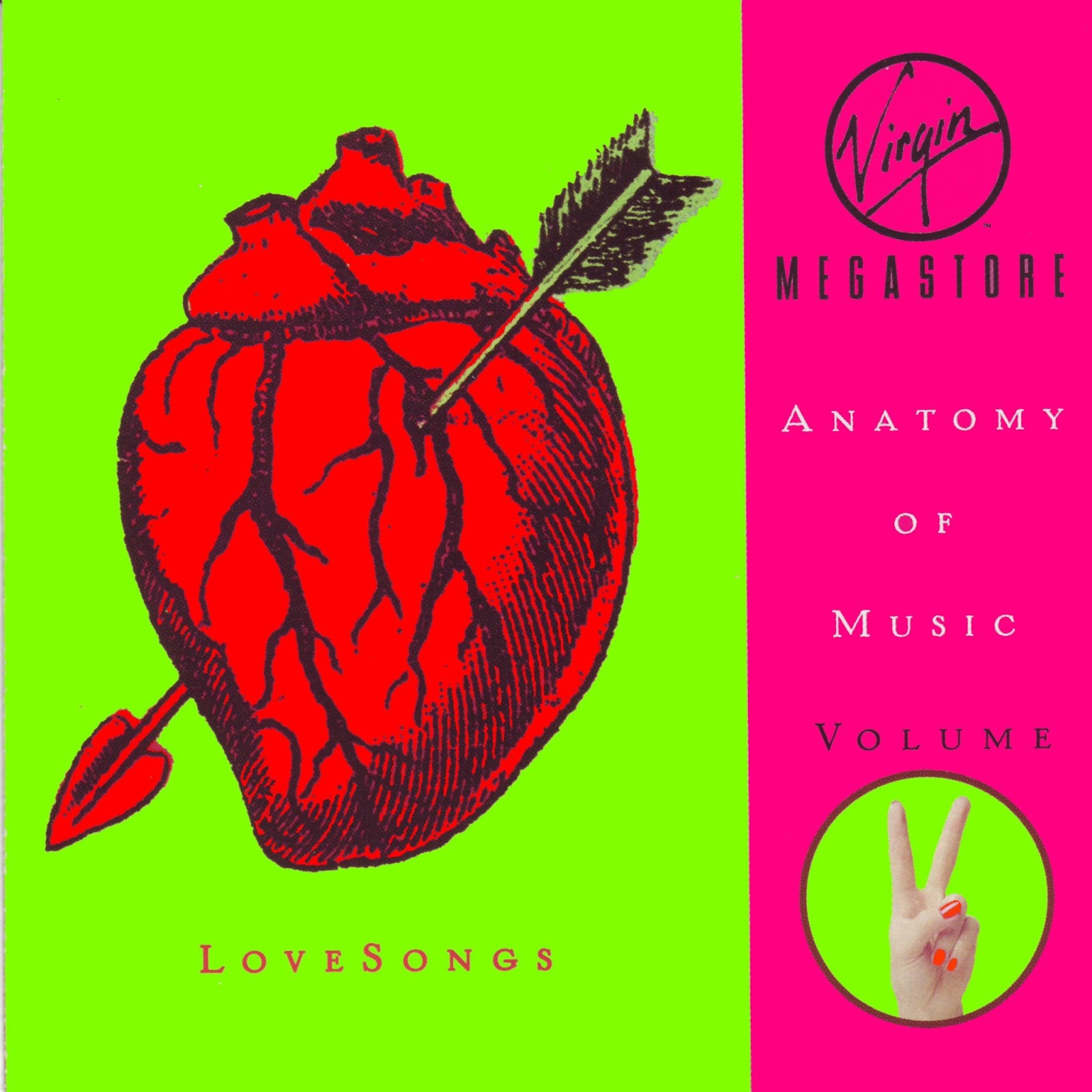
A CD music sampler given away for free (with purchase) at participating Virgin Megastores worldwide in 1997. I recall
getting mine when I purchased Bjork's Homogenic in the store at Grapevine Mills Mall in Texas that fall. They just sort of handed it to me at the register; I was happy to receive it (free is always good), but there was nothing on the recording particularly cutting-edge or out of the ordinary.
You can determine that for yourself - here's the track list:
1. One Way Or Another - Blondie
2. Crowded House - Something So Strong
3. We're An American Band - Grand Funk Railroad
4. It Ain't Over 'Til It's Over - Lenny Kravitz
5. Fly Like An Eagle - Steve Miller
6. Thing Called Love - Bonnie Raitt
7. Rock This Town - Stray Cats
8. I'm Still In Love With You - Al Green
9. Hungry Like The Wolf - Duran Duran
10. Locomotive Breath - Jethro Tull
11. What's Love Got To Do With It? - Tina Turner
12. American Pie - Don McLean
13. Behind The Wall Of Sleep - The Smithereens
14. Higher Ground - The Red Hot Chili Peppers
15. The Weight - The Band
I believe that Virgin's goal on this disc was to break down music into its major parts and groups - rock, New Wave, easy listening, R&B, etc. - then provide representative examples of what they considered the best in each type of genre, in order to inculcate listeners who might not have as much familiarity with these different sounds (and hopefully generate more sales in their stores). Fair enough . . . On this thing, Virgin went out of their way to provide something for everyone, in the most inoffensive way possible; there's nothing on here that's going to generate controversy or set your hair on fire. I assume that Virgin planned on making these Anatomy of Music compilation freebies an ongoing thing at their stores, but they only put out one
more of them (Volume 2: Love Songs) before discontinuing the series in 1998.
The reason I'm posting this recording is as follows: I was looking through my CD racks this evening and came across this old disc. On a whim, I looked it up on Google, and found that this old giveaway - filled with conventional hits easily acquired from other sources - was being sold on Amazon for $50! I'm sorry, but that sort of blatant money-grubbing pisses me off.
So in order to head off the gougers (and the people seriously considering forking over big money for a CD like this), I offer to you for your enjoyment Virgin Megastore Anatomy of Music: Volume One, put out by Virgin Entertainment Group in late 1997. Enjoy this soothing musical pablum and, as always, let me know what you think.
Please use the email link below to contact me, and I will reply with the download link(s) ASAP:
The only thing worse than getting royally screwed by someone . . . is screwing yourself over. Here's a prime example.
Sneaker Pimps was the brainchild of two musicians from Hartlepool (in northeastern England), friends Chris Corner and Liam Howe. Chris and Liam were the sort of teenage music nuts who would hang out together after high school, talking about bands they liked and creating their own weird, experimental lo-fi bedroom recordings. Their mutual interests in reggae, pop, funk, folk and show tunes eventually found their way into their music, and after college the pair (as F.R.I.S.K.) inked a deal with small independent Clean Up Records and recorded the instrumental The Soul of Indiscretion EP in early 1993. This disc (along with others such as Massive Attack's 1991 album Blue Lines) is considered to be one of the earliest examples of what soon became known as trip-hop - a label that the duo came to despise, as they weren't out to create a whole new genre of music. Whatever their intent, and despite the label's small reach and limited distribution network, the 'right' people were exposed to the EP, and the new sound began taking off and spreading.
For a couple of years after this release, the duo worked as in-house producers for other Clean Up artists, and continued releasing trippy, funky, beat-heavy instrumental recordings on the label, both as F.R.I.S.K. (1994's Take The Sun Away EP) and as Line of Flight (World In A Cone EP that same year). But by late 1994, Corner and Howe were eager to move into producing their own complete songs, with more complex structures and vocals. Not feeling that they were up to the task of writing their own lyrics, they got in touch with an old Hartlepool school chum, Ian Pickering, and the three of them together honed about a dozen songs for eventual release. The only problem they had now was in finding an actual vocalist to sing their words over their music; Howe and Pickering couldn't sing very well. Corner had the pipes, but at the time he felt severe trepidation and anxiety over fronting as a lead vocalist. Beside, the group, now christened Sneaker Pimps (taken from an article they read in The Beastie Boys' Grand Royal magazine, about a guy they hired to track down classic sneakers), felt that the lyrics were more suitable for a female voice.
While attending a show in a Birmingham pub in 1995, Corner and Howe noticed Kelli Dayton, a saucy, bubbly lead singer and guitarist for a band called The Lumieres. They didn't think much of her personality, but they liked the sound of her voice, which seemed a perfect fit for the new songs they had available. After a few days of discussions, they talked Dayton into joining their band as vocalist. Two more old muso college friends, Joe Wilson and David Westlake, were also recruited to comprise a rhythm section, and the group entered the studio in early 1996 to record their first LP. Corner and Howe, as Line of Flight, served as producers, and shared engineering and mixing duties with others, including Flood and Nellee Hooper. This album,
Becoming X, was released by Clean Up Records in England on August 19th, 1996. Throughout it all, Corner and Howe approached Sneaker Pimps and the album as a short-term project, fully expecting that the disc would repeat the fate of their previous Clean Up releases - a few thousand copies sold, a little recognition and acclaim in some limited quarters, and that would be that. They figured they would soon be back to their behind-the-scenes production duties and instrumental releases.
Of course, that's not quite how it turned out . . .
After a slow start, momentum behind this disc gradually began to build - first in England, where over the next year, four singles from the album ("6 Underground", "Spin Spin Sugar", "Tesko Suicide" and "Post Modern Sleaze") all made the British Top 25. The album itself went Gold in the U.K., with sales of over 100,000 copies, eventually reaching #27 on the charts. American distribution of Becoming X was picked up by Virgin Records, with the result being that "6 Underground" and "Spin Spin Sugar" also charted on the U.S. Hot 100 (the former nearly breaking into the Top Forty), and the two songs made the Top Ten on the American alternative and dance charts, respectively. The album also charted in the States, never reaching any lofty heights, but spending considerable time on the U.S. Billboard 200 charts and selling in excess of 200,000 copies. By all measures, the disc was a surprising, smashing success.
No one was more surprised than Corner and Howe; the runaway popularity of their little in-house project caught them completely off guard. These guys were primarily studio geeks, with no interest whatsoever in becoming rock stars (or so they initially claimed). But as the buzz began to grow in the U.K., Sneaker Pimps were reluctantly forced to get out on the road and tour. Originally slated for a short series of concerts in England, the tour kept expanding in size and scope, eventually morphing into an international campaign with scores of stops in dozens of countries over the next eighteen months. These shows were generally well-received, further enhancing sales of the album. By the end of 1997, Becoming X had estimated worldwide sales of over half a million. I snapped up my copy in the fall of 1996, while I was living and going to school in Charlottesville, VA - the local college station played "6 Underground" to death!
The release was so popular that an EP of remixes of the album cut "Spin Spin Sugar", put out in September 1997, also made the lower reaches of the UK Top Fifty. The EP song list was as follows:
1. Spin Spin Sugar (Radio Mix)
2. Spin Spin Sugar (Armand's Dark Garage Mix)
3. Spin Spin Sugar (Armand's Dark Dub)
4. Spin Spin Sugar (Farley & Heller's Fire Island Vocal Mix)
5. Walk The Rain (Previously Unreleased)
By the unofficial end of their Becoming X tour in early 1998, trip-hop was no longer an underground phenomena but a mainstream genre, with established pop artists such as Bjork, Madonna and Kylie Minogue(!) incorporating elements of the sound into their own music. Sneaker Pimps were classed, along with artists like Portishead and Tricky, as leaders of the musical movement - a circumstance that left the group enormously conflicted. While they had received critical acclaim and great financial success with their sound, Corner and Howe decided they didn't want to be shackled to the trip-hop genre; they wanted the freedom to move in any musical direction they wanted, even if that risked all that they had achieved and experienced over the past two years. To me, that's a bit of a pretentious stance by self-styled "artistes" . . . but that's what they wanted.
In addition to that emotional conflict, tensions also began to rise within the group. As lead vocalist, the attractive Kelli Dayton naturally became the focal point and public 'face' of Sneaker Pimps; her pleasant, talkative personality contrasted sharply with the darker, more brooding personae of her band mates. Corner and Howe, of course, resented all of the attention being focused on Dayton; as far as they were concerned, Sneaker Pimps was THEIR band, and she was considered by them to be little more than a hired hand. Soon after their return to the UK after the tour, the group used part of their Becoming X cash to move their studio from northeast England to London, and began working on songs for the second album. Dayton insisted on assisting in that songwriting, but was repeatedly rebuffed. By this time, Corner decided that he had gained much more confidence in his singing abilities (what a shock, eh?), and not surprisingly, the songs he, Howe and Pickering wrote over the
next few months suited his voice more than Dayton's. The handwriting was on the wall . . . Kelli Dayton was 'dismissed' (i.e., 'fired') from the group in mid-1998, and Sneaker Pimps continued on as a quartet with Corner as lead singer.
It took Sneaker Pimps nearly a year to finish their next album (ironically releasing the Becoming Remixed album - featuring Dayton's vocals - as a stopgap during that time). This sophomore
effort, Splinter, featuring a radically different sound from its predecessor, was released in mid-1999. As such, the album was generally ignored by most critics and mainstream rock fans in general, who were apparently looking forward to a more Becoming X-ish sound and found instead a more acoustic-driven, painfully emotive, somewhat whiny emo-rock disc. Splinter has its fans, many of whom consider it to be Sneaker Pimps' best work. But the seemingly abrupt shift into this new sound did the group no favors, and resulted in extremely poor sales. The album faded from the charts very quickly, with only two cuts from the disc reaching the lower end of the British Top Sixty. If they had played their cards right and capitalized on their successful debut, Sneaker Pimps were poised to break out with their second disc. But the reception of Splinter doomed them from that point onward to being a second-tier band. And they had no one to blame but themselves.
After their next album, 2002's Bloodsport, flopped in Britain, the members of Sneaker Pimps scattered. Since that time, Chris Corner has released five solo albums under the moniker IAMX [hmmm - Becoming X; "I AM X" - still a little possessive and defensive, are we not?]. Liam Howe is a successful music producer, and Joe Wilson and David Westlake went on to form the band Trash Money. Kelli Dayton (now known as Kelli Ali) has released three solo albums, the last being 2008's Rocking Horse. Thus ends the tale of a band that singlehandedly engineered its own demise.
But at least we have some fond memories and good music to remember them by. Here's Sneaker Pimps' Spin Spin Sugar EP of remixes, released by Virgin Records on September 23, 1997. Enjoy and, as always, let me know what you think.
Please use the email link below to contact me, and I will reply with the download link(s) ASAP:
I first heard the song "Here I Stand" during my first austral summer in New Zealand, sometime in early January 1994. It was like it appeared out of nowhere - I'd never heard of this guy Bitty McLean or his music prior to that time; suddenly the song was everywhere, on every station in the country.
While lightweight, it had a nice sort of old-school dancehall vibe to it, and that was enough to get me to purchase the single and find out more about this young singer.
Delroy McLean was born to West Indian immigrant parents in Birmingham, England in 1972. During his youth, he was immersed in 60's-era rocksteady and reggae, the sounds of his parents' homeland, and soon became adept at emulating this sound in his own singing. By the time he reached middle school in the mid-80s, he was fronting as vocalist for some of the major Birmingham sound systems [in the context of West Indian culture, a 'sound system' was a mobile group of engineers, DJs and toasters (MCs) who played popular music (at top volume) at street parties and dance halls - in Jamaica, sound systems were instrumental in the development of ska and reggae, and spurred the formation of local record production companies that ended up spreading this music throughout the world]. Nicknamed "Bitty" due to his young age and small stature, McLean and his singing gained a large local following.
After gaining his GCSE, McLean enrolled in a local Birmingham college, taking courses in sound engineering. After graduation, he found employment with British roots reggae band UB40, initially as an engineer,
soon graduating to assistant producer roles, and even appearing as an occasional background singer on some of their songs (you can hear his vocals featured on the 1993 album Promises and Lies).
At the same time he was working with UB40, McLean was utilizing his studio access to work on his own music, behind the scenes and on the side of his day job. In the spring of 1993, he inked a deal with small independent Brilliant Records, and in late July the label released his first single, "It Keeps Rainin' (Tears From My Eyes)", a cover of an old Fats Domino tune from the early 60s. The song was a sensation in England, staying on the national charts for six months and peaking at #2. The song was also popular in several other European and Commonwealth countries, topping the charts in Holland and New Zealand (which was strange, because I don't recall hearing it there at
all). Brilliant released Bitty's first album, Just To Let You Know..., in the fall of 1993; his second single, "Pass It On", didn't do as well as his debut. But it still made the British Top 40.
Virgin Records, never one to be caught flat-footed when there was a dollar to be made in music, quickly swooped in to acquire McLean's contract and recording rights from Brilliant, and by the beginning of 1994 had rereleased Just To Let You Know... under their own label. Learning the lesson of the relative failure of Bitty's second single, Virgin put all of its marketing muscle and expertise behind the release of the third album single, "Here I Stand". The effort paid off; "Here I Stand" was McLean's second big international hit, reaching the Top Ten in England and elsewhere, including New Zealand. In the months that followed, Virgin culled two more British Top 40 singles off of this album: a reggae-fied cover of The Shirelles' "Dedicated To The One I Love", which made it to #6 that May, and "What Goes Around", which only reached #36 that August.
Bitty McLean's music was popular and enjoyable enough, but more than a bit derivative. Unlike his former employers UB40 (who, to their credit, gave their former engineer their full support, and even toured with him for part of 1993), the vast majority of McLean's music avoided any controversial or political themes. His tunes were mostly inoffensive 'lovers rock' - light, soulful, 'crooners' reggae - a style and stance that put him at odds with the prevailing trends in reggae at that time. In addition, almost all of Bitty's hits were reggae covers of already-popular songs - along with the Fats Domino and Shirelles songs I mentioned earlier, "Here I Stand" was an old Justin Hines tune. So while the general public at large was receptive to him, in the world of reggae purists, McLean was considered a sellout and a fraud. However, as long as his records kept selling, this stance wouldn't be a problem for him.
Unfortunately, McLean's commercial success vanished just as quickly as it came to him. His second album, Natural High, was released in early 1995 but did not chart. Most of the singles released off of this album reached the extreme lower end of the British Top 60. Within 24 months of his greatest successes, Bitty was a has-been in the industry. He quietly returned to his engineering and production duties, working mostly with his old friends UB40.
However, in the past ten years McLean has made a comeback of sorts, releasing a couple of albums of rocksteady covers (2003's Soul To Soul and 2005's On Bond Street KGN, JA) and two studio albums with Sly & Robbie in Jamaica, 2007's Made In Jamaica and 2009's Movin' On. With his recent work and his tours with Sly & Robbie, his reputation has improved somewhat in hardcore reggae circles. His latest stuff hasn't reached the commercial heights of his early '90s material, but he seems contented now with improved critical acclaim.
That isn't to say that his early stuff was without quality. Here, for you consideration, is Bitty McLean's Here I Stand EP, released in England in January 1994 on Virgin Records. This disc features the original song, a seven-minute dub version, and a "60's version" (basically, McLean singing the same song over a simulated "dusty LP" crackle), along with the non-album single "Don't Be Confused". Enjoy, and as always, let me know what you think.
Please use the email link below to contact me, and I will reply with the download link ASAP:
I'd never even heard of Hunters & Collectors until about ten years ago. I was browsing through one of my old reliable music books, the Trouser Press Record Guide, and happened to come across their name. I can't remember what most of the article about this band said; the main thing I recall was that the TPRG mentioned that the band's sound was similar to that of England's The Fall.
Being a HUGE Fall fan, that was all I needed to hear. I instantly became more interested in what this band was about.
Hunters & Collectors was formed in Melbourne, Australia in 1981 by a bunch of local college students. They named themselves from a track on an album by Can. The band lived up to its naming source by creating a post-punk sound heavily influenced by 1970s German experimental groups like Faust, Tangerine Dream and, of course, Can, filtered through an Australian rock sensibility (Mark E. Smith's love of Krautrock was a primary early influence to The Fall's music as well; hence the comparison between The Fall and Hunters & Collectors in TPRG). The band's lead singer and principal lyricist was a guy named Mark Seymour, whose younger brother Nick later became bassist for Crowded House.
Hunters & Collectors were quickly signed to a subsidiary of Mushroom Records, and their first release, a 3-song EP called World Of Stone, was released in January 1982. Their debut album, Hunters & Collectors, was released by the label the following July, and reached #21 on the Australian charts. Another EP, Payload, was released on Mushroom in November of that year. In early 1983, the band began a six-month tour of the UK and signed to Virgin Records, who combined the band's LP and the Payload EP into a UK LP rerelease of Hunters & Collectors. Another album, The Fireman's Curse (recorded in Germany and helmed by renowned Krautrock producer Conny Plank), was released on Virgin in September 1983. But a multialbum deal with Virgin fell apart after the band publicly insulted the manhood of the managing executive of the label. By November, Hunters & Collectors had disbanded.
But by early 1984 the members had returned to Australia and reformed, at the same time revising their sound, moving away from post-punk and arty German rock pretensions towards a fuller, 'pub rock'-ier, bass-&-horn-driven attack that brought them nationwide fame. Hunters & Collectors' breakthrough album was 1986's Human Frailty, featuring their most popular song, "Throw Your Arms Around Me". The album was their first Australian Top Ten LP, and from then on, the band was one of Australia's top live draws, a 'bloke's' band that recorded several other popular songs, such as "Back On The Breadline", "When The River Runs Dry", and "Where Do You Go", before finally calling it quits in 1998.
Hunters & Collectors didn't do diddley-squat in America, but it's not for lack of trying. In 1986, they signed a parallel record deal with I.R.S. Records to release their albums in the States, but found little mainstream success ("Back On The Breadline" did make the Top Ten Modern Rock charts here, however). They were the support band for Midnight Oil's 1990 U.S. tour (The Oil's were touring on their American breakthrough record, Diesel & Dust), but failed to make any headway. I think that I.R.S. considered the band to be "too Australian" (whatever the heck that means), and as such, didn't know how to properly market the band in the U.S.
[Of course, that rationale makes absolutely no sense - Midnight Oil was a hell of a lot more "Australian" than H&C, and so it stands to reason that Diesel & Dust, a song cycle dealing almost exclusively with the plight of the country's aboriginal population, should have tanked here - instead, it was the album that made them in the States. So go figure.]
It's too bad that H&C couldn't find a U.S. audience. It's also sort of a shame that they changed their sound after 1983. Their debut self-titled album is absolutely superb. The 'hit' off of this album was supposed to be "Talking To A Stranger". But my favorite song off of Hunters & Collectors is "Run Run Run", an absolutely mesmerizing song that starts off as a bass-and-nagging guitar motorik hybrid, before suddenly, in the middle of the song, changing into a hypnotic chug that modifies yet AGAIN near the end into a grinding guitar workout. A completely amazing work.
But don't take my word for it. Here's the album for you to judge for yourself. As always, let me know what you think:
Please use the email link below to contact me, and I will reply with the download link(s) ASAP:
In my opinion, the last great Rolling Stones album, released in 1978 on Virgin Records. Yes, yes - I know that Emotional Rescue and Tattoo You were released afterwards, and both of these albums have their fans. But both Emotional Rescue and Tattoo You were comprised mostly of outtakes and leftovers, rags, bones and offal from sessions as far back as 1969, along with a lot of filler (especially Emotional Rescue, which frankly is redeemed by only two songs, the title cut and "She's So Cold" - otherwise, this album would be classed alongside Dirty Work as one of the Stones' worst).
In Some Girls, the Stones take on both disco and punk, the twin threats to their popularity and chart success in the late '70s. I think their response to disco, "Miss You", is spot-on, and a classic Stones song. However, they don't come at punk quite as directly. Instead of coopting the new sound, Mick and the boys instead channel punk's aggression, in songs like "When The Whip Comes Down" and especially in "Shattered", which they play the hell out of.
Radio stations had this one in heavy rotation throughout the summer and fall of 1978. You couldn't go more than 20 minutes, it seemed, without hearing "Shattered" on the radio. I loved this album, especially the cover art with the cutouts from the wig ads. The Rolling Stones dumped as much fire and vitriol into this album as they had; in hindsight, it now appears that afterwards, they had nothing left. Some of their later albums have been good, especially in the 1990s and afterwards (there was a lot of dreck put out by the Stones in the Eighties). But the drive, the passion, the verve is long gone.
What a drag it is getting old, indeed.
Anyway, here it is - enjoy:
Please use the email link below to contact me, and I will reply with the download link(s) ASAP:
Saying "Thanks" for the music you receive from here costs you absolutely nothing, and yet is worth quite a bit to me… If you can't bother leaving a comment on this blog for the first album/set we send you, don't bother making a request For a second album…