Showing posts with label Alternative. Show all posts

Thursday, September 24, 2026

Happy 35th Anniversary


Today is the thirty-fifth anniversary of a watershed day in music.  On that day, September 24th, 1991, not one, not two, but THREE iconic, genre-defining albums were released:  The Red Hot Chili Peppers' Blood Sugar Sex Magik, A Tribe Called Quest's The Low End Theory, and, of course, Nirvana's Nevermind.  A recent Rolling Stone article called it "probably the best day ever for new albums in music history", an assessment that is difficult to refute.

In the past, I've already said my peace about The Chili Peppers, and how I wrote them off after their third album, 1987's The Uplift Mofo Party Plan, and thus missed their ascent into popular and critical acclaim - starting with Mother's Milk in 1989 and peaking with BSSM two years later.  I was late in acknowledging the band and giving them their due, I'll admit that.

As for Nirvana, I've written extensively about them here over the years.  Don't think I need to rehash my stories about/memories of this group - if you want to reprise them, the posts are here and here. 

Regarding ATCQ:  I've never been much of a hip-hop aficionado.  To me, a lot of that genre consists of a bunch of posturing and braggadocio, heavily laden with profanity to make it "sound like the STREETS" (whatever that means) over the same tired, repetitive beats.  A Tribe Called Quest, however, was one of the very few hip-hop artists that broke out of that mold.  Their musical influences were vast, incorporating elements of jazz, funk and soul into their sound.  To call them a "hip-hop group" diminishes their output and importance; in many ways, A Tribe Called Quest's artistry transcended rap.

The only Tribe Called Quest story I have is that I was in the crowd for their final East Coast show and one of their last ever live performances, at the Panorama Music Festival on Randall's Island in New York City on July 30th, 2017.  Someone gifted me two tickets to the concert; I ended up selling one at the gates for almost three times the face value!  I went to the festival mainly to see the reemergence of Trent Reznor's Nine Inch Nails to the stage after a long hiatus.  But Tribe, who went on immediately before NIN as the sun went down, immediately grabbed my interest.  

Group mainstay Phife Dawg had died earlier that year, and the band decided to call it quits soon after.  For the New York performance, an empty mike stood on stage the entire time in tribute to the deceased group member.  The remaining members (Q-Tip, Ali Shaheed Muhammad, and Jarobi White) left it all on the stage for their last show in their hometown, belting out classics like "Check The Rhime" and "Electric Relaxation".  Here's a live sample of "Buggin' Out" (off The Low End Theory) from a video I recorded that day:


All in all, a great show.

Well, I won't belabor the point here regarding these three monumental albums; after 35 years, you all are already aware of the greatness of them.  So, here you are, the releases from that red-letter day, September 24th, 1991:

  • Nirvana - Nevermind, put out on DGC Records (what I'm offering here is the four-disc 20th Anniversary Super Deluxe edition, released in 2011.  There was also a five-disc 30th Anniversary edition released five years ago. but most of the additional discs include full live band concerts from that era, and seems a little redundant.  Trust me - this is the version you want);
  • The Red Hot Chili Peppers - Blood Sugar Sex Magik, released by Warner Bros. Records (Here's the Deluxe edition, containing two extra songs not included on the original album); and
  • A Tribe Called Quest - The Low End Theory, released on Jive Records.

I'm sure that most of you already have these albums, or some version of them.  If not, here, enjoy, and as always, let me know what you think.

(And yes, yes - I'm fully aware that both Primal Scream's Screamadelica and The Pixies' Trompe Le Monde also came out on that fateful day as well (as I recall, the Pixies disc was the only one I actually purchased on its release day...).  These albums have their fans, but in my opinion come nowhere close to the impact and influence of the three discs mentioned above.  If we were gonna
include ALL of the albums released that day, I would have included MOR dung like Bryan Adams' Waking Up The Neighbors here as well - that damn thing ended up selling 16 million copies!  But that's not happenin'!)

Please use the email link below to contact me, and I will reply with the download link(s) ASAP:
  • Nirvana - Nevermind (2011 Super Deluxe Edition) (4 Discs) Send Email
  • The Red Hot Chili Peppers - Blood Sugar Sex Magik (Deluxe Edition) Send Email

Saturday, January 24, 2026

Mark E. Smith with The Rolling Stones - Grotesque Rescue


Haven't put up an annual tribute/commemoration post on the anniversary of Fall frontman Mark E. Smith's death in a couple of years (he died on this date in 2018)... simply because in my opinion there hasn't been very much newsworthy information and/or activity regarding the band in a long, long while. The Fall Online forum, once my frequent go-to, is completely dead - the last update to their "Fall News" section was back in 2020. Same goes for The Official Fall Website - there's just been nothing there to report on.

At least House Of All, the band made up of former members of The Fall (including Martin Bramah on vocals, the great and long-serving Steve Hanley on bass, a dual drum attack from Paul Hanley and Simon Wolstencroft, and Pete Greenway on guitar) is still going strong. When they formed back in 2022, there was a lot of sniping in the press from Smith's family, who disavowed the band and claimed that they were ghoulishy trading on the name and legacy of The Fall (which of course the band members denied). But since that time the group has put out a series of well-reviewed releases which have for all intents and purposes put that issue to bed. While there are some echoes and vestiges of the former
group present, House Of All has managed to create their own unique sound and aesthetic. For their latest album, House Of All Souls, released in February of 2025, for some tracks they added an additional former member whose presence electrified old Fall fans - long-lost drummer Karl Burns. It was their most well-received album to date.

As for what Brix Smith-Start is up to, I really don't know. I haven't paid much attention to her since Brix & The Extricated, that half-assed karaoke band/vanity project she fronted with the Hanley brothers, folded in 2020. She announced the release of a new album, Valley Of The Dolls, in 2023, and I heard she put together another band to tour it. But I've made no effort to seek it/them out.

So, with all of that (such as it is), I can't recall how I first got wind of the release I'm featuring in this post. At first glance, it sounded intriguing: a mashup of two albums by seminal English groups, Emotional Rescue by The Rolling Stones and Grotesque (After The Gramme) by The Fall, both released in 1980, and both albums containing a total of ten tracks. From what I could gather, it was produced by a 
conceptual artist and musician out of Chicago named Peter Speer, who released a couple of other mashups/distortions by other artists on Bandcamp. I've got a number of mashups in my collection, including one of the greatest, Danger Mouse's Beatles vs.Jay-Z 2004 hip-hop masterpiece The Grey Album. So I was expecting/anticipating Speer to focus the same sort of care and imagination in putting this new one together...

Nope - didn't happen.  Sorry, but in my opinion, this is crap.

Instead of trying to meld/blend the two group's sounds and approaches into an interesting and modified sound, it appears that all Speer did was utilize the instrumental tracks from the Stones' album and superimpose Mark's vocals over the music. And for the most part, not in a coherent way. There's little attempt to 'fit' words and music together - Mark's voice is just sort of slapped in there. I tried my hardest to come away with some sort of good feeling from this disc, and finally just gave up. I can't even chalk this up as a noble attempt or inspired experiment; I don't know WHAT this is, but it certainly doesn't come across as such.

Shortly after this was released, the guys running the We Are The Fall podcast (Gavin and Steve) dedicated an entire show to this album - here it is:

I love this podcast, and usually I think these guys are spot-on. But they just go on and on singing the praises of this release... so much so that I was like, "What the f*ck are you two talking about?", and came away thinking that they and I had listened to two totally different albums.

In either event, if you're burning to hear this, here ya go: Grotesque Rescue, a purported Fall/Rolling Stones mashup album, produced by Peter Speer and released on vinyl in limited quantities (and later on CD-R) by Faxed Records on January 1st, 2024. Get ready... and after you've listened to as much of this as you can, let me know what you think, as always.

Please use the email link below to contact me, and I will reply with the download link(s) ASAP:

Send Email

Wednesday, January 24, 2024

More Mary Hansen (Stereolab) Obscurities


I was in the casino last weekend to play a little poker and make a couple of bets on the NFL playoff games scheduled for that weekend. The place I go has a huge sports book, with multiple giant screens covering a vast back wall, showing every current game (football, college and pro basketball, hockey, etc.) being played at that particular time on various broadcast networks.

As I was walking in to the space to place my bet at one of the automated machines (go Kansas City!), I was jolted when I suddenly heard Stereolab's "Lo Boob Oscillator" blasting at top volume all around me. Now, Stereolab isn't generally what you'd expect to hear coming out of a casino's music system... so needless to say, I was momentarily confused, as I couldn't immediately place the source. Then I looked up and one of the display screens, and saw it was running the following commercial for Hotels.com:


I couldn't believe it - a huge corporation choosing to set their ad to a tune by a band that I'll wager the vast majority of Middle American viewers had never heard of, and one of my favorite songs of all time, as I've related in a previous posting here! Now, I'm not overly superstitious... but I took that out-of-the-blue Stereolab encounter as a good omen... as it turned out to be. I not only won my football bet that night, but also came away with a solid win at the hold 'em tables.

As I've detailed time and again here, I adore Stereolab, and over the years have managed to gather up pretty much all of their recorded output as a group (or "Groop", if you will), both albums and singles, along with many of the band collaborations and individual member side projects. In the past, I've posted a couple of these harder-to-find releases here earlier, including the Rose, My Rocket-Brain! tour EP from 2004 and the Eaten Horizons Or The Electrocution Of Rock art-house release from 2007.

I was ecstatic when they reformed in 2019 after a ten-year hiatus, and went running like a bastard to their show at Boston's Royale back in September of that year, a couple of months before COVID hit (damn, hard to believe that show was THAT long ago...). The concert was superb, and even with the long break, they didn't seem to have missed a beat (and yes, they played "Lo Boob Oscillator"). But seeing the group up on stage that night once again made me wistful for the presence of Mary Hansen, their late percussionist, keyboardist and background vocalist, who died in 2002. As I mentioned in an earlier post, Mary brought an ineffable quality to Stereolab's music:

Hansen's voice was the perfect complement to Sadier's; their singing styles and vocal range were very similar . . . but different enough to add nuance and color to many of the band's songs.

So, in the wake of a previous request for these items from an intrepid blog visitor, I thought I'd post a few more releases I have that feature Mary's work.

  • Europa 51 - Abstractions

Over the years, Stereolab's drummer Andy Ramsay has been the catalyst behind an number of the band's experimental singles/EPs, offshoots and collaborations, Either with his bandmates or working independently, Ramsay has appeared on, written for or arranged releases with artists as diverse as The High Llamas, Ui, Wire, The Charlatans, Add N to (X), and many, many more. In the past, I've featured some of his work here on this blog. But this release was probably his most eclectic.

Named after Roberto Rossellini's early '50s Italian film starring Ingrid Bergman, Europa 51’s lone album, Abstractions, is the work of Ramsay and fellow Stereolab member Simon Johns, also featuring Mary Hansen, High Llamas members Dominic Murcott and John Bennett, jazz bass player Simon Thorpe and classical harpist Celine Saout. The album was a hybrid project that combined styles like lounge, jazz, bluegrass, and folk. While this album sounds somewhat like Stereolab from time to time, in many ways it goes far beyond anything The Groop had ever done - unfortunately, with somewhat uneven results. Mary's vocals are featured on tracks 4 through 7 ("Voyeurism", "Three Steps In The Sun", "Golden Age Of Gameshows" and "Free Range Corona"), and are lovely as always. But be sure to check out the entire album - it may not all be to your taste, but you will definitely find sounds that pique your interest.

  • Splitting the Atom - Splitting The Atom EP:

Another Ramsay one-off, a short-lived project with Stereolab's sound engineer Simon Holliday and Peter Kember, a.k.a. Sonic Boom (Spaceman 3, Spectrum, etc.). Only 2,500 copies of this EP were pressed for release on black vinyl, making it one of the rarest Stereolab-related discs. Mary Hansen added vocals to one track here.

Trivia: "Monkey Brain" (vinyl pops and all) was later used as the soundtrack to a short film/digital video called "four" by Man and Martin, described as "four whole minutes of pulsating thought muesli, ultra-violet and ultra-compact bulletproof adventures for ages four years and above" (Man and Martin is graphic designer, sculptor and AppleMacintosh convert Andy Martin). "four" premiered at the onedotzero2 digital film festival at the Institute of Contemporary Arts, London in May 1998. Here it is, if you'd like to see it:

  • Various Artists - Spooky Sounds Of Now:

An ostensibly Halloween-themed compilation CD - plus a very cool comic collection in book form ("Spooky Tales", subtitled 'Spirit Summoning Stories', edited by Mark Baines) - all housed in a lidded box. In addition to inclusions from alternative heavy hitters such as Jad Fair, Yo La Tengo and The High Llamas, this release also includes a short track by Blips, "Blip^/Blip~", featuring Stereolab's Tim Gane and Mary along with Sonic Boom once again. It sounds a lot like what was released on the Turn On side project, also released that year - hard to tell if it was an outtake from that session or not. No matter - it's a pretty good tune.

Here's the full track list:
1. Dymaxion - The Haunted Radio
2. Blips - Blip^/Blip~
3. Jad Fair & Jason Willett - Werewolf of London Town
4. Two Dollar Guitar - The Lonliest Monk
5. Herald - It's Under The Waltzers
6. Kooljerk - Mailor Jeune
7. Mount Vernon Arts Lab - Scooby Don't
8. Cylinder - Red Moss
9. Pink Kross - Spooky Dooky
10. Mystery Dick - Screambirds
11. Amplifier - Cat Whisker
12. The Yummy Fur - Saturday Night Mo-Mo
13. Dick Johnson - Vertigo
14. Angel Corpus Christi - Clown Sex
15. Project Dark - Full Length Mirror
16. G. Mack - Red Moss [Frame Trigger]
17. the Dramatics - Hallucination of a Deranged Mind [Inspired by Coffin Joe]
18. Yo La Tengo - 3D
19. Supermalprodelica - L'etat De Grace
20. High Llamas - Spool to Spool
21. Will Prentice - Singing Floorboards

  • Alternative 3 - Original Soundtrack Recording:

In June of 1977, England's Anglia Television aired a documentary called 'Alternative 3' on its weekly Science Report program. The episode was presented as a factual expose, in that the show's investigators had found evidence that life on Earth was soon to be doomed to extinction from global warming, and the two superpowers of that time (Russia and the United States) had been secretly working together for decades to terraform and eventually
colonize the Moon and Mars with selected superior humans - leaving the rest of us here on this planet to die off when the inevitable end came. The show detailed what appeared to be a global 'brain drain', with scientists, engineers and other highly skilled technicians and thinkers from all over the world seemingly disappearing or dying - but, in the course of the program's investigation, finding that they all had been recruited for the interplanetary program, and sequestered at a secret base to work on it. 'Alternative 3' was filled with interviews with authoritative personnel and film footage showing the level and scope of work on this secret plan up to the present day.


Within minutes of its airing, network and government phone lines were inundated with thousands of calls from jolted viewers, demanding more information on this all-too-real effort. Needless to say, 'Alternative 3' was all just a big hoax, a spoof of similarly styled conspiracy documentaries from that period. It was originally planned to air on April 1st (April Fool's Day) of that year, in order to drive that point home, but due to production issues was not broadcast until June 20.

Needless to say, it freaked a whole lot of people out, in the same manner that Orson Welles' radio broadcast of War Of The Worlds caused mass hysteria almost forty years earlier. Although Anglia Television and the show's producers freely and readily admitted that it was fake, the basic points and premises of 'Alternative 3' live on to this day in various forms in other global cabal/UFO/extraterrestrial conspiracy theories.

The score for the 1977 broadcast was composed by no less than Brian Eno, who subsequently released a portion of it on his 1978 album Music For Films. And in 2001, a collective of musicians (including Stereolab, Add N to (X), Richard Thomas and others, all recording under the Alternative 3 moniker) recorded and released an 'alternative' version of the film score, allegedly for a feature film on the hoax that was scheduled for release that same year (I didn't find any evidence that this movie was ever produced or released, however).

This album is promoted on the label's website as "Super fried electronic madness. Long lost sessions mostly recorded at the Centre of Sound in London plus some dubs done at the ‘labs studio, stretched and twisted into dense and filmic slices of electronica." Can't really argue with any of that description!


So here for your listening pleasure is a smorgasbord of Stereolab's Mary Hansen-related ephemera:

  • Europa 51 - Abstractions, released by London-based experimental music label Lo Recordings in 2003;
  • Splitting the Atom - Splitting The Atom EP, put out on Stereolab's own Duophonic Super 45s label in 1997;
  • The Spooky Sounds Of Now compilation, launched by Scottish independent label Vesuvius Records, also in 1997; and
  • Alternative 3 - Original Soundtrack Recording, another Lo Recordings release, put out on April 30th, 2001

Have a listen and once again contemplate and revel in the artistry of the late, lamented vocalist, who left this world way too soon - you are still missed, Mary, by multitudes of music fans.

And as always, let me know what you think.

Please use the email link below to contact me, and I will reply with the download link(s) ASAP:
  • Europa 51 - Abstractions: Send Email
  • Splitting The Atom - Spiltting The Atom EP: Send Email
  • Various Artists - Spooky Sounds Of Now: Send Email
  • Alternative 3 - Original Soundtrack Recording: Send Email

Saturday, October 28, 2023

Various Artists - No Alternative


Holy smokes - this seminal compilation is THIRTY YEARS OLD this week!

To understand why this disc is so essential, and so celebrated, I direct you to Stereogum's writeup on it from ten years ago, on No Alternative's twentieth anniversary - can't add a word to this superb summation.

I'll just save my breath, and instead provide you all with possibly the best and timeliest collection of then-rarities and unreleased songs by some of the giants of alternative music of that period.  Here's No Alternative, released on Arista Records on October 26th, 1993.  Enjoy this great throwback to an interesting and exciting era in modern music, and, as always, let me know what you think.

Please use the email link below to contact me, and I will reply with the download link(s) ASAP:

Send Email

Tuesday, April 4, 2023

T.R.A.C. (Top Risk Action Company) - Nice Up The Nation: The First Demos


Of Schulz... and Strummer... and second acts.

(Just read this over; this is a pretty meandering post... but it gets to the main point soon enough.  Just bear with me...)

I read a lot - that's my thing.  I rarely if ever watch TV; I'd much rather spend the evening with a book in my lap and a drink at my elbow, especially on these warm and fleeting summer nights up here when I can do so on my front porch.  

My tastes are pretty eclectic; in the past couple of months, I've gone through Patti Smith's Just Kids, F. Scott Fitzgerald's first three novels (This Side Of Paradise, The Beautiful and Damned (the ending of which I HATED) and The Great Gatsby (for the first time in more than twenty years)), David McCullough's final book (before his death last year) The Pioneers (which frankly in my opinion wasn't as compelling as any of his previous histories - no offense, but I think he should have hung it up after his second-to-last one, the brilliant The Wright Brothers), Barbara Tuchman's Stilwell and the American Experience In China (superb, although sometimes hard to keep track of all the Chinese names), Nathaniel Philbrick's Battle of the Little Bighorn history The Last Stand, and all three volumes of Edmund Morris' comprehensive biography of Theodore Roosevelt's life and presidency.  While taking in these larger tomes, I usually read other shorter/less-serious books for "dessert", such as obscure Jim Thompson hardboiled crime novels I didn't get through the first time (like A Swell-Looking Babe and Pop. 1280), Wild and Crazy Guys (documenting the rise of comedy mavericks like Steve Martin and Eddie Murphy in the '80s and '90s), and a recent compilation of Shary Flenniken's raunchy and insightful Trots and Bonnie comics from the old National Lampoon magazine.

I buy new books practically every other weekend, and have what I think is a pretty decent home library.  But I rarely if ever buy books just to "buy" them - I read everything I purchase, because something looks interesting and informative to me.

With that being said, there's really only one series that I collect just to "have", due to one of my childhood obsessions - the Charlie Brown cartoon reprints.  In 2004, Fantagraphics Books published the first in a series of books containing the entire print run of Peanuts, Charles Schulz's beloved, long-running and internationally famous comic strip.  Starting with the first strip published in 1950, Fantagraphics released two volumes a year, each volume containing two years of strips.  Over the next twelve years, the publisher put out what ended up being a total of 26 volumes capturing every comic printed between 1950 and 2000, along with a final volume containing collection of Schulz strips, cartoons, stories, and illustrations that appeared outside of the daily newspaper strip.

It's my personal feeling that Peanuts, and Charles Schulz, peaked in the Seventies.  By that time, the cartoonist had been drawing the strip for over two decades, and had all but perfected the complicated interplay of relationships between the characters.  And most importantly during that period, the character Snoopy had yet to take over and dominate the strip - the dog still interacted somewhat with the other characters, and his activities complemented those of (ostensible main character) Charlie Brown and the gang.  

But by the end of that decade, Snoopy's fantasy lives (the WWI flying ace, Joe Cool, novelist, etc.) began to be the focus of the comic.  He no longer needed any of the other strip characters to "be" - he just needed his imagination.  In support of this new focus on Snoopy, Schulz began constructing a entire side life for him existing apart from that of the other Peanuts characters, beginning with the 1970 introduction of Snoopy's bird friend Woodstock... and in the years that followed with beagle members of Snoopy's immediate family, including Spike, Belle, Olaf and the like.  In my opinion, this shift of focus dragged the entire strip down and completely screwed up the overall dynamic.  I was a huge fan of Peanuts when I was a kid, but after around 1980 I ceased to pay very much attention to it.

With that said, over the years I've collected every volume of the Fantagraphics Peanuts series up through the first thirty years or so of the strip, through the early 1980s run - the initial fifteen books.  But I've never felt quite "right" about stopping there.  As you can probably determine from my music posts, I'm a completist, and I like having a full set, whether that's the total discography of a band I like or all the books in a particular collection.  So last year I began a search for the remaining volumes, and found what I thought was the next in the series for sale at a discount on eBay, The Complete Peanuts: 1981 to 1982.  When it arrived the next week, I took the new book down to the section of my library containing the other Peanuts volumes... only to find that I ALREADY had a copy of that particular one, which I must've purchased unconsciously in years prior.

I couldn't return it, and I wouldn't just throw it out, so I did the next best thing; there's a really good used bookstore across town from where I live, which has thousands of volumes in various genres on sale and also runs a decent book-buying program.  I figured I could take my unneeded tome over to the shop and get a few bucks out of it, or possibly swap it out for something on sale there that I might be more interested in.

That weekend, I went over to the bookstore and made a deal with the proprietor for a reasonable price for my book; it was in almost-new condition, so I did pretty well.  Instead of taking the money and running, I took the time to look around while I was there, to see if there was anything that semi-struck my fancy.  And I found it in the "Popular Music" section - Redemption Song: The Ballad of Joe Strummer, a 2007 biography of the Clash frontman, written by his longtime friend, music journalist Chris Salewicz.  As I've mentioned before, The Clash are one of my all-time favorite bands, so I couldn't buy this book fast enough...
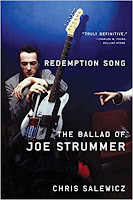
...And I found it well worth the acquisition.  Salewicz's excellent book goes through Strummer's life in intricate detail.  I found the following review on the GoodReads.com site - I heartily concur with every word, and can add nothing to this succinct and superb review:

The Clash was--and still is--one of the most important groups of the late 1970s and early 1980s. Indebted to rockabilly, reggae, Memphis soul, cowboy justice, and '60s protest, the overtly political band railed against war, racism, and a dead-end economy, and in the process imparted a conscience to punk. Their eponymous first record and London Calling still rank in Rolling Stone's top-ten best albums of all time, and in 2003 they were officially inducted into the Rock and Roll Hall of Fame. Joe Strummer was the Clash's front man, a rock-and-roll hero seen by many as the personification of outlaw integrity and street cool. The political heart of the Clash, Strummer synthesized gritty toughness and poetic sensitivity in a manner that still resonates with listeners, and his untimely death in December 2002 shook the world, further solidifying his iconic status.
Music journalist Chris Salewicz was a friend to Strummer for close to three decades and has covered the Clash's career and the entire punk movement from its inception. With exclusive access to Strummer's friends, relatives, and fellow musicians, Salewicz penetrates the soul of an icon. He uses his vantage point to write the definitive biography of Strummer, charting his enormous worldwide success, his bleak years in the wilderness after the Clash's bitter breakup, and his triumphant return to stardom at the end of his life. In the process, Salewicz argues for Strummer's place in a long line of protest singers that includes Woody Guthrie, John Lennon, and Bob Marley, and examines by turns Strummer's and punk's ongoing cultural influence.

One of the main areas of Strummer's life I was eager to get to in reading this book was the circumstances behind the dissolution of The Clash in late August 1983, when Mick Jones was summarily dismissed from the group.  Over the years, there have been various conjectures, claims and counterclaims surrounding who exactly pulled the trigger on Mick and why - was it Bernie Rhodes, who reentered the band's orbit as manager in 1981, after being dismissed from that role three years earlier?  Was it a decision by Joe alone, or a joint one with fellow band member Paul Simonon?  The book is sort of wishy-washy in terms of definitively pointing the dirty stick at anyone in particular, and I won't spoil anything for those of you who haven't had the chance to read it yet... although reading between the lines, Strummer does not come off looking particularly well in this episode.

Mick reflected on the internal politics that eventually split up the group during an interview for the BBC 2 programme Def II, circa 1990:

“It all started going wrong actually when Topper left…Topper left and it was never really the same, but we could have carried on, but then I got fired (laughs)…but we’d really stopped communicating by that time. We just managed to maintain a grunting level of civility, you know, before, but it was kind of all set up as well, you know, I was set up really, and that was kind of political, behind the back.

People were moving and trying to be influential, and different people were coming between members of the group, you know, things like that. All the things that start happening, you know, when you become really successful… you become a different kind of asshole. I turned up the day I was fired and got me guitar out, you know, and I think it was Joe it was who managed to muster up the courage to say that he didn’t want to play with me anymore, and when somebody says that to you…I just packed my guitar…just whoa… hey, you know, OK bye, and that was it. I walked, and Bernie came running out after me with a cheque in his hand, you know like a gold watch or something…which added insult to injury, but I took it anyway, and about two days mourning, and I started on the next group.”

The timeline of Jone's immediate post-Clash work has always seemed a bit scrambled to me; memories of participants in that period that I've read are variously contradictory and confused in terms of time periods and activities.  So I've tried on my own to come up with a plausible sequence, based on all of the information I could gather...

I'd always been under the impression/assumption that Jones formed Big Audio Dynamite in the weeks after his departure from The Clash.  But apparently that wasn't quite true.  Jones' initial post-Clash landing spot, within days of his dismissal, was as a member of General Public, Dave Wakeling and Ranking Roger's new project formed in the wake of The English Beat's breakup earlier that year.  With Mick on board as lead guitarist, General Public became a British New Wave/ska 'supergroup' of sorts, containing former members of Dexy's Midnight Runners and The Specials along with The Beat and The Clash.  But Jones' tenure in the group was short-lived; by the late fall of 1983, less than three months after leaving The Clash and halfway through the recording sessions for General Public's debut album All The Rage (where he contributed guitar to "Hot You're Cool", "Tenderness", "Where's The Line?" and many other tracks), he had already moved on.

Jone's next group, Top Risk Action Company (T.R.A.C) came together, it seems, in early 1984.  The story, as told by saxophonist John "Boy" Lennard (ex-Theatre Of Hate - Jones was the producer on that band's only LP, 1982's Westworld), is a bit inaccurate in regards to time, in that Jones had departed The Clash six months earlier - perhaps the 'spliff' smoke mentioned below left him somewhat confused:

"T.R.A.C. came about when I was at Mick's place. He got up to phone the press to confirm he was leaving the Clash... He came back, rolled a spliff and said he wanted to start a band with Topper and I."

As mentioned above, Jones also asked former Clash bandmate Topper Headon and Basement 5 bassist Leo Williams to join the nascent band with Lennard and himself, and the quartet began rehearsing and recording demos in the early spring of 1984.  But in hindsight, I don't believe that Mick was serious about prepping an actual album for release with this group.  He appears to be just exploring and experimenting with different sounds at this time for his own benefit.  In addition, Top Risk Action Company almost immediately faced some band turmoil; Headon's on-again/off-again heroin addition made a serious resurgence during this time.  As per Lennard again:

"I think [Mick] didn’t feel confident Topper could hold it together and was feeling overwhelmed and [therefore] closed it down [by sacking Headon]."

After Headon's firing, rehearsals became more sporadic, and Lennard began drifting away to other projects.  With that, T.R.A.C., as a viable enterprise, was over and done with before the summer of 1984 was out... not that this appeared to be any great loss for Jones.  It seems clear now that Mick himself wasn't too keen on pursuing his evolving musical direction with that group of musicians, and all of the demos the band recorded were shelved.

Into what remained of T.R.A.C. (namely Jones and Williams), Don Letts and Greg Roberts were recruited in July/August of 1984... and from the ashes of that former band rose the phoenix that was Big Audio Dynamite.  BAD's first gigs were in October 1984, and their debut LP This Is Big Audio Dynamite was released in November 1985, sparking off a decade of successful and critically-acclaimed albums and gigs.

That isn't to say that what Top Risk Action Company came up with pre-BAD was a bunch of crap.  What survived of the band's demos were recently recovered, remastered, and released on a bootleg CD.  Stylistically, the songs on this disc are to me somewhere between Mick Jones' genre-hopping dance songs on Combat Rock (e.g. "The Beautiful People Are Ugly Too", "Atom Tan", "Inoculated City") and proto-Big Audio Dynamite post-punk dance/funk/reggae (indeed, the demo version of "The Bottom Line" here was reworked and released on BAD's first album). 

Here's the full tracklist:

1. The Prolific 
2. Winning (Napoleon Of Notting Hill) 
3. Gone To The Dogs 
4. Ringmaster 
5. Astro Turf 
6. Interaction 
7. Nation 
8. Apprentice 
9. Ducane Road
10. Fare Dodgers 
11. The Bottom Line 
12. Euroshima (Edit)
13. Euroshima (Unedited)
 
Lineup: 
 
Mick Jones: Vocals/Guitar 
Topper Headon: Drums 
Leo Williams: Bass 
John "Boy" Lennard: Sax

On the whole, this release may not be everyone's cup of tea.  But at the very least, we can get a glimpse as to what was going in Mick Jones' mind at the time, and get a sense of his music creation process.  

I'll leave John Lennard again with the final word regarding T.R.A.C.:

"I thought it was a creative period for him but Mick is slow to bring it up. Great memories!"

Here for your listening pleasure and to add to your musical memories is Nice Up The Nation: The First Demos, a bootleg compilation of Top Risk Action Company tunes recorded during the summer of 1984.  Enjoy, and as always, let me know what you think.

Please use the email link below to contact me, and I will reply with the download link(s) ASAP:

Send Email

Wednesday, June 15, 2022

Various Artists - Until The End Of The World (Original Motion Picture Soundtrack)


I was saddened to learn of the death in Pittsfield, Massachusetts last week of singer and actress Julee Cruise. About four years ago, she announced that she was suffering from systemic lupus, a painful autoimmune condition that left her depressed and unable to move and walk. Reports state that she took her own life at her home, with The B-52's song "Roam" playing as she died (Cruise was a touring member of The B-52's in the early 1990s, replacing Cindy Wilson who took a few years off to raise her children; I remember seeing her on stage at a band show I attended in Washington, DC during that period).

In a post I wrote almost a dozen years ago, I detailed how I first came across Cruise's music and my impressions regarding it - the melancholy, haunting quality that both repels and attracts the listener. After the release of her debut album Floating Into The Night in 1989, Cruise issued a follow-up, The Voice Of Love, four years later. As with the first album, almost all of the songs on her sophomore release were written by director David Lynch and composer Angelo Badalamenti, so the sound and atmosphere are remarkably similar to Floating Into The Night. The Voice Of Love is more of a continuation of her debut, rather than a stand-alone entity. If you liked the first, than this one will be right up your alley as well.

Between these two albums, Cruise recorded a Lynch/Badalamenti-modified cover of an old Elvis Presley song, "Summer Kisses, Winter Tears", for the soundtrack to Wim Wenders' scifi drama Until The End Of The World, starring William Hurt. The plot of the film had something to do with in a finding and using a device that can record visual experiences and visualize dreams... but the end result was so confusing and convoluted that the few people who DID go to see the movie were left flummoxed by it. Cashing in on his success with small, cerebral films like Paris, Texas and Wings Of Desire, Wenders managed to secure a budget of $22 million for this latest film, an amount more than the cost of all of his previous films combined. And he proceeded to spend every penny of that money, spreading his production over almost half a year with setups in 11 countries.

While Graeme Revell (co-founder of the Australian industrial band SPK) was commissioned to compose the movie theme and other incidental music for the film, Wenders asked a number of his favorite recording artists (including Cruise) to contribute songs as well for inclusion. For their selections, he asked them to anticipate the kind of music they would be making a decade later, when the film was set. It was Wenders' desire to use every song he received to its fullest extent that ultimately contributed to the overall length of the film. The initial cut was reportedly TWENTY HOURS long, from which the director and producer whittled down to a more standard running time versions of 2 1/2 and 3 hours (which Wenders called the "Reader's Digest" versions). There is also reportedly a five-hour "director's" cut of this film which has been screened at various festivals over the years.

...Not that any of that mattered. The truncated versions of Until The End Of The World were released to theaters, first in Germany in September 1991, and later in the U.S. that December, and overall the flick was a commercial failure, managing to gross only about $830,000 against its $22 million budget.  Critics at the time savaged it; Roger Ebert gave the film 2 stars out of 4, describing it as lacking the "narrative urgency" required to sustain interest in the story, and wrote that it "plays like a film that was photographed before it was written, and edited before it was completed". He went on to say that a documentary about the globe-trekking production would likely have been more interesting than the film itself.  Other reviewers were even less kind.

But while the film flopped, the soundtrack was, frankly, amazing, featuring great songs by some of the top alternative performers of the day.  Wenders chose well.  Here's the soundtrack lineup:

  1. "Opening Title" – Graeme Revell
  2. "Sax and Violins" – Talking Heads
  3. "Summer Kisses, Winter Tears" – Julee Cruise
  4. "Move with Me (Dub)" – Neneh Cherry
  5. "The Adversary" – Crime & the City Solution
  6. "What's Good" – Lou Reed
  7. "Last Night Sleep" – Can
  8. "Fretless" – R.E.M.
  9. "Days" – Elvis Costello
  10. "Claire's Theme" – Graeme Revell
  11. "(I'll Love You) Till the End of the World" – Nick Cave & The Bad Seeds
  12. "It Takes Time" – Patti Smith (with Fred Smith)
  13. "Death's Door" – Depeche Mode
  14. "Love Theme" – Graeme Revell
  15. "Calling All Angels" (Remix Version) – Jane Siberry with k.d. lang
  16. "Humans from Earth" – T Bone Burnett
  17. "Sleeping in the Devil's Bed" – Daniel Lanois
  18. "Until the End of the World" – U2
  19. "Finale" – Graeme Revell

Personal favorites on this disc, in additon to the Julee Cruise song, include R.E.M.'s "Fretless", Depeche Mode's "Death's Door" and the Jane Siberry/k.d.lang collaboration "Calling All Angels".  At the time, most of these songs were unavailable anywhere else, making the compilation a gold mine of rarities. All in all, the soundtrack did better than the movie, eventually reaching #114 on the U.S. Billboard Top 200 Albums chart in 1992.

So, in honor of the life and art of Julee Cruise, I proudly offer to you all Until The End Of The World (Original Motion Picture Soundtrack), released on Warner Brothers Records on December 10th, 1991.  Enjoy, and as always... well, you know.

Please use the email link below to contact me, and I will reply with the download link(s) ASAP:

Send Email

Monday, January 24, 2022

Various Artists - The Fall: A French Tribute


Once again, here's my annual post commemorating the death of Fall major-domo and 'Godlike Genius' Mark E. Smith, who slipped this mortal coil four years ago today.

There's even less to talk about in regards to The Gruppe this year. As I've noted in prior commemorative yearly posts, the silence in FallWorld continues to settle. The last post on the Official Fall Website was in February 2018, the month after Mark died, and its discussion board has been dormant, with the last new post in May 2020, nearly two years ago. The "unofficial" (and in my opinion, better) website The Fall Online website hosted its last posting in June 2020. At least The Fall Online Forum there is still fairly active, with new posts and discussions almost daily. But I've definitely noticed a decrease in the scope and level of activity there. At least there are some Facebook group sites, such as "Mark E Smith & The Fall: It's Not Repetition, It's Discipline" and "The Mighty Fall", trying to hold up their end.  But it's distressing to see widespread memories of my all-time favorite band gradually fading away.

Imperial Wax was on hiatus for most of 2020, as the COVID moratorium on live music entered its second year. However, in October of last year, the band played its first gigs in almost two years, and continued with another one earlier this month. They appear to be expanding their concert slate in England and on the Continent further into the year, and have mentioned that they are in the process of writing their second album, which currently has an unknown release date scheduled.

Brix and The Extricated, Brix Smith-Start's much-maligned band made up of former Fall stalwarts, a group I have heaped tons of scorn and derision on over the years, appears to be no more - thank God.  Brix announced that she would be releasing a solo album, Valley Of The Dolls, later this year, and also putting together an all-female band made up of "post-punk feminists", including former members of My Bloody Valentine, to take out on the road sometime this spring. With typical modesty and humility, she added that the group would be "going under the name Brix Smith or possibly Brix Smith Group, I haven’t decided yet. It’s time for me to put my money where my mouth is and take it out there!"

(Man, the narcissism and relentless self-promotion NEVER ends with her, does it?)

Not much more left to say, so I'll just get to the music.  For your review this year, I'm offering a compilation of reinterpretations/re-imaginings of some classic Fall tunes, all done by French artists.  I love sets like this - not only do you sometimes get interesting, off-the-wall takes on songs you know well and love, this album also shows the worldwide reach and influence of The Fall's music.  I highly recommend it. 

Here for your perusal is The Fall: A French Tribute, released on Teenage Hate Records on November 15th, 2019. Enjoy, and use this disc to keep Mark E. Smith and his band in your thoughts for just a little while longer. And, as always, let me know what you think.

Please use the email link below to contact me, and I will reply with the download link(s) ASAP:

Send Email

Thursday, June 10, 2021

The Kelley Deal 6000 - Go To The Sugar Altar... Plus

Happy Birthday to famed musicians and identical twins Kim and Kelley Deal, who were born on this date in Dayton, Ohio sixty years ago today. In honor of this day, I thought I might as well post the rest of Kelley Deal's output I currently have in my possession.

Both of the twins got into music during their teen years in Ohio, working up songs in the home studio they built in their parents' basement, and playing folk- and country-laced originals and covers in and around the Dayton area (with Kim on guitar and Kelley on drums). This went on for a couple of years until the mid-1980s, when Kim got married and moved to Boston; Kelley stayed in Dayton and started working as a technical analyst.  Kim found a job in the Massachusetts biochemical tech industry, and that was her main focus in life until one day in March 1986, she came across an unusual advertisement in the "Musicians Wanted" classified section of the old Boston Phoenix newspaper that read, "Band seeks woman bassist into Hüsker Dü and Peter, Paul and Mary..."  On a whim, Kim answered the ad (she later found that she was the only person who did) and met locals Charles Thompson and Joey Santiago, old college roommates who were thinking about forming a band.  The trio began jamming together, and that's how the band The Pixies were formed.

Even with Kim on board, the rudimentary Pixies were still without a drummer. Kim contacted her sister Kelley back in Ohio, and subsequently paid for her to fly out to Boston to audition behind the kit for the band. Although both Thompson (soon to be known as Black Francis) and Santiago approved, Kelley wasn't confident enough in her drumming to join up, and opted to move back to Ohio. Kim then recommended another drumming acquaintance, David Lovering, a friend of her husband's she met at their wedding reception the year before. Lovering signed on, and the group was complete.

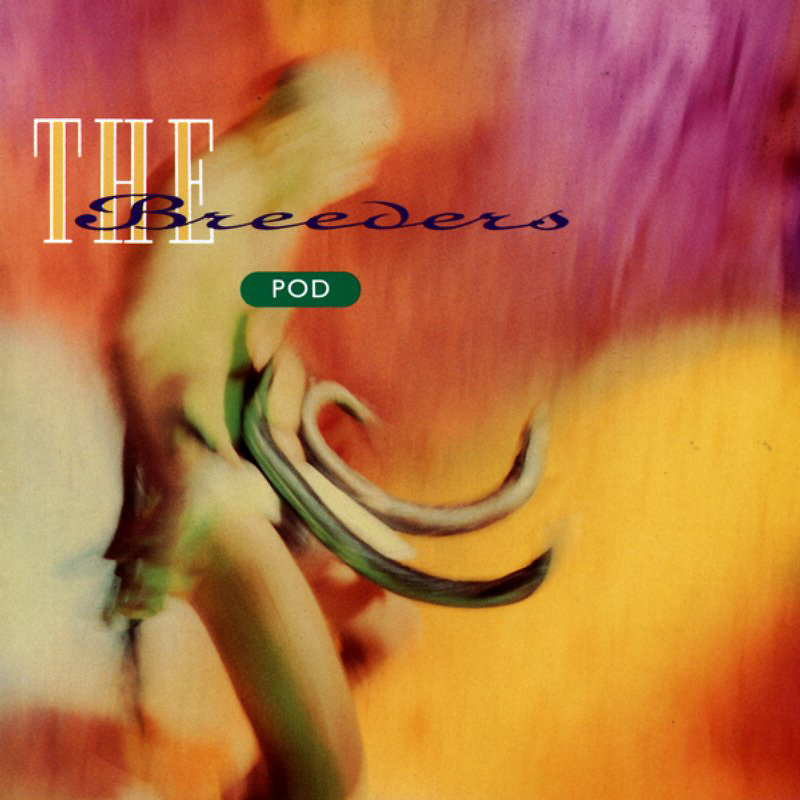
In a post I published a decade ago, I briefly provided an overview of the formation of The Breeders in 1989, the result of the dissatisfaction Kim Deal and Tanya Donelly were feeling regarding their roles in their then-current bands (Donelly was a member of Throwing Muses). Kim asked Kelley to join the new group and assist with the recording of their debut album Pod, but Kelley was unable to participate because she couldn't arrange to take enough time off of her analyst job. However, after Donelly left the group, Kelley quit her job and joined her sister's band in 1992, assuming the lead guitarist role (although at the beginning, she had NO IDEA how to play the instrument).

Many moons ago, I related to you all the story of my initial encounters and brief long-distance semi-friendship with Kelley Deal during the mid-to-late 1990s. In that narrative, I related how she and The Breeders were riding on the crest of global commercial and critical success, in the midst of a triumphant world tour capitalizing on their hit album Last Splash.  It seemed to me at the time that everything was going right for the band; little did I know how much turmoil was occurring behind the scenes, and how much things were getting out of hand for Kelley. Demons already long present in her life began to take over, exacerbated by the long hours of life on constant tour. Taken from a 2002 feature article on the group from The Guardian newspaper:

The Breeders spent several months during 1993 and 1994 touring, and it was during this period that Kelley's long-standing addiction to heroin stopped being a secret and started being a problem. When the band returned home, the Deals immediately started work on the follow-up to Last Splash, but in autumn 1994 Kelley was arrested for possession, and by the beginning of 1995 she was in rehab in Minnesota.

As I mentioned in that earlier post, Kelley got busted by the feds when she received a half-pound brick of Black Tar heroin from her dealer at her home address.  The subsequent felony charges could have landed her in jail for an extended period.  But her family pulled together to support her, and saved her from the slammer - not that she appreciated it at the time (also from The Guardian):

Kelley insists that her family drove her to the rehabilitation centre themselves, and that meant that when her case came to court, she wasn't convicted. "I hated my family," she admits. "They were all against me, they didn't understand me. I didn't think I had a problem."
She was ordered to report to the famed Hazelton rehab center in Minneapolis, Minnesota, where she spent much of 1995 in a structured, isolated environment, getting treatment for her addiction. Kelley's time at the clinic also helped her find a up-to-then untapped wellspring of creativity and inspiration, and for the first time she began penning her own songs. At the completion of her program at Hazelton, Kelley was gradually eased back into society, moving into a halfway house in nearby St. Paul for further observation and treatment. While there, she met and befriended Jesse Colin Roff, a local guitarist and drummer also undergoing drug rehab, and (tentatively, at first) began sharing with him some of the songs that she wrote while at the center. Intrigued and inspired, the two began jamming together and collaborating, and Kelley began plotting a return to active recording.

The duo began gathering like-minded musicians, including David Shouse from The Grifters and Jimmy Flemion of The Frogs, and by early 1996 Kelley was confident enough in the abilities of herself and her band (christened The Kelley Deal 6000) to enter Minneapolis's Terrarium recording studio to work on a debut album. Go To The Sugar Altar was completed in a month, and issued in the late spring of 1996.

Go To The Sugar Altar, to me, is the sound of a band, and a musician, finding their/her feet. The songs (all written either by Kelley herself or in conjunction with various band members) cover a number of genres: straight-ahead rock, some punky thrashing, a dollop of blues and even a dash of country thrown in from time to time. A lot of these songs sound somewhat like glorified demos... but that may be due to the nature of the circumstance, with Kelley producing and funding the project herself from whatever limited funds she had at her disposal. With that being said, most of the songs are winners, and Kelley's voice is a treat; it has the same familiar sound as that of her sister, but unlike Kim, who tends to bury her voice somewhat in her recordings, Kelley's is out front the entire time, and has an appealing tone and growl. Some of my favorite songs off of this album include "Dammit" and "How About Hero":


Comparing the Deal sisters' immediate post-Last Splash releases of the time [after The Breeders went on forced hiatus in the wake of Kelley's drug problems, Kim assembled what was originally intended to be a "new Breeders", but instead evolved into The Amps, and released a so-so album (Pacer) in late 1995], I feel that Go To The Sugar Altar is the truer follow-up/continuation of the hit Breeders sound.

The band's debut album met with decent reviews, and the group hit the road that summer for shows all across the U.S., drumming up support for the disc.  I saw The Kelley Deal 6000 a couple of times that year, as I mentioned in my earlier post, and at every show took the opportunity to try to say "hello".  During their tour, the label released the Canyon EP, containing the lead cut from the album along with the non-album track "Get The Writing".  I picked up both over the course of that year.

After their extensive tour, the group returned to Minneapolis in the spring of 1997 to record their sophomore album Boom! Boom! Boom!  During these sessions, Kelley and Jesse Roff took a little time apart from the other band members to record a two-song side project, titled Carnivale, under the moniker Solid State 6000. This single didn't expand upon the sound ideas that ended up on the full band album, but serves as a superb companion piece.

These were the final releases by Kelley on her own. After the Boom! Boom! Boom! tour ended in early 1998, the group went on indefinite hiatus, and Kelley returned to the Breeders' fold, where she remains to this day.

It's been a quarter-century since the band's debut, and while they didn't last very long, The Kelley Deal 6000 and related projects shouldn't be relegated to just a long-ago memory, or regarded as a 'flash in the pan'.  Kelley definitely had some things to say, and it is to her credit that, in the wake of all that was going wrong for her at the time, she was bold enough and adventurous enough to step out on her own and present to the public what was on her mind at the time. I enjoyed this group very much while it lasted, and miss heading out to see them in the small clubs they played around the country during that time. And on a personal note, it was an honor and a privilege to have Kelley as my friend, even for so brief a time.

With that being said, for your listening pleasure, here are:

  •  Go To The Sugar Altar, the debut album by The Kelley Deal 6000, released by Nice Records (Kelley's label) on June 4th, 1996; 
  • The band's Canyon EP, released later that summer; and
  • The Carnivale single, released by Solid State 6000 on the same label in mid-1997.

Enjoy, and as always, let me know what you think.

Please use the email link below to contact me, and I will reply with the download link(s) ASAP:

The Kelley Deal 6000 - Go To The Sugar Altar: Send Email
The Kelley Deal 6000 - Canyon EP: Send Email
Solid State 6000 - Carnivale (single): Send Email