Tuesday, June 13, 2017

Various Artists - If I Were A Carpenter


My son had his thirteenth birthday this past weekend, the last of my children to hit their teens. We tried to make it a memorable one; we booked a few hours at a local paintball facility, and he invited about a dozen of his friends to engage in birthday-related combat at the outdoor arena there, interspersed between intervals of pizza-eating, cake-cutting and present-opening. For almost all of the boys who attended, it was their first paintball experience, and after a little initial nervousness, everyone really got into it. All in all, it was an outstanding afternoon, one that I hope my boy and his friends will always remember.

Thirteen seems to be a big birthday milestone culturally, bar and bas mitzvahs notwithstanding. It's a transitional birthday, the day supposedly when the world starts opening up for you, and you're no longer considered a "boy" per se. and also the time (at least for me) when you begin to notice things in your life changing. What may have looked steady and seemingly eternal when you're six or eight - home, friends, family - suddenly all of that seems to be in flux with the advent of your teenage years.

With my son's big day come and gone, I can't help but reflect back on my own thirteenth, so many years ago. I remember it well - at the time, it was the best birthday I ever had, and one of the best days of my life. But in hindsight, it definitely and clearly marked a point when things shifted in my own life, and a major presumption of my boyhood fell away.

But first, let's go back a few years earlier . . .

As I've mentioned before, my dad was a career Navy officer, and as such we moved a lot when I was a kid, as his duty stations changed every couple of years. The first place we lived that I was consciously aware of was in Norfolk, Virginia, my fourth home by the time I turned three (Both of my parents were born and raised in Norfolk, and most of my immediate relatives - aunts, uncles, grandparents, cousins, etc. - still lived in the city).

My family lived on Marlfield Drive in Crown Point Townhouses, a (then) brand-spanking new housing location along Virginia Beach Boulevard, midway between downtown Norfolk and Virginia Beach and close to Janaf, the most popular shopping center in the area. Every one of the hundreds of two-story semi-detached residences in this sprawling development featured heating and air conditioning, a fenced-in backyard area and storage shed, and other amenities considered "modern" and "cutting edge" for the mid/late 1960s. The front yards and sidewalks were immaculate, with young saplings in the front yards of each building at exactly the same intervals on every street. The place was definitely a cut above what was generally available in the Hampton Roads area at that time. As such, although Crown Point wasn't government or military housing per se, young military families flocked to the place, probably because the price was right and the quality was well above what could be expected for housing on one of the several Army, Navy and Air Force bases in the area. So the neighborhood was full of kids the same age as my siblings and I.

It must have been the summer of 1969 when Ricky, a new boy exactly my age, and his family moved in a couple of doors down from me. Ricky's dad was in the Navy as well, and had just been transferred to the Norfolk area from Minnesota. In addition to his mother and father, Ricky also had a older sister, Diane. As little kids do, we had no hesitation or trepidation regarding meeting and getting acquainted, and by the end of that summer we were inseparable friends.

Crown Point was bounded by Broad Creek to the west, wide open play fields to the south, and woods to the east. As such, there were multitudes of places there for children to play and explore, and Ricky and I were familiar with all of them. We would splash ourselves in the stinking mud on the shores of the creek, or go running pell-mell through the woods, swinging sticks at each other and playing "swords". At five and six years old, we thought nothing of walking several streets over to visit our other friends, or spending the entire afternoon far from our homes and our parents' sight, doing activities like climbing trees and balancing along high walls, locales and actions that would give today's parents (myself included) no end of anxiety. Looking back on it now, it seems amazing to me now how much freedom we had as little kids, and how much mischief and trouble we were able to get into.

Once Ricky somehow came upon a pocketknife, and he and I decided that it would be a good idea to "prune" the young sapling in front of his house with it. Well, "pruning" quickly turned into carving our names into the trunk, then stripping the bark off the tree, then eventually gouging at it. We had just about finished our "work", and were headed over to do the same job on the tree in front of my house, when Ricky's mother happened to glance out the front window to see what we were up to. Two six-year-old boys had managed to chop down all but about a two-foot stump of the tree! Both Ricky and I were sent to our respective rooms for the afternoon, and when his dad came home, he uprooted the pitiful remainder of the tree, never to be replaced. So if you ever find yourself on the middle block of Marlfield Drive, and wonder why one of the townhouses on the north side of the street doesn't have a tree in front of it, now you know!

Diane was already a teenager, several years older than Ricky, and her room was strictly off limits to her little brother and his pesky little friends - which of course made the lure of it irresistible to us. We sneaked into her bedroom several times when she wasn't around - not really looking for anything, but moreso just reveling in the "forbidden" nature and adventure of it all (if sneaking into a teen girl's room could be called that . . .). In only one instance did our surreptitious excursions into Diane-land bear fruit; Ricky and I discovered - and were genuinely shocked to find - MENTHOL CIGARETTES (horrors!) hidden away in the back of one of her bureau drawers! The main thing I recall about her room what her music collection, generally late-'60s/early-'70s AM radio fare, stacked in vinyl on the top of her bureau - Simon & Garfunkel, Bobby Sherman, Three Dog Night, The Hollies . . . and especially The Carpenters. Diane owned every Carpenters album then released, and had a big poster of the duo up on her wall.

Originally from Connecticut, Richard Carpenter and his younger sister Karen spent their teenage years growing up in Downey, California, a suburb of Los Angeles. Richard showed interest and promise at the piano at an early age, and in the mid-60s enrolled at Cal State - Long Beach to study music. Karen was more of a tomboy in her youth, but while in high school got into drumming, and by her early teens was considered good enough on the kit to play professionally. Richard formed his first band (without his sister), a jazz combo called the Richard Carpenter Trio, and had some local success, winning a "Battle of the Bands" competition at the Hollywood Bowl in 1966 that led to the group being signed by RCA. But the demos the trio recorded that year were deemed unsatisfactory and the label quickly dropped the group without producing them.

Later in 1966, Karen tagged along with Richard to a demo session he was participating in at a ramshackle L.A. studio. On a whim, the session producer asked the sixteen-year old to sing a few bars - to everyone's shock and surprise, Karen was fantastic; "This girl can sing!" The producer, Joe Osborn (a bass-playing member of the legendary and prolific group of top Los Angeles session musicians famously known as The Wrecking Crew) immediately signed Karen as a solo act onto his personal label, and in 1967 produced her first release, a single featuring two of Richard's compositions. Sadly, the record flopped, and the label went bust soon afterward.

With their recording life seemingly stalled, the siblings hooked up with four of Richard's old college buddies to form Spectrum, a sort of 'meh', generic jazz-pop combo with mild psychedelic trappings, that played in and around the Los Angeles area wherever they could find - everywhere from supper clubs to the Whisky a Go Go; just another one of hundreds of area bands trying to 'make it' in showbiz. Here's a sample of what Spectrum had to offer the world in 1968:


In the meantime, Joe Osborn was cool enough to let the Carpenters continue to use his garage studio to record demos to submit to record companies. In early 1969, they had the good fortune to have one of their demos heard by the founder of A&M Records, the legendary Herb Alpert, who liked Karen's voice enough to sign the duo in April 1969 (as "Carpenters", as opposed to "The Carpenters" - at the time they thought the former sounded 'cooler'). They immediately entered the studio to begin work on their debut album.

A&M gave the group near-total independence in the crafting of their first long-player, hoping to recapture some of the magic that Alpert heard on their demo. The disc, to be titled Offering, contained ten Richard Carpenter originals and three cover tunes - by the Youngbloods, Neil Young and The Beatles ("Ticket To Ride"). Richard's songs, written mostly during their Spectrum period, for the most part consisted of E-Z listening jazz-pop and Flowery-Powery fluff. In addition, Richard sings lead vocals on almost half of the record, with Karen singing lead on the other half - an arrangement they planned on continuing.

Offering was released on October 9th, 1969, and met with near-total critical and commercial failure. Their heavily-Spectrum influenced sound just didn't resonate with the general public. The album scraped along the bottom to the Billboard 200 for a few brief weeks, and only one song, the "Ticket To Ride" cover, charted, peaking at #54 on the Hot 100. By any measure, the group's first LP was a flop.

The Carpenters fully expected A&M to drop them, as RCA had done three years earlier, and by all rights in the cutthroat commercial landscape of the time, the label would have been justified in doing so. But Alpert, the label head, was fully invested emotionally and financially with the group, and as such he was determined to help them succeed.

To that end, he took a more active role in the crafting of their second album - recommending (more like "insisting") on the inclusion of cover songs by more successful, established composers. During the recording sessions (which began in late 1969 and ran off and on through May 1970), Alpert pointed Richard towards several songs written by '60s pop giant Bert Bacharach . . . including an old Bacharach/Davis chestnut called "(They Long To Be) Close To You", a song that had been kicking around for most of the decade and recorded several times by various artists without appreciable success.

While the recording sessions were progressing that winter, Richard happened to be at home one evening, watching the tube, and came across a TV commercial for Crocker National Bank featuring footage of a young couple getting married and just starting out (of course, with the unstated implication being that Crocker Bank would be financing their progress):


The ad included an appealing theme song, sung by an unidentified vocalist, who Richard quickly guessed was a friend and fellow musician at A&M, Paul Williams. A couple of days later, Richard ran into Williams in the company parking lot, where he confirmed his guess as to the authorship and vocals, and also learned from his friend that he had written a full song, not just a commercial-sized snippet. Permission was granted to include the full-length version of the tune, called "We've Only Just Begun", on the upcoming Carpenters album.

Richard reworked all of the tunes by these outside composers. A&M released "Close To You" in June 1970, as a teaser single and table-setter for the upcoming album release . . . and it exceeded the label's and band's highest hopes. In a month, "Close To You" had vaulted to #1 in the nation, and it stayed there for the next four weeks, the Carpenters' first bonafide hit single and gold record.

While the single was riding high on the charts, the Carpenters' sophomore album release, also titled Close To You, came out on August 19th, 1970 to great acclaim, selling over two million copies in the U.S. alone. A month later, "We've Only Just Begun" was also released as a single, and like "Close To You" also shot to the top of the charts. On both hit songs, Karen served as lead vocalist, and also did so for nearly all of the album's song - an arrangement that would remain in place for the remainder of the band's career.

By the time Ricky and I entered elementary school together that year, the Carpenters were big time. At the 1971 Grammy Awards, the band was nominated in eight different categories, with "Close To You" winning for Best Contemporary Vocal Performance and the group itself being named Best New Artist. They released their third album, the eponymously titled Carpenters, in the spring of 1971. It was to be their most successful album ever (and their first to feature the celebrated band logo), making it to #2 on the U.S. album charts, selling over four million copies, and producing the #1 Easy Listening/Adult Contemporary hit singles (and soon-to-be pop standards) "Rainy Days and Mondays"(also #2 on the Hot 100), "Superstar" (#2), and "For All We Know" (#3). The Carpenters even had a short-lived replacement show on NBC during the summer of 1971, Make Your Own Kind Of Music, which I only watched a couple of times, as it came on opposite reruns of ABC's The Mod Squad (yes, as a little kid, my parents let me watch The Mod Squad . . . I used to watch all sorts of non-kiddie fare back then!).

Suffice to say, the Carpenters were all over the airwaves in 1971-72, in heavy rotation of all of the AM stations. In hindsight, it's sort of weird that in an era of turmoil - Vietnam, domestic terror groups, political assassinations and the like (with the Watergate scandal waiting just offstage) - this soft-rock duo and their music could be so universally successful and accepted . . . Actually, maybe it's not so weird; for some, in many ways. the Carpenters' poppy, soothing sound was a comforting throwback to music and vocals of a bygone, less frenetic age. So they drew in both old and young fans - including my friend's sister Diane. Although the poster was in her room, somehow I began associating The Carpenters and their music with Ricky.

In the summer of 1972, when I was eight, we moved away from Norfolk, ending up in Wisconsin for two years while my dad attended graduate school in Madison. I was thrilled with discovering all there was to know about a new place and meeting new kids, but still, I missed my best friend back in Norfolk. Ricky and I wrote one another constantly during my first year in the Upper Midwest; I told him about my new school and the new friends I had made; he told me about what was happening back at our old elementary school and about the old neighborhood kids we used to play with.

As big as The Carpenters were before I left Virginia, it was during my time in Wisconsin when the group became really huge. The band released two albums during that period, A Song For You in June 1972 and Now And Then in May 1973. Both albums went multi-platinum in the States, reached the Billboard Top Five, and between them spawned
seven songs that reached either #1 or #2 on the Adult Contemporary charts, five of which ("Hurting Each Other", "Goodbye To Love", "Sing", "Yesterday Once More" and "Top Of The World") also making the national Top 10. I remember for the Spring Pageant at my school in 1973, the third graders sang The Carpenters' "Sing", which had topped the charts just that March. By the middle of 1973, the Carpenters were the best-selling, most popular music group in the United States, and their songs were AM radio staples.

In the summer of 1973, during my dad's school break, we went back to Norfolk for a week to visit relatives, driving across Indiana and Ohio, stopping occasionally at Stuckey's along the way for drinks and their famous peanut brittle (remember those places?), and listening to Carpenters songs on the radio practically the entire way there. During that summer vacation back in Virginia, I got to spend a glorious day with Ricky back at Crown Point. Just like old times, he and I played in the woods and in his front yard with some of my other old friends from the year before, like Craig & Paul and Marlena and her little sister Gee. It was loads of fun, and it felt like I'd never left. It was one of the more magical days I'd had in my life up to then - to paraphrase a Carpenters song that was a big hit during that summer, it really was 'yesterday once more' . . . and despite the time and the distance, I knew that Ricky remained my best friend, and always would be . . . at least that's what I thought.

Shortly after my family returned to Wisconsin from our Virginia vacation, Ricky's dad received transfer orders to a new duty station, and later that summer they moved to Massachusetts. Ricky wrote me to tell me of the news, and during the latter part of 1973 we exchanged several letters, telling one another of our new lives, friends and adventures in our current towns.

Then, late in the winter of 1974, I sent off a letter to Ricky . . . and a week or so later, it was returned, marked "Addressee Unknown" - which, needless to say, was weird. I quickly sent off another letter to my friend, apologizing for taking so long between replies and explaining the curious case of the previously returned letter. But that one too came back a few days later, also marked as undeliverable. Worried now, I got permission from my parents to call Information, to see if his father had a phone number registered with them. But no luck - there was no such listing under his name in that area. Ricky and his family had seemingly disappeared, and without a forwarding address or any contact info. I was heartbroken, but also determined to find him - after all, we were best friends.

Thus began my multi-year quest to discover the whereabouts of my buddy. For the next three-plus years, the mission of my young life was to discover where Ricky was - no mean feat in a time without search engines or social media or online people finders, like we have nowadays. I had to make do with the tools and methods of the time, as primitive as they were. Public libraries used to have rooms full of local phone books from across the nation - mainly for the large urban centers, but some smaller communities as well. At every library I visited in my travels, I scoured those White Pages, searching in vain for Ricky's dad's name. I mailed letters to addresses that I thought were close to his old "addressee unknown" one, a couple of numbers above or below his street address, hoping for a response containing any news regarding their erstwhile neighbor - I never received any replies. I also tried contacting every military base I could find in Massachusetts, then New England as a whole, trying to find out if Ricky's dad might have worked there - again, no responses. I even found an advertisement in the back of Boy's Life magazine, claiming to be a "People Finder" service that could find the location of anyone - I quickly sent the address some of the money I had saved from my paper route, hoping for good news. After three months, I received a letter from the company with several random addresses across the nation for people whose name were similar - but not identical - to my friend's father. In other words, it was a complete waste of money.

But still I persevered, continuing my search, past our move from Wisconsin to Maryland in 1974, through 1975 and 1976, and into 1977 - hoping against hope that I might find Ricky again someday. Now, this might not seem like much time now, at our current respective ages (I'm assuming that most of you reading this are well along in years . . . ) - but when you're eight/nine years old, three years is an eternity. Yet I stuck with it, and never lost faith in my quest.

. . . I would sometimes imagine what the day would be like when I finally found him, what our reconciliation would look like. We would meet up somewhere, either his house or mine, or maybe at a restaurant, and at first sight on one another we would shout, laugh and approach each other to shake hands, while someone like my dad or brother would say something like "The best friends are reunited once again!" Then we would run off to play somewhere, and everything would be just like it was years before - of that I was certain.

While I was doing all of this during the middle of the decade, the Carpenters' hit machine was began to wobble a bit. Changing music styles may have had something to do with it. However, a more likely cause were the constant demands on the duo and their relentless touring schedule; it began to take an obvious toll on the siblings. Karen began to obsess about her appearance; her weight fluctuated wildly, and eventually she developed anorexia nervosa. Richard was under constant stress to come up with that next chart-topping hit; he started taking Quaaludes to calm himself, but quickly became heavily addicted, frequently dosing himself into a semiconscious state.

The Carpenters did not put out an album in 1974, the first time since their 1969 debut that they didn't have an annual LP release, and the first clear indication to the public as to where their heads were at. Their next record, Horizon, was released in the spring of 1975. The album cover is particularly telling; you can literally see the exhaustion in Richard and Karen's faces. It was the group's first album in five years not to make the Top Ten. There were two big hits off of Horizon; the first was the Richard Carpenter-penned "Only Yesterday" - the final Carpenters song, and final original tune, to reach the Billboard Top Ten. The second hit was a cover of The Marvelettes' "Please Mr. Postman". From that point onward, the group's increasing reliance on cover songs would be a sign of things to come.

Their next album, A Kind Of Hush, came out in June 1976. Of the ten songs on this disc, only three were Richard Carpenter originals; the rest were covers of songs by Herman's Hermits, Neil Sedaka and Barry Manilow. By the time of this recording, Richard was a full-blown addict to downers, and that undoubtedly affected his output and production duties, which led to the album's underwhelming performance. Despite having two singles (the title track and "I Need To Be In Love") reach #1 on the Adult Contemporary charts, A Kind Of Hush was the first Carpenters album since their debut not to achieve platinum status, and it charted well below its predecessors. The album was released on the cusp of a full-blown disco craze in the U.S., and entering 1977 the Carpenters signature sound was becoming increasingly dated and not to the general record-buying public's taste. The group entered the studio again that year determined to reverse this trend by including more modern, experimental sounds in their music. Their efforts were hampered somewhat by their long-term reliance on their signature formula, and by Richard's continuing drug dependency. But as the year progressed they soldiered on, trying to make it - something - work.

By mid-1977, my family was making a change as well - we were moving again. My dad's tour at the Naval Academy was winding up, and a new position awaited him at a Naval Air Station on Massachusetts' South Shore. My folks went up to the new location a couple of weeks before we were scheduled to leave Annapolis to do some house-hunting, while my grandmother came up from Virginia to watch over us kids while they were gone. Of course, I asked my dad to keep his eyes open, to see if he ran across any signs of Ricky's family, as that area was their last known location. I wasn't really expecting anything - it was more or less just a hope.

So I was jolted when I received a phone call from my dad a few days later - he'd found them!

On his preliminary check-in at his new duty station, my dad discovered that Ricky's father was still deployed at the base, so he looked him up and spoke with him one evening. They were still living in the same house they moved into three years earlier; it seemed that the post office had misdirected my letters to them in 1974 due to some faulty/erroneous information they had on file. I had assumed that he had changed addresses, and therefore never tried to write to his old one again after those two letters came back to me. And by the time this postal faux pas was discovered and Ricky tried to respond to me with this news, we'd moved away from Wisconsin, so his letters to me were also returned as undeliverable. Government bureaucracy was therefore the cause of all those years of childhood angst! In any case, plans were made for Ricky and I to meet up in a couple of weeks, when we moved to the state - my birthday was shortly after our scheduled arrival time there, so it seemed like the perfect time to reunite.

We motored up from Maryland to Massachusetts in mid-July 1977, in the midst of a blistering heat wave, finally making it up to temporary family quarters at the air station that evening, as my parents weren't scheduled to close on the house they had chosen for a few more days (just as we settled into our rooms that night, we learned that New York City, the place we'd spent a miserable, sweaty afternoon crawling through on our way up north, had just been hit by a citywide power outage - we just missed being plunged into the middle of the Great New York Blackout of 1977 by mere hours). A day or two later was my birthday party; my parents had made reservations at the Ponderosa Steak House in nearby Hanover. On the way there, we picked Ricky up from his home nearby, the first time I'd laid eyes on him in nearly four years.

The guy who climbed into the Dodge van that day looked a lot different than the kid I'd known back in Norfolk - like me, he was no longer a little boy, but just a gawky tween, on the cusp of being a teenager. But to me, at that moment, he was still good ol' Ricky, and he grinned broadly as he settled into the middle seat of the van, next to me. I stuck out my hand, and he shook it warmly as my family looked on, and over the driver's seat my dad said, "The best friends are finally reunited - at last!", just as I'd always dreamed someone would say at that moment. Three years of diligent, focused effort had paid off, and that instant, that handshake, was by far the best moment in my life up to then.

We all got steaks and burgers at the Ponderosa, everyone gave me presents (Ricky brought one along too), and the wait staff brought out a little birthday dessert with candle on it for me at the end of the meal. Ricky and I sat next to each other at the restaurant and told the stories of our lives over the past four years - new schools, new friends, new activities and adventures. We talked about the old times back at Crown Point and our old friends there, many of which had long since fallen by the wayside. Despite the passing of time, it still felt as though the old connection was still there, and I was glad for it. After the dinner party was over, we drove Ricky back home, and we made promises to see each other again soon, and keep in touch once the school year started.

We called one another a couple of times during the summer break, and made plans to meet up again. But those plans always seemed to fall through for one reason or another. I wasn't too worried about it, though - we made promises to hang out at some point in the coming months. But those promises quickly fell by the wayside as the summer ended and classes began. I guess we both got busy, with me settling in to my new surroundings and all, and Ricky doing his thing. My family ended up living only a couple of towns over from Ricky's, but far enough away to make it inconvenient to visit. As the weeks and months progressed, we contacted each other less and less. As Halloween approached, Ricky faded more and more into the background of my life.

During that fall, the Carpenters finally finished their "modern, more mature" album, titled Passage. The group made their last major run at the '70s charts later that year, with their cover of Klaatu's "Calling Occupants Of Interplanetary Craft" (Klaatu was a Canadian prog-rock group of middling success, nowadays remembered mostly due to the rumor at the time that they were actually The Beatles secretly recording under a pseudonym).


Although the song was a major hit in the UK, it stalled at #32 here in America, and the album was the first by the band that failed to reach Gold status (500,000 copies sold). The group's glory years were pretty much at an end.

About a year or so later, I went with my parents to Hanover Mall, to check out the wares in Musicsmith and Booksmith while they visited some of the other stores there. While browsing through the racks, I was surprised to hear someone call my name; I looked up, and there was Ricky. If he hadn't have said anything, I probably wouldn't have recognized him - it had been that long. Anyway, I said "hi" back, and we chatted briefly, but to this day I can't recall anything specific that we talked about; it was all pretty inconsequential. We were both polite to one another, if a bit reserved. We didn't make any plans to hang out or meet up again later; in the end, we shook hands and sort of said "see ya", and both wandered off in our separate directions. Before I walked away, I recall turning and watching him leave, and feeling like, "Well, that's that . . ." - the old, intense friendship and devotion of our youth was fully gone, leaving just two geeky teenagers, now strangers to one another, trying to make it through the rest of their lives.

That was the last time I saw Ricky as a youth, and the last I knew of him for many, many years.

After the release of a compilation album and a disc of Christmas standards in 1978, the Carpenters went on a two-year hiatus while Richard and Karen left the music scene to battle their respective illnesses/addictions. Seemed sort of fitting that a strong link to my childhood would begin to fade away at that particular time . . .

The duo regrouped in 1981 for another album, Made In America, which was tepidly received; the album sold less than 200,000 units, and the three singles released from the album made little headway on the charts. After a short tour to less-than-capacity houses in support of the disc, Karen returned home to seek further treatment for her anorexia, which in the end was unsuccessful. During a visit with her parents, on February 4th, 1983, she was found unresponsive in her bedroom; her anorexia had led to extremely low weight and associated complicating health factors that led to heart failure. She was a month shy of 33 years old when she died.

Even during their early Seventies heyday, The Carpenters were scorned and widely dismissed as inconsequential by a vast majority of the record-buying public, and generally, their music was critically derided as formulaic AM-radio pap. This critical dismissal of their being too syrupy, bland and "white bread" continued even after Karen's death, and that assessment was assumed by the industry to be the final word on the duo until the late '80s.

On January 1st, 1989, CBS aired The Karen Carpenter Story, a biopic of her life and untimely death. To the network's surprise, not only was the program the top-rated program of the week (41% of U.S. households tuned in), it also became the highest-rated two-hour TV movie of that year, and was the third highest rated such program on any network during the ENTIRE 1980s. The show sparked a resurgent interest in the group's music, with sales of Carpenters albums skyrocketing by over 400 percent in the two weeks following the broadcast. And it marked the advent of a serious critical reassessment of their art and the Carpenters' place in music history. From The Life of Karen Carpenter: Little Girl Blue, the author Randy L. Schmidt wrote:
"There had been more than twenty years of jibes and sneers - two decades of dismissing even Karen's best recordings as bland, homogenized, and saccharine sweet - but with the airing of this low-budget dramatization, prejudice against the Carpenters' recordings began to fade, revealing an extraordinary change in perception... At times, it seemed almost cool to like The Carpenters. "Maybe it's just an overdue appreciation of a singer who, despite some terrible material, always had a pure pop voice," wrote Stephen Whitty in an article for the San Jose Mercury News. "Or maybe it's simply a twinge of '70s nostalgia. For baby boomers in their twenties, 'Close To You' was part of their AM radio childhoods..."
Schmidt nailed it with that last line. What the critics never seemed to take the time to understand was that the Carpenters were ingrained in the early years of many baby boomers, and their music was part of the soundtrack of our youth. Even now, a Carpenters tune is a reminder for many of us of a more almost-carefree time for kids, when playing with your friends outside all day was standard and being allowed to ride your bike on the neighborhood streets was a big deal . . . when Halloween and Christmas were HALLOWEEN!!! and CHRISTMAS!!! . . . when you could walk to school through the woods and wander far from home without being afraid or causing your parents undue anxiety . . . when families, friends and people actually interacted and engaged with one another face-to-face, rather than through a smartphone screen or not acknowledging anyone at all while constantly searching the web. Even in that age of political scandal, gas shortages, economic worries and war - both hot (Vietnam) and Cold - most of those issues didn't really affect the lives of children all that much. Our memories from that time (at least mine) tend to focus on the fun times and good stuff, which the Carpenters were part of.

It seems that more than a few folks in my generation, now involved in the music business, felt the same way. If I Were A Carpenter came out in the mid-90s, part of a spate of tribute
albums to artists from the '60s and '70s (Where The Pyramid Meets The Eye: A Tribute To Roky Erickson; Encomium: A Tribute To Led Zeppelin; Hard To Believe: A Kiss Covers Compilation, etc.) released during that period. At first glance, you'd be forgiven if you looked upon this release as an alt-rock piss-take on the Carpenters; a bunch of hipsters doing ironic, tongue-in-cheek versions of these songs in a insincere, "This band is so uncool, they're cool now - and therefore WE'RE cool for doing this!" vein . . . until you actually listened to the music on this disc. Almost every band on this compilation approaches their reimagining of these classics seriously, respectfully and with heartfelt conviction. If there is any sense of eye-winking condescension present here, it's extremely well hidden.

Here's the song lineup:
1. Goodbye To Love - American Music Club
2. Top Of The World - Shonen Knife
3. Superstar - Sonic Youth
4. (They Long To Be) Close To You - The Cranberries
5. For All We Know - Bettie Serveert
6. It's Going To Take Some Time - Dishwalla
7. Solitaire - Sheryl Crow
8. Hurting Each Other - Johnette Napolitano with Marc Moreland
9. Yesterday Once More - Redd Kross
10. Calling Occupants Of Interplanetary Craft - Babes In Toyland
11. Rainy Days And Mondays - Cracker
12. Let Me Be The One - Matthew Sweet
13. Bless The Beasts And Children - 4 Non Blondes
14. We've Only Just Begun - Grant Lee Buffalo
Richard Carpenter himself approved of this tribute and the artists involved in its making, even making a guest appearance on Matthew Sweet's cover of "Let Me Be The One". And he was sure that his sister would have been pleased and thrilled with it as well. "She'd like it for the same reasons I like it," he told HITS magazine. "The people involved thought enough of our music or her talent to take time out of their schedules to contribute, and that there continues to be, after all these years, so much interest in our music."

I picked my copy up at the old CD and Tape Exchange in the Adams Morgan neighborhood of Washington, DC sometime between 2006 and 2008.  I used to visit that store a lot, looking for bargain gems, and came across this during one of my visits - couldn't purchase it fast enough.

* * * * * * *

In early 2009, I received a Facebook message from out of the blue, from some guy stating that he lived near a kid with my name in Norfolk, VA in the early 70s, and who was wondering if that person and I were one and the same. It was Ricky - now known as Ric; the first I'd heard of him since that day in Hanover in the late '70s. I was glad to hear from him after so long, and in the following weeks we exchanged a series of messages telling one another about how our lives had progressed since our high school days.

Shortly after we reconnected, he invited me to a party he was throwing at his home near Boston. I drove up I-95 on a warm summer night, searching for a decent radio station and feeling more than a little anxiety and trepidation over my first meeting in over three decades with a guy who was now a veritable stranger, but who once was the best friend I had on this planet. Would it be weird? Would it turn out to be cool? What in the world would we talk about? I finally settled on the local oldies station, and listened distractedly to 'classic' rock and pop tunes from the '60s, '70s and '80s while I concentrated on the road and tried not to think about the destination and evening to come.

It turned out to be a wonderful evening, full of laughs and memories. Ric treated me like the guest of honor, introducing me to all of his friends and regaling them with our story. His dad also attended, the first time I'd seen him since I was nine, and he was still as nice and gregarious as I remembered. Everyone was cool there, and I ended up having a great time. I took my leave just after midnight; Ric walked me out to my car, which was parked around the corner. We chatted about nothing of note for a couple of minutes, then we shook hands warmly. As we shook, I couldn't help but recall another handshake between us, many years before, which ended up symbolizing something a lot different from what I thought it would - an ending, rather than a new beginning. Then I got into my car, put it in gear, and quietly headed for home.

I drove away from Ric's house pleased with the events of the evening, but also more than a little sad and regretful. I thought about what might have been if we had kept in touch throughout our youth, if there had been no break in communication. In an ideal world, Ricky and I would have, should have, been close friends throughout our lifetimes. I like to think that we would have gone on being long-distance buddies, sharing stories, thoughts and adventures into our teens, and as we got older meeting up for drinks or having occasional visits together with our respective families every once in a while - stuff like that. It's funny how seemingly the smallest quirks and vagaries - a missed appointment, a word said or not said at the right time, a misdirected letter - can have such huge consequences in our lives. The guy was once my very best friend, and if not for a random error, a slip in the vast machine that is our postal system, he might have very well remained so. But who can really say? All I know is that it would have been nice to have had that opportunity.

About halfway home, I flipped on the radio, which was still set on the oldies station. Now, what I'm going to say next sounds like bullshit, the contrived ending to a Hallmark Hall of Fame made-for-TV movie, and you all have every reason to doubt this . . . but I swear to you all this is 100% true:

The song that was playing on the station at that exact moment was the Carpenters' "Close To You".

Kismet . . . the world is a very weird, odd and funny place sometimes.

In honor of Ricky/Ric (who, I might add, I remain friends with to this day) and our many years of acquaintance, I'm pleased to present to you all the If I Was A Carpenter compilation, featuring interpretations of the duo's classic songs by several alternative bands of the era, released by A&M Records on September 13th, 1994. Enjoy, and as always, let me know what you think.

Please use the email link below to contact me, and I will reply with the download link(s) ASAP:

Send Email

Friday, June 2, 2017

The Beatles - Sgt. Pepper's Lonely Hearts Club Band (Purple Chick) (6-disc set) (RS500 - #1)


Fifty years . . . wow.

What is widely considered to be the greatest rock album of all time was released half a century ago today.  That length of time is truly hard to fathom.  This album is still as fresh and vital as the day it came out.

What else can I say about this album that hasn't already been said, or will be said on its golden anniversary today? Nothing . . . so why continue to elaborate, and/or belabor the point?

Thus, here you are - the six-disc version of The Beatles' Sgt. Pepper's Lonely Hearts Club Band, collected, compiled and remastered by the good people at Purple Chick back in 2007. Here's the complete track lineup, in case you're interested:

Don't squander your hard-earned coin on the latest loudly-trumpeted "50th Anniversary Deluxe Rerelease - in glorious 5.1 sound!" - who gives a crap? The good stuff is all right here, and at no charge!

Enjoy, and as always, let me know what you think.

Please use the email link below to contact me, and I will reply with the download link(s) ASAP:

Send Email

(and yep - I'm back (kinda . . .) - frankly, I've always been here, and never left.)

Thursday, April 21, 2016

Prince - The Hits/The B-Sides (3-disc set)


**sigh**. . . shit.

Another icon lost . . . He had so much left in the tank - creatively, personally and professionally. I know that time is finite for us all . . . but this one smarts.

Nothing much else left to say . . .  Here's something by someone well-known, who succinctly expressed the overall feeling of Prince's passing today a lot better than I ever could:


All I can do in tribute to this great artist is to provide his music to you - so here you are: Prince's The Hits/The B-Sides three-disc compilation, released by Paisley Park Records and Warner Brothers Records on September 10th, 1993. I bought mine at the old Echo Records in Christchurch shortly after it came out - just looked at it; it still has the price tag on it all these years later: NZ$87.95. Worth every penny I spent on it, and then some.

My favorite song off of this set is "Erotic City" - this song was the JAM during the summer of '84:


Anyway, have a listen to this set tonight, enjoy, and remember this gifted, innovative and prolific artist as he transitions into the realm of legend. Rest well, Prince.

(Man, but I'm tired of writing these eulogy posts . . .)

Please use the email link below to contact me, and I will reply with the download link(s) ASAP:

Send Email

Wednesday, March 9, 2016

The Beatles - Yellow Submarine (2009 Stereo Remaster)


(Seems like I'm writing more and more of these "tribute" posts nowadays . . .)

I was sorry to hear this morning of the death of Beatles producer Sir George Martin at age 90. The man was quite possibly the most famous record producer who ever lived . . . but he was more than just a guy working the mixing board controls behind the glass. Martin was a true collaborator with the group, helping John, Paul, George and Ringo hone and polish their sometimes rough and sketchy ideas and musical doodles into the legendary Beatles hits we all know and love. Without George Martin's influence, support and quiet guidance, there would BE no Beatles.

My words of respect for Martin's work and my regret at his passing will no doubt be inadequate . . . so I'll enlist some assistance. My friend, the writer and Beatles expert Colin Fleming, penned a piece for Rolling Stone earlier today in remembrance of Mr. Martin - it superbly and succinctly sums up the man's life and the nature and importance of his interactions with the most influential rock band of all time. Check out Colin's article here.

I can't add much more to that, so I'll leave you all with this: The Beatles' Yellow Submarine, the soundtrack album to the animated film of the same name, issued by Apple Records on January 13th, 1969. In addition to the previously released songs "Yellow Submarine" and "All You Need Is Love", this album includes four other Beatles tunes of second-rate quality that the band admittedly put minimum effort into, to satisfy their contractual obligation of United Artists for new music to use in the film (still, you've got to admit - "second-rate" Beatles music is still pretty doggone good).

The last half of the album is a re-recording of the incidental orchestral music used in the film, composed by George Martin himself. At first listen, the Martin songs seem lightweight and out of place on this disc. But further listening reveals hidden gems and surprises Sir George placed in his music, like his references to other Beatles songs (for instance, "Sea Of Time" briefly and quietly quotes "Within You Without You") and tucking in nods to works by Stravinsky and Bach.

Since its release, Yellow Submarine has generally been slagged by critics as a "meh", mostly inconsequential album, and it really isn't considered a major or important addition to The Beatles' overall canon, due to the inclusion of older and/or "filler" material like the Martin orchestral tracks (Magical Mystery Tour is another Beatles release that gets slammed for similar reasons). Some have gone so far to say that this album would have made a superb 4-song EP, with the other songs left off entirely or perhaps relegated to a separate release.

But I think by now that the Yellow Submarine album, as it is, has been with us so long that most people are sort of used to the juxtapositions inherent within it. For example, I recall how
appalled I was when Yellow Submarine Songtrack was released in 1999 - the album was being promoted as a remixed "movie soundtrack" album, when in actuality it was little more than a compilation of Beatles music from that period. It just looked like a crass Beatles money-grab . . . plus, it just didn't sound "right" - like the Yellow Submarine album I grew up with. I own Songtrack, but I rarely if ever play it. For good or ill, warts and all, I'm sticking with the original album, if only to hear George Martin's music which can be found nowhere else. And I don't think I'm alone in that attitude; in regards to Yellow Submarine, David Gassman at PopMatters magazine wrote: "No matter how you get them, though, the otherwise unavailable songs on this album ought to be part of any thinking Beatles fan's collection."

Yup - I agree wholeheartedly. And I KNOW you're ALL thinking Beatles fans. So, here ya go. Enjoy this version of the original Yellow Submarine (remastered and reissued on September 9th, 2009), and as always, let me know what you think.

R.I.P., Sir George.

Please use the email link below to contact me, and I will reply with the download link(s) ASAP:

Send Email

Monday, February 29, 2016

The Clash - Clash On Broadway (The Interviews)

Here's a Leap Day quickie (and a way for me to keep up my monthly quota of posts as well . . .): a disc of interviews of various members of The Clash, put together as a promotion for the 1991 release of the Clash On Broadway compilation. These interviews, conducted by former band manager/associate Kosmo Vinyl in New York City and London in late 1991, provides info on the origins and operations, stresses and successes of the group from the 'horse's mouths' themselves. Mick Jones, Joe Strummer and Paul Simonon detail their thoughts and inspirations behind some of the most important and popular Clash songs. While there is mostly just talk on this disc, there IS some music on here as well.

Here's the track lineup:
  1. Interview (Mick Jones on the beginnings of The Clash)
  2. Interview (Joe Strummer on the beginnings of The Clash)
  3. Interview (Mick Jones on the beginnings of The Clash)
  4. Interview (Paul Simonon on the beginnings of The Clash)
  5. Interview (Mick Jones on the beginnings of The Clash)
  6. Interview (Paul Simonon on the beginnings of The Clash)
  7. Interview (Joe Strummer on the beginnings of The Clash)
  8. Interview (Mick Jones on the beginnings of The Clash)
  9. Interview (Joe Strummer on the beginnings of The Clash)
  10. Interview (Mick Jones on the beginnings of The Clash)
  11. White Riot
  12. Interview (Paul Simonon; Joe Strummer; Mick Jones; on the transition from Terry Chimes to Topper Headon as Clash Drummer, and the writing of the song Complete Control)
  13. Complete Control
  14. Interview (Mick Jones; Joe Strummer on writing (White Man) In Hammersmith Palais)
  15. White Man In Hammersmith Palais
  16. Interview (Joe Strummer on the inspiration for Julie's Working For The Drug Squad)
  17. Julie's Been Working For The Drug Squad
  18. Interview (Paul Simonon; Joe Strummer on writing One Emotion)
  19. One Emotion
  20. Interview (Joe Strummer; Mick Jones on covering the song I Fought The Law)
  21. I Fought The Law (Live)
  22. Interview (Mick Jones; Paul Simonon; Joe Strummer on writing the song and album London Calling)
  23. London Calling
  24. Interview (Joe Strummer; Mick Jones on writing Lost In The Supermarket)
  25. Lost In The Supermarket
  26. Interview (Paul Simonon on writing The Guns Of Brixton)
  27. The Guns Of Brixton
  28. Interview (Paul Simonon; Mick Jones on writing Train In Vain)
  29. Train In Vain
  30. Interview (Joe Strummer on writing Rock The Casbah)
  31. Rock The Casbah
  32. Interview (Mick Jones; Joe Strummer; Paul Simonon on writing Should I Stay Or Should I Go)
  33. Should I Stay Or Should I Go
  34. Interview (Paul Simonon, Mick Jones; Joe Strummer on recording Every Little Bit Hurts)
  35. Every Little Bit Hurts
  36. Interview (Mick Jones; Paul Simonon; Joe Strummer on the legacy of The Clash)
I ran this one down only a couple of years back, in my constant search for any and all noises related to The Clash. I had no idea it existed prior to then, else I would have acquired it at the same time I bought the compilation all those years ago. This mostly-interview disc may not be everyone's cup of tea, but I always find it interesting to know a band's roots, and how/why they came up with their hit songs. This album is a great complement to the original box set and the Clash On Broadway (The Outtakes, a.k.a. Disc 4) I posted earlier. If you have any interest in the history of The Clash, this is a must-have.

So here for your edification and listening pleasure, is Clash On Broadway (The Interviews), released by Epic Records in late 1991.  Enjoy, and as always, let me know what you think.

Happy Leap Day!

Please use the email link below to contact me, and I will reply with the download link(s) ASAP:

Send Email

Friday, February 26, 2016

Shoes This High - Shoes This High EP and Live at Billy The Club (1980)


I love-love-LOVE New Zealand music!  I wish I could have lived there back in the early 1980's, when it seemed like there was interesting stuff happening all over the country, and great bands - The Clean, Toy Love, The Chills, and many, many more - were popping up left and right.  I've been an aficionado and collector of Kiwi punk and alternative music for donkey's years.  Here's a real obscurity I got into almost a decade ago . . .

Shoes This High has its origins in the New Zealand punk/post-punk music emerging from Wellington in the late '70s. The band was specifically part of what was called the city's "Terrace Scene", a group of cheap, ramshackle houses on a street hard by Kelburn Park (and just down the street from Victoria University and Massey University) occupied mainly at the time by young students, artists and musicians. Lacking funds to partake in other local entertainment, the residents of The Terrace began throwing underground house parties with instruments available for participants to jam together on. From these jam sessions, several bands began forming, but none of them - including Beat Rhythm Fashion, 52, Life In The Fridge Exists, and Naked Spots Dance - lasted beyond 1982.

Of all of the short-lived Terrace Scene bands, Shoes This High was probably the most interesting of the lot. The band came together in the early fall of 1979, when Kevin Hawkins (lead guitarist) met Jessica Walker (bassist) at one of those impromptu gigs and they decided to join forces (Jessica came from a family that already had deep connections in the New Zealand post-punk scene; her sister Jane was a member of the legendary Toy Love). Vocalist Brent Hayward joined the group that November, and after running through a couple of drummers, the band finally settled on Chris Plummer. Shoes This High honed their chops on the Wellington scene, branching out from Terrace parties and playing more established city venues like Thistle Hall and The Last Resort. The band's name came from a conversation overheard in the street: “Jessica heard some transsexual people getting on a big red bus and they were gossiping. “And how high did you say her shoes were?” “Those shoes were this high.”"

The sound this group put together was far and away from what was going on elsewhere in the city, and country, at that time - scabrous, slashing guitar rhythms; Gang Of Four-style propulsive, almost funk-based bass lines; crash-and-bang drumming . . . all backing Hayward's aggressive vocals. Here's a good summary description of what the Shoes This High was about, taken from Wade Ronald Churton's book Have You Checked The Children?:
“The band were plainly punk-based (though influences like funk and even disco were coming through) but shared little of the form's clichĂ©s. Plummer and Walker locked together to form one of the country's finest post-punk rhythm-sections; taut, slippery, staccato and even funky (and remarkably reminiscent of 1980s' Features). Fused with Hawkins' menacing jangle and unusual melody-lines, the three were exemplary improvisers who could extemporise on a theme on a par with most jazz-rock hotel outfits. Shoes This High were working with much more exciting rhythms, however.”
However, while the band was carving its own space in the local music scene, they were doing so at the expense of establishing a more extensive audience or with an eye towards greater commercial acceptance. New Zealanders just didn't 'get' Shoes This High in the early '80s. In addition to the jagged, abrasive, angular music, Hayward would spend much of his time during the group's gigs spitting venom, hurling insults and abuse on their audience. All of this made it difficult to be a dedicated fan of this group back then - pissing off your audience is rarely a recipe for success. The situation got so bad for Shoes This High in Wellington that the group decamped for Auckland in the austral winter (July) of 1980, although things them up in that city, in terms of audience reception, weren't appreciably better.

Still, the band was provided one shot at immortalizing their legacy. In late 1980, they entered a local studio to lay down tracks for a four-song EP; here's the track list:
1. The Nose One
2. Foot's Dream
3. A Mess
4. Not Weighting
The EP was released on the band's own STH Records label, but sold very poorly (usually at the group's poorly attended gigs) and quickly faded away . . . as did the group itself.  Shoes This High soldiered on in the North Island punk scene, but broke up before the middle of 1981 (rumor has it that Jessica's affair with a member of The Gordons - who Shoes This High gigged with extensively and lived with in Auckland for a time -  was the final straw that did the band in).

I didn't know a thing about this band or its music until nearly a decade ago, when I came across their hard-to-find EP via Detailed Twang, a superb music blog that sadly ceased operations in 2009. The write-up they did for this band and its music really whetted my appetite:
“.....Think it was all whimsical happy-go-lucky goofball pop music down there in New Zealand twenty-some-odd years ago? Songs about sheep and fish and heartbreak? You gotta hear SHOES THIS HIGH, a quick-lived 1980 Auckland-by-way-of-Wellington quartet who are by far one of the best lost post-punk bands I’ve had the pleasure of finding out about. Think a more jagged Minutemen, The Gordons, Seems Twice, Pere Ubu, some Beefheart-like deconstructed stabs at atonality – or, as Gary Steel’s liner notes for the reissued 7” EP exclaim, “killer-riffing-angry-in-your-guts-avant-garde-pin-pricking punk funk". The lead track on their sole four-song single, “The Nose One”, has a real spastic stop/start structure which successfully masks some great weary, disengaged vocals. Guitars chime in and chop out of all four tracks, some of which are pretty biting and aggressive (hence the GORDONS comparison). The greatness of this thing again reminds me of the strong influence of The Fall in NZ, where “Totally Wired” went actually into the Top 5. Not that Shoes This High sound much like The Fall, but there’s gotta be a hook there somewhere. Recorded December 1980, released in 1981, reissued on Raw Power records in 2002. Please do yourself a favor and begin a tireless, unyielding quest for the Shoes This High EP forthwith.....”
I downloaded the music directly from the site, and immediately fell in love with it. Here's my favorite song off of the EP, the lead track, "The Nose One":


After being exposed to this fantastic stuff, I began searching for more offerings by this great band . . . only to quickly discover to my disappointment that apparently there was no more to be had; Shoes This High made no other official recordings, and it seemed that there was nothing else available . . .

Until about four-five years ago, when out of nowhere, a live recording of the group playing a June 1980 gig at Billy The Club popped up on the Web. There's a guy by the name of Bob Sutton who, back in the day, used to go around recording the shows of the various groups that came through his town. And over the years, he had collected a pretty extensive archive of live sets by some of the country's most obscure, short-lived bands - including Shoes This High. Here's the set list from their gig that night:
1. Monodrone
2. Living Hell
3. The Nose One
4. Sop Pong
5. Mental Whiff
6. Tic Toc
7. Ain’t 1/2 Right
8. Fatman
9. Gifted?
10. Stuk
11. Christian Song
12. Menace In Yer Head
13. Tunnel Vision
14. ——–
15. You Sold Out
16. Small
17. For Too Long
18. Scab
19. Catshit
20. Bull-fight
21. Cretin Time
22. Beach Muscle
23. Don’t Wanna
24. R U Happy?
Of course, I quickly snapped this offering up as well. For a bootleg concert recording in a dodgy venue, it has a remarkably clear sound and presentation. And it greatly expands the band's previously limited musical legacy. All in all, it's a great recording.

The reason I'm posting this stuff now is that, while browsing around the Web the other day, I came across a site selling a "limited edition" release (only 500 copies available) of live Shoes This High music along with "bonus cuts", called Straight To Hell (link to the site is here). I quickly realized that what these guys were offering up for sale was the Billy The Club gig I already owned, along with the original EP tracks as the "bonus" songs! And to add insult to injury, they weren't even offering the complete show - only about half of the original 1980 show tracks are on the album (I assume they're saving the remaining twelve for another "limited edition' release to gouge people with later on down the line).

As I've said before, blatant money-grubbing like that pisses me off. So in order to counter that, and to make available some great, mostly unheard music to you all, here's:
  • The Shoes This High self-titled EP, recorded at Mascot Studios in Auckland by Gerard Carr on December 21st, 1980 and self-released by the band in January 1981; and
  • The Live at Billy The Club (22 June 1980) set, from Bob Sutton's personal stash.
Enjoy this flashback to a mostly-unknown but influential and fondly remembered scene - and as always, let me know what you think.
Shoes This High EP: Send Email

Live At Billy The Club (22 June 1980): Send Email

Tuesday, February 9, 2016

Beatles Haikus

 
As (apparently) a small number of you are aware, for the past couple of years, to amuse myself (and hopefully you as well), I've hidden links to a few (about four or five) "secret posts" throughout this blog within already-existing posts. The posts are mostly for Beatles-related stuff I didn't feel like making fully available to casual visitors, but only to intrepid, observant, regular visitors to this site who actually take the time to read my verbose narratives - hopefully in the course of which they'll stumble over some pretty cool and amazing stuff. Usually, there's a special phrase or password that requestors have to send along in their email request, to confirm their discovery.
(And no - I'm not going to give out any clues as to any of their locations in this post . . . you're just gonna have to track them down yourself! *)
For one of my better "secret posts", in addition to forwarding a password, I had folks jump through one more hoop - they had to provide in their email an original Beatles-related haiku. I've collected some of the better ones here for your amusement (some people were inspired enough to submit more than one):
Sergent Pepper's Band
They hope you enjoy the show
Your evening well spent

- Andrew Siegel

Welcome to Hamburg
Preludin makes music fast
We should poach Ringo.

- Ted Roberts

Who’s this George Martin?
Peter Sellers fancied him
But not Peter Best…

- Ted Roberts

John, Paul, George, Ringo
All together or solo
Music I follow
(Comment: I like poems that rhyme so came up with this one first.)

- Adrian Lewis
Plastic Ono Band
James Paul McCartney and Wings
Ringo's All Starr Band

Plastic Ono Band
The Traveling Wilburys
McCartney & Wings

McCartney & Wings
The Traveling Wilburys
Ringo's All Starr Band
(Comment: Four solo Beatle bands don't fit into three lines, so I have three different combination versions.)

- Adrian Lewis
Purple Chick bootlegs
iTunes-friendlier mpegs
Download “Scrambled Eggs”?!
(Comment: Working title and substitute opening verse lyrics of “Yesterday” had "Scrambled Eggs/Oh, my baby how I love your legs".)

- Adrian Lewis
Yellow Submarine
The Hunt for Red October
The Spy Who Loved Me

(Comment: Three submarine films.)

- Adrian Lewis

Help me if you can,
Seek and you shall find," said he,
Hey, you've got to hide . . .

- Buddy Woodward
Adjusting my specs:
(Damnable dyslexia!)
All you need is luck!

- Buddy Woodward

Sixth time's the charm, eh?
A puzzle worthy of John;
Jai guru deva

- Buddy Woodward

John, Paul, George, Ringo
Sang many songs long ago
Hidden from their fans

- Jeffrey Cellers
From a tiny club,
To a record-breaking crowd;
The Beatles live on.

- Robert Harrison

Hopes for affection
Possesses nothing but love
Eight days in a week

- Robert Harrison
Mop top to long hair
Clean cut lads to hippie men
Eight short years of change

- Daniel T Monk Pelfrey
Ed Sullivan Show,
Screaming girls going crazy;
“Beatlemania”

- Kevin Swesey

I’m fixing a hole,
Sgt. Pepper rocks my world...
Paul was the walrus

- Kevin Swesey

The White Album rocks
The summer of sixty eight -
Revolution comes

- Kevin Swesey

Yellow Submarine
Sing it out loud all day long
Ringo Starr sings best

- Brad First

Waves of joy and love;
Sea of green and sky of blue;
Is it all too much?

- Brad First
Secret message found
Purple Chick. Incredible!
Beatle passions rise.
- David Pannell

Wisened words, whispered
Let it Be, Mother Mary
There is an answer


- Charles Fontaine (Dec 2021)

A mystery search
for transitory things, when
All you need is love


- Todd Glaeser (Dec 2021)

As I receive additional verses from new finders, I'll continue adding the best ones here. Congratulations and thanks to everyone who have discovered them and participated so far - I look forward to greeting and publishing the works here of more observant souls!

I hope that you enjoy these, and thanks for continuing to visit and support my blog. More music to come!

* - OK, OK - I'm just kidding . . . I kinda/sorta WANT people to find them.  For example, you might want to take a close look at this old post. But this is absolutely, positively the only secret post clue I'm giving out - it's up to you to find the rest!  Happy hunting!

Tuesday, January 19, 2016

David Bowie - Love You Till Tuesday ("Soundtrack" & Film)


It's been a week-plus now since David Bowie's death . . . and it still feels weird. I don't want to overplay the "end of a era" thing, but that's sort of the way his passing feels. And most of the tributes and commentaries that followed in the wake of his death have all, either overtly or not, mentioned the same feeling. The man was one of a kind, and it may be a long time before someone with his creative gifts, innate intelligence, and puckish wit ever passes this way again.

In the past week, Bowie's latest album Blackstar has shot to the top of the U.S. and several international charts, and NINE of his earlier albums also reentered the Billboard 200, including two more in the Top 40: The Best Of Bowie at #4 and The Rise And Fall of Ziggy Stardust & The Spiders From Mars at #21. Radio stations around the world have held week-long tributes - since last Monday, Radio NZ has played nothing but Bowie hits. And music bloggers all over the Internet (myself included) have fallen all over themselves writing about the man and artist and trying to come up with obscure, hard-to-find tidbits of Bowie-ibilia to make themselves stand out from their peers.

I was going to try to avoid doing that . . . but in reviewing the artist's offerings made available on various sites over the past few days, I noted that one interesting artifact appeared to be missing - an artifact that I happen to have in my possession.

In the mid-60s, a teenaged David Jones passed through a series of unsuccessful bands - The Konrads, The King Bees, The Manish Boys, The Lower 3rd, The Riot Squad - most of which recorded non-charting, poorly-received singles. With the emergence of another English David (Davy) Jones, a member of the American pop group The Monkees, Jones
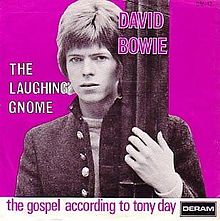
changed his name to David Bowie in late 1966 to differentiate himself. Not that the change in moniker did him any good; he released a solo single in April 1967 (the weird and wonderful/embarrassing (depending on who you ask) children's song "The Laughing Gnome") and his debut album, David Bowie, that June (the same day Sgt. Pepper's Lonely Hearts Club Band was released), both on Deram Records.

The problem with David Bowie especially, in my opinion, is that it's all over the map - on it, Bowie does folk tunes, Anthony Newley-type show tunes, baroque pop, etc.; none of them written especially well. Buyers just didn't know what to make of him; was he 'for real', or just a novelty artist? The result was that they stayed away in droves - neither the single nor the album charted. This would be the last music Bowie released for more than two years (Deram dropped him a couple of months later).

In the interim, Bowie began an intensive course of study in dance and the dramatic arts under renowned choreographer Lindsey Kemp. He immersed himself in lessons in mime, Medieval Italian comedy and avant-garde performance, and began his first serious exploration into creating a distinct persona/personae for himself. David also started performing again, in a folk/Merseybeat combo with mime interludes and poetry readings mixed in, with his new girlfriend Hermione Farthingale (God, how 'English' a name can you get?) and friend John Hutchinson. And through his connection with Kemp, he got a couple of small uncredited parts in British movie and TV productions. Here he is (blink and you'll miss him) as an extra in the 1969 movie The Virgin Soldiers:


Around the same period, Bowie got a new manager, Kenneth Pitt, who believed in David's talent but was annoyed and frustrated by his lack of wider recognition. Pitt wracked his brains to figure out some way to bring Bowie's gifts to the masses. A chance encounter with a West German television producer in late 1968 provided him with what he thought was an answer: Pitt would put together a short promotional film showcasing Bowie's talents. The professionally-produced short would include not only music from David's 1967 album, but also dramatic and mime bits. The German producer broadly hinted that, once completed, he would air the film on Zweites Deutsches Fernsehen (ZDF), the country's public broadcasting station, the equivalent to the American Public Broadcasting Service (PBS). Pitt figured that that sort of exposure might break Bowie out in Europe, with that fame subsequently translating back to Britain. He suggested his plan to Bowie, who also thought it was a boffo idea.

In choosing which songs to feature and dramatize in the film, Pitt and Bowie selected four from David Bowie, along with two new songs David had recently written with Farthingale and Hutchinson, "Ching-A-Ling" and "When I'm Five". Added to these selections was "Let Me Sleep Beside You", a single recorded and rejected by Deram shortly after the 1967 album was released and shortly before the label released him (Bowie wrote this song with a new friend of his, a young American expat record producer named Tony Visconti). Pitt enlisted a Scottish friend who had spent considerable time in the U.S., Malcolm Thomson, as the director, and arranged for a week's shooting at a studio in Greenwich in late January 1969; the schedule was delayed due to Bowie's participation in The Virgin Soldiers, shooting earlier that month.

David arrived at the Greenwich studios that January 26th ready to go in every aspect but one; his hair was unfashionably short, cut to regulation Army length for the war film. Pitt and Thomson were aghast, but quickly improvised by finding a suitable long-haired wig for Bowie to wear throughout the shoot. Bowie also arrived with another piece to include in the production; an unfinished outer space-themed song that he and John Hutchinson had been working on during the prior week called "Space Oddity".

The filming ran into difficulties from nearly the very beginning. Pitt and Thomson began to clash over content, quality and subject matter. I think that Pitt was looking for more of a quickie showreel done relatively cheaply, where Bowie's songs were the standout/featured attraction. Thomson, on the other hand, wanted to add more costumes, camera movement, and artistic nuances into the production. A major point of contention between the two centered on plans for "Space Oddity"; in particular, Thomson wanted to make the part where Major Tom cavorts with the "space maidens" considerably more
sexy and risque than what may have been permitted for German television. Also, a considerable amount of time and effort was expended on Bowie's mime segment, titled "The Mask". As a result of all of this, studio time had to be extended, and the overall cost of the film began to mount.

Finally, after nearly two weeks of filming, the film (entitled Love You Till Tuesday) wrapped on February 7th. Here's a list of the performance pieces on it:
  1. "Love You Till Tuesday"
  2. "Sell Me a Coat"
  3. "When I'm Five"
  4. "Rubber Band"
  5. "The Mask (A Mime)"
  6. "Let Me Sleep Beside You"
  7. "Ching-a-Ling"
  8. "Space Oddity"
  9. "When I Live My Dream"
Pitt immediately contacted his West German friend, to let him know the short was ready for airing . . . but found that the producer had moved on from ZDF, and no one else there was interested in showing a music film by some unknown English artist. Bowie's manager found he had spent all of his money for seemingly nought. Desperate now, Pitt began shopping the showreel around to various British networks and record labels, but no one was interested in anything about it . . .

Well, that is, ALMOST no one.

Ken Pitt was given an audience with representatives from Mercury Records' British subsidiary Philips in the early spring of 1969. The reps found little of interest in the film . . . except for "Space Oddity". From that modicum of interest, Pitt was then able to negotiate a one album deal (with an option for another one or two albums) for Bowie with the label. David was rushed into the studio; "Space Oddity" was recorded that June 20th, and released as a single on July 11th, 1969, just in time to take advantage of the Apollo 11 mission (the first lunar landing) nine days later. The single proved to be a hit in Britain, where after a slow start it peaked at #5 (it did nothing in America on its initial release, stalling at #124 - but on its re-release in 1973 in the wake of Ziggy Stardust, it reached #15, his first U.S. hit single).
This song, and the subsequent album David Bowie (aka Man Of Words/Man Of Music in the States) released in November 1969, launched David's career.

As for the film: apart from its use to secure the Mercury/Philips deal, Pitt found no immediate further use for it and filed it away, where it sat unseen for years. But in the early '80s, with the advent of home video, Bowie's former producer (the two split in 1971) realized he may have something golden on his hands. He contacted Polygram (by
then the holding company for Philips) and made a deal for its release; Love You Till Tuesday went on sale in VHS format in May 1984. Not to be outdone, Deram Records, the label holding most of the material used in the movie, released a "soundtrack album" (actually, just the versions of film songs recorded for David Bowie, along with non-film singles from the same period) that same month. Here's the song lineup:
1. Space Oddity
2. Love You Till Tuesday
3. When I'm Five
4. Ching-A-Ling
5. The Laughing Gnome
6. Rubber Band
7. Sell Me A Coat
8. Liza Jane
9. When I Live My Dream
10. Let Me Sleep Beside You
11. The London Boys
Looking at the film nowadays, it's hard to properly consider it for its standalone artistic and musical merits in the context of its time. It's very much a time capsule of late '60s "Swinging London" styles and attitudes, and as such, in this day and age it's an effort to take it all seriously. For example, it is difficult to watch Bowie, the dapper young puka-beaded gentleman, lounge suggestively on pillows while warbling the title track and resist the urge to shout "Yeah, baby!" in a cheesy Austin Powers accent:

(Did you hear him briefly snicker halfway through the video?  David knew full well what the story was, and what he was doing . . .)
All in all, there's nothing in Love You Till Tuesday, either the album or the film, that's particularly deathless or essential in Bowie's career. Other than "Space Oddity", which was considerably revamped for its summer 1969 release, most of the other tunes here are either lightweight or forgettable. But both works of art stand as interesting artifacts in the early design and development of David's sound and vision of himself to come. The seeds of Major Tom, Ziggy Stardust, Pierrot from Scary Monsters, and the otherworldly/alien Bowie can be found in his performances here.

And what's also great to see and hear here is Bowie as a young man - full of energy, life and happiness, presenting his compositions and ideas to the world with a knowing smile on his face and absolutely no fear whatsoever. No matter what other changes he brought to his act and career, that part of him always stayed consistent and true. Thank God for that.

So, for your consideration, here's:
  • The album Love You Till Tuesday, released by Deram Records on vinyl and cassette in May 1984 (not released on CD until 1991);
  • The film Love You Till Tuesday, produced in 1969 but released by Polygram in May 1984. The complete 30-minute film is exceedingly difficult to find on the Web; so here it is, in .mp4 format.
I promise that this will be my last Bowie post for the foreseeable future. So enjoy, and as always, let me know what you think.

Please use the email link below to contact me, and I will reply with the download link(s) ASAP:
Love You Till Tuesday (album): Send Email

Love You Till Tuesday (film): Send Email

Monday, January 11, 2016

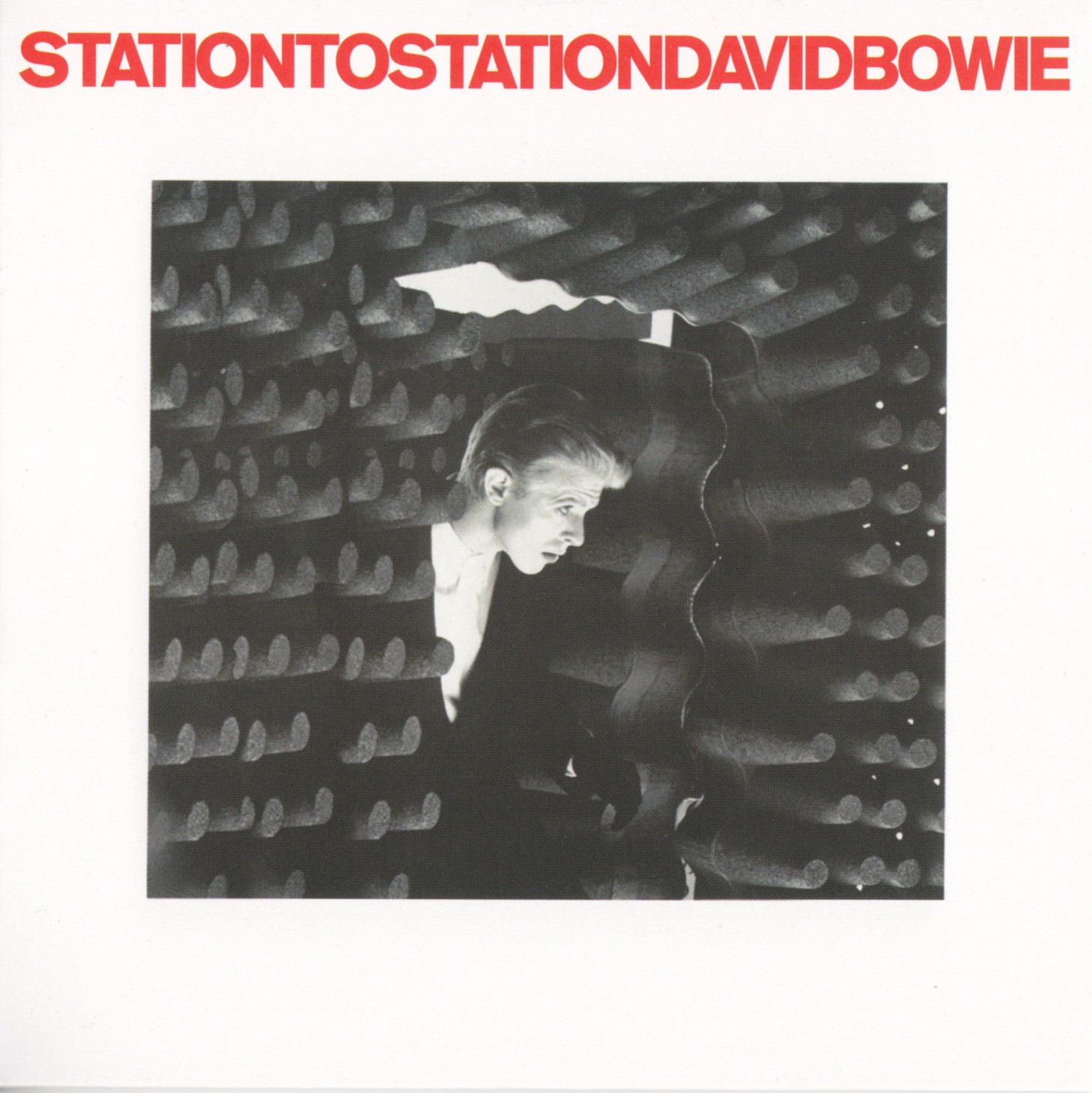
David Bowie - Station To Station (Deluxe Edition) (3 Discs) (RS500 - #323)


I was up fairly late last night - I've recently been having a little trouble falling asleep before midnight. At around two a.m., I received a Skype call from my old buddy Rob, who'd just returned to Christchurch after spending the past few days mountain biking near Arthur's Pass. I've mentioned Rob on occasion in this blog; he's been one of my best friends for over twenty years now, and in that time we've had some hilarious adventures and fun experiences together in both New Zealand and America.

In addition to being my friend, Rob is one of the most rabid, knowledgeable David Bowie fans I know. He was into Bowie before he reached his teens; the first album he ever owned was Changesonebowie, given to him by his mother on his birthday in 1976. By his own admission, this introduction to Bowie's music changed Rob's life. He quickly morphed into a dedicated follower, and fell in with a small but selective group of hard-core Bowie fans in Christchurch, cutting his hair and dressing in flares in emulation of his musical idol (much to the amusement of his infinitely patient and devoted mother . . . and the chagrin of his staunch, straight-laced career Air Force father, who didn't have the faintest notion as to why his son was acting so "crazy"). Rob was amongst the crowd who attended the legendary concert at QE2 Stadium on November 29th, 1978 on the Australasian leg of his Isolar II Tour that year, Bowie's sole South Island show for the entirety of his career.

In the years that followed, Rob's fandom never waned. He managed to assemble quite a Bowie collection, probably the best in New Zealand - rare albums and bootlegs, books, photographs and lithographs. His travels around the world have taken him to places renowned in Bowie-lore; Rob has posed in front of the gate to Chùteau d'Hérouville in France, where most
of Low was recorded, and made a special trip to Berlin to tour the Hansa Tonstudio and stand in the exact spot where "Heroes" was recorded. For over forty years, he remained a devoted Bowie fan, and over time he has greeted each new release, no matter how poorly reviewed, with genuine adoration and enthusiasm. Just as The Fall are my all-time favorite artists, David Bowie has long been Rob's Number One.

Anyway, last night, Rob began to tell me about his weekend and a minor sports injury he suffered while riding around, but our Skype chat was interrupted when he received a call via his regular phone, so he asked me to hold for a couple of minutes. I whiled away that time sifting through my email messages and browsing the news on the Web, nothing major or out-of-the-ordinary, just another night. So I was jolted when I suddenly came across the headline "David Bowie Dead at 69".

I instantly thought "This has got to be bullshit." After all, David's latest album, Blackstar, had just been released two days prior on his birthday, to rave reviews. Plus, there hadn't been the slightest hint or warning in the news that he had been ill. I figured that it was a album release publicity-driven hoax, and began to dismiss it from my mind . . . but I started checking into the story anyway, just to be sure.

It didn't take long to find that the news was not specious, but accurate - David Bowie had died a couple of hours earlier. "Jolted" is an inadequate word to describe my initial thoughts and feelings once I received confirmation of this story . . . with my second thought being, "How am I going to break this to Rob?" I knew it was potentially devastating, heartbreaking news, and I wasn't looking forward to telling him . . . but he had to know, as soon as possible - and it's always good to find these sort of things out from your friends. I sent him a quick text message telling him to get off the phone as quickly as he could, as there was some important news I had to tell him . . .

When Skype resumed, I told Rob the news, in a way that let him know I wasn't screwing around or pulling his leg. I've known this guy a long time . . . and I have to say I've never seen him more stunned. We spent the rest of the call reminiscing, commiserating, and reflecting on the life and work of Bowie, and what he's meant to us over the years.

To be honest, I didn't know that much about David Bowie until I was well into my teens - my first full-on encounter with all things Bowie occurred in late 1979, when I saw him perform on NBC's Saturday Night Live. As I alluded to an earlier post, in much of America of the 1970s, Bowie was considered a "weirdo", a cross-dressing English fop with a flair for flamboyant, garish makeup and outlandish rock 'n' roll alter egos. Of course, by the late '70s, he'd long left a lot of that stuff behind - Bowie was constantly modifying and experimenting with his sound and his look. But the majority of Americans didn't keep up with his ever-changing moods, methods and influences - in this country, first impressions meant a lot. And the impression that the majority of Middle America still had of Bowie - the otherworldly Major Tom and Ziggy of the late '60s/early 70s - was the impression that still lingered as the Eighties approached.

But long before his SNL gig, Bowie had begun taking steps to make himself more accessible and acceptable to the American public at large. The original concept behind his 1973 album Pin Ups was to present an album of cover songs by '60s British rock and pop artists (The Pretty Things, The Merseys, Them) to an American audience that might not have been aware of them. This was to have been followed by another album covering American artists from the same period (the second
part of this plan was eventually scrapped). After 1974's Diamond Dogs, Bowie permanently moved away from glam and on his next album, 1975's Young Americans, he began showcasing his latest musical influences, American R&B and Philly soul. His plan seemed to be paying off here; Young Americans went Gold in the States and produced his first U.S. #1 hit "Fame".

And of course, a big move was his appearance on Bing Crosby's Merrie Olde Christmas holiday special on 30 November, 1977. As I mentioned in an earlier post:
"People forget nowadays, but back in the mid-70s Bowie was considered to be an out-and-out freak by most of Middle America . . . so it was somewhat of a shock and an enlightenment for a lot of people seeing the friendly, polite, 'normal' family man Bowie warbling Christmas carols with Mr. Wholesomeness himself."
So the stage was pretty well set for him to continue his assault on the U.S. market through his Saturday Night Live appearance, his first national television performance. David made the most of this opportunity.

Bowie's appearance on SNL was in many ways a concise summation of his career up to that point. He and his band (supplemented by up-and-coming (but then generally unknown) New York performance artists Joey Arias and Klaus Nomi) opened with "The Man Who Sold The World", from his 1970 album of the
same name (The Man Who Sold The World is regarded by many music critics as "where the [Bowie] story really starts", with the artist abandoning much of the folky, acoustic music of his first two '60s albums and moving into the hard rock/glam rock genres). Later in the show, he blazes through "TVC 15", off of 1976's Station To Station (by this album, he left behind his early '70s glam rock personae of Ziggy Stardust/Aladdin Sane and the "soul boy" funk leanings of his previous album, 1975's Young Americans, and began forging a
hybrid sound combining his earlier influences with that of German electronic music). And the song Bowie closed the show with, "Boys Keep Swinging", from Lodger released earlier that year (Lodger was the last of Bowie's celebrated "Berlin Trilogy" (along with Low and "Heroes") of abstract, minimalist albums with collaborator Brian Eno, but was considered the most accessible and commercially successful).

Here's a clip of the first song from the show, "The Man Who Sold The World":


I thought the costume that Bowie wore for this song was amazing; basically a rigid Bauhaus/Dada-inspired shell tuxedo that held him immobile - Arias and Nomi had to carry him out to
his place on stage. Apparently, I wasn't the only one affected by his getup; Nomi was reportedly so impressed with the costuming that he adopted a variation on the huge plastic tuxedo Bowie wore as his own signature look, wearing one on the cover of his first album, 1981's Klaus Nomi, and performing in it until his death from AIDS in 1983.

What followed later in the show was "TVC 15", with another stunning and androgynous costume change that Bowie pulls off flawlessly, a 1940s-style Lennon Sisters wide-shouldered dress suit and sheath skirt:


And who could forget the pink poodle with the monitor in its mouth, and the herky-jerky backup singing?

The strangest performance occurred at the very end of the program, just before the host/cast farewells and closing credits. For "Boys Keep Swinging", Bowie's head is shown atop what appears to be a man-sized wooden puppet body, which during the performance cavorts and bounces around the stage in a very weird, off-putting yet mesmerizing way:


Bowie was pissed that the NBC censor bleeped out the "other boys check you out" line during the song, but he got his revenge and the last laugh - take a close look at what happens to the puppet's pants at the end of the tune! All in all, it was truly a strange, surreal "WTF?" moment in television history. I didn't know what to make of it; you can tell by the studio audience reaction that they didn't know what to make of it all either.

In any event, as strange as it was to see unusual performances like this on American national TV, I was entranced and impressed by Bowie's art, and finally realized what I'd been missing all those years. December 15th, 1979 at 1:00 AM was the moment I finally became a David Bowie fan - a decision I've never regretted.

I spoke with Rob again for a bit this afternoon. "Mate," he said, "I don't normally like to admit this, but I'm feeling a little . . . weird and vulnerable since I heard the news last night." I know exactly what he means. The passing of an entertainment icon is normally a cause for acknowledgement, appreciation and tribute from fans and contemporaries. But in the vast majority of these instances, this "moment of reflection" is just that - a short-lived moment, and after which, we all go on with our lives. Perhaps all of this is too recent to make a truly subjective determination, but David Bowie's death feels . . . different, as though something has definitely changed in the world.

I've had conversations with other friends today regarding his passing, and they all feel the same way. The recent deaths of Lemmy and Natalie Cole were sad, but they haven't been lingered over, analyzed and eulogized in the press and on social media as Bowie's has been. I think that may be due to the nature of the man and what he brought to the world for the past fifty years. To quote Rob: "Bowie didn't write music; he made accessible art." In those words lies the essence of what made Bowie so great, why he will be missed, and why his absence will leave such a void.

During our conversation late last night, Rob and I asked one another not what our favorite Bowie album is, but even more narrowly, what our favorite Bowie SONG is. Here's mine - the 1973 alternate demo version of "Candidate", included as a bonus cut on Diamond Dogs:


Rob's all-time fave is "Always Crashing The Same Car", from Low:


Enough of all of this - there have been more than enough tributes today, and there are certain to be tons more coming in the next few days. I don't expect my reflections and memories of David Bowie will have that much import or impact in the grand scheme of things. I just felt the need to pay a small tribute to a visionary artist who is now no longer with us. We may not see the likes of David Bowie again . . . but isn't it great that, in the millions and billions of years that this planet has existed, we all were lucky enough to share this planet at the same time with him?

In honor of the life and memory of David Bowie, for my buddy Rob, for myself, and for you all, I proudly offer the deluxe edition of the 1976 album Station To Station. This is the September 10th, 2010 reissue, which includes not only the original album, but the entire show at Nassau Coliseum in Uniondale, New York on March 23rd, 1976 (on two bonus discs).

In addition, also offered here are the three performance videos from Saturday Night Live shown above, in .mp4 format. These are notoriously hard to find on the Web; NBC and Lorne Michaels are vicious about keeping SNL content off of free sites like Vimeo and YouTube. The ones included here are burned off of my SNL DVDs I purchased upon their release many years ago; I own the first five seasons of the show, which are really the only seasons anyone needs to care about.

Anyway, enjoy, and as always, let me know what you think.

Farewell, Thin White Duke.

Please use the email link below to contact me, and I will reply with the download link(s) ASAP:
Station To Station (Deluxe Edition): Send Email

Saturday Night Live performances, December 15th, 1979: Send Email


[Hmm . . . it appears that the performance videos I embedded above aren't being displayed in this post anymore; I guess Blogger.com has an issue with having them be seen here. No matter - the download links are still available, and I'll be happy to send them along to you.]

David Bowie (1947-2016)


"Chameleon, comedian, Corinthian and caricature".

I'm speechless . . . what a loss.

Can't even write about this now.  More later.

Farewell, Thin White Duke.

Friday, January 1, 2016

The Clash - Clash On Broadway (The Outtakes)


Well, let's start 2016 off right - with some Clash!

From Sharoma's superb site, reviewing a multitude of Clash bootlegs and rarities, comes the following quote taken from his excellent write-up regarding the super-hard-to-find (except here, of course!) Demos, Outtakes, Alternates (D.O.A.) set:
"Along with Clash On Broadway Outtakes and The Rat Patrol, [you'll] almost have all The Clash demos, outtakes and alternates."
Since the other two mentioned above have long been available on this blog, I figured I might as well post the third and final selection in the band's bootleg triumvirate!

Despite this disc's professionally-produced liner notes and cover, which are identical to the 1991 three-disc Clash on Broadway Legacy Records release, this release is NOT an official part of that set. The original compilation (which included early singles, some live recordings, and a couple of previously unreleased tracks and demos) covered the period from the band's 1977 debut through to 1982's Combat Rock. It notably
included nothing from the critically and commercially reviled 1985 album Cut The Crap, about which I've had more than enough to say about in the past. The Outtakes (or Clash On Broadway (Disc 4), if you will), is an attempt to fill in that missing piece, and also provide fans with additional rarities and demos left off of the box set (which, in my opinion, had a pretty scanty selection).

Sharoma's site only details the last ten tracks for this boot (I stand by his reviews of these songs); I got the extended version from somewhere - I can't quite recall where or when, it's been so long. Here's the back cover with song details:


Highlights from the first half include some live concert takes by the post-Mick Jones Clash in Seattle, Glasgow and Paris (as much as I've badmouthed this lineup over the years, I must say that overall, they didn't sound that bad in concert); radio news reports of the chaos surrounding the Clash's legendary 1981 stand at Bond's International Casino in New York; a full-length version of "Dirty Harry", the early working title for Sandinista's "The Magnificent Seven" (a shorter version of this song is contained on my previous Clash post, Rocker Station); and in my opinion the only decent song off of Cut The Crap, "We Are The Clash". There are a couple of things here that have appeared elsewhere: "Rock The Casbah (with Ranking Roger)" was included on Rat Patrol From Fort Bragg, and "Guns Of Brixton (alt. mix)" was taken off of the Return To Brixton EP. But overall, the selections here are truly hard to find and well thought out.

So, for my first post of the new year, here's Clash On Broadway (The Outtakes), complied in 2002 by an European bootleg label called Scotty Snail. Enjoy, Happy New Year, and as always, let me know what you think.

Please use the email link below to contact me, and I will reply with the download link(s) ASAP:

Send Email