Thursday, December 10, 2015

Richard Pryor - Craps (After Hours)


I've mentioned before how much of a comedy buff my oldest daughter has become. Through my collection of audio and video, she has been fully conversant with the entire Monty Python ouevre before she was out of elementary school; has watched all of the episodes of Police Squad!, Fawlty Towers and The Young Ones multiple times, and is a huge fan of Mystery Science Theatre 3000 reruns. Just a couple of months ago, I took her to see Dave Chappelle's live show here in town. Believe me, I put a lot of thought into whether or not, as a high-school teen, she was old enough to handle Chappelle's language and style of humor (and don't ask me how I managed to sneak all of this past her mother . . .). But my girl has a pretty good head on her shoulders, so in the end I brought her along, we both had a great time - my daughter thought he was hysterical.

For Father's Day earlier this year, my little girl got me an inspired gift, Scott Saul's Becoming Richard Pryor, detailing the early life and rise of the great groundbreaking comedian and performer. I've been enjoying this book very much, and through it learned quite a bit about the life and career of this man.

To say that Richard Pryor's early life was rough would be a gross understatement. He was born in 1940 in Peoria, IL, a city located midway between Chicago and St. Louis. Despite its northern location, Peoria in the 1940s and '50s was still a heavily segregated town, not de jure but de facto. But that didn't prevent it from being considered at the time one of the most corrupt, sordid, "wide open" cities in America. For decades, gambling (the largest gambling hall in the city was directly across from the police department), drinking (the largest distillery in the world was located there; before income tax was implemented, when the U.S. derived most of its revenue through import fees and commodity taxes, Peoria alone, through the whiskey tax, was responsible for nearly half the federal government's income), and prostitution flourished here, not only in the exclusively white, upper-class bluffs overlooking the city, but especially in the lower-class, industrial valley section hard by the Illinois River, where most of the minorities were congregated.

Richard's grandmother was a celebrated madam in the city's North Washington red-light district, operating a string of brothels in the area. Richard's mother was a brothel worker (i.e., prostitute); his father, the brutal Leroy "Buck" Pryor, was one of the head pimps working for his mother. His parents divorced at the age of five and Buck was awarded custody of his son, so Richard grew up primarily in and around the whorehouses, privy to all that went on in these establishments from an early age, and subject to the heavy and routine physical abuse inflicted on him by both his father and grandmother. In school, he was usually one of the few black kids in his class, and his days will filled with ostracism, taunts and bullying from most of his classmates. This was the atmosphere Pryor grew up in; it must have been miserable.

His only escape was through the movies - in the "Negroes Only" balcony seats of Peoria's downtown theaters, he could lose himself for an hour or two in adventure films and westerns (his favorite was the whip-wielding cowboy star Lash LaRue). Practically the only other bright spot in Pryor's life during his Peoria years occurred when he was fourteen years old, where he participated in a youth theater group at a local community center. The group's adult director, Juliette Whittaker, took Richard under her wing, gave him crash courses in acting, set and costume design, and directing, and provided him some of his first opportunities to shine in front of an audience. If any single person set Richard on the path to fame and stardom, it was Ms. Whittaker.

After being kicked out of school in ninth grade, Richard worked odd jobs in and around the Peoria area until joining the Army in the spring of 1959.  His stint in the military lasted a year and a half; stationed in Germany, he was constantly in trouble, serving several periods of restriction and extra duty, culminating in a long stay in the stockade after stabbing a fellow soldier. It was by supreme good fortune that Pryor received an honorable discharge from the Army in August 1960. He returned home to Peoria and recommenced the same cycle as before his departure - working odd, low-paying jobs and hanging out on the streets and interacting with winos, drifters and other neighborhood characters. He soon landed a job as a bartender and occasional comedian at a local black club of questionable legality and ill repute, and worked there until it was closed by the city in the fall of 1962. He then headed to New York to try his luck there as a professional comic.

The first couple of years of Pryor's professional standup career were relatively undistinguished. Bill Cosby's comedic career had taken off and catapulted him to nationwide fame just as Richard was starting out, and for a long while, Pryor labored under Cosby's long shadow. His material was straight out of the Cosby playbook - on the whole middlebrow, mild, and generally observational. Combined with Richard's near-mimicry of Cosby's act and subject matter was a tendency to punctuate his punch lines with a goofy face or expression - Pryor appropriated that rubber-faced schtick from the man he called "The God of Comedy", Jerry Lewis. But above all, Pryor's act strove to be free of any controversial class or racial connotations that could upset Middle American audiences. In fact, Pryor was very careful to obscure or whitewash any and all aspects of his rough past and upbringing.

For example, here's Richard Pryor's television debut in August 1964, on Rudy Vallee's variety show On Broadway Tonight. Vallee introduced him as "a former Army paratrooper" whose father Leroy, "an old vaudeville song and dance man", bequeathed his talent on his son. In Pryor's act, the lies and bullshit kept coming:


Looking back at it now, Richard Pryor's act in the mid-60s was startlingly conventional, and rigidly within the bounds of decency. There was nothing particularly exceptional or ground-breaking in his comedy. But that seemed to suit the tenor of the times. As Scott Saul wrote:
Soon Richard would be recognized as a "lean, literate, quick-witted kook", the man with "the most elastic face in show business." His main persona was the bungler or schlemiel . . . He was Bill Cosby's younger, skinnier brother, the one who blew his cool as much as Cosby kept his.
After his appearance on On Broadway Tonight, Richard began appearing on television more frequently, especially on the Ed Sullivan and Merv Griffin programs where he was a favorite guest. His broadcast work in New York earned Pryor a ticket to Hollywood in 1966, where he was featured as a recurring special guest on a new program, The Kraft Summer Music Hall, a relentlessly hokey TV variety show hosted by the squarest of squares, singer John Davidson. Appearances on other shows - The Wild Wild West, The Mod Squad, The Partridge Family - were soon to follow, and Pryor became a Hollywood insider, making friends of industry power brokers and stars like Aaron Spelling, David Wolper, Ryan O'Neal and Bobby Darin.

But despite this plethora of high-profile, highly paid TV work, it all kept Richard's comedy under the same strictures - somewhat corny, mild, inoffensive, acceptable to most of America . . . and by that, I mean white America; his act had yet to resonate with black Americans. For most of that community, Pryor's comedy didn't connect; for them, he was little more than a slightly hipper version of Nipsey Russell. Richard once related a story of how one day in 1966, after a Merv Griffin taping, he and his new friend Redd Foxx went on a visit to Harlem. Foxx, of course, was by then a giant in black comedy, a Chitlin Circuit veteran known for his raunchy underground show recordings - the "King of the Party Records". As they walked through the neighborhood, residents greeted Foxx warmly, shouting his street nickname, "Zorro". Pryor was all but ignored.
"Wait a minute," he thought to himself. "I'm in the wrong place, I'm in the wrong town. I want to be here. I want people to talk to me like they talk to Redd."
His klutzy, zany, goofball TV persona was in marked contrast to his continuing stand-up work at counter-cultural comedy clubs like the Troubadour, the Improv and the Cafe Au Go-Go, where his language and subject matter were considerably less PC. But at that point in time, there was no acceptable outlet for Pryor to bring this side of his humor to the public at large. He was making it, but yet not "making" it, if you understand my meaning.

By 1967, Pryor seriously began to chafe against these strictures, with the result being that he started to lose it, both personally and professionally. The early part of that year was fraught with turmoil, including a breakup from his longtime girlfriend, jail time for drug possession and court hearings after his arrest for assaulting a hotel clerk. His oft-mythologized "breakdown" on stage at the Aladdin in Las Vegas occurred later that year, but the legend behind this incident - in mid-set at the venue, suddenly asking himself and the audience out loud "What the fuck am I doing here?" and walking offstage, thus beginning his long blackballing by the entertainment industry - belies the actual facts. Pryor continued to be welcome in Vegas and on TV for the remainder of the year and into 1968. But he, and his act, were changing.

His first album, titled simply Richard Pryor, taken from recordings from his shows at the Hollywood Troubadour in July 1968, was released on Dove/Reprise later that year. There are some semi-risque bits on it, like "Super Nigger" and "Farting", and a mild obscenity or two. But for the most part, the album is made up of Richard's "kook" persona delivering somewhat lame, polished, showbiz-zy routines (like "Prison Play" and "TV Panel Show") that would have wowed a semi-"with it" Las Vegas lounge audience. The only real evidence of the change in Pryor's attitude here was on its cover, with Richard simultaneously embracing and denigrating an African stereotype - an interpretation that, in that day, could go either way.

In the months to come, things continued to fall apart in Pryor's life. Both of his parents died, and he began seriously abusing drugs, leading to a series of missed performances, breakups with managers and lovers, and estrangement from the industry (including cancellation of his two-album deal). By the end of the decade, Pryor was pretty much off the nightclub/talk show circuit; there were only four clubs TOTAL "in the world" whose doors were open to him: The Cellar Door in DC, Maverick's Flat in L.A., Basin Street West in San Francisco and Mandrake's in Berkeley, CA. Richard had burnt his bridges nearly everywhere else. Even his old friend and patron Redd Foxx refused to book him at his club, considering him unreliable. Richard tried to concentrate on his TV and movie acting career during this period. But even that had stalled. By mid-1970, Pryor was in bad shape and in serious trouble - no manager, little income, and debts to some fairly heavy and sinister drug dealers had begun to mount.

At this low point, Richard turned for help to Louis and David
Druzen, the owners of Laff Records, a small and rather disreputable label specializing in releasing infamous black raunch/"party" records from the likes of LaWanda Page, Skillet & Leroy, Mantan Moreland - and yes, Redd Foxx. Laff signed Pryor in late 1970 for only a $5,000 advance - a far cry from the $50,000
he received just two years earlier for his two-album deal with Reprise Records. What Laff got in return was plenty - a commitment for four albums over the next two years (with $27,500 payable upon receipt of the last one), plus exclusive recording/release rights to Richard's comedy for the next two years and the right afterwards to exercise an additional
two-year option that would have committed Pryor to releasing three more albums with the label. That's a potential total of seven albums over four years - a daunting nut to make. But at the time, Richard was desperate - the drug dealers were after him big time. As he told the Druzens as he signed with them and received his money, "If I didn't get this, I'm going to die."

The first album he delivered was Craps (After Hours). Showing some leniency to his friend and protege, Foxx allowed him to record the album at the Redd Foxx Club in Los Angeles. What made it on to the recording was almost a complete departure from the work Richard was known for before.

Craps differed in many ways from Pryor's first Reprise album. Most obvious was the number of tracks - thirty-two (as opposed to just seven on Richard Pryor), with some tracks lasting no longer than a few seconds. There was no clear underlying theme in the comedy here; Pryor covered sex ("Gettin' Some", "Big Tits"), drugs ("Gettin' High"), politics ("President Nixon"), race relations and all sorts of controversial, risque topics in dark, absurd terms. He also got very personal - for the first time, Pryor openly discussed, in detail, the turmoil, craziness and violence in his family life. Also for the first time here, he brought the images (winos, junkies and preachers) and vocal rhythms of lower-class black life into his act. On Craps, Richard moves from thought to thought, theme to theme, in rapid-fire sequence, so the album at first listen seems scattershot and not totally coherent from start to finish. But despite (or due to) its low concept approach, it feels more intimate, more "real", than Pryor's first album. It's also funny as hell.


Due to the limited retail reach of Laff, Craps (After Hours) wasn't a Billboard 200 hit (it was fortunate to have been released on the cusp of major social changes in America; the album probably would have been banned if it had been put out just a couple of years earlier). But it soon became an underground/cult classic - future comedians like Eddie Murphy and Chappelle have spoken about hearing this album at a young age and how much it influenced their ambition and later work. This was the first record that allowed Pryor to be Pryor, to break free of showbiz bounds and express himself the way that he wished to be heard.

All in all, Craps was a revelation, and the date of its release can be considered the starting point of the true comedic genius of Richard Pryor. Richard's later comedic development and ascent to superstardom began with the launch of this disc. Its release date can also be thought of as a Year Zero for stand-up comedy in this country. The influence of the openness of subject matter and language in Richard Pryor's work, and on this album in particular, can be seen and heard in the later work of Murphy, Damon Wayans, Sarah Silverman and Margaret Cho, among many, many others. Comics from across the spectrum and every generation fully acknowledge the impact of Pryor to U.S. humor; Jerry Seinfeld called him "the Picasso of our profession"; Bob Newhart named him as "the single most seminal comedic influence in the past fifty years." Comedian Paul Rodriguez said it best: "There are two periods in comedy in America: before Richard Pryor and after Richard Pryor." Craps was the transition point.

So here, on the tenth anniversary of the death of the man universally acknowledged as the greatest stand-up comedian of all time, I proudly present to you Richard Pryor's Craps (After Hours), released by Laff Records in late 1971 and rereleased on CD on November 15th, 1994.   This is hard as hell to find for download online, so here it is, burnt off of my personal copy.  Laugh, enjoy, and remember this great talent.

And as always . . . well, you know.

Please use the email link below to contact me, and I will reply with the download link(s) ASAP:

Send Email

Friday, December 4, 2015

Various Artists - Dr. Demento Presents: The Greatest Christmas Novelty CD Of All Time


I got back home fairly late last Friday night; I spent all of Black Friday with my children running up and down Manhattan, an annual tradition with us. I know that to many of you, it may sound like madness to willingly subject myself and my family to the inherent craziness of a major city on the biggest, most frenzied shopping day of the year . . . but I - we - LOVE New York during the holiday season.

There's nothing like Christmas in that city - the crowds on Fifth Avenue filling the sidewalks, everyone carrying boxes and bags from the high-end stores located up and down the street; the streets and buildings decorated with wreaths, trees, bells and bunting; the display windows of Saks Fifth Avenue and Bergdorf Goodman transformed into amazing Christmas fantasies; the ringing of the bells near the Salvation Army donation kettles situated on every block; St. Patrick's Cathedral filled with visitors sitting in the pews or mingling amongst the votive candles; the pungent burnt smell wafting from the carts selling roast chestnuts and sugared peanuts and cashews; the steam rising in curls from the manhole covers (not so much this year - the day was unseasonably mild and pleasant) . . . just everything about New York on that day all but screams "The holidays are here!". I rarely if ever do any actual Christmas shopping while I'm there - frankly, there ain't that many deals to be had in the city's shops on that day. I go to New York on Black Friday mainly to eat, have fun, get myself psyched for the holiday season, and to carefully watch my kids as they gleefully go through places like the Times Square Toys 'R' Us and the old F.A.O. Schwarz (it is very weird not having that venerable toy shop around this year) to gather gift ideas for them for the coming holiday.

The kids enjoy the town as much as I do. I never spent any serious time in NYC myself until I was in my mid-20s; it was then that I realized how much I'd missed out by not experiencing all that the city had to offer until then. Since that realization, I've made sure that my kids got familiar with the city at an early age; I didn't want them to miss out for so long as I did. So since they were toddlers, I have taken them to New York quite often, usually a couple of times a year; there are a ridiculous number of things to do and see there, especially for kids - the stores, the parks and playgrounds, the museums and sights of the City That Never Sleeps. And over the years, my crew have developed their own distinct preferences and favorites in the city. They now know where the best playgrounds are in the city (specifically, the Union Square playground and the Billy Johnson playground in Central Park, with its long hillside granite slide).
They think that the Carnegie Deli is vastly better than its cross-street rival, the Benash Delicatessen, and they used to charm and impress the Carnegie waitresses by ordering their own chocolate egg creams like native New Yorkers (I hope that deli sorts out the ongoing mess with their utilities and opens its doors again sometime soon - the city isn't the same with them closed for the past six months now, and their permanent loss would be a terrific blow to what makes New York what it is). They'd rather spend an afternoon at MoMA, the Metropolitan Museum or the Strand bookstore than anywhere else. And they know what subway stop to take to get to the Soho Dean & Deluca, their preferred location of that city's gourmet grocery, where they purchase their favorites, landjaeger and colorful sugar cookies.

My Black Friday New York visits used to be all about the esoteric, commercial aspects of the city and the holiday season - that is, up until last year.

Our time in the city on Black Friday 2014 was fairly typical. We hit F.A.O. first, where my son undertook a lengthy inspection of the store's Lego inventory (he had his eye on the new Tumbler Batmobile - guess what he got under the tree that year?), followed by visits to the Apple Store, Little Miss Matched, the Hershey Candy boutique and Toys 'R' Us, with other stops in between. By late afternoon, I could tell that they were starting to wind down from their long day in the city, so we stopped for a long, leisurely dinner at one of their favorite places, the Oyster Bar at Grand Central Terminal.

My gang got their second wind after dinner, and expressed a desire to head down to Soho to patronize the Dean & Deluca there before we left the city for home. So we took the 4 train (Lexington Avenue Express) out of Grand Central down to Union Square, then changed over to the R (Broadway Local), since it stopped at Prince Street, right across the street from our destination. We all found seats in a half-empty car, and settled in for the short ride (Prince was the second stop after 8th Street-NYU).

The stop at 8th Street-NYU was uneventful, but as the train pulled away, I noticed a young woman who had apparently just boarded, dressed in what appeared to be some sort of red and green gown, a Christmas-y outfit, standing at the far end of our car. Whoop, I thought - here we go. I've been on enough NYC subway rides to smell a performance/donation shakedown coming, and sure enough, as the train picked up speed, without any preliminaries or introduction, she began to sing.

But her song wasn't just an ordinary Christmas carol; it was "Ave Maria", in a strong, clear, obviously classically-trained soprano voice. And her rendition of it was . . . well . . .

Do you recall that scene in The Shawshank Redemption, when Andy commandeered the prison loudspeakers and played "Canzonetta sull'aria" from Mozart's Marriage of Figaro for the inmates? If you don't, let me remind you of it again:


For a moment, as the girl's clear, strong "Ave Maria" filled that subway car, it was sort of like that scene in the film - just . . . goosebumps. To be in the presence of something so perfect and beautiful in the most drab and mundane of surroundings was a special event. It was difficult to resist the urge to lose yourself in the beauty of that moment . . .

And yet, resist I did. Cynic that I am, I simply regarded it as just another New York hassle - I ride the subway to get from Point A to Point B, not to be frickin' serenaded! I hunkered down in my seat, frowning to myself as the singing woman began slowly moving up the car, holding out a hat for donations from riders.

My children, however, were charmed and mesmerized by the woman's performance. My two oldest, both girls, are aspiring singers, and both participate in their school choruses and drama clubs. So I could tell they were pretty well blown away. They both began to reach into their wallets and pockets for their money, made up of weekly allowances I provide to them (plus a little extra that I gave them especially for our trip to the Big Apple) to spend on things that they pleased - little toys, candy and the like. They didn't have much, but enough to enjoy themselves with. I pursed my lips and grimaced slightly as my oldest daughter pulled out two or three dollars, but I didn't say anything - seemed like a little much in my estimation, but oh well. She was blocking my view of my younger daughter, so I couldn't see how much money she took out.

My oldest sat back to close her purse, and I looked over just in time to see my little girl handing the singer . . . a twenty-dollar bill.

As my body stiffened and my mouth flew open in shock and consternation, the young singer took the donation, smiled sweetly at my girl and paused her song to thank her profusely. I guess in some ways it was pretty heartwarming, and later on I recalled a couple of other subway riders seated nearby who were smiling on the scene . . . but all I could think of at the time was "Holy shit! She just gave that chick $20!", a goodly portion of the funds she had in her possession, her spending money for the Dean & Deluca delicacies she talked of purchasing. Fortunately, a few seconds later we arrived at the Prince Street station, and I quickly hustled my charges past the woman and off of the car.

I got the kids through the station turnstiles, then stopped and faced my little girl. I was pretty displeased, but with effort, I tried to keep any emotion out of my voice as I asked her "Why did you give that singer so much?" Without any hesitation, my daughter looked up at me and replied with a smile, "She was so pretty! And sang so well! I wanted to give her something to thank her - did you see how happy she was?"

I looked down at her, and saw the joy on her face from that moment on the train, an experience that was worth far more to her than money or merchandise. It was then that I 'got' it . . . and I stopped being mad. I smiled back at my daughter, and she took my hand as we climbed the station stairs up to the street. She and the other kids talked about that singer the entire time we were in the gourmet shop, where I bought them whatever they wanted and let them keep what remained of their funds.

My little girl taught me a lesson that day. Despite all of the in-store displays, newspaper ads, mailbox flyers and TV commercials urging you to "Buy, BUY, BUY!", and the hucksterism and crass consumerism that has become an integral part of the holiday season, Christmas is about giving back to the people who have made you happy during the year or for any portion thereof - a month, a week, a day . . . or perhaps even just for a moment. In some cases, the best Christmas gifts you receive aren't the ones purchased for you . . . and the gifts you offer are sometimes worth more to someone than the dollar amount you paid.

As noted in its title, this disc contains several major Christmas novelty songs, including one of my all-time favorites (the famous "The Chipmunk Song (Christmas Don't Be Late))". It also includes many of my most reviled holiday tunes, including "Nuttin' For Christmas" (which, with every play, dredges up bad memories of horrible school pageants from when I was in 4th grade . . . no need to elaborate upon that here!) and what is in my opinion the worst Christmas song ever produced, Elmo & Patsy's "Grandma Got Run Over By A Reindeer". But all in all, there's some good stuff here that should bring back some fond holiday memories and make you and yours smile this month. Here's the full lineup:
1. The Chipmunk Song - The Chipmunks
2. All I Want For Christmas Is My Two Front Teeth - Spike Jones & His City Slickers
3. Jingle Bells - The Singing Dogs
4. Twelve Gifts of Christmas, The - Allan Sherman
5. I Want A Hippopotamus For Christmas - Gayla Peevey
6. Nuttin' For Christmas - Stan Freberg
7. A Christmas Carol - Tom Lehrer
8. Grandma Got Run Over By A Reindeer - Elmo & Patsy
9. I Yust Go Nuts At Christmas - Yogi Yorgesson
10. Twelve Days of Christmas, The - Bob and Doug McKenzie
11. Green Christmas - Stan Freberg
12. I'm A Christmas Tree - Wild Man Fischer
13. I Saw Daddy Kissing Santa Claus - Kip Addotta
14. Santa Claus And His Old Lady - Cheech & Chong
15. Christmas At Ground Zero - Weird Al Yankovic
16. Christmas Dragnet - Stan Freberg & Daws Butler
I hope that you accept this Christmas music in the spirit in which it is offered, and in some small way, it makes your holiday that much merrier.

For your listening pleasure, here's my first selection for this year's season, Dr. Demento Presents: The Greatest Christmas Novelty CD Of All Time, released by Rhino Records on July 31st, 1989. Enjoy, and as always, let me know what you think.  

Please use the email link below to contact me, and I will reply with the download link(s) ASAP:  

Send Email

Saturday, November 28, 2015

The Clash - Rocker Station


Recent comment on my Nakano Sun Plaza, Tokyo, Japan (1982-01-28) posting:
"Great show; always looking for Clash bootlegs. Will definitely bookmark your site. More Clash please!"
Ask, Mr. Donihue, and you shall receive!

Here's the great Rocker Station bootleg, put together by super-Clash fan Sharoma. As per a previous post I did many moons ago on a bootleg by this band, I'm going to get out of the way and turn the narrative description of this set over to him . . . only Sharoma - come in Sharoma!

I didn't hear about this comp until about four/five years ago, long after it first appeared, so I had the devil's own time trying to track down a copy of it - it was especially tough since this is really not an official bootleg, just a fan's collection of odds and sods.  But mission accomplished, and gladly so; there's some gold on this here disc - including the live version of "The Magnificent Seven" the band played on Tom Snyder's Tomorrow show in 1981, while they were in New York during their legendary Bonds International Casino residency, and the demo version of the same song from the previous year (then titled "Dirty Harry [Speed Mix]"). 


Here's the rest of the track listing:
  1. Radio One
  2. Dirty Harry [Speed Mix]
  3. Rock The Casbah (Hot Tracks Mix)
  4. Overpowered By Funk (New York Remix) [Speed Mix]
  5. The Escapades Of Futura 2000
  6. Radio One (Reprise)
  7. The Escapades Of Futura Dub
  8. Overpowered By Funk (Instrumental)
  9. Rock The Casbah (Ultimix)
  10. The Further Adventures Of Futura 2000
  11. The Magnificent Seven (Tomorrow Show)
  12. Lightning Strikes (Live)
  13. The Magnificent Seven (Grooveblaster Remix)
  14. In The Pouring Rain (Demo)
Here - have a listen and pick out the standout tracks for yourself. Enjoy Sharoma's Rocker Station Clash rarities compilation (first formatted in 2002), and as always, let me know what you think.

Please use the email link below to contact me, and I will reply with the download link(s) ASAP:

Send Email

Tuesday, November 24, 2015

S.F. Seals - Baseball Trilogy EP


Years ago in this blog, I wrote effusively of my affection for the work of Barbara Manning. A longtime indie music stalwart out of San Francisco, Manning has sadly had little mainstream success in her career. But in indie circles around the world, her name is considered sacred. For more than thirty years, pretty much everything she has been involved in as a solo artist or band member has been nothing more than gold.   And this little EP is no exception; it's a weird and wonderful gem of a release.

Apparently, Barbara Manning has always had a thing for baseball. Note the cover of her first major solo compilation, 1991's One Perfect Green Blanket (a poetic euphemism for a ballfield).  This album includes a sample from the broadcast of the National League San Francisco Giants' 1989 Western Division victory (the same year they were swept by their cross-bay rivals the Oakland As in the infamous "Earthquake Series").   And after working as a solo artist in the early 1990s, her first post-World of Pooh band was named The S.F. Seals, after the famous minor-league team that represented San Francisco in the Pacific Coast League for more than fifty years. So it was only a matter of time, apparently, before Ms. Manning addressed her love for baseball in song.

Barbara's selections for inclusion on this disc are varied and eclectic. The lead song, "Joltin' Joe DiMaggio", was originally released in 1941 by Les Brown & His Band of Renown (fronted by singer Betty Bonney), just after DiMaggio's famous 56-game hitting streak with the New York Yankees ended (prior to joining the Yankees, DiMaggio played for the Seals). Manning and her band faithfully recreate the jazzy, big-band sound of the original recording. It's a fun, funny record for indie alt-rockers to perform, yet they pull it off brilliantly.

For the stomp-rocker "The Ballad of Denny McLain", Barbara cedes vocal duties to bandmate Lincoln Allen. This song is another cover, originally recorded by the legendary and eccentric Bay Area band Mad V. Dog & the Merchants of the New Bizarre. It documents the story of the infamous Detroit
pitcher, the last Major League pitcher to win 30 games in a season (in 1968), but who got involved with organized crime figures and ended up serving several long stints in prison in the '80s and '90s for various serious charges (his first conviction was for cocaine trafficking, embezzlement and racketeering; his co-defendants were Anthony Spilotro (Joe Pesci's character in Casino was based on him) and later John Gotti, Jr.).

The final (and in my opinion, the best) song on the EP, the fuzzed-out psychedelic guitar workout "Dock Ellis", celebrates the Pittsburgh Pirates pitcher who allegedly threw a complete no-hit game on June 12th, 1970 while tripping on a massive dose of LSD.


Soon after finally acquiring World of Pooh's The Land of Thirst in 2000, I went on a big Barbara Manning buying spree, tracking down everything of hers that I could find: much of her solo work, the rest of her World of Pooh stuff, and her collaborations with 28th Day, The Original Artists, The Go-Luckys! and The S.F. Seals - including this disc. I'm glad I did; this is a superb addition to her canon. Check it out and see for yourself.

Here's The S.F. Seals' Baseball Trilogy EP, released by Matador Records on November 1st, 1993. Enjoy, and as always, let me know what you think.

Please use the email link below to contact me, and I will reply with the download link(s) ASAP:

Send Email

Wednesday, November 18, 2015

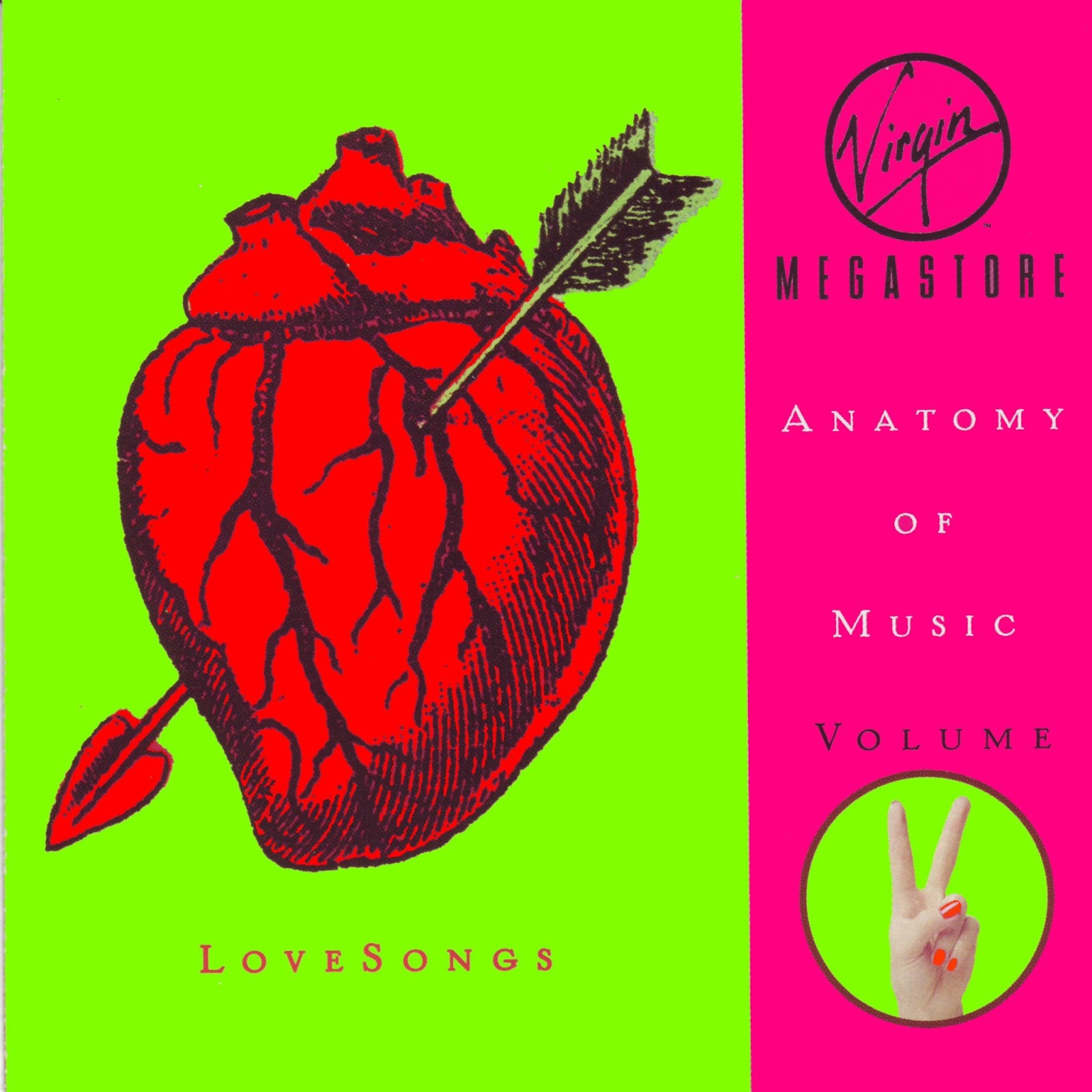
Various Artists - Virgin Megastore Anatomy of Music: Volume One


A CD music sampler given away for free (with purchase) at participating Virgin Megastores worldwide in 1997. I recall
getting mine when I purchased Bjork's Homogenic in the store at Grapevine Mills Mall in Texas that fall. They just sort of handed it to me at the register; I was happy to receive it (free is always good), but there was nothing on the recording particularly cutting-edge or out of the ordinary.

You can determine that for yourself - here's the track list:
1. One Way Or Another - Blondie
2. Crowded House - Something So Strong
3. We're An American Band - Grand Funk Railroad
4. It Ain't Over 'Til It's Over - Lenny Kravitz
5. Fly Like An Eagle - Steve Miller
6. Thing Called Love - Bonnie Raitt
7. Rock This Town - Stray Cats
8. I'm Still In Love With You - Al Green
9. Hungry Like The Wolf - Duran Duran
10. Locomotive Breath - Jethro Tull
11. What's Love Got To Do With It? - Tina Turner
12. American Pie - Don McLean
13. Behind The Wall Of Sleep - The Smithereens
14. Higher Ground - The Red Hot Chili Peppers
15. The Weight - The Band
I believe that Virgin's goal on this disc was to break down music into its major parts and groups - rock, New Wave, easy listening, R&B, etc. - then provide representative examples of what they considered the best in each type of genre, in order to inculcate listeners who might not have as much familiarity with these different sounds (and hopefully generate more sales in their stores). Fair enough . . . On this thing, Virgin went out of their way to provide something for everyone, in the most inoffensive way possible; there's nothing on here that's going to generate controversy or set your hair on fire. I assume that Virgin planned on making these Anatomy of Music compilation freebies an ongoing thing at their stores, but they only put out one
more of them (Volume 2: Love Songs) before discontinuing the series in 1998.

The reason I'm posting this recording is as follows: I was looking through my CD racks this evening and came across this old disc. On a whim, I looked it up on Google, and found that this old giveaway - filled with conventional hits easily acquired from other sources - was being sold on Amazon for $50! I'm sorry, but that sort of blatant money-grubbing pisses me off.

So in order to head off the gougers (and the people seriously considering forking over big money for a CD like this), I offer to you for your enjoyment Virgin Megastore Anatomy of Music: Volume One, put out by Virgin Entertainment Group in late 1997. Enjoy this soothing musical pablum and, as always, let me know what you think.

Please use the email link below to contact me, and I will reply with the download link(s) ASAP:

Send Email

Friday, November 13, 2015

The Beatles - Please Please Me (Purple Chick) (2-disc set)


R.I.P. to British musician Andrew White, who died on Monday, November 9th at the age of 85. Beatles aficionados know of Andy White as one of many "Fifth Beatles", although his claim to that title is more secure than other would-be pretenders: he was the session drummer who infamously was called in to replace Ringo Starr on the kit during the recording of The Beatles' first single, "Love Me Do".

White began drumming literally before most of The Beatles were even born, and by the mid-1940s, before George Harrison had started primary school, he was working as a professional session drummer. In the late 1950s, he formed a big-band outfit that was good enough to take across the Atlantic; his group toured the Eastern Seaboard of the U.S., sharing bills with early American rockers like Bill Haley and Chuck Berry. Quickly seeing where the future lay, White abandoned his big band shortly
thereafter, and more and more began working with members of the nascent British rock scene. In 1960, he served as drummer for Billy Fury on his debut album, The Sound of Fury, credited as the first authentic English rock 'n' roll album. By the early '60s, White knew both his craft and his way around the rock genre.

The Beatles, recently signed by Parlophone, went into EMI Studios in London in early September, 1962 to record sides for their debut single, scheduled for release later that fall. The band had prepared six songs for eventual selection as A/B sides, including "Love Me Do", "Please Please Me", and a lightweight Adam Faith-penned song called "How Do You Do It?" (a hit the following year for Gerry & The Pacemakers). At that point, the band's producer George Martin had little confidence is his new charges' songwriting abilities, and for that reason was pushing for "How Do You Do It?" as the debut A-side. But Martin began showing interest in "Love Me Do", mainly due to the wailing harmonica played by John Lennon, a sound that had featured on several British hits that year, including Bruce Channel's "Hey Baby" and Frank Ifield's "I Remember You". After recording both songs, and after much deliberation, the decision was made on September 4th for "Love Me Do" to be the lead single.

However, Martin was dissatisfied with Starr's drumming on the September 4th recording, considering it to be not as "tight" as he would prefer. A rerecording session was scheduled for a week later; Martin was going to be absent from the studio, so assistant producer Ron Richards was placed in charge of the session for that day. The weekend prior to the session, acting on Martin's orders, Richards quietly contacted Andy White and requested that he attend the upcoming Beatles session (George Martin had used White as a session musician several previous times in the early 1960s, and was thoroughly familiar with his style and professionalism).

So Ringo and the band were taken by surprise when, on September 11th, they arrived at EMI to find White behind the drum kit. But Starr took it like a man; as Richards recalled later: "He just sat there quietly in the control box next to me . . . Ringo is lovely—always easy going" [Richards' memory was in error - during the recording, Ringo was out on the floor with the band, but was relegated to playing the tambourine].

Though he appeared to hide it well, needless to say Ringo WAS disappointed, recalling later:
"On my first visit in September we just ran through some tracks for George Martin. We even did "Please Please Me". I remember that, because while we were recording it I was playing the bass drum with a maraca in one hand and a tambourine in the other. I think it's because of that that George Martin used Andy White, the 'professional', when we went down a week later to record "Love Me Do". The guy was previously booked, anyway, because of Pete Best [the band, with Best on drums, had recorded a version of the song during their EMI Artist Test session earlier that year in June that Martin was also dissatisfied with]. George didn't want to take any more chances and I was caught in the middle. I was devastated that George Martin had his doubts about me. I came down ready to roll and heard, 'We've got a professional drummer.' He has apologised several times since, has old George, but it was devastating — I hated the bugger for years; I still don't let him off the hook!"
With the Andy White version of "Love Me Do" in the can, work then immediately commenced on the B-side, "P.S. I Love You". White also drummed on that, with Ringo again playing a backup role, shaking maracas in the background.

The version of "Love Me Do" with Starr on drums was used on the early British pressings of the single, released on October 5th, 1962. But the version with White on drums was used on the first American pressings of the single (released on April 27th, 1964), all later releases of the single, and on the Beatles' debut British album, Please Please Me, in 1963.
Most of The Beatles' subsequent albums that included the song used the White version (a simple way to distinguish between the two is that White's version features Starr on tambourine; there is no tambourine on Starr's version).

For his labors at the studio that day, Andy White received a grand total of 10 pounds as payment, plus an extra 50 pence for bringing his drum kit. He received no royalties from, nor credit on, the recording. It was the first and last time White ever worked with the band, but it was enough to get him in the history books as the first "fifth Beatle" whose contributions made it onto an official recording during the band's active life.

White remained a session drummer for the remainder of his career, playing with the likes of Herman's Hermits and Anthony Newley. He did participate on other hit records, most notably drumming on Tom Jones' 1965 smash "It's Not Unusual". He ended up on the cabaret and backing band circuit until his retirement in 1975. In the late 1980s he moved to the U.S.; he married and settled in New Jersey, where he lived until his death, teaching music and working for regional pipe band associations.

In commemoration of Andy White's life and the small but important contribution he made to the early Beatles' sound and subsequent legend, I proudly offer Please Please Me (Deluxe Version), compiled by the good people at Purple Chick in 2006. This two-disc set includes mono and stereo versions of songs on the album, along with various takes of selected tunes. As an added bonus, I've included both the Ringo version of "Love Me Do" and the Pete Best version as well. The latter went missing for years and was assumed lost, but was tracked down in the EMI archives and included in the 1995 Anthology 1 set. See if you can spot the differences in each of the three versions!

Enjoy, and as always, let me know what you think. And on behalf of the band (including Ringo) and Beatles fans the world over, let me say thank you once again, Mr. White.

Please use the email link below to contact me, and I will reply with the download link(s) ASAP:

Send Email

Wednesday, November 11, 2015

The Fall - Masquerade (Single) (Discs 1 & 2)


Most of the stuff on these discs was recorded during the tension-fraught Levitate sessions in mid-1997, studio time filled with financial pressures, band member walkouts (Simon Wolstoncroft) and reentries (Karl Burns), unpaid producers quitting in disgust, and creation of semi-coherent, structureless songs, most of which for some reason vocalist and group leader Mark E. Smith refused to sing (Smith later admitted that, at the time, he was "drinking heavily", "paranoid" and "losing it"). Somehow out of all of this confusion and turmoil (a portion of which I alluded to here), an album was produced, but neither the methods to create it nor the final product were particularly inspiring or pretty.

Levitate was the last in a series of weak and generally unmemorable 1990s Fall albums issued in the wake of 1993's The Infotainment Scan, considered at the time of its release the band's most accessible and commercially successful album (debuting at #9 on the British album charts). As I wrote in an earlier piece I did regarding The Fall during this era:
The 1990s were an iffy period for The Fall, in my opinion. Brix had left Mark E. Smith and the band, and her presence and ear for pop-friendly hooks was sorely missed. Her absence did serve as the inspiration for one of the best Fall albums of that era, 1990's Extricate . . . From there, the albums began a gradual decade-long slide into mediocrity. There were some high spots here and there: Code: Selfish and The Infotainment Scan had many high moments. But other releases like Middle Class Revolt and Cerebral Caustic seemed to lack the imagination and fire of some of the band's best material from the 1980s. And, of course, the infamous onstage punchup in New York in 1998 that led to the departure of longstanding Fall stalwarts like Steve Hanley didn't help either. The Fall really didn't start to get its shit back together until 1999's The Marshall Suite.
At the time of its release in September 1997, Levitate was The Fall's worst performing album since 1979's Dragnet (which did not chart), only making it as high as #117 on the British charts. The tragedy of all this is that even with all of the craziness going on during the recording sessions, there were some great songs produced during that period, that for some ungodly, unknown reason were not included on the album itself.   Instead, these songs were bundled with various versions of album cuts onto a couple of CD singles released in early 1998, shortly after Levitate dropped.

Masquerade (Disc 1) contains the following track listing:
1. Masquerade (Single Mix)
2. Ivanhoes Two Pence
3. Spencer Must Die (Live)
4. Ten Houses Of Eve (Remix)
Songs 1, 3 and 4 are versions of songs included on the album. The only "new" song here is "Ivanhoe's Two Pence", a shambling, chugging workout of a song set on a strong rhythmic foundation - no wonder, since longtime Fall bassist Steve Hanley co-wrote it (his 100th (and as it turned out, last) songwriting credit with the band). Despite the rudimentary, almost slapdash nature of the song, it's still better than much of what ended up on Levitate.

Disc 1 is OK, but for my money, the real gold of the Levitate sessions is contained in Masquerade (Disc 2). Here's the track listing:
1. Masquerade (Single Mix)
2. Calendar
3. Scareball
4. Ol' Gang (Live)
The first and last tunes here are album track versions. But the second and third songs, "Calendar" and "Scareball", are some of the great "lost" Fall tracks, and probably my favorite Fall songs of the past twenty years.

The circumstances behind the recording of "Calendar" are weird and interesting, as all good Fall stories are: In the early winter of 1997, shortly after Levitate was released, Mark E. Smith went out on the town in Manchester and tied one on. Stumbling out of the Night & Day pub late that evening, Smith jumped into what he assumed was a cab and ordered the driver to take him home. However, it was no cab; it was the private car of a local musician named Damon Gough — aka Badly Drawn Boy — who just happened to be idling outside the pub at the time. Gough was still relatively unknown at the time; his first EP had been released only three months earlier, and he was still two years removed from worldwide acclaim with his album The Hour Of Bewilderbeast. Gough agreed to drive Smith home, but only after getting Smith to commit that the Fall record one of Gough's songs, the instrumental "Tumbleweed", which was reworked by the two in the studio later that month into "Calendar". Badly Drawn Boy even guests on guitar, resulting in an interesting collaboration between two of Britain's leading independent musicians. Just a great song:


As for "Scareball", this song was written by keyboardist (and Smith's then-girlfriend) Julia Nagle; it was based on a demo that Nagle recorded with her previous group, the Manchester-based What? Noise the year before. The tune is essentially a point-counterpoint duet between Smith and Nagle, with some excellent guitar work and a catchy little keyboard riff thrown in for good measure:


I found these discs for sale at the old Virgin Megastore at Grapevine Mills Mall in Texas in early 1998. I noticed the similarities in the design of the singles covers to that of the parent album, which I had purchased a couple of months prior and, frankly, didn't particularly like. But as a longtime Fall fan, I was damned if I was going to leave any band product up on the shelf, unpurchased. I'm glad I did - I find the music on these two EPs superior to the majority of what could be found on Levitate. Apparently, others did as well - the Masquerade singles charted in England significantly higher than The Fall's previous album release. Now, I am not by any means claiming that the addition of these songs to Levitate would have made the album that much more acclaimed or successful. It just seems to me that the disc could have used a bit more of the innovative spirit and "pep" inherent in these sidelined works.

It would be nice to claim that the songs off of these EPs were precursors for The Fall's future success, and pointed the way towards the band's critical and creative reemergence in the late 1990s (sparked by the release of The Marshall Suite) - but that claim just doesn't hold up under scrutiny. After the disastrous 1998 American tour, punctuated by the Brownies on-stage altercation that led to the departure of longtime Fall members Hanley and Karl Burns, Smith was forced to reconstitute the band with all new members, which necessitated a return to basics - specifically to the more simplistic rockabilly-influenced sound of earlier group lineups. The new band members brought a new level of spirit and energy to The Fall's music, similar to what the best of the Masquerade songs offered, but it wasn't as if they were in any way influenced by or building upon that sound.

It's still an open question as to which direction The Fall would have moved in if the pre-1998 members had stayed in the band - whether they would have followed the Masquerade singles trend, or just continued to simply crank out uninspired, half-assed albums like Cerebral Caustic and Levitate. Who knows? All I can say is that, in many ways, the New York bustup was a blessing in disguise, and may have saved the band.

But enough of all that. Here you go - The Fall's two Masquerade EPs, released by Artful Records in January 1998. These discs are fairly hard to come by now - Artful went belly-up more than a decade ago, and all of their releases are currently out of print. So enjoy, and as always, let me know what you think.

Please use the email link below to contact me, and I will reply with the download link(s) ASAP:

Send Email

Saturday, October 31, 2015

Various Artists - Dr. Demento's Demented Halloween (28 October 1984)


Howdy, all.

I hope you'll pardon me, but I've been slack as hell regarding posting new offerings to this blog. I know I've started at least a dozen over the past few months, but for reasons including inattention and lack of free time, I just haven't had the wherewithal to finish them up. I DO feel bad about it, and I'm endeavoring to make an effort to complete and backdate many of these prospective posts before the year is out. I greatly appreciate the continued visits and requests from you all. Suffice to say that this blog is still up and running, and music links are still being forwarded to all who request them. I just need to get myself up and running again.

With that, here's an offering for this Halloween; a recording of Dr. Demento's Halloween show from October 1984. I used to listen to Dr. Demento every Sunday night when I was in school in Annapolis; it was part of WHFS's regular weekly lineup, and you could always expect to hear something weird and wonderful on it (apparently, the Doctor and his show are still going strong - however, I know I haven't heard it in at almost 30 years). This particular show was no exception; here's the song/track lineup:
Trick Or Treat - Elvira
Haunted House Of Rock (a cappella version) - Whodini
Goblin Girl - Frank Zappa

Let's Twist Again (Mummy Time Is Here) - Zacherle
The Addams Family Theme (excerpt) - Vic Mizzy
Whatever Happened To Eddie? - Butch Patrick (Eddie & The Monsters)
Mr. Ghost Goes To Town - Jon Schwartz & Group
Halloween Spooks - Lambert, Hendricks & Ross
Main Title From Night Of The Living Dead (excerpt)
Dead - The Poets

Werewolves Of London - Warren Zevon
The Vegas Vampire - Jim Parker/Bruce Popka
Human Fly - The Cramps
The Spider And The Fly - Bobby Christian & The Allen Sisters

It's Halloween - The Shaggs
Casper The Friendly Ghost - The Peter Pan Players
Haunted House - Jumpin' Gene Simmons
The Headless Horseman - Kay Kyser
With Her Head Tucked Underneath Her Arm - Caryl P. Weiss

Spook Opera - The Hawaiian Pups
Skeleton In The Closet - Louis Armstrong
The Lurch - Ted Cassidy as Lurch
The Laughing Gnome - David Bowie

I Only Have Eyes For You - Spike Jones & The Band That Plays For Fun
I Want To Bite Your Hand - Gene Moss
Harry, The Toothless Vampire (short version) - SuLu
Please Mr. Gravedigger - David Bowie

Cemetery Girls - Barnes & Barnes
#5 The Blob - The Five Blobs

#4 Vampire Beavers - Joe Hall & The Continental Drift
EXTRA: Dracula soundtrack (excerpt) - Bela Lugosi & Dwight Frye [misannounced as Boris Karloff]
#3 Dinner With Drac - Zacherle
#2 My Old Flame - Spike Jones & His City Slickers

#1 Monster Mash - Bobby (Boris) Pickett & The Crypt-Kickers
Up until a couple of days ago, I completely forgot that I had this in my collection. I think I found it years ago, and just filed it away. In any case, it's the perfect scary, silly, spooky, fun soundtrack for your festivities tonight!

So for your listening pleasure, here's Dr. Demento's Demented Halloween, syndicated show #84-44 aired Sunday, October 29th, 1984. Enjoy, and as always, let me know what you think. Happy Halloween!

(And more to come, hopefully sooner than later . . .)

Please use the email link below to contact me, and I will reply with the download link(s) ASAP:

Send Email

Sunday, September 27, 2015

The B-52's - Debbie 12"


Found this one over the summer at a hole-in-the-wall vinyl record store in Mystic, Connecticut, situated in a side alley
midway between the town's river drawbridge and the original Mystic Pizza location, namesake of the famous Julia Roberts movie. I was in town for the afternoon, taking in a few of the scanty sights and browsing the tourist trap shops along Main Street, when I recalled the existence of this record store, Mystic Disc, from a previous visit many moons ago.

Mystic Disc is exactly what you would expect in a classic, longstanding record store - a ramshackle space about the size of
a living room in a building that has seen better days, with old-fashioned wooden album racks taking up every possible square foot of floor space conceivable to display the voluminous wares but still allow the minimum amount of free space required for customers to actually move around, and the walls jammed to the ceiling with album covers, concert posters, t-shirts, photos, and other music paraphernalia. The air in the shop is close and semi-humid, with a low, latent scent of dust, the nearby river, armpit sweat from the hippie-fied proprietor, and that 'old record' smell - a staple of old stores like this.

Now, while that description of Mystic Disc may sound a little condescending and depressing, that was not my intention in the least. I LOVE old records stores like this, and whenever I come across one, wild horses can't drag me away until I've had a thorough look through what these places have to offer. I'm always hopeful in my searches through these stores that somehow, someway, that rare overlooked gem that I'd been searching for for years will magically appear and justify the hour or so I spent churning through crusty old Olivia Newton-John and obscure early '70s prog-rock albums. Of course, that very rarely happens . . . but I'm an optimist, and therefore hope always springs eternal.

I wasn't exactly looking for B-52's music that day, but I came across this disc anyway during my peregrinations. "Debbie" was one of two new songs the band recorded for the release of
their 1998 single-disc compilation Time Capsule: Songs For A Future Generation (the other one being "Hallucinating Pluto"). Being a big Bee-Fives fan, I of course bought the comp when it came out all those years ago, but to be honest neither of the two new songs did all that much for me. In my opinion, the sound of both of those songs veered dangerously close to the overall sound of their 1992 album Good Stuff, a disc I've reviled for years (as I've mentioned before in detail). However, of the two, I guess that if I had to choose, I would have to favor "Debbie" over the other one. Here's the video:
[In addition, I consider Time Capsule to be a flawed compilation. Again, it's only a single disc, with fully half of it weighted towards the later-period B-52s songs off of Cosmic Thing and Good Stuff. In doing that, they leave off some some group classics, like "Give Me Back My Man", "Dance This Mess Around" and "Devil In My Car". I 
think that even the band themselves realized what a half-assed job Time Capsule did in summarizing their legacy; it was less than four years later that the vastly superior (in my mind) double-disc Nude On The Moon anthology was released. Anyway, I digress . . . let me continue:]
The factor that tipped me towards purchasing this EP that day was the price; Mystic Disc was practically giving it away. Here's the song lineup:
1. Debbie (Edge Factor Club Mix)
2. Debbie (Edge Factor Instrumental)
3. Debbie (Tea Dance Dub)
4. Debbie (Album Version)
There's nothing particularly essential here in these remixes for B-52's fans; this offering is basically for completists (like me) who want every note, burp and gurgle associated with one of their favorite groups.

So here you are: The B-52's Debbie 12", a promo copy of dance remixes released in the wake of the band's 1998 compilation album, burnt off of glorious vinyl. Enjoy, and as always, let me know what you think.

Please use the email link below to contact me, and I will reply with the download link(s) ASAP:

Send Email

Friday, September 4, 2015

The Last Hard Men - The Last Hard Men


I heard about this band in early 1997, as I was finishing up my final year of grad school in Virginia. The movie Scream (directed by the great and recently departed Wes Craven - God rest his soul) had come out just before Christmas 1996, and was doing boffo box office across the country. I personally didn't go to see it; slasher films of that ilk were not and still are not quite my bag. But the presence of the film (which went on to gross more than $170 million worldwide and spawned three sequels) was everywhere during the winter of 1996-97, including the airwaves. The movie soundtrack album, featuring alternative and post-punk tunes by the likes of Moby, Nick Cave and Julee Cruise, had been released the week after the film opened, and while the album itself didn't chart, a number of the songs featured on it received some fairly significant airplay.

In the movie (semi-spoiler alert), after a number of teenagers are murdered, school is suspended while the authorities hunt for the killer or killers. Students gleefully leave the now-closed high school while Alice Cooper's classic "School's Out" plays as background music. For a song so prominently featured in the film, you would expect that it would be on the official soundtrack album, right? Wrong . . . instead, the original was replaced by a cover version done by The Last Hard Men, a short-lived alt-rock "supergroup" of sorts, instigated by former and current Breeders guitarist Kelley Deal.


According to Deal, the genesis of this band came from an article regarding hair metal bands she read in an issue of Spin magazine in early 1996. The article's low regard for and generally condescending, dismissive tone for this genre of music apparently pissed Kelley off:
". . . here they were making fun of these bands, but what were the interviewers wearing? Grunge flannel? Baggy pants? I was bothered that Spin made fun of style because everything is style, and it was done in a really mean way . . . It just didn't seem fair."
In response and reaction to Spin's article, Deal made an effort to seek out vocalist Sebastian Bach, who had just parted ways with his longtime band Skid Row; she considered him one of the best hair metal band singers out there. The two finally connected in New York City in the summer of 1996, backstage at a Kelley Deal 6000 gig, and made plans to record together later that fall.

The original idea was for Deal to recruit one additional alt-rock member for their one-off recording, and for Bach to get one of his metal friends to join in. For a while, there was talk that Motley Crue's Tommy Lee would be that member, but those plans fell through, and in the end Deal gathered the remaining group members from the alternative spectrum, namely Frogs guitarist Jimmy Flemion and former Smashing Pumpkins drummer Jimmy Chamberlin (Chamberlin had been fired from the Pumpkins the year before, due to his involvement with the heroin-related death of keyboardist Jonathan Melvion in New York while the band was on tour; ironically, The Smashing Pumpkins finished the tour with new hires, Matt Walker on drums - and Jimmy Flemion's older brother Dennis on keyboards . . . so I'm sure the two Jimmys had much to talk about during their time together . . . )

Word of the formation, which had yet to be named, got out to certain quarters, and the producers of Scream quickly requested a song contribution from the group for the soundtrack. The four got together in a Minnesota studio in the fall of 1996, just to record their version of "School's Out". But the song and the session went so well that Deal extended the studio time, and in four days the group (now dubbed The Last Hard Men) hammered out an additional dozen or so songs.

And that was that; the members of The Last Hard Men immediately went their separate ways. Sebastian Bach started a solo world tour a month of so after the Minnesota sessions and took Jimmy Flemion along; a couple of Last Hard Men cuts were added to his set list. Deal went back on tour as well with her band, but the momentum behind The Kelley Deal 6000 was petering out, and it was only months later that the group went on permanent hiatus. Chamberlain reconciled with Smashing Pumpkins founder and front man Billy Corgan and was reinstated in the band in the fall of 1998. He continued his association with Corgan (in both the Pumpkins and Zwan) for the next decade.

As for the recordings, Kelley Deal began shopping the tapes around to various labels, but found little interest. Atlantic Records made mouth noises about a possible release at the end of 1997, but in the end they declined their option. Finally in 1998, Deal scraped together enough funds to press about a thousand copies of the album, and quietly released it under her own Nice Records label. Due to its limited availability, it was an extremely hard-to-find disc. But in 2001, a small independent producer out of Long Island negotiated to give the album a more widespread release under its own label.

I purchased this disc during a visit I made to DC in 2002, at Olsson's Books & Records' Georgetown store, shortly before that location permanently closed its doors (the remaining branches of this beloved and venerable independent bookstore chain shut down in 2008, a tremendous loss to Washington's cultural and retail presence). When I went into Olsson's at that time, I wasn't actually looking for this album; back then, you could count on the bookstore having unusual/hard-to-find music buried in its stacks, and I whenever I visited the store, I always took the time to thoroughly browse through their CD racks. As I mentioned above, I'd heard of this project years earlier, so when I came across the disc, I just had to pick it up.

To me, this is sort of a weird record. Musically, it's all over the map - some songs, like "Sleep", are straight out of the hair metal playbook; others sound like cuts left off of Kelley Deal 6000 albums ("The Last Hard Men"). There's acoustic pop ("When The Longing Goes Away"), punk ("Spider Love"), and alternative tunes ("Candy Comes") interspersed between band member interviews - there's even a cover of "I Enjoy Being A Girl" from Rodgers & Hammerstein's 1958 musical Flower Drum Song! I can't say that this disc holds together as a coherent album. But there are pieces and parts of it that are interesting and superb, which is I guess the best that you can hope for from a one-off band. I can't say that I highly recommend it . . . but I recommend you give it a listen nonetheless.

So here you are to hear for yourself - The Last Hard Men, the only release by the group of the same name, put out by Spitfire Records fourteen years ago today, on September 4th, 2001. Run it past your ears and, as always, let me know what you think.

Please use the email link below to contact me, and I will reply with the download link(s) ASAP:

Send Email

Monday, May 25, 2015

Pee-Pee Soaked Heckhole's Five Year Anniversary


Wow . . . has it actually been that long?

Back in 2010, the mere thought of starting my own music blog was daunting, to say the least. I like to think of myself as pretty computer-savvy, but I honestly had no concept as to how to go about creating a forum to discuss and distribute to the masses selections from my voluminous collection of tunes. At the time, I figured that only hardcore computer geeks and programming experts had the know-how to set one of these things up, and that I was hopelessly outclassed in that field.  It was only after finally sitting down and really looking into it that I found how easy it would be to go about establishing my own site.  And I'm glad I did.

Over the years, I've written about albums both familiar and obscure, riffing on everything from Rolling Stone 500 selections to strange, hard-to-find bootlegs and other music considered to be well off the beaten track.  In several cases, the tunes I've talked about here have affected or influenced my life in some large or small way, and to this day many of them bring back fond and/or poignant memories from my past whenever I play them.  I'm sure that all of you out there have songs that do the same for you.

All in all, through this blog, I've attempted to sort out and organize my tangled thoughts to convey to you all my love for, hatred of, and, in some cases, mania for the tunes that I enjoy.  I like to think that I've been successful with this, based on the number of visits I've had here over the years and the friends I've made via this site.  And I must say that I've had a high, fine old time doing it!

I've been trying to think of an appropriate post to commemorate this blog's fifth anniversary . . . perhaps something with a "five" in its name, or a five-disc set. But in the end, I figured that there was no need for anything special. I'm planning on continuing this blog for a long time, so I'll need to save my selections for the future.

I will, however, leave you all with one of my longtime favorite albums, AK·79 - the definitive summation of the Auckland, New Zealand punk scene of the late 1970s, released by Ripper Records in late 1979. A fellow blogger and giant in contemporary New Zealand music by the name of Simon Grigg (who compiled the expanded CD version of this disc in 1993 and also wrote the liner notes) put together an excellent write-up on this disc; here it is, for your reading pleasure. I can add nothing more substantive to his fine words.

Accept this compilation as my thanks to you all for continuing to visit and comment upon this site. It's been a heck of a ride so far, and I have no intention of stopping anytime soon. Thanks - more to come!

(And, as always, let me know what you think.)

Please use the email link below to contact me, and I will reply with the download link(s) ASAP:

Send Email

Friday, May 15, 2015

B. B. King - Live At The Regal (RS500 - #141)


We lost a legend last night . . . not entirely unexpected, but still sad, and a tremendous blow to the music world.

Riley B. (B.B.) King: September 16th, 1925 - May 14th, 2015

What else need be said?  Farewell, Mr. King, and thanks for all the music.

In honor of and in tribute to his remarkable life, here's B.B. King's classic blues album Live At The Regal, recorded on November 21st, 1964 at the Regal Theater in Chicago, and released by ABC Records in early 1965. Enjoy and remember B.B. King, more than just a great blues guitarist, but one of the 20th century's greatest, most influential musicians.

And as always, let me know what you think.

Please use the email link below to contact me, and I will reply with the download link(s) ASAP:

Send Email